

Roof Needs Repair Signs: UK Homeowner Guide

Roof Needs Repair Signs should never be ignored because small roof defects often spread before they become obvious inside the home. A cracked tile, slipped slate, blocked gutter, flat roof blister, lifted flashing, damp ceiling mark, or sagging roofline can point to water entering the roof system. A & A Roofing London helps homeowners across London, Essex, and the Hertfordshire borders identify roof repair signs early, trace the real cause, and decide whether the right next step is maintenance, repair, restoration, or replacement.
Quick Check: If you have seen leaks, loose tiles, gutter overflow, damp marks, flat roof cracks, or movement along the roofline, ask A & A Roofing London to arrange a roof inspection in the UK before repairable damage spreads into hidden roof layers.
Roof Needs Repair Signs: The Main Warning List
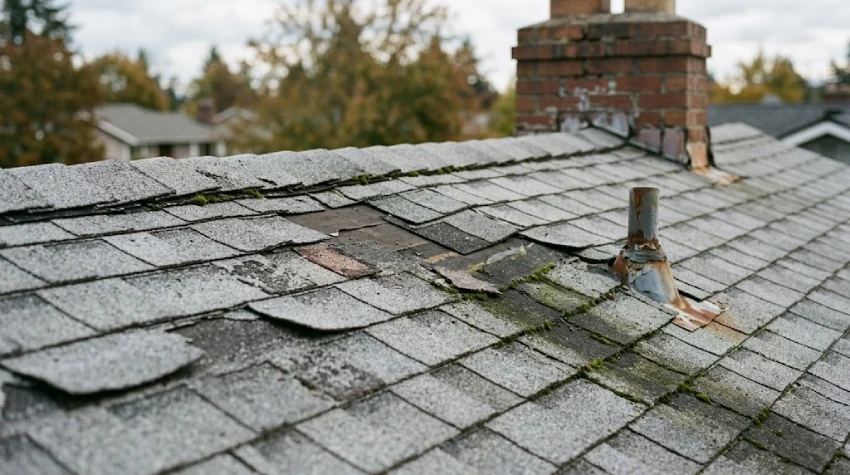
Roof Needs Repair Signs usually appear in groups. A single cracked tile may be local, but cracked tiles plus gutter fragments, damp loft insulation, and ridge movement suggest a wider roof condition issue.
HSE says roof work is high risk; almost one in five construction deaths involve roof work, and all roofs should be treated as fragile until a competent person confirms otherwise. Homeowners should record visible signs safely from the ground, windows, or a safe internal space instead of climbing onto the roof.
| Warning sign | What it may mean | A & A Roofing London check |
| Damp ceiling mark | Leak from tile, slate, flashing, flat roof, valley, or chimney | Internal stain and external water path |
| Loose or missing tiles | Wind movement, failed fixing, broken tile, or underlay exposure | Tile course, battens, ridges, valleys |
| Slipped slates | Fixing failure, cracked slate, storm movement, or age-related wear | Slate laps, fixings, leadwork, damp evidence |
| Flat roof cracks or blisters | Surface failure, trapped moisture, poor drainage, or ageing membrane | Surface, deck, outlets, upstands |
| Gutter overflow | Blocked drainage, debris, sagging gutter, or poor discharge | Gutters, downpipes, eaves, fascia |
| Lifted flashing | Weak junction around chimney, wall, rooflight, or flat roof edge | Leadwork, abutments, surrounding covering |
| Sagging roofline | Structural movement, water damage, or long-term loading issue | Roof shape, timbers, deck, internal cracks |
| Repeat leaks after patching | Wrong source repaired or wider failure developing | Previous repairs and full water route |
A & A Roofing London uses these signs to find the cause rather than simply patching the nearest visible gap. That matters because water can travel beneath tiles, along underlay, through insulation, around masonry, or below flat roof membranes before showing indoors.
Tile Roofing Repair Signs
Tile roofs often show repair signs through cracked tiles, missing tiles, loose courses, broken corners, fragments in gutters, ridge movement, or staining below the roof slope. One damaged tile can be repairable, but several damaged tiles across different areas may show a wider roof covering problem.
A & A Roofing London checks roof tile replacement in London by reviewing tile condition, roof pitch, surrounding courses, ridges, gutters, valleys, underlay clues, and internal damp. Planning Portal notes that tile or slate choice on a pitched roof is partly governed by how steep or shallow the roof is, so pitch matters when assessing why tiles have moved or failed.
For tile-specific repair context, loose tile failure sequence and ridge tile movement checks are useful supporting topics.
Slate Roof Repair Signs
Slate roof repair signs can be subtle. Look for slipped slates, uneven slate lines, cracked corners, small gaps, damp near chimneys, or slate fragments below the roof. Slate defects can be harder to see from ground level, so internal damp and chimney-area staining are important clues.
A & A Roofing London checks slate roof repair in London by reviewing slate laps, fixings, underlay condition, leadwork, valleys, chimneys, gutters, and loft damp. Slate roofs also need careful access because poor roof walking can damage otherwise serviceable slates.
For slate-related warning signs, slate deterioration cause patterns and slate renewal warning groups help separate local repair from wider slate roof failure.
Flat Roof Repair Signs
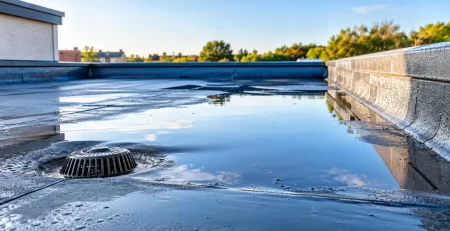
Flat roof repair signs include ponding water, cracks, blisters, open seams, lifted trims, blocked outlets, damp below the ceiling, soft decking, rooflight leaks, and failed upstands. Flat roof leaks can spread beneath the surface before appearing indoors.
A & A Roofing London assesses flat roof replacement in London when repair signs suggest hidden moisture, deck damage, repeated leaks, or widespread surface failure. Planning Portal notes that a flat roof usually has a slight fall so rainwater can drain away, so ponding and blocked outlets should always be checked during repair diagnosis.
For early flat roof symptoms, flat membrane distress signs are relevant.
Pitched Roof Repair Signs
Pitched roof repair signs often appear around tiles, slates, ridges, valleys, verges, gutters, chimneys, and flashings. A pitched roof sheds water through slope, but it still leaks when junctions fail or water is blocked.
A & A Roofing London checks pitched roof repair in London by reviewing the full water route: roof covering, ridges, hips, valleys, gutters, leadwork, chimneys, and internal damp marks.
The Met Office advises checking roofs for loose tiles, slates, and flashing before windy weather, and warns that leaves in gutters and drainpipes can cause water to back up and leak into the roof and sides of a house.
Roof Restoration Signs
Roof restoration in the UK may be suitable when the roof is showing repair signs but still has a serviceable structure. Restoration can include replacing damaged tiles or slates, correcting ridges, clearing valleys, improving drainage, repairing leadwork, or restoring flat roof details.
A & A Roofing London checks whether restoration will solve the cause of the damage. If repair signs are widespread, underlay has failed, flat roof decking is soft, or leaks keep returning, restoration may not be enough.
| Repair sign | Repair may be enough | Restoration or replacement may be needed |
| One broken tile | Surrounding courses are sound | Several slopes have damaged tiles |
| One slipped slate | Fixing issue is local | Slate failure is repeated across the roof |
| Small flashing gap | Junction can be corrected | Water has damaged nearby roof layers |
| Flat roof crack | Surface and deck are dry | Cracking, blisters, and damp are widespread |
| Gutter blockage | Drainage clears and eaves are dry | Overflow has damaged roof edges |
| Damp ceiling mark | Source is clear and local | Stains return after repairs |
For decision-making, repair threshold comparison and replacement-stage warning groups are useful support pages.
Leak Signs Inside the Home
Interior signs often reveal roof repair needs before the defect is clear outside. Look for ceiling stains, brown patches, peeling paint, mould, wet loft insulation, damp rafters, musty smells, or daylight visible through the roof.
Energy Saving Trust warns that condensation and damp can cause mould and even rot in roof timbers over time, so damp evidence should not be ignored. A & A Roofing London compares internal damp marks with external roof features to trace the route of water.
For leak diagnosis, water-entry evidence map helps explain why the visible indoor stain may not be directly below the roof defect.
Sagging and Structural Repair Signs
A sagging roofline, dipped ridge, bowed ceiling, soft flat roof area, or repeated ponding in one low spot can show a deeper repair issue. These signs may involve water damage, timber movement, deck weakness, poor installation, or roof loading problems.
A & A Roofing London checks roof shape, deck condition, rafters, internal cracking, ceiling lines, and drainage patterns before recommending repair. A structural warning sign should not be treated as a simple surface patch.
For movement-related diagnosis, roofline movement evidence points are relevant.
Flashing and Leadwork Repair Signs
Flashing and leadwork repair signs include lifting, cracks, gaps, poor sealant patches, loose chases, damp below wall junctions, and leaks around chimneys, rooflights, dormers, parapets, or flat roof upstands.
A & A Roofing London checks the flashing and the surrounding covering because water may enter above the junction and appear at the leadwork. A flashing repair should control the water path, not only cover a visible gap.
For junction symptoms, flashing defect location notes are useful.
Chimney Repair Signs
Chimney-related roof repair signs include damp chimney breasts, staining near the stack, cracked pointing, failed leadwork, loose pots, damaged back gutters, and damp after wind-driven rain.
A & A Roofing London checks chimney flashing, soakers, back gutters, pointing, stack condition, surrounding tiles or slates, and internal damp. A chimney-area leak may come from the stack, the flashing, the surrounding roof covering, or nearby drainage.
For chimney-specific evidence, chimney leak path indicators support the inspection.
Valley and Gutter Repair Signs
Valleys and gutters are common places for roof repair signs because they move large amounts of water. Moss, leaves, broken tile pieces, silt, poor fall, sagging gutters, or blocked downpipes can push water under roof coverings or into roof edges.
Planning Portal defines gutters and rainwater pipes as roof drainage, so gutter and downpipe condition should be part of any roof repair diagnosis.
A & A Roofing London checks valley channels, gutter fall, downpipe flow, eaves staining, fascia condition, and whether debris from tiles or slates is blocking the route. For water-flow signs, valley flow restriction evidence, valley leak pressure zones, gutter overflow damage clues, and roof drainage defect route are useful.
Storm Damage Repair Signs
Storm damage can reveal roof repair needs suddenly. Signs include missing tiles, slipped slates, loose ridge pieces, lifted flashing, blocked gutters, debris in valleys, flat roof edge lifting, and new damp indoors.
The Met Office advises people not to go outside to repair damage during a storm. A & A Roofing London inspects once conditions are safe and checks whether the damage is local or part of a wider roof weakness.
For safe storm review, post-storm roof condition notes and urgent water-entry response steps are relevant.
Poor Workmanship Repair Signs
Poor workmanship can create roof repair signs even on a newer roof. Look for messy flashing, poor tile alignment, open laps, bad ridge work, shallow flat roof upstands, incompatible patches, blocked drainage, or repeated leaks after recent repairs.
A & A Roofing London checks whether the roof is failing because of age, weather, damage, or incorrect detail. That matters because repairing the surface again may not solve a workmanship-led defect.
For quality review, workmanship defect fingerprints are useful.
Inspection Timing for Repair Signs
A roof should be inspected when repair signs appear, after storms, before winter exposure, after gutter overflow, when damp appears indoors, or when roof materials move. Waiting until water is actively dripping can allow hidden layers to become wet first.
A & A Roofing London sets inspection timing around roof age, material, exposure, trees, drainage, flat roof sections, previous repairs, and internal symptoms. For planning, inspection timing decision points, roof condition evidence checklist, and homeowner inspection record sheet support the process.
Maintenance That Prevents Repair Escalation
Maintenance reduces the chance that small roof repair signs become major roof damage. Clearing gutters, checking valleys, replacing cracked tiles, fixing lifted flashing, reviewing flat roof outlets, and checking internal damp can all prevent escalation.
A & A Roofing London connects maintenance with repair evidence. If maintenance keeps finding the same issue in new areas, the roof may need deeper investigation.
For prevention planning, preventive roof task order helps organise routine checks.
Re-Roofing and Replacement Warning Signs
Some repair signs point beyond local repair. Replacement planning becomes more likely when defects are widespread, leaks keep returning, underlay or battens have failed, flat roof decking is soft, slates or tiles are failing across several areas, or the roofline has changed.
Planning Portal states that most roof replacement work on existing buildings needs Building Regulations approval. It also says that changing the roof covering material may require checks for structural stability, fire safety, and energy efficiency.
A & A Roofing London checks whether the work is a repair, restoration, re-covering, or replacement before recommending the scope.
Safety Limits for Homeowners
Homeowners can record repair signs safely, but they should not walk on roofs. Wet tiles, fragile slates, soft flat roof decking, rooflights, moss, steep pitches, and damaged edges can all create serious fall risks.
HSE’s fragile-surface guidance says precautions are required for work on or near fragile surfaces, including maintenance, repair, cleaning, and demolition, no matter how short the duration.
A & A Roofing London uses proper inspection access rather than treating roof repair checks as DIY roof walking.
Residential Roof Repair Signs
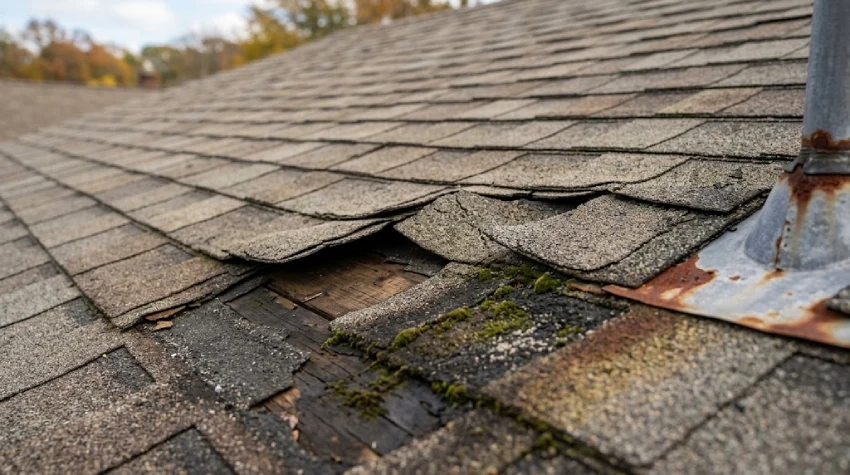
Residential roofs often combine several risk points: tiled slopes, slate sections, flat roof extensions, chimneys, valleys, gutters, ridges, dormers, rooflights, and shared drainage. A repair sign in one area may be caused by water from another area.
A & A Roofing London checks the roof as a whole system. A lower flat roof leak may be caused by water from the pitched roof above. A wall damp mark may come from gutter overflow. A chimney stain may be caused by flashing, masonry, or nearby roof covering defects.
Roof Needs Repair Signs Area Coverage
Local roof age, roof material, weather exposure, chimneys, extensions, tree debris, gutter access, and previous repairs all affect roof repair signs. A & A Roofing London covers North London, Essex, and the Hertfordshire borders, helping homeowners identify repair needs before they spread.
North London
In North London, Roof Needs Repair Signs often involve terraced homes, shared rooflines, chimneys, slate details, tiled slopes, rear extensions, and restricted gutter access. A & A Roofing London can check loose tiles, slipped slates, leadwork, valleys, damp ceilings, flat roof areas, and previous patch repairs.
Hertfordshire Borders
Across the Hertfordshire borders, Roof Needs Repair Signs may include moss, tree debris, older tiles, slate movement, blocked gutters, storm-related damage, and roofline changes. A & A Roofing London reviews drainage, roof covering condition, chimneys, valleys, internal damp, and repair history before recommending the next step.
Essex
In Essex, Roof Needs Repair Signs can become clear after rain, wind, frost, gutter blockage, roof-edge damp, flat roof ponding, or tile movement. A & A Roofing London can inspect tiles, slates, flat roofs, pitched roof slopes, gutters, valleys, flashing, chimneys, and internal stains so repair follows the real cause.
Final Roofing Decision
Roof Needs Repair Signs should be handled early and safely. Cracked tiles, slipped slates, flat roof cracks, gutter overflow, lifted flashing, chimney damp, roofline movement, and repeated leaks all need proper diagnosis before repairs are chosen.
A & A Roofing London can carry out a roof inspection in the UK to check the covering, drainage, valleys, chimneys, leadwork, flat roof sections, internal damp, roofline movement, storm damage, and previous repairs. That gives homeowners a practical route to targeted repair, roof restoration, or replacement where the damage has moved beyond local repair.
FAQs About Roof Needs Repair Signs
What are the most common Roof Needs Repair Signs?
Common signs include damp ceilings, cracked tiles, slipped slates, missing roof coverings, flat roof cracks, blisters, gutter overflow, lifted flashing, chimney damp, sagging rooflines, and repeated leaks. A & A Roofing London checks these signs together because the visible symptom may not be the true source.
Does one broken roof tile mean the roof needs major repair?
Not always. One broken tile may only need local replacement if the surrounding courses and underlay are sound. Wider repair becomes more likely when several tiles are damaged, gutters contain broken fragments, damp appears indoors, or roof movement is visible.
Are damp ceiling marks always caused by roof leaks?
Not always, but they should be checked. Damp marks can come from roof leaks, condensation, plumbing, gutter overflow, flashing failure, chimney defects, or flat roof issues. Energy Saving Trust warns that damp and condensation can lead to mould and even rot in roof timbers over time.
Can blocked gutters make a roof need repair?
Yes. Planning Portal describes gutters and rainwater pipes as roof drainage. When roof drainage is blocked, water can back up into roof edges, walls, and internal finishes. A & A Roofing London checks gutters with valleys, eaves, fascia, and damp signs.
When do repair signs mean replacement instead?
Replacement becomes more likely when leaks keep returning, covering defects are widespread, flat roof decking is soft, underlay or battens have failed, the roofline is sagging, or previous repairs no longer hold. Planning Portal states that most roof replacement work on existing buildings needs Building Regulations approval.
Should I inspect roof repair signs myself?
You can record safe observations from the ground, windows, or a safe internal space, but you should not walk on the roof. HSE says roof work is high risk and all roofs should be treated as fragile until a competent person confirms otherwise.
What should be checked after storm damage?
Check safely for missing tiles, slipped slates, loose ridge pieces, lifted flashing, blocked gutters, debris in valleys, flat roof edge lifting, and new damp indoors. The Met Office advises checking loose tiles, slates, and flashing before windy weather.
What should A & A Roofing London inspect during a repair visit?
A & A Roofing London should inspect tiles, slates, flat roof surfaces, pitched roof slopes, gutters, valleys, downpipes, flashing, chimneys, leadwork, roofline movement, loft damp, ceiling stains, storm damage, and previous repairs. The inspection should identify the cause before repair, restoration, or replacement is agreed.






Comments (15)
[…] warning signs early prevents emergency-level […]
[…] Clear warning signs include: […]
[…] roof tile replacement in London may be the practical route. For homeowners comparing visible signs, roof fault warning signs can help separate one-off damage from a roof that needs a larger […]
[…] diagnosis, roof repair symptom sorting helps homeowners document what they have noticed. If damp is already visible indoors, roof leak […]
[…] early roof symptoms, roof repair sign categories helps homeowners record what they can see. If water has already entered the property, roof leak […]
[…] repair planning, roof repair warning indicators are useful. If tiles are broken, broken roof tile repair steps and tile repair process outline help […]
[…] decide whether the issue is local or part of wider roof decline. Where symptoms are still unclear, roof defect symptom overview helps organise visible warning […]
[…] whether a repair is local or whether the roof has broader deterioration. For visible warning signs, roof condition warning groups help homeowners record what they see safely. If water is already inside, roof leak pathway sorting […]
[…] decision support, repair or renewal decision path and roof defect escalation clues are […]
[…] early warning context, roof repair warning evidence is […]
[…] repair indicators, roof repair symptom checklist is […]
[…] early repair indicators, roof repair warning markers are […]
[…] repair planning, roof repair symptom groups help homeowners record what they can see safely. Where the decision is between a local chimney […]
[…] visible warning signs, roof repair symptom sorting can help homeowners record what they have noticed before arranging […]
[…] repair planning, slate repair inspection findings and roof repair warning review are […]
Comments are closed.