
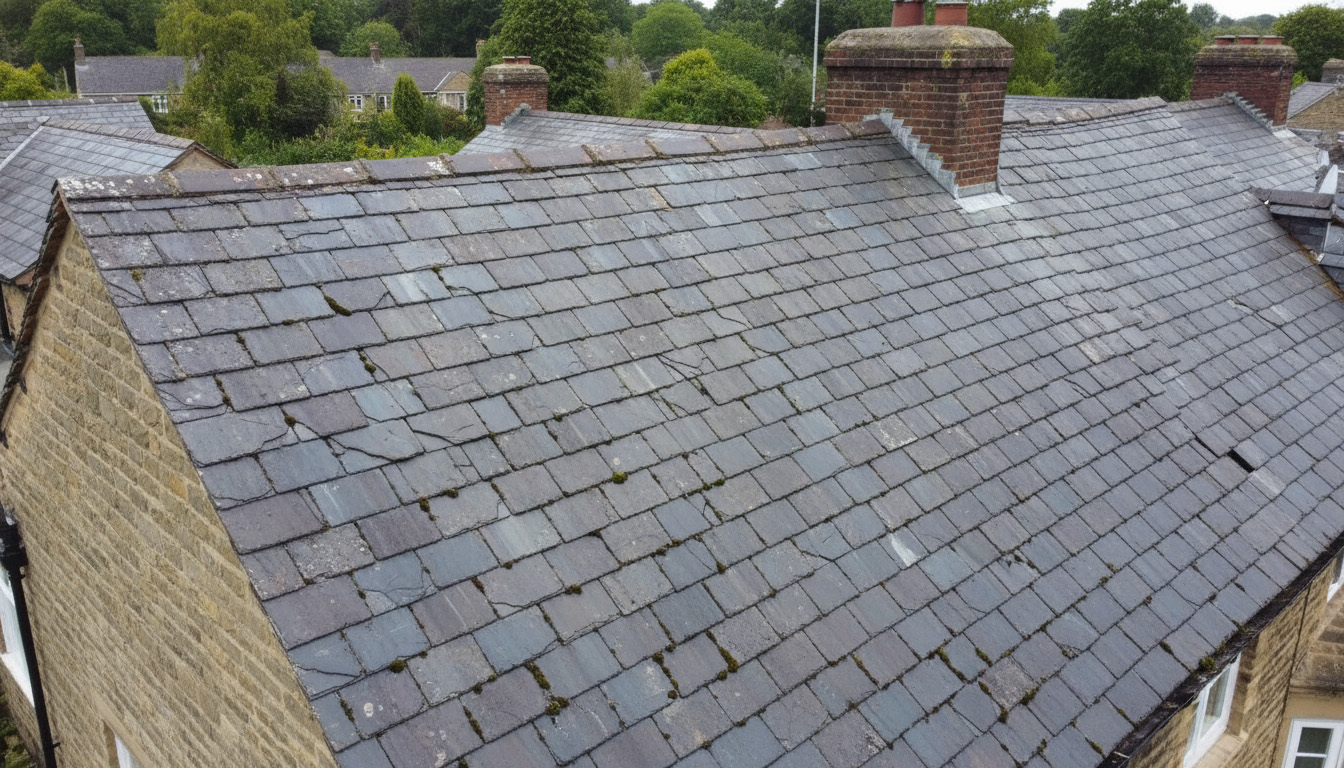
Slate Roof Replacement Signs UK can include repeated leaks, widespread slipped slates, cracked slate edges, failed fixings, damp loft timbers, sagging rooflines, failing underlay, weak battens, chimney leaks, blocked valleys, storm movement, and repairs that no longer hold.
A & A Roofing London helps homeowners across London, Essex, and the Hertfordshire borders understand when a slate roof can still be repaired and when replacement becomes the safer long-term option. The goal is to inspect the roof properly, avoid unnecessary replacement, and act before hidden damage spreads into the structure below.
Quick Check: If your slate roof has repeated leaks, widespread movement, damp loft signs, or visible roofline changes, ask A & A Roofing London to assess roof replacement in the UK before small defects become structural problems.
Slate Roof Replacement Signs UK: Main Warning Signs
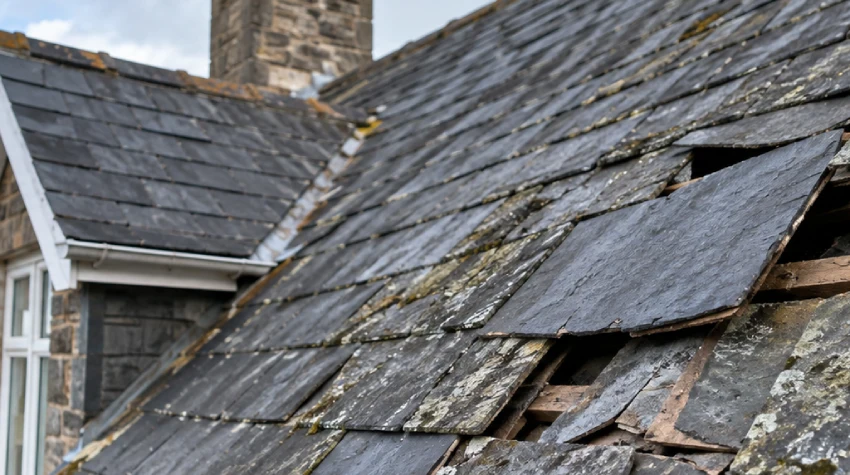
Slate Roof Replacement Signs UK should be judged by the whole roof, not one visible defect. A single slipped slate may need repair. Repeated slips, widespread cracking, failing fixings, damp timbers, and returning leaks can point to deeper failure.
| Warning sign | What it may mean | A & A Roofing London checks |
| Repeated leaks | Water is entering through more than one weak point | Slate surface, leadwork, valleys, chimneys |
| Widespread slipped slates | Fixings, battens, or exposure may be failing | Pattern of movement across roof slopes |
| Cracked slate edges | Weathering, impact, poor handling, or age | Slate condition and surrounding courses |
| Damp loft timbers | Water may be reaching hidden layers | Loft staining, insulation, underlay, airflow |
| Sagging roofline | Structural movement may be present | Rafters, roof shape, ridge line, loading |
| Failed underlay | Secondary protection is no longer reliable | Roof build-up and leak tracking |
| Weak battens | Slates may no longer be securely supported | Batten condition and fixing strength |
| Chimney leaks | Flashing, pointing, or stack defects may be active | Leadwork, stack condition, nearby slates |
| Blocked valleys | Water can back up under slate edges | Valley lining, debris, adjacent slates |
| Failed repairs | Patches may be masking wider failure | Repair history and recurring problem areas |
A & A Roofing London looks for patterns. Replacement becomes more likely when the same roof has several warning signs at once, especially where internal damp confirms water has moved beyond the surface.
When Does a Slate Roof Need Replacement?
A slate roof may need replacement when the roof system is no longer reliable. This usually means the problem is not just one damaged slate, but wider failure across fixings, battens, underlay, rooflines, leadwork, or drainage routes.
A & A Roofing London checks whether the roof can still be repaired or restored before recommending replacement. The decision should be based on roof evidence, not age alone.
For repair comparison, slate repair boundary notes help explain when repair may still be practical.
When Is Slate Roof Repair Enough?
Slate roof repair in London may be enough when damage is local, the surrounding slates are secure, the underlay and battens remain serviceable, and the leak source is clear.
A & A Roofing London checks whether the defect is isolated or part of a wider failure pattern. One cracked slate, one slipped slate, or a small flashing gap may be repairable. Several problem areas across different slopes may point toward replacement planning.
For broader decision support, repair replacement decision fork and early roof repair indicators are useful.
Repeated Leaks and Internal Damp
Repeated leaks are one of the clearest slate roof replacement signs. A single leak can sometimes be traced and repaired. Returning leaks after several repairs suggest the roof may have hidden issues below the slate surface.
A & A Roofing London checks ceiling stains, loft damp, wet insulation, timber marks, chimney areas, valleys, gutters, and previous repair patches. Water can travel from the original entry point before showing indoors, so the visible stain may not sit directly below the defect.
For leak tracing, leak source tracing cues are useful.
Widespread Slipped or Missing Slates
A few slipped slates may be a repair job. Slipped or missing slates across several parts of the roof can suggest failing fixings, tired battens, storm movement, poor installation, or ageing roof layers.
A & A Roofing London checks whether slate movement is random or follows a pattern. Movement near ridges, verges, valleys, and exposed slopes can show where the roof is most vulnerable.
If slipped slates keep appearing after repair, replacement or restoration should be considered.
Cracked, Delaminated, or Broken Slates
Cracked, delaminated, or broken slates can let water enter beneath the covering. If only one or two slates are damaged, repair may be enough. If cracking is widespread, the roof material may be reaching the end of its serviceable life.
A & A Roofing London checks slate texture, edges, corners, thickness, previous repairs, and nearby roof details. Repeated cracking can also come from poor access, storm impact, frost action, weak fixing, or unsuitable replacement materials.
For diagnosis, slate failure pattern review and slate deterioration trigger list are useful.
Sagging Roofline or Structural Movement
A sagging roofline is a serious warning sign. It may indicate timber movement, long-term loading, roof spread, water-damaged structure, or previous work that changed the way the roof carries weight.
A & A Roofing London checks the ridge line, rafters, ceiling level, loft timbers, roof covering weight, and signs of damp. Slate replacement may be needed alongside structural correction if the roof surface has moved because the support below is failing.
For this issue, roofline sagging risk signs are relevant.
Failed Underlay and Weak Battens
The slate surface is only the visible layer. Underlay and battens help the roof perform behind the covering. If these hidden layers fail, the roof may leak even when many slates still look usable.
A & A Roofing London checks underlay condition, batten strength, fixing points, loft damp, and whether previous repairs are attached to sound support. Replacement becomes more likely when the hidden roof build-up is failing across several areas.
A new slate surface should not be installed over unreliable support layers.
Chimneys, Leadwork, and Valleys
Chimneys, leadwork, and valleys can make a slate roof look worse than it is, but they can also reveal wider failure. Leaks near chimneys may come from flashing, pointing, stack defects, or adjacent slate movement. Valleys can fail when debris, silt, moss, or broken slate pieces block water flow.
A & A Roofing London checks the roof junctions before deciding whether the slate roof needs replacement. If the main slate field is sound, leadwork repair may be enough. If junction failure appears alongside widespread slate movement, replacement or restoration may be more practical.
| Roof detail | Repair may be enough | Replacement review may be needed |
| Chimney flashing | One local flashing gap | Multiple damp points around the stack |
| Valleys | Debris blockage only | Valley lining and adjacent slates failing |
| Leadwork | Local lifting or open chase | Several junctions failing at once |
| Gutters | Blockage or poor fall | Eaves and roof edges damaged by overflow |
| Ridges | Small local movement | Long ridge line movement or roofline change |
Storm Damage and Slate Roof Replacement
Storms can expose weak slate roofs. Wind may move loose slates, rain may enter failed junctions, and debris may block valleys or gutters. After severe weather, new leaks or slate pieces on the ground should be treated seriously.
A & A Roofing London checks whether storm damage is local or whether the storm revealed an already weak roof. A roof that repeatedly loses slates during bad weather may need more than patch repairs.
For storm checks, post-storm roof movement checks, storm leak safety order, and weather damage mechanism notes are useful.
Slate Roof Lifespan and Replacement Timing
Slate roof lifespan depends on material quality, pitch, fixings, battens, underlay, leadwork, ventilation, weather exposure, and maintenance. Replacement timing should be based on condition, not a simple age estimate.
A & A Roofing London checks whether the roof is ageing normally or failing as a system. A well-maintained slate roof may only need local repair, while a neglected roof with repeated leaks and failing hidden layers may need replacement sooner.
For lifespan context, slate age condition review and slate service span clues are useful.
Inspection Signs Before Replacement
A replacement decision should start with inspection. Ground-level appearance is not enough. The inspection should include visible slate condition, roofline shape, leadwork, gutters, valleys, chimney areas, loft damp, previous repairs, and the pattern of movement across the roof.
A & A Roofing London checks whether the roof needs local repair, planned restoration, or full replacement. Inspection helps prevent both under-repair and unnecessary replacement.
For inspection planning, slate inspection trigger schedule, inspection timing trigger guide, and roof survey evidence checklist are useful.
Maintenance Signs That Replacement Is Close
Maintenance can delay replacement when the roof is still serviceable. But some maintenance findings suggest the roof is approaching the end of its practical life. These include repeated gutter debris from broken slate, several slipped slates after each storm, persistent loft damp, and repairs that fail within a short period.
A & A Roofing London reviews maintenance history before making a recommendation. A roof that needs constant patching may be more expensive to keep repairing than to replace properly.
For planned roof care, slate maintenance priority plan, scheduled slate upkeep tasks, and preventive roof care timeline are useful.
Slate Roof Cost and Replacement Planning
Slate roof replacement cost depends on roof size, access, scaffold, slate type, underlay, battens, leadwork, chimneys, valleys, gutters, waste removal, insulation, ventilation, and hidden damage. A quote should show what is included and what may change after strip-out.
A & A Roofing London checks the roof before pricing replacement because the visible surface does not always show hidden timber, underlay, or batten issues.
For budgeting context, slate replacement budget factors and whole-roof renewal warning set are useful.
Slate Roof Replacement Installation
Slate replacement should follow a proper installation process. The work may involve safe access, removal of old slate, checking the structure, replacing underlay and battens, correcting leadwork, installing new slate, clearing waste, and checking drainage.
A & A Roofing London plans replacement around the roof’s pitch, existing material, roofline, chimneys, valleys, gutters, ridges, and any flat roof connections. Replacement should solve the roof’s causes of failure, not only refresh the surface.
For process context, slate re-roof installation stages are useful.
Roof Tile Replacement Compared With Slate
Roof tile replacement in London differs from slate replacement because tile profiles, material weight, fixing methods, and repair availability can be different. Some homes also have tile and slate sections on the same property.
A & A Roofing London compares tile and slate replacement by checking roof pitch, structure, existing material, weight, drainage, access, and maintenance history. A material switch should not be made without confirming that the roof can support it.
Flat Roof Replacement Near Slate Roofs
Flat roof replacement in London should be reviewed separately from slate roof replacement. Flat roofs rely on waterproofing systems, falls, outlets, upstands, trims, and rooflight details.
Many homes have a slate main roof with a flat roof extension, dormer, garage, or porch. A & A Roofing London checks whether water from the slate roof is discharging correctly onto lower flat roof sections. Poor drainage above can damage the flat roof below.
Pitched Roof Repair Before Replacement
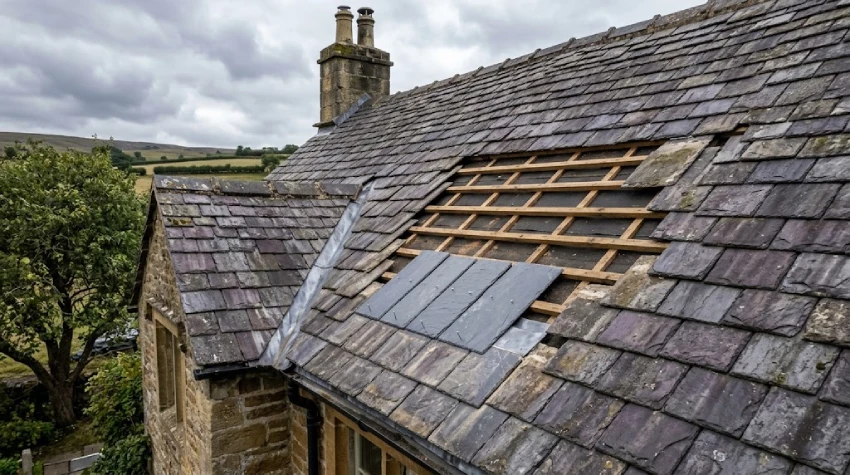
Slate roofs are pitched roofs, so pitched roof repair in London can sometimes avoid replacement when the underlying roof is still sound. Repairs may include correcting ridges, valleys, gutters, leadwork, and isolated covering defects.
A & A Roofing London checks whether the pitched roof can still shed water properly. If the roof slope, structure, and hidden layers remain sound, targeted repair may be enough. If those layers are failing widely, replacement becomes more likely.
Roof Restoration Before Replacement
Roof restoration in the UK may be suitable when the roof is still structurally sound but needs more than basic maintenance. Restoration can include replacing damaged slates, repairing leadwork, clearing valleys, checking chimneys, improving drainage, and tracing damp.
A & A Roofing London checks whether restoration will solve the cause of the problem. Restoration may not be enough where underlay, battens, fixings, or the roof structure have failed widely.
| Roof condition | Repair route | Restoration route | Replacement route |
| One slipped slate | Replace slate | Not usually needed | Not usually needed |
| Local flashing fault | Repair leadwork | Review nearby details | Not usually needed |
| Several recurring leaks | Trace and patch causes | Correct several roof details | Consider if hidden layers fail |
| Widespread slipped slates | Too limited | May help if support layers are sound | Likely if fixings and battens fail |
| Sagging roofline | Not enough | Not enough alone | Structural review and replacement likely |
| Failing underlay | Limited value | Possible only in small areas | Likely if widespread |
Slate Roof Replacement Signs Uk Area Coverage
Local property age, roof pitch, access, slate type, weather exposure, chimneys, valleys, gutters, and previous repairs all affect Slate Roof Replacement Signs Uk. A & A Roofing London covers North London, Essex, and the Hertfordshire borders, helping homeowners decide whether a slate roof needs repair, restoration, or replacement.
North London
In North London, Slate Roof Replacement Signs Uk often matters for terraced homes, period properties, shared rooflines, chimney stacks, rear extensions, and older slate coverings. A & A Roofing London can check repeated leaks, slipped slates, loft damp, leadwork, valleys, gutters, and roofline movement before replacement is recommended.
Hertfordshire Borders
Across the Hertfordshire borders, Slate Roof Replacement Signs Uk may involve larger pitched roofs, moss, tree debris, exposed slopes, old repairs, and mixed roof materials. A & A Roofing London reviews slate condition, structure, access, drainage, chimneys, gutters, and maintenance history to confirm whether replacement is needed.
Essex
In Essex, Slate Roof Replacement Signs Uk can be affected by wind exposure, rain runoff, gutter flow, roof-edge weathering, chimney junctions, and existing slate condition. A & A Roofing London can inspect slate roofs, tile sections, flat roof connections, leadwork, valleys, and internal damp evidence before setting the replacement scope.
Final Roofing Decision
Slate Roof Replacement Signs Uk should be judged by evidence across the whole roof. One cracked or slipped slate may only need repair. Repeated leaks, widespread slate movement, failing underlay, weak battens, sagging rooflines, damp loft timbers, storm movement, and failed repairs can point toward replacement.
A & A Roofing London can assess roof replacement in the UK by checking slate condition, fixings, battens, underlay, leadwork, chimneys, valleys, gutters, ridges, roof edges, loft damp, flat roof connections, pitched roof details, previous repairs, and storm damage. That gives homeowners a clear route between slate repair, roof restoration, and full replacement.
FAQs About Slate Roof Replacement Signs Uk
What Are the Main Slate Roof Replacement Signs Uk?
The main signs include repeated leaks, widespread slipped slates, cracked slate edges, failed fixings, damp loft timbers, sagging rooflines, failing underlay, weak battens, chimney leaks, blocked valleys, and repairs that no longer hold.
When Does a Slate Roof Need Replacement?
A slate roof may need replacement when defects are widespread, leaks keep returning, hidden layers are failing, or the roofline has moved. A & A Roofing London checks whether repair, restoration, or replacement is the correct route.
Can a Slate Roof Be Repaired Instead of Replaced?
Yes. Repair may be enough when damage is local and the surrounding roof is sound. Replacement becomes more likely when slipped slates, leaks, fixing failure, and hidden damp appear across several areas.
Are Slipped Slates a Sign of Replacement?
One slipped slate is often repairable. Repeated slipped slates across different areas can suggest failing fixings, weak battens, storm movement, or wider roof ageing.
Does a Sagging Roof Mean Replacement?
A sagging roofline needs urgent inspection. It may indicate structural movement, timber damage, roof spread, or loading issues. Replacement may be needed with structural correction if the support below the slate has failed.
How Do Leaks Show a Slate Roof Is Failing?
Leaks become a replacement warning when they return after repair, appear in several areas, or are linked with damp loft timbers, failing underlay, chimney defects, or widespread slate movement.
Should Storm Damage Be Repaired or Replaced?
It depends on the extent. Local storm damage may be repairable. Replacement becomes more likely if storms reveal widespread movement, weak fixings, damaged underlay, or repeated leaks.
What Should A & A Roofing London Inspect Before Slate Roof Replacement?
A & A Roofing London should inspect slate condition, roof pitch, fixings, battens, underlay, leadwork, chimneys, valleys, gutters, ridges, roof edges, roofline shape, loft damp, flat roof connections, pitched roof details, previous repairs, and storm damage.