
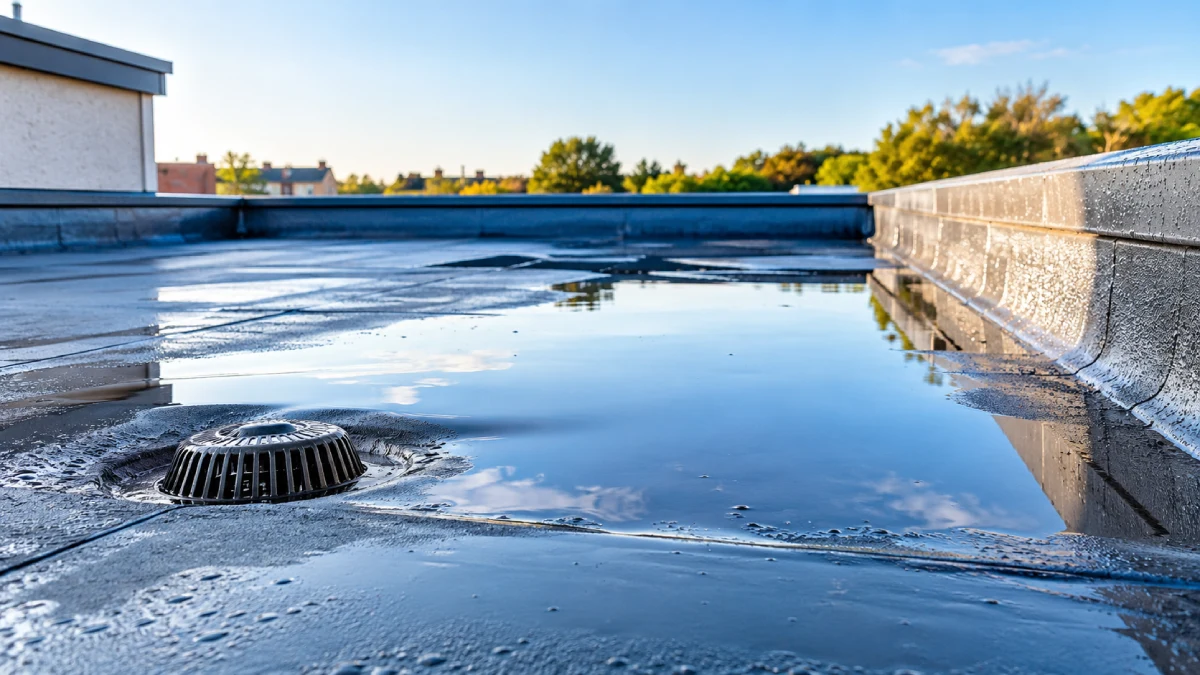
Eliminating “Ponding Water” & Structural Sag is urgent because standing water is rarely just a surface problem. On flat roofs, water that sits after rainfall can expose poor falls, blocked outlets, weak decking, insulation failure, or structural movement. On pitched and mixed roofs, sagging can point to timber stress, roof spread, long-term water entry, or overloaded roof sections. A&A Roofing London helps homeowners across London, Essex, and Hertfordshire Borders identify whether the issue is drainage, covering failure, leadwork, roof structure, or wider roof damage before recommending repair, restoration, or replacement.
Quick Check: If water is sitting on your roof or the roofline looks uneven, A&A Roofing London can assess roof damage and explain whether the cause is drainage, sagging, covering failure, or structural movement.
Eliminating “Ponding Water” & Structural Sag
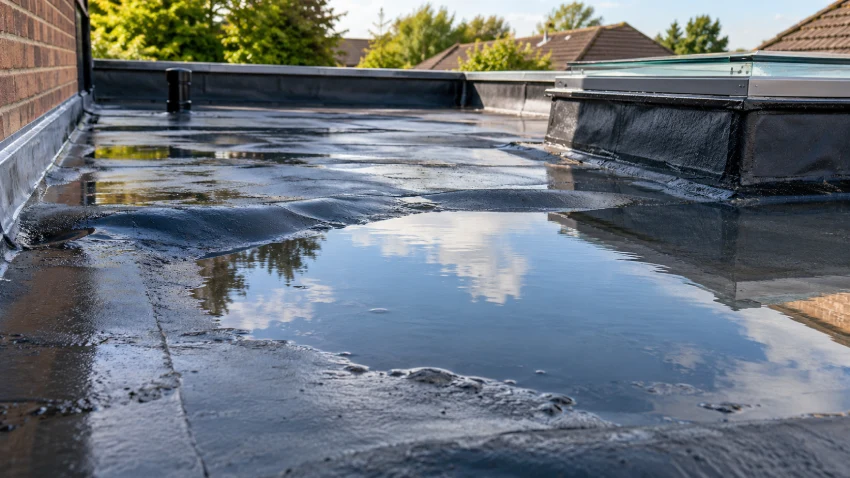
Eliminating “Ponding Water” & Structural Sag starts with diagnosis. Ponding water may come from blocked outlets, poor falls, compressed insulation, failed decking, or a flat roof surface that has deformed over time. Structural sag may come from overloaded timbers, water-damaged roof supports, poor previous work, or long-term movement in the roof frame.
Ponding water and sag diagnosis table
| Visible sign | Possible cause | What should be checked |
| Water remains after rainfall | Poor falls, blocked outlet, low roof area | Drainage route, outlet, surface condition |
| Soft or springy flat roof | Deck decay, saturated build-up, failed boards | Deck strength and roof layers |
| Dips around rooflights | Weak support, poor detailing, water retention | Rooflight kerbs and surrounding deck |
| Uneven pitched roofline | Timber movement, roof spread, old repairs | Rafters, purlins, ridge line, load path |
| Leaks below low spots | Ponding, membrane fatigue, failed laps | Covering, seams, flashing, insulation |
| Repeated patch failures | Underlying fall or structure issue | Whether repair or renewal is needed |
A&A Roofing London checks the roof as a whole before treating ponding water as a simple surface defect. Where flat and pitched areas meet, the roof detail must be checked carefully because water can move from one roof form into another.
For homeowners trying to understand the wider risk, a roof sag cause checklist helps explain why a sagging line should be inspected before it becomes a larger repair.
Tile Roofing Around Flat Roof Drainage
Tile roofing matters when Eliminating “Ponding Water” & Structural Sag because many homes have flat roof extensions connected to tiled roof slopes. Water can collect where a flat roof meets tiles, walls, valleys, gutters, or lead flashing.
A&A Roofing London checks tile roof detailing around flat extensions where a tiled roof feeds water toward a lower flat roof. If the tile courses, gutter line, or valley detail is wrong, the flat roof may receive more water than it was designed to manage.
A tiled roof can also hide the cause of ponding. Blocked gutters, slipped tiles, broken verges, and poor abutment details can redirect water toward a flat roof surface or low roof section.
A blocked gutter roof damage guide is useful where water is spilling over edges, backing up into roof details, or increasing saturation near flat roof junctions.
Slate Roofing and Edge Movement
Slate roofing affects Eliminating “Ponding Water” & Structural Sag where slate slopes meet flat roofs, valleys, parapets, dormers, or roof edges. Slate is a durable covering, but edge movement, slipped slates, failed fixings, and tired underlay can allow water to track into lower roof sections.
A&A Roofing London checks slate roof edge maintenance when ponding water appears near a slate-to-flat-roof junction. The aim is to confirm whether water is entering from the flat surface, the slate edge, or the flashing between them.
Structural sag on a slate roof should also be taken seriously because natural slate adds weight and relies on consistent support. A dip in the roofline can affect laps, drainage, and the way water sheds from the roof.
Where valley areas are involved, a roof valley blockage process can help homeowners understand why leaves, moss, debris, and poor water flow often create hidden saturation problems before leaks appear indoors.
Flat Roofing and Ponding Water Removal
Flat roofing is the main setting for Eliminating “Ponding Water” & Structural Sag. A flat roof should still have a planned fall so water moves toward outlets, gutters, or drainage points. When water remains in dips, it increases stress on the covering and can speed up ageing.
A&A Roofing London reviews the flat roof renewal detail before recommending patching, overlay, deck repair, or replacement. The surface material may be part of the issue, but the fall, outlet position, insulation, and deck condition often decide whether repair will last.
Ponding water can also point to a low spot created by compressed insulation or deck movement. If the roof feels soft, has blisters, cracks, or repeating leaks in the same place, the problem may be below the top layer.
A flat roof ponding and defect guide helps identify early signs that a flat roof is no longer shedding water properly.
Pitched Roof Installation and Sagging Lines
Pitched roof installation is closely tied to Eliminating “Ponding Water” & Structural Sag because an uneven roofline is often structural rather than cosmetic. Rafters, purlins, battens, underlay, tile weight, and previous repairs all affect how a pitched roof holds its shape.
A&A Roofing London provides pitched roof repair london support where a roofline is dipping, spreading, or showing signs of uneven load. The inspection looks at the covering above and the roof structure below where accessible.
Sagging may also affect drainage. A dip in a pitched roof can interrupt tile laps, create water traps near valleys, or push water toward vulnerable junctions. That can eventually lead to damp, underlay staining, and timber decay.
Where homeowners are unsure whether the issue belongs to the flat roof or pitched roof, a flat roof and pitched roof comparison helps explain why each roof form fails differently.
Roof Restoration After Water Damage
Roof restoration becomes important when Eliminating “Ponding Water” & Structural Sag because repeated water retention can damage more than the surface layer. The roof may need drainage correction, deck repair, timber checks, flashing work, and covering renewal.
A&A Roofing London handles roof restoration after damage where water has affected flat roof layers, pitched roof junctions, valleys, gutters, or lead details. Restoration is considered where the roof still has serviceable elements but needs targeted renewal to stop further deterioration.
Restoration planning for ponding and sag
| Roof condition | Restoration focus | Why it matters |
| Minor ponding with sound deck | Drainage and surface repair | Prevents early material breakdown |
| Ponding with cracks or blisters | Covering and deck review | Surface failure may hide deeper damage |
| Sagging roofline | Structural inspection | Movement can worsen drainage and leaks |
| Valley overflow | Debris removal and valley repair | Restores controlled water flow |
| Lead junction leaks | Flashing renewal | Stops water entering behind the covering |
A flat roof restoration checklist can help homeowners understand why restoration should include falls, outlets, roof surface condition, and the structure underneath.
Roof Repairs for Drainage and Sag
Roof repairs for Eliminating “Ponding Water” & Structural Sag should never be based on appearance alone. A puddle may look minor, but if it appears in the same place after every rainfall, it can indicate a low point, blocked drainage, or deformation in the roof build-up.
A&A Roofing London checks whether the repair should address the surface covering, outlet, gutter, valley, leadwork, deck, or structure. A small patch may solve a puncture, but it will not correct poor falls or roof sag.
A roof leak cause framework helps separate ponding-related leaks from failures caused by flashings, rooflights, valleys, chimneys, or damaged coverings.
Poor previous work is another common factor. A roof workmanship defect checklist can help identify weak repairs, bad falls, poor edging, loose detailing, or patching that ignores the real drainage problem.
Re-Roofing and Roof Replacement Timing
Re-roofing may be necessary when Eliminating “Ponding Water” & Structural Sag cannot be solved with local repair. If the roof deck is soft, the covering is failing widely, the insulation is saturated, or the structure has moved, repeated patching may waste money.
A&A Roofing London separates local repair from full renewal by checking the age of the roof, number of previous repairs, drainage performance, material condition, and whether sagging is active or historic. The decision should be based on the roof’s condition, not only the size of the visible puddle.
A repair or replacement decision guide helps homeowners compare the likely value of another repair against planned roof replacement.
Where the roof has reached the end of service life, a roof replacement cost and timing guide can help homeowners understand why access, materials, deck work, drainage, and labour all affect the final decision.
Lead Work, Chimneys, and Water Flow
Lead work and chimneys can complicate Eliminating “Ponding Water” & Structural Sag because water may be entering from the edges while ponding appears in the middle. Flashing defects, split lead, poor step flashing, chimney back gutters, and wall abutments can all direct water into the roof build-up.
A&A Roofing London checks lead flashing maintenance in London where water appears near chimneys, parapets, abutments, valleys, or roof transitions. This is especially important when flat roof ponding is close to a wall or chimney detail.
Leadwork also affects drainage. A poorly formed flashing or blocked back gutter can hold water where it should flow away. Over time, that increases the chance of leaks, timber decay, and sagging around the junction.
Where valleys are involved, a valley leak pattern overview helps explain why water concentration at valley lines can create repeated damp problems if flow is restricted.
Roof Inspections Before Structural Decisions
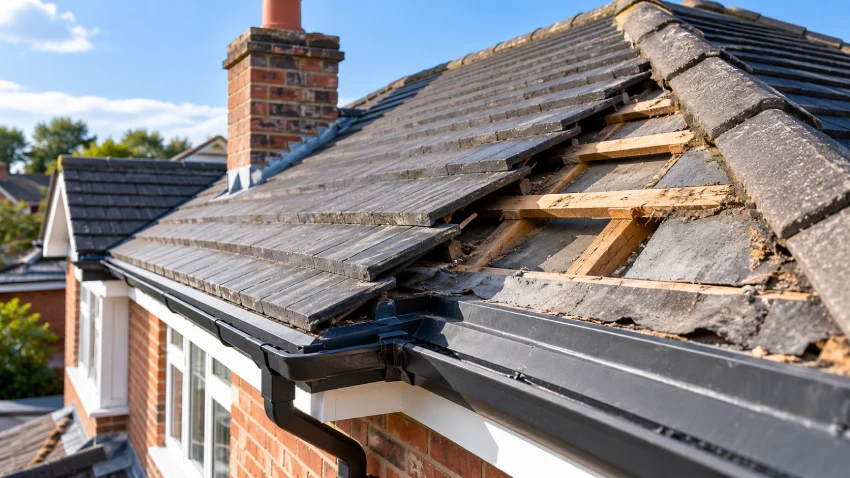
Roof inspections are essential for Eliminating “Ponding Water” & Structural Sag because the visible symptom may not show the cause. A flat roof puddle may come from a surface dip, but it may also come from a failing deck or compressed insulation. A sagging pitched roof may be historic movement or an active structural concern.
A&A Roofing London checks roof falls, drainage points, gutters, valleys, roof surface condition, deck firmness, roofline shape, internal damp signs, and safe access. Where possible, loft or ceiling-level observations can help identify whether sagging is linked to timber movement or water damage.
A roof inspection preparation guide helps homeowners record visible signs before an assessment, including where water sits, how long it remains, and whether indoor damp appears after rain.
Inspection timing also matters. A roof inspection schedule guide helps reduce the risk of small drainage problems turning into sagging, leaks, and structural repair.
Residential Roofing and Weather Exposure
Residential roofing makes Eliminating “Ponding Water” & Structural Sag more varied because homes across London, Essex, and Hertfordshire Borders include flat roof extensions, older pitched roofs, slate coverings, tiled roofs, chimneys, dormers, and valleys. Each roof form handles water differently.
Weather exposure can make small drainage issues worse. Heavy rain, frost, wind-driven debris, and repeated wet-dry cycles can increase water retention, block outlets, and accelerate surface breakdown.
A UK weather roof wear guide helps homeowners understand why rain, wind, and frost can worsen existing ponding and sag issues.
For urgent situations after storms, a storm roof repair response guide can help homeowners respond safely without climbing onto the roof or disturbing damaged sections.
Eliminating “Ponding Water” & Structural Sag Area Coverage
Local roof conditions matter because property age, access, roof form, drainage routes, and weather exposure all affect ponding water and structural sag. A&A Roofing London supports homeowners across London, Essex, and the Hertfordshire Borders with roof checks that identify whether the issue is surface drainage, flat roof failure, pitched roof movement, or wider roof damage.
North London
North London homes often include rear flat roof extensions, older tiled roofs, slate sections, dormers, chimneys, and limited access. For Eliminating “Ponding Water” & Structural Sag, A&A Roofing London checks whether water is collecting because of blocked drainage, poor roof falls, worn flat roofing, valley problems, or movement in the pitched roof structure. This helps homeowners avoid repeated patching where the real cause is a fall, outlet, or structural issue.
Hertfordshire Borders
Around the Hertfordshire Borders, properties can include older pitched roofs, garages, extensions, and mixed roof forms. A&A Roofing London assesses Eliminating “Ponding Water” & Structural Sag by reviewing roofline shape, flat roof deck condition, gutters, valleys, leadwork, and signs of long-term water retention. Where the issue is early-stage, targeted repair may be possible; where the roof has softened or moved, renewal may be needed.
Essex
Across Essex service areas, flat roofs, pitched roofs, and roof junctions can be exposed to rain, frost, wind, and debris build-up. A&A Roofing London reviews Eliminating “Ponding Water” & Structural Sag by checking whether outlets are clear, falls are working, roof coverings are sound, and the structure below is still firm. The aim is to stop standing water before it causes deeper roof damage.
Choosing A&A Roofing London for Ponding and Sag
Ponding water and structural sag should be investigated before another patch is applied. A&A Roofing London checks drainage, roof falls, deck condition, gutters, valleys, leadwork, and roofline movement before recommending repair, restoration, or replacement. For homeowners dealing with Eliminating “Ponding Water” & Structural Sag, A&A Roofing London can assess roof damage and identify whether the next step should be drainage correction, flat roof renewal, structural review, or wider roof restoration.
FAQs About Eliminating “Ponding Water” & Structural Sag
What does Eliminating “Ponding Water” & Structural Sag mean?
Eliminating “Ponding Water” & Structural Sag means finding and correcting the reason water is sitting on a roof or why the roofline has dipped. The cause may be poor drainage, blocked outlets, failed roof falls, soft decking, saturated insulation, weak timbers, or roof movement. The right repair depends on whether the problem is only on the surface or has affected the roof structure below.
Is ponding water on a flat roof serious?
Ponding water can become serious if it remains after rainfall, appears repeatedly in the same place, or sits above a soft area of the roof. Eliminating “Ponding Water” & Structural Sag is important because standing water adds weight, speeds up surface wear, and can expose weak seams, cracks, outlets, and deck movement. A short-term puddle may be less concerning than water that stays for long periods or grows after each repair.
Can ponding water be fixed without replacing the whole roof?
Ponding water can sometimes be fixed without full replacement if the roof deck is firm, the covering is still serviceable, and the issue is caused by a local outlet, debris blockage, or small low area. Eliminating “Ponding Water” & Structural Sag becomes more complex when the deck is soft, insulation is saturated, or the roof has widespread poor falls. Inspection decides whether repair, restoration, or renewal is more sensible.
Why does a roof start to sag?
A roof may sag because of age, water damage, overloaded timbers, poor previous alterations, inadequate support, rot, spreading roof structure, or long-term moisture entry. Eliminating “Ponding Water” & Structural Sag requires checking both the outside roof covering and the structure beneath it. A sagging line should not be ignored because movement can affect drainage, tile laps, waterproofing details, and internal finishes.
Can blocked gutters cause ponding water?
Blocked gutters can contribute to ponding water, especially where rainwater backs up, spills over edges, or prevents the roof from draining correctly. Eliminating “Ponding Water” & Structural Sag includes checking gutters, outlets, valleys, and drainage routes because surface repairs will not last if water cannot leave the roof. Debris, moss, leaves, and poor outlet positioning can all make ponding worse.
Should I patch a flat roof with standing water?
A patch may help only if the defect is local and the roof below is sound. Eliminating “Ponding Water” & Structural Sag should come before patching because standing water may indicate poor falls, deck sag, failed insulation, or a drainage defect. If the cause is not corrected, the patch may fail and water may return to the same area after the next rainfall.
What should be inspected before repairing ponding water?
Before repairing ponding water, the roof should be inspected for surface condition, falls, outlets, gutters, valleys, deck firmness, insulation clues, flashing, rooflights, internal damp marks, and signs of sagging. Eliminating “Ponding Water” & Structural Sag also requires checking whether the problem is local or widespread. A&A Roofing London uses this assessment to decide whether the roof needs cleaning, drainage correction, local repair, restoration, or replacement.