
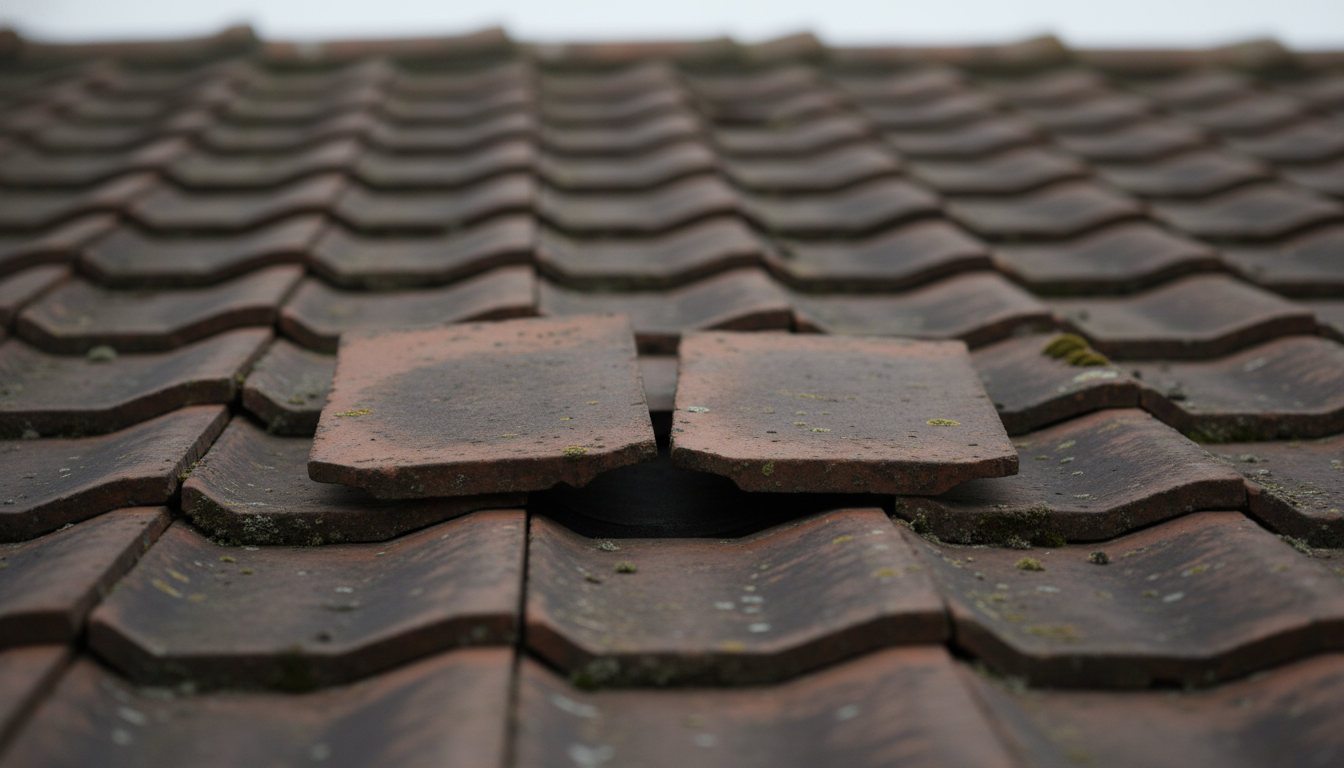
Loose Roof Tiles UK Dangers Storm Damage Repairs is a warning topic homeowners should take seriously because one shifted tile can expose underlay, battens, loft spaces, and ceilings to wind-driven rain. The damage may look minor from the ground, but loose tiles can move further in storms, fall from height, let water beneath surrounding tiles, and create hidden damp before an obvious leak appears. A & A Roofing London helps homeowners across London, Essex, and the Hertfordshire borders inspect loose roof tiles safely, trace the cause, and decide whether tile repair, roof restoration, pitched roof repair, or replacement is needed.
Quick Check: If roof tiles have slipped, lifted, cracked, or moved after wind, arrange a roof inspection in the UK with A & A Roofing London before the damage spreads beneath the roof covering.
Loose Roof Tiles Uk Dangers Storm Damage Repairs
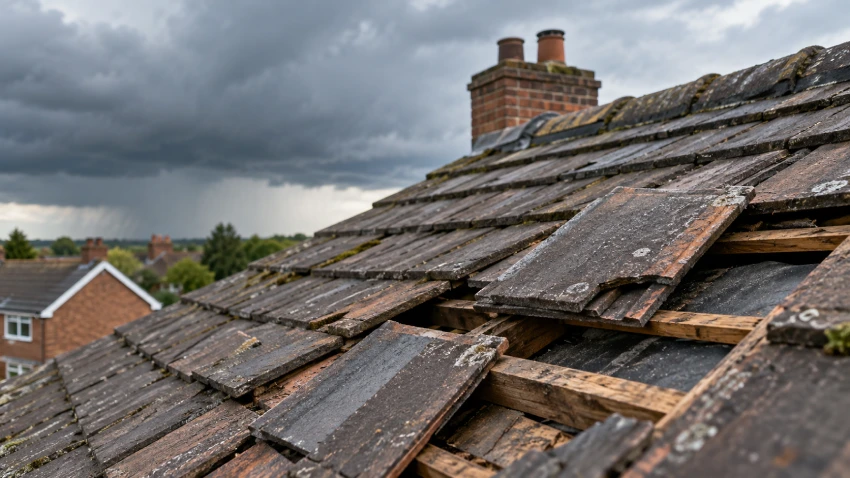
Loose Roof Tiles Uk Dangers Storm Damage Repairs begins with understanding what a loose tile can affect. A roof tile is part of a wider water-shedding system, so one displaced section can expose the underlay, let rain track sideways, disturb neighbouring tiles, and weaken the roof’s ability to resist the next storm.
The Met Office advises people not to go outside to repair damage while a storm is in progress. It also notes that gales are a common cause of damage and disruption in the UK, which is directly relevant when loose roof tiles appear after high winds.
| Loose tile situation | Main danger | What may happen next | A & A Roofing London check |
| One slipped tile | Exposed underlay | Water can enter during wind-driven rain | Tile position, batten, fixing, underlay |
| Several lifted tiles | Wider fixing failure | More tiles may move in the next storm | Roof slope, tile courses, ridge, edges |
| Broken tile pieces | Falling debris and water entry | Gutters or valleys may block | Surrounding tiles, drainage path, debris |
| Loose ridge-adjacent tiles | Apex exposure | Water can enter near the roof peak | Ridge line, top courses, mortar or fixings |
| Repeated tile movement | System weakness | Repair may not hold long term | Workmanship, battens, underlay, roof age |
Loose Roof Tiles Uk Dangers Storm Damage Repairs should never be treated as a ground-level guess. HSE says roof work is high risk and that all roofs should be treated as fragile until a competent person confirms otherwise. It also identifies falls from roof edges, openings, fragile roofs, and rooflights as main causes of death and injury.
A & A Roofing London inspects the visible tile damage, the surrounding courses, the drainage route, the internal damp pattern, and the roof’s wider condition. That matters because a loose tile is often the symptom, not the whole fault.
Tile Roofing and Loose Tile Movement
Tile roofing is the main focus of Loose Roof Tiles Uk Dangers Storm Damage Repairs because tiled roofs rely on correct overlap, fixing, batten support, and weathering detail. When tiles shift, the roof can lose the clean water path it was designed to maintain.
A & A Roofing London checks whether the tile has simply slipped or whether the fixing point, nib, batten, underlay, or surrounding roof course has failed. This is important because replacing one visible tile may not solve the problem if the tiles around it are also loose.
Where the damage is tile-specific, roof tile replacement in London may be the right service route. For a homeowner reference on how tile work should be approached, tile roof repair method basics explains why the support layers matter as much as the tile itself.
Broken Tiles After Wind or Impact
Loose Roof Tiles Uk Dangers Storm Damage Repairs often includes broken tiles as well as shifted tiles. Wind can lift a tile, but impact from debris, falling branches, frost damage, or careless previous access can crack the tile and leave fragments on the roof or in the gutter.
A & A Roofing London checks whether broken tile pieces have blocked gutters, valleys, or flat roof outlets. Broken fragments are not just evidence of damage; they can become part of the drainage problem if they collect lower down the roof.
If a homeowner can see missing corners, cracked pieces, or tile fragments safely from the ground, broken tile repair sequence is a useful supporting topic. Where several tiles have failed together, tile replacement planning factors helps explain when a wider tile section should be reviewed.
Slate Roofing and Loose Covering Risks
Slate roofing can show similar storm damage, even though the material behaves differently from roof tiles. A slipped or cracked slate can expose underlay and create a hidden water path that only becomes obvious after repeated rain.
A & A Roofing London checks slate roof maintenance in the UK where slate sections sit near tiled areas, valleys, ridges, or chimneys. Slate movement can be caused by fixing failure, nail fatigue, previous workmanship, storm pressure, or ageing battens.
Loose Roof Tiles Uk Dangers Storm Damage Repairs should therefore include the full roof covering, not just concrete or clay tiles. If a property has mixed tile and slate areas, both materials should be checked because water can travel beneath one section and appear inside somewhere else.
Flat Roofs Below Loose Tiles
Flat roofs do not have loose roof tiles, but they can be damaged by loose tiles from pitched roof sections above. Many UK homes have flat roof extensions, dormers, garages, or bays below tiled slopes. When tiles slip or break, water and debris can land on the flat roof surface below.
A & A Roofing London checks flat roofs in London where tile damage above may have caused impact marks, blocked outlets, punctures, surface cracks, or ponding. This is especially important where a flat roof leak appears after a storm but the source is higher up the pitched roof.
For connected flat roof symptoms, flat roof surface distress signals helps explain why cracks, blisters, and weak outlets should be inspected after tile movement above.
Pitched Roof Repair After Storm Damage
Pitched roofs take the direct force of wind and rain. Loose Roof Tiles Uk Dangers Storm Damage Repairs becomes urgent when tiles move on an exposed slope, near an eaves edge, beside a valley, around a chimney, or close to the ridge.
A & A Roofing London checks pitched roof repair in London by looking at the tile courses, ridge line, hip details, valley cuts, underlay condition, battens, fixings, and internal damp evidence. The goal is to find whether the wind caused a local defect or exposed a wider weakness.
The Planning Portal explains that with a pitched roof, the type of tile or slate used is partly governed by how steep or shallow the slope is. That matters because poor material choice or poor installation can make tile movement more likely under weather pressure.
Ridge Tiles and Loose Roof Tiles
Loose roof tiles near the ridge need special attention because the ridge sits at the highest, most exposed part of the roof. If ridge tiles, top-course tiles, or bedding fail, water can enter close to the apex and spread beneath the roof covering.
A & A Roofing London checks ridge tiles, mortar, mechanical fixings, top tile courses, underlay, ventilation paths, and any signs of damp inside the loft. Ridge-related tile movement can be caused by storm pressure, poor bedding, old mortar, or weak roof detailing.
For ridge-specific symptoms, ridge tile fixing principles is the most relevant supporting topic. It helps explain why ridge faults should be checked with the surrounding tiles rather than treated as one isolated cap tile.
Roof Restoration After Tile Damage
Roof restoration may be appropriate where Loose Roof Tiles Uk Dangers Storm Damage Repairs reveals wider weather wear but the roof structure and main covering are still serviceable. Restoration can involve replacing damaged tiles, improving detailing, clearing debris, checking moss, repairing small faults, and restoring the roof’s water-shedding performance.
A & A Roofing London links storm damage to roofs in the UK with condition-led restoration. If the roof is failing across several slopes, restoration may not be enough. If the damage is contained and the surrounding materials are sound, restoration may be a practical middle route.
NFRC says moss on roof tiles is rarely a problem in most cases and usually only needs removal where it blocks gutters, outlets, or other drainage points. NFRC also warns that inappropriate moss removal can damage the roof covering. That matters because loose tiles and moss often appear together, but aggressive cleaning can create more tile movement if the roof is already fragile.
Roof Repairs That Start With Cause
Loose Roof Tiles Uk Dangers Storm Damage Repairs should start with the cause of movement. A tile can move because of storm wind, broken nibs, old fixings, batten decay, poor workmanship, impact damage, roof sagging, or water getting beneath the covering.
A & A Roofing London traces the reason before replacing visible tiles. A repair may include refixing or replacing loose tiles, checking battens, inspecting underlay, correcting ridge or verge details, clearing debris, and reviewing internal leak evidence.
| Cause of loose tiles | Repair implication | Wider check needed |
| Storm wind | Local refixing may work | Adjacent tiles and ridge movement |
| Broken tile nib | Tile replacement likely | Batten and tile support |
| Poor previous work | Repair must correct detail | Workmanship and fixing pattern |
| Batten decay | Surface repair may fail | Underlay and timber condition |
| Roof sagging | Structural review needed | Rafters, loading, roofline |
| Moss and debris | Cleaning may be needed carefully | Drainage and tile surface condition |
For early roof symptoms, roof repair sign categories helps homeowners record what they can see. If water has already entered the property, roof leak origin framework is useful because the ceiling stain may not sit below the loose tile.
Re-Roofing and Replacement Decisions
Loose Roof Tiles Uk Dangers Storm Damage Repairs does not automatically mean full replacement. A few displaced tiles after a storm may be repairable. Replacement becomes more likely when loose tiles are widespread, the underlay has failed, battens are deteriorating, the roofline is sagging, or repeated repairs no longer hold.
Planning Portal says repairs or re-covering to an existing pitched or flat roof will not normally need a building control application where less than 25% of the building envelope and less than 50% of the roof are affected. It also says approval may be needed where those limits are exceeded, structural alterations are made, fire performance changes significantly, or the new covering increases roof weight by 15% or more.
A & A Roofing London uses inspection findings to decide whether tile repair, restoration, or replacement is the right route. For wider decision-making, repair or replacement comparison steps and roof replacement timing clues help homeowners understand when patching stops being practical.
Lead Work, Chimneys, and Tile Movement
Loose tiles often appear near chimneys, abutments, dormers, and leadwork. These junctions are high-risk because water flow, flashing, tile cuts, and roof movement meet in one place. A tile may look like the problem when the real weakness is failed flashing beside it.
A & A Roofing London checks leadwork, chimney pointing, soakers, step flashing, top tile courses, and surrounding underlay together. If the tile has moved near a junction, the repair should protect the whole water path.
For junction-related symptoms, flashing leak pattern clues is a useful reference. If poor workmanship caused the tile movement or a weak repair has failed, roofing workmanship review points can help homeowners understand what should be documented.
Storm Damage: What Homeowners Should Do First
Loose Roof Tiles Uk Dangers Storm Damage Repairs often becomes urgent after high winds. The safest first step is not to climb the roof. Homeowners should keep people away from any area where materials could fall, photograph visible damage from the ground, check ceilings and loft spaces if safely accessible, and arrange inspection.
The Met Office advises checking for loose items before high winds and not going outside to repair storm damage while the storm is in progress. HSE also says work at height should be avoided where reasonably practicable, and where it cannot be avoided, falls should be prevented using a safe place of work or the right equipment.
A & A Roofing London can assess whether the roof needs temporary weatherproofing, tile replacement, ridge repair, gutter clearance, or wider repair after conditions are safe. For safe homeowner observations, storm damage inspection notes and emergency repair response order are the strongest supporting topics.
Drainage, Gutters, and Loose Tile Debris
Loose roof tiles can damage drainage even when the main leak has not started yet. Broken pieces, mortar, moss, and roof grit can slide into gutters, valleys, and outlets, slowing water flow during the next heavy rain.
A & A Roofing London checks gutters, valleys, downpipes, roof edges, and flat roof outlets after tile movement. A loose tile issue can quickly become a drainage issue if debris blocks the water path.
For water-flow symptoms, roof drainage path restrictions and gutter blockage damage stages help explain how a broken roof covering can create secondary damage below.
Inspections and Maintenance After Loose Tiles
Loose Roof Tiles Uk Dangers Storm Damage Repairs is easier to manage when inspections are planned before small movement becomes a leak. A proper inspection checks the tile covering, ridge tiles, valleys, flashing, gutters, underlay, battens, loft signs, and internal damp marks.
A & A Roofing London recommends inspection after major storms, visible tile movement, recurring leaks, roofline changes, or repeated gutter debris. The aim is to prevent small roof covering faults from becoming hidden timber, ceiling, or insulation damage.
For planned care, inspection timing reference, roof inspection item list, and preventive roof care sequence give homeowners useful maintenance context without encouraging unsafe roof access.
Residential Roofing and Falling-Material Risk
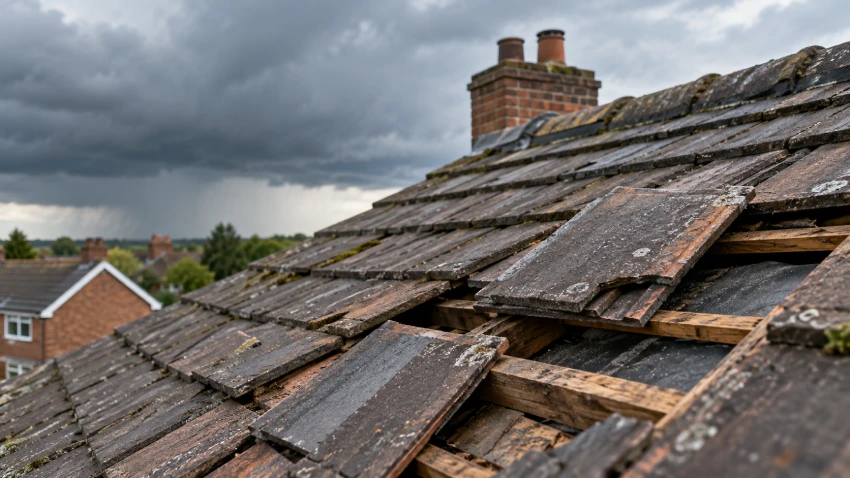
Residential roofing defects are not only about leaks. Loose tiles can fall from height, especially near eaves, verges, ridges, or storm-exposed slopes. That creates risk to people, vehicles, neighbouring property, garden areas, and access paths.
HSE roof guidance highlights falls from roof edges and materials falling from roofs as key hazards during roof work. It also explains that sloping roofs need measures such as scaffolding to prevent people or materials from falling.
A & A Roofing London treats falling-material risk as part of the repair priority. A loose tile above a doorway, pavement-facing slope, driveway, or shared access route may need urgent attention even before the internal leak becomes visible.
Weather Exposure and Tile Loosening
UK weather can make loose tiles worse. Wind lifts weak edges, driving rain tests overlaps, frost can widen cracks, and repeated wet-dry cycles can expose failing mortar or fixings. A roof that seemed stable in calm weather may shift again during the next storm.
A & A Roofing London checks whether storm damage is a one-off event or the latest sign of long-term roof wear. If tiles keep moving, the roof may need more than isolated replacement.
For weather-linked defects, weather exposure roof effects is a useful supporting topic. If the roofline itself looks uneven, roof sagging warning features should also be considered before treating tile movement as a surface-only repair.
Loose Roof Tiles Uk Dangers Storm Damage Repairs Area Coverage
Local roof access, roof pitch, property age, roof materials, and storm exposure all affect how loose tiles should be inspected and repaired. A & A Roofing London covers North London, Essex, and the Hertfordshire borders, helping homeowners check tile movement safely and choose the right repair, restoration, or replacement route.
North London
In North London, Loose Roof Tiles Uk Dangers Storm Damage Repairs often involves terraced homes, pitched roofs, flat roof extensions, chimneys, narrow access, and tiles displaced after wind or rain. A & A Roofing London can inspect whether a visible loose tile is a local repair issue or part of wider roof covering, ridge, drainage, or flashing damage.
Hertfordshire Borders
Across the Hertfordshire borders, Loose Roof Tiles Uk Dangers Storm Damage Repairs may involve tiled roofs, mixed slate sections, storm-exposed slopes, moss, gutter debris, and older roof details. A & A Roofing London checks the surrounding roof structure, underlay, battens, valleys, gutters, and internal signs before recommending repair or replacement.
Essex
In Essex, Loose Roof Tiles Uk Dangers Storm Damage Repairs can become visible after high winds, heavy rain, frost, or repeated weather exposure. A & A Roofing London can assess loose tiles, broken pieces, roof edges, ridge lines, gutters, and internal damp evidence so homeowners get a practical repair plan rather than a temporary patch.
Final Roofing Decision
Loose Roof Tiles Uk Dangers Storm Damage Repairs should be handled before the next storm turns a small gap into a leak or falling-material risk. A loose tile can expose underlay, move neighbouring tiles, block drainage, damage flat roofs below, or allow rain into hidden roof layers.
A & A Roofing London can carry out a roof inspection in the UK to check tiles, slates, ridges, valleys, gutters, leadwork, flat roofs, pitched roof sections, battens, underlay, and internal damp evidence. The right result may be tile replacement, pitched roof repair, roof restoration, emergency weatherproofing, or planned roof replacement. The key is to repair the cause of movement, not just the visible tile.
FAQs About Loose Roof Tiles Uk Dangers Storm Damage Repairs
What causes Loose Roof Tiles Uk Dangers Storm Damage Repairs after wind?
Loose Roof Tiles Uk Dangers Storm Damage Repairs often follows wind because gusts lift weak tile edges, expose poor fixings, disturb old mortar, or move tiles that were already cracked or poorly seated. Storms may also break branches or move debris onto the roof. A & A Roofing London checks whether wind caused one local defect or revealed a wider issue with battens, underlay, ridge details, workmanship, or roof age.
Is one loose roof tile dangerous?
Yes, one loose roof tile can be dangerous because it can fall from height, expose the underlay to rain, move surrounding tiles, or let water enter beneath the roof covering. The risk is higher near doorways, driveways, public-facing slopes, and roof edges. A single tile may still be a small repair, but it should be inspected before wind or rain turns it into a larger roofing problem.
Should I climb up to fix loose roof tiles myself?
No. Homeowners should not climb onto the roof to fix loose tiles. HSE says roof work is high risk and that all roofs should be treated as fragile until a competent person confirms otherwise. It also identifies falls from edges, openings, fragile roofs, and rooflights as major causes of death and injury. The safer step is to photograph visible damage from the ground and arrange a proper inspection.
What should I do during a storm if tiles come loose?
Do not go outside to repair the roof while the storm is happening. The Met Office specifically advises people not to go outside to repair damage during a storm. Keep people away from areas where tiles could fall, move vehicles if safe, place a container under internal drips, and avoid touching electrical fittings near water. Once conditions are safe, arrange an inspection with A & A Roofing London.
Can loose tiles cause a leak even if the underlay looks intact?
Yes. Underlay is a secondary barrier, not the main weatherproofing layer. If loose tiles expose underlay repeatedly, wind-driven rain can find laps, nail holes, tears, or weak junctions. Water can then travel along battens, rafters, or insulation before appearing indoors. A & A Roofing London checks the tile position, underlay condition, water path, and internal damp pattern before deciding whether the repair is local or wider.
When do loose tiles mean roof replacement is needed?
Loose tiles may point to roof replacement when movement is widespread, repairs keep failing, battens are deteriorating, underlay is damaged, the roofline is sagging, or the roof covering has reached the end of reliable service. Planning Portal states that repair or re-covering work usually avoids a building control application only below certain affected-area limits and where other conditions are not triggered. A proper inspection should guide the scope.
Can loose roof tiles block gutters or valleys?
Yes. Loose or broken roof tiles can drop fragments, grit, moss, and mortar into gutters or valleys. That debris can slow water flow, cause overflow, and push water under roof edges or valley cuts. A loose tile problem can therefore become a drainage problem. A & A Roofing London checks the tile damage and the lower water route together, especially after storms or when gutters overflow during rain.
How quickly should loose roof tiles be repaired?
Loose roof tiles should be inspected promptly, especially before heavy rain or high wind is forecast. The repair timing depends on where the tile is, whether water is entering, whether materials could fall, and whether surrounding tiles are also moving. A & A Roofing London can prioritise urgent weatherproofing where there is active water ingress or falling-material risk, then plan permanent repairs once the roof is safe to access.