
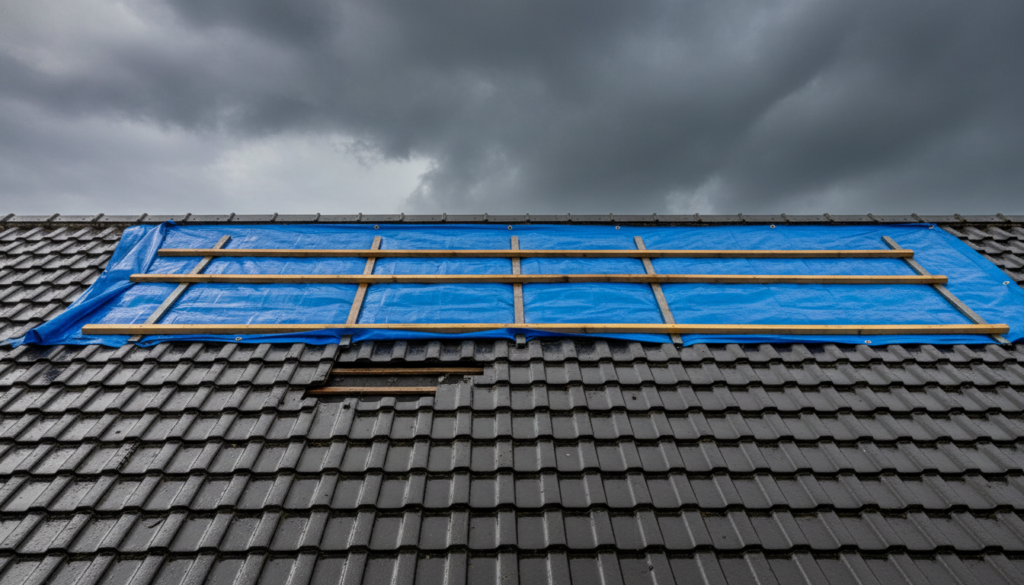
Emergency Roof Repairs Uk What To Do After Storm Damage is about making the property safe first, limiting internal damage, and then getting the roof inspected before temporary measures become long-term failures. After high wind, heavy rain, flying debris, or fallen branches, roof damage may involve loose tiles, slipped slates, torn flat roof coverings, leaking flashings, blocked valleys, chimney leaks, or water entering near electrics.
A & A Roofing London helps homeowners across London, Essex, and the Hertfordshire borders respond safely, identify urgent roof risks, and move from storm control to proper repair, restoration, or replacement.
Quick Check: If storm water is entering, roof materials have moved, or tiles may fall, ask A & A Roofing London to assess storm roof damage in the UK before temporary covering, internal drying, or insurance records are treated as the final fix.
Emergency Roof Repairs Uk What To Do After Storm Damage
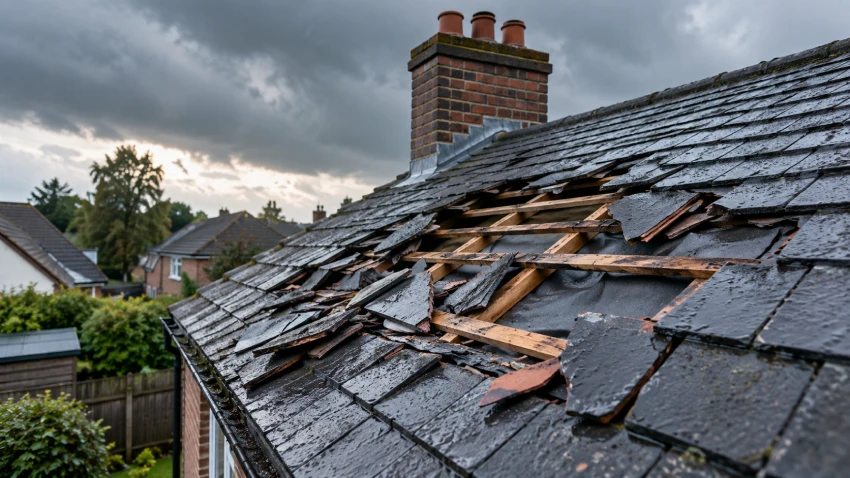
Emergency Roof Repairs Uk What To Do After Storm Damage should follow a clear order: protect people, avoid roof access, limit water damage indoors, record visible evidence, and arrange a roof inspection once conditions are safe. The Met Office says gales are the most common cause of damage and disruption in the UK and advises people not to go outside to repair damage while a storm is in progress.
| Emergency stage | What to do | What not to do | A & A Roofing London focus |
| During the storm | Stay inside, keep away from leak areas, protect people | Do not climb ladders or go onto the roof | Safety-first guidance before inspection |
| Active water entry | Use containers, move belongings, avoid wet electrics | Do not touch lights, sockets, or wet wiring | Leak route and internal risk assessment |
| Visible roof movement | Photograph from ground level where safe | Do not pull loose tiles or flashing | Tiles, slates, ridges, valleys, chimneys |
| After conditions improve | Arrange roof inspection and document damage | Do not rely on sealant patches alone | Temporary protection then permanent repair |
| Repeated or severe damage | Decide repair, restoration, or replacement scope | Do not keep patching a failing roof | Full roof condition review |
HSE says roof work is high risk and all roofs should be treated as fragile until a competent person confirms otherwise. It also identifies falls from roof edges, openings, fragile roofs, and rooflights as major causes of death and injury, which is why storm damage should not be inspected by homeowners climbing onto wet roof surfaces.
A & A Roofing London checks the storm damage and the reason water entered. A missing tile, torn flat roof membrane, lifted flashing, blocked gutter, or damaged chimney may only be the visible part of a wider roof problem.
Tile Roofing After Storm Damage
Tile roofing is one of the first areas to check after severe weather. Wind can lift tiles, break corners, move ridge-adjacent courses, or expose underlay. Broken fragments can then slide into gutters, valleys, or flat roof outlets and create secondary drainage damage.
A & A Roofing London checks whether roof tile replacement in London is enough or whether the storm has exposed failing battens, underlay, fixings, ridges, or roof edges. A single visible tile gap may hide more movement higher up the slope.
For safe homeowner observations, storm-damage evidence points help organise what can be photographed from the ground. If tiles are cracked or missing, broken tile replacement sequence gives useful context before roof-level work is planned.
Slate Roofing After High Winds
Slate roofs can lose individual slates after wind, especially where fixings, laps, or older roof details have weakened. A slipped slate can let water enter without leaving an obvious large hole from ground level.
A & A Roofing London checks slate roof repair in London by reviewing slipped slates, cracked edges, fixing condition, valleys, ridges, flashings, and internal damp marks. Slate roofs should be inspected carefully because careless access can damage sound slates and increase repair scope.
Storm damage on a slate roof should not be judged only by the number of missing slates. The inspection should check the surrounding roof covering, underlay, water path, and whether the wind exposed older maintenance issues.
Flat Roof Emergency Problems
Flat roofs are vulnerable after storms because wind can lift edges, rain can expose ponding, and debris can block outlets. A small tear, blister, open seam, or failed upstand may let water beneath the membrane and spread across the deck before it drips indoors.
A & A Roofing London checks whether flat roof replacement in London should be considered or whether a local repair can protect the roof. The inspection covers membrane condition, outlets, upstands, edge trims, ponding, deck softness, and water from higher pitched roofs.
For early visible signs, flat roof storm-surface clues help explain why bubbles, cracks, and ponding after severe weather should be checked before water spreads beneath the covering.
Pitched Roof Repair After Storms
Pitched roofs take the direct force of wind and rain. Emergency Roof Repairs Uk What To Do After Storm Damage often involves pitched roof slopes because they contain tiles, slates, ridges, hips, valleys, gutters, leadwork, and chimney junctions.
A & A Roofing London checks pitched roof repair in London by reviewing the roof slope, ridge line, hip details, valleys, gutters, tile or slate fixing, underlay, and internal signs of water entry. The aim is to find whether the storm caused a local defect or revealed wider deterioration.
The Met Office advises people to stay indoors as much as possible during storms and not to go outside to repair storm damage while the storm is in progress. That makes professional inspection after conditions improve the safer route.
Roof Restoration After Storm Damage
Storm damage does not always mean the roof needs full replacement. If the structure, underlay, and main covering are still serviceable, roof restoration may help bring the roof back into reliable condition.
A & A Roofing London assesses storm damage to roofs in the UK by checking tiles, slates, flat roof sections, leadwork, chimneys, gutters, moss, valleys, ridges, and internal damp evidence. Restoration may include replacing damaged coverings, correcting drainage, improving leadwork, and repairing storm-exposed weak points.
Where weather has affected the whole roof surface, wind-rain-frost roof stress factors provide useful context. Storms often expose old weaknesses as much as they create new ones.
What to Do Indoors When Water Enters
If water is entering the home, the safest response is to protect people first. Keep children and pets away, move belongings where safe, use containers for drips, avoid sagging ceilings, and do not touch wet electrics.
Electrical Safety First advises switching off the electricity supply at the fuse box only if it is safe to do so when flooding or water damage creates electrical risk. It also advises getting professional advice from a registered electrician where there are signs of water inside the consumer unit or signs of arcing or overheating.
A & A Roofing London can trace the roof leak after immediate safety risks are controlled. For understanding likely sources, roof leak source mapping factors help connect internal stains with roof defects such as tiles, slates, flashings, valleys, chimneys, gutters, and flat roof seams.
Roof Repairs: Temporary vs Permanent
Emergency roof repairs often begin with temporary protection, but temporary work should never be treated as the full solution. A tarp, emergency covering, small patch, or short-term weatherproofing can reduce immediate water entry, but it does not confirm that underlay, battens, decking, insulation, or flashings are sound.
A & A Roofing London separates emergency stabilisation from permanent repair. The team checks what failed, how water entered, what has been exposed, and whether hidden layers need attention.
| Emergency measure | What it can do | What it cannot prove |
| Temporary covering | Reduce immediate rain entry | Whether underlay, battens, or deck are dry |
| Replacing a missing tile | Close one visible gap | Whether neighbouring tiles are loose |
| Patching flat roof split | Slow water entry | Whether moisture has spread under membrane |
| Clearing an outlet | Restore water flow | Whether drainage damage already occurred |
| Sealing a junction | Reduce surface entry | Whether flashing detail is correctly formed |
For wider decision-making, damage-scope decision framework helps homeowners understand when a local repair is enough and when larger work should be planned.
Re-Roofing and Replacement Decisions
Storm damage can move from emergency repair to roof replacement when defects are widespread, underlay has failed, roof decking is soft, battens are damaged, tiles or slates are repeatedly moving, or water has reached hidden layers.
Planning Portal states that most roof replacement work on existing buildings needs Building Regulations approval. It also notes that changing roof covering material may need approval for structural stability, fire safety, and energy efficiency, and that re-covering should include improving thermal insulation because a roof is a thermal element.
A & A Roofing London checks whether a storm-damaged roof should be repaired, restored, or replaced. For homeowners planning next steps, re-covering threshold indicators help frame when repeated emergency repairs are no longer a sensible route.
Lead Work, Chimneys, and Storm Leaks
Leadwork and chimneys are common storm leak points. Wind-driven rain can push water behind weak flashing, lift poorly fixed lead, expose cracked pointing, or drive rain around a chimney stack.
A & A Roofing London checks lead aprons, step flashings, soakers, back gutters, chimney pointing, tiles, slates, valleys, and roof edges. A leak near a chimney may involve the stack, the flashing, the roof covering, or drainage behind the stack.
For junction-led leaks, flashing-lap fault markers and chimney water-entry evidence are useful supporting topics. If ridge movement appears near the leak, ridge-line storm movement factors should also be checked.
Valleys, Gutters, and Storm Water Flow
Storms often overload valleys and gutters. Leaves, moss, tile fragments, broken mortar, and wind-blown debris can collect quickly, blocking the water route and pushing rain beneath tiles, slates, flashing, or roof edges.
Planning Portal defines roof drainage as the above-ground system of gutters and rainwater pipes that carries rainwater from the roof. Storm response should therefore include gutters, downpipes, outlets, and valley discharge, not just the broken tile or visible ceiling stain.
A & A Roofing London checks whether emergency damage is really a drainage failure. Supporting topics include gutter overflow after debris fall, two-slope valley overflow clues, valley blockage after storms, and poor water-flow damage routes.
Loose Tiles and Falling-Material Risk
Loose tiles after storms are urgent because they can fall from height or expose the roof to more water during the next rainfall. A missing tile may be visible from the ground, but the surrounding area may also be loosened.
A & A Roofing London checks loose tiles, tile fragments, roof edges, ridge lines, gutter debris, underlay exposure, and internal damp evidence. The repair should address why the tile moved, not only replace the visible piece.
For homeowner safety, loose tile hazard patterns are relevant. If tile movement is paired with broader warning signs, roof damage symptom groups can help organise what needs inspection.
Roof Safety Limits for Homeowners
Emergency Roof Repairs Uk What To Do After Storm Damage should not encourage DIY roof access. A wet, damaged, or wind-exposed roof is not a safe place to inspect from, especially around rooflights, flat roof edges, loose tiles, and fragile surfaces.
HSE says effective precautions are required for work on or near fragile surfaces no matter how short the work duration, including maintenance, repair, cleaning, and demolition. It also states that all roofs should be treated as fragile until a competent person confirms otherwise.
A & A Roofing London recommends safe ground-level documentation, internal checks only where safe, and professional roof inspection once weather conditions allow. For clear boundaries, roof-access safety limits is the most useful supporting topic.
Inspections and Maintenance After the Emergency
Once the immediate leak is controlled, inspection should identify what the storm damaged and what was already weak. A roof that has survived one emergency may still need follow-up maintenance before the next weather event.
A & A Roofing London checks the roof covering, underlay, insulation, flat roof deck, gutters, valleys, chimneys, leadwork, ridges, flashings, and internal damp signs. The inspection should also document visible damage, temporary measures, and areas needing permanent work.
For post-storm planning, roof inspection item sequence, inspection timing after weather, and preventive maintenance cycle help move the roof from emergency response back into planned maintenance.
Insurance Records and Repair Evidence
After storm damage, homeowners may need photos, dates, visible defect notes, and repair records. This is not a substitute for roof repair, but it can support clearer communication with insurers and contractors.
Citizens Advice explains that buildings insurance covers the cost of repairing damage to the structure of a property, while the Association of British Insurers advises people who suffer storm damage to contact their insurer as soon as possible for advice.
A & A Roofing London can help document roofing observations during inspection: missing tiles, slipped slates, torn flat roof surfaces, lifted flashing, blocked gutters, valley debris, chimney leaks, and water-entry routes. Records should focus on what is visible and verified, not guesses.
Poor Workmanship After Emergency Patching
Emergency roof work sometimes fails because temporary patching becomes permanent. Warning signs include smeared sealant, mismatched tiles, unsecured flashing, poorly fixed temporary coverings, short-lived patches, and leaks that return in the next rainfall.
A & A Roofing London checks whether previous emergency work controlled the leak safely or concealed the real defect. This matters around flashings, chimneys, valleys, flat roof seams, ridges, and gutters because water may travel behind the visible patch.
For follow-up checks, workmanship evidence checkpoints help homeowners identify details that should be reviewed before accepting more repair work.
Emergency Roof Repairs Uk What To Do After Storm Damage Area Coverage
Local roof access, property age, storm exposure, roof pitch, chimneys, valleys, flat roof extensions, and drainage routes all affect emergency storm response. A & A Roofing London covers North London, Essex, and the Hertfordshire borders, helping homeowners move from safe first steps to proper roof inspection, repair, restoration, or replacement.
North London
In North London, Emergency Roof Repairs Uk What To Do After Storm Damage often involves terraced homes, shared rooflines, chimney stacks, rear flat roof extensions, tiled slopes, slate details, and restricted access. A & A Roofing London can check whether storm water is entering through loose tiles, failed flashing, valleys, gutters, chimneys, or flat roof sections.
Hertfordshire Borders
Across the Hertfordshire borders, Emergency Roof Repairs Uk What To Do After Storm Damage may involve wind-exposed tiled roofs, slate sections, tree debris, blocked gutters, valley overflow, and older roof details. A & A Roofing London checks the visible storm impact and the hidden water route before recommending temporary protection, repair, restoration, or replacement.
Essex
In Essex, Emergency Roof Repairs Uk What To Do After Storm Damage can appear after high winds, heavy rain, frost, fallen debris, or repeated weather exposure. A & A Roofing London can inspect pitched roofs, flat roofs, tiles, slates, gutters, valleys, leadwork, chimneys, and internal damp evidence so the repair follows the real source of damage.
Final Roofing Decision
Emergency Roof Repairs Uk What To Do After Storm Damage should move in stages: make people safe, avoid roof access, control internal water where safe, document visible damage, and arrange professional roof inspection when conditions allow. Temporary measures may reduce immediate water entry, but they do not confirm that the roof is sound.
A & A Roofing London can assess storm roof damage in the UK by checking tiles, slates, flat roof coverings, pitched roof slopes, ridges, valleys, gutters, flashings, chimneys, underlay, decking, insulation, and internal leak evidence. The right outcome may be emergency weatherproofing, targeted repair, roof restoration, or planned replacement where the storm has exposed wider roof failure.
FAQs About Emergency Roof Repairs Uk What To Do After Storm Damage
What should I do first after storm roof damage?
The first step is safety. Stay indoors during the storm, keep people away from leak areas, avoid wet electrics, move belongings where safe, and photograph visible roof damage from ground level after conditions improve. The Met Office advises people not to go outside to repair damage while a storm is in progress. A & A Roofing London can inspect the roof once it is safe.
Should I climb onto the roof after storm damage?
No. Homeowners should not climb onto a roof after storm damage. HSE says roof work is high risk and all roofs should be treated as fragile until a competent person confirms otherwise. A storm-damaged roof may have loose tiles, wet surfaces, unstable edges, rooflight risks, or hidden weak points. Ground-level photos and internal observations are safer first steps.
What if water is coming through near lights or sockets?
Do not touch wet electrical fittings. Electrical Safety First advises switching off the electricity supply at the fuse box only if it is safe to do so where flooding or water creates electrical risk, and seeking professional electrical advice where water has reached the consumer unit or there are signs of arcing or overheating. A roof inspection should follow once the immediate electrical risk is controlled.
Are temporary roof repairs enough after a storm?
Temporary roof repairs can reduce immediate water entry, but they are not enough to prove the roof is safe or watertight. A temporary covering, patch, or replaced tile does not confirm that underlay, battens, decking, insulation, flashings, valleys, or gutters are sound. A & A Roofing London checks the underlying cause before recommending permanent repair, restoration, or replacement.
When does storm damage mean roof replacement?
Storm damage may mean roof replacement when the damage is widespread, roof coverings are repeatedly moving, underlay or battens have failed, a flat roof deck is soft, leaks return after patching, or the storm exposed wider roof deterioration. Planning Portal states that most roof replacement work on existing buildings needs Building Regulations approval.
Can blocked gutters or valleys cause storm leaks?
Yes. Storms can wash leaves, moss, grit, broken tile fragments, and mortar into gutters and valleys. Planning Portal describes gutters and rainwater pipes as part of the roof drainage system, so blocked drainage can force water back beneath roof coverings or into roof edges. A & A Roofing London checks drainage as part of storm repair diagnosis.
Should I contact my insurer after storm roof damage?
It is usually sensible to record visible damage and contact your insurer promptly where you may need to make a claim. Citizens Advice explains that buildings insurance covers repair damage to the structure of your property, and ABI advises people who suffer storm damage to contact their insurer as soon as possible for advice.
What should A & A Roofing London inspect after storm damage?
A & A Roofing London should inspect the full storm-damage route: tiles, slates, ridges, valleys, gutters, flat roof surfaces, chimneys, leadwork, flashings, underlay, decking, insulation, loft damp, and internal ceiling stains. The inspection should identify whether the storm caused a local defect or exposed wider roof deterioration that needs repair, restoration, or replacement.