
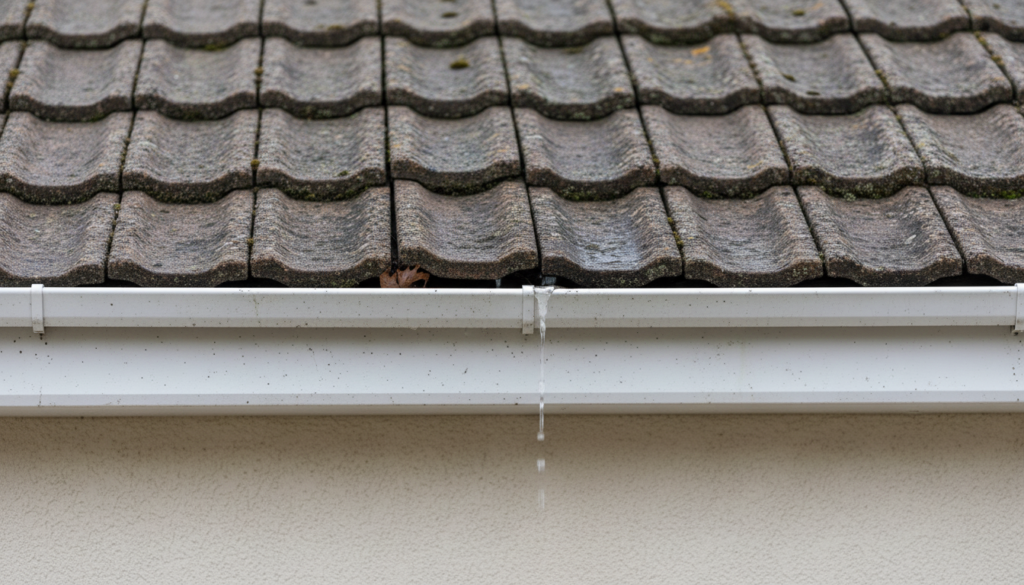
Roof Flashing Problems UK usually start where the roof changes direction or meets another surface. Chimneys, walls, valleys, rooflights, dormers, parapets, flat roof upstands, and abutments all need flashing to guide water away from vulnerable joints. When flashing lifts, cracks, slips, corrodes, pulls out of a chase, or is covered with temporary sealant, water can pass behind the roof covering and travel into ceilings, loft timbers, insulation, or masonry.
A & A Roofing London helps homeowners across London, Essex, and the Hertfordshire borders trace flashing faults properly and choose the right repair, restoration, or replacement route.
Quick Check: If flashing is lifting around a chimney, wall, valley, rooflight, or flat roof edge, ask A & A Roofing London to trace the junction through a roof inspection in the UK before sealant or patching traps water behind the roof covering.
Roof Flashing Problems UK: Why They Happen
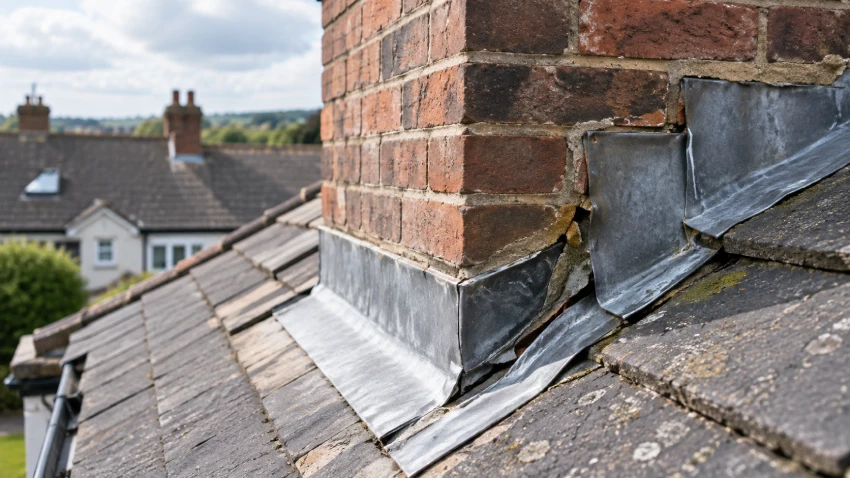
Roof Flashing Problems UK happen because flashing sits at the most complicated parts of a roof. Ordinary roof slopes shed water in one direction. Flashing has to manage water where the roof meets masonry, changes slope, surrounds a chimney, joins a flat roof, or turns into a valley.
NOCN’s roofing unit on installing pre-formed weathering flashings describes skills including forming and installing metal and supplied flashings and weathering to roof junctions, as well as positioning and dressing weathering to slates and tiles. That reflects why flashing work is a specialist detail, not just a strip of material fixed over a gap.
| Flashing problem | Where it appears | Why it leaks | A & A Roofing London check |
| Lifted flashing edge | Chimneys, walls, abutments | Wind-driven rain gets underneath | Fixing, chase, lap, and surrounding covering |
| Cracked leadwork | Chimney aprons, valleys, roof junctions | Splits open a direct water path | Age, movement, code suitability, support |
| Sealant-heavy patch | Around stacks, rooflights, flat roof edges | Sealant hides failed weathering detail | Original flashing route and water exit |
| Poorly chased flashing | Masonry walls and chimney stacks | Water enters behind the lead | Chase depth, wedging, pointing, cover |
| Blocked back gutter | Behind chimneys or roof junctions | Water backs up behind the stack | Debris, outlet route, flashing, roof slope |
| Failed upstand detail | Flat roof edges and parapets | Water moves behind the membrane | Upstand height, laps, trims, drainage |
A & A Roofing London checks the flashing and the roof around it. A flashing fault may be caused by damaged tiles, slipped slates, blocked gutters, poor valley flow, roof movement, bad workmanship, or storm damage. Repairing only the visible lead or sealant line may leave the true water path active.
Tile Roofing and Flashing Edges
Tile roofing often shows flashing problems around chimneys, wall abutments, dormers, rooflights, and valleys. Roof tiles need clean laps and correct cuts where they meet leadwork or other flashing details. If tiles are poorly cut, lifted, cracked, or pushed too tightly against a wall, water can be forced behind the flashing line.
A & A Roofing London checks tile roofing in London by reviewing the tile courses around the flashing, not just the flashing material itself. The inspection includes tile cuts, battens, underlay, side laps, soakers, mortar, and water staining inside the roof space.
Where flashing failure appears beside a tile roof, the useful supporting topic is displaced covering warning signs. Loose or broken tiles can change how rain reaches the flashing, especially after wind.
Slate Roofing and Flashing Detail
Slate roofing needs careful flashing work because slates rely on accurate laps, secure fixings, and clean water shedding. A slate roof can leak around a chimney or abutment even when most of the slate covering still looks sound.
A & A Roofing London checks slate roof maintenance in the UK around flashing by looking at slipped slates, cracked slate edges, soakers, step flashing, underlay, roof pitch, and internal damp signs. Older slate roofs may also have previous leadwork repairs that no longer match the roof movement or water path.
The Lead Sheet Training Academy describes intermediate leadwork training as covering repair and maintenance of leadwork used in roofing, cladding, and weathering applications, including soakers and step flashings. That is relevant because slate flashing work often depends on concealed soakers and carefully formed step details, not only the visible cover flashing.
Flat Roofs, Upstands, and Flashing Leaks
Flat roofs have flashing-related risks at upstands, parapets, rooflights, wall junctions, trims, and areas where a pitched roof drains onto a flat section. Because flat roofs have shallow falls, water can sit longer against weak details than it would on a pitched roof.
A & A Roofing London checks flat roofs in London for failed upstands, split edges, open laps, poor trims, outlet restrictions, ponding, and cracks near flashing junctions. A leak may appear to be a membrane issue when the real weakness is where the flat roof turns up against a wall.
If the flat roof surface is also showing early deterioration, membrane stress around roof edges is a useful supporting topic. Flashing work should not be isolated from the condition of the waterproofing surface below it.
Pitched Roof Maintenance Around Junctions
Pitched roof maintenance should always include flashing checks because pitched roofs carry rainwater toward valleys, gutters, chimneys, dormers, and wall abutments. Flashing fails faster where water is concentrated or where wind drives rain under exposed edges.
A & A Roofing London checks pitched roof maintenance in the UK by reviewing roof pitch, tile or slate condition, valleys, ridge lines, gutters, chimney bases, abutments, and internal staining. Flashing performance depends on how the whole roof moves water.
Planning Portal explains that with pitched roofs, the type of tile or slate used is partly governed by roof steepness or shallowness. That matters because flashing details must match the roof pitch and covering, not just the wall or chimney they meet.
Lead Work and Flashing Function
Leadwork is one of the main areas behind Roof Flashing Problems UK. Lead is commonly used to weather junctions, but it must be formed, fixed, lapped, chased, supported, and dressed correctly. When lead is too short, poorly chased, unsupported, split, or sealed over, water can pass behind it.
A & A Roofing London checks lead aprons, step flashings, cover flashings, soakers, back gutters, valleys, and abutments. The aim is to see whether the leadwork is actually directing water back onto the roof covering.
For homeowner understanding, lead weathering detail concepts explain why flashing protects junctions rather than the main roof slope. This is especially useful where a leak sits near a chimney, wall, rooflight, or valley.
Chimneys and Flashing Failure
Chimneys are one of the most common places to find flashing problems. The stack interrupts the roof covering, creates several water routes, and exposes leadwork to movement between masonry and roof materials.
A & A Roofing London checks chimney aprons, step flashing, soakers, back gutters, lead chases, pointing, flaunching where visible, surrounding tiles or slates, and damp near the chimney breast. A chimney leak may be caused by flashing, masonry, roof covering movement, or blocked drainage behind the stack.
For stack-related symptoms, chimney breast damp tracing is the most relevant supporting topic. It helps connect internal damp marks with the chimney-to-roof junction instead of assuming the main roof slope is the source.
Roof Restoration and Flashing Condition
Roof restoration can include flashing correction, but it should not cover over active flashing failure. Cleaning, coating, tile replacement, repointing, or surface improvement will not solve water entry if the flashing still allows water behind the roof covering.
A & A Roofing London links roof damage in the UK with junction condition. Before restoration, the team checks leadwork, chimneys, gutters, valleys, ridges, tiles, slates, flat roof sections, and internal damp evidence.
Flashing is often the detail that decides whether restoration is realistic. If the roof covering is sound but flashing has failed locally, targeted repair may be enough. If the flashing failure has exposed rotten battens, saturated insulation, failed underlay, or repeated leaks, the scope may need to widen.
Roof Repairs for Flashing Problems
Roof flashing repairs should begin with water-path diagnosis. A visible split, lifted edge, or sealant patch may be only the final clue. The water may be entering from a higher valley, blocked gutter, failed chimney joint, or loose tile above the flashing.
A & A Roofing London traces how water reaches the flashing, how it should leave, and where it is entering the building. This avoids replacing flashing that is only being overwhelmed by another drainage or roof-covering issue.
| Leak clue | Possible flashing-related source | Repair focus |
| Damp beside chimney breast | Failed step flashing, soakers, or back gutter | Stack-to-roof junction |
| Stain below wall abutment | Poor cover flashing or chase | Wall junction and tile or slate edges |
| Leak below rooflight | Failed apron, side flashing, or upstand | Rooflight perimeter and surrounding covering |
| Damp after heavy rain only | Valley or gutter backing up onto flashing | Water-flow route before flashing |
| Repeated leak after sealant | Detail failure not corrected | Remove patch logic and rebuild junction |
For wider diagnosis, water-entry route groups help explain why the internal stain may not be below the visible flashing defect. If the homeowner is deciding whether the work is local or wider, repair extent decision path is a useful next step.
Re-Roofing and Replacement Decisions
Roof Flashing Problems UK do not always mean re-roofing. Local flashing correction may be enough where the roof covering, underlay, battens, decking, and structure are sound. Re-roofing becomes more likely when flashing failure is part of wider deterioration.
Planning Portal states that repairs or re-covering to an existing pitched or flat roof will not normally need a building control application where less than 25% of the total building envelope and less than 50% of the roof are affected, provided other triggers do not apply. It also notes approval may be needed where structural alterations are made, fire performance changes significantly, or the new covering increases roof weight by 15% or more.
For wider roof replacement, Planning Portal states that most roof replacement work on existing buildings needs Building Regulations approval. It also explains that changing roof covering material may require checks for structural stability, fire safety, and energy efficiency.
A & A Roofing London uses inspection findings to decide whether flashing repair, roof restoration, or replacement is the right route.
Valleys, Gutters, and Flashing Back-Up
Flashings often fail when water backs up around them. Valleys and gutters can overload flashing junctions if debris, moss, broken tile fragments, or poor fall slows water flow.
Planning Portal defines roof drainage as the above-ground system of gutters and rainwater pipes. Flashing should therefore be checked alongside gutters, outlets, downpipes, and valleys because poor water flow can force water into junctions that would otherwise stay dry.
A & A Roofing London checks valley discharge, gutter overflow, blocked outlets, roof-edge staining, chimney back gutters, and flat roof drainage. For related water-flow issues, two-slope valley water load, valley channel debris signals, roof water movement faults, and eaves overflow route notes are relevant supporting topics.
Storm Damage and Flashing Movement
Storms can expose weak flashing quickly. Wind can lift loose flashing edges, driving rain can push water behind laps, and flying debris can damage roof coverings around chimneys, valleys, and roof edges.
The Met Office says gales are the most common cause of damage and disruption in the UK and advises people not to go outside to repair damage while a storm is in progress. HSE also states that roof work is high risk and that roof work includes repair, maintenance, cleaning, and demolition.
A & A Roofing London can inspect flashing after conditions are safe, checking whether the storm created a new issue or exposed an older weakness. For homeowner observations, after-storm exterior clues and first-response leak containment are useful supporting references.
Weather Exposure and Flashing Wear
UK weather can stress flashing through repeated rain, wind, frost, temperature movement, and wet-dry cycles. Flashing sits at roof junctions, so it often experiences movement from both the roof covering and the adjoining wall or chimney.
A & A Roofing London checks whether flashing has failed from age, movement, poor fixing, storm exposure, blocked drainage, or workmanship defects. Weather exposure is especially relevant around chimneys, parapets, valleys, rooflights, and roof edges.
For weather-linked deterioration, wind and frost junction stress helps homeowners understand why flashing problems may appear after seasonal weather rather than only after a single storm.
Inspections and Maintenance for Flashing
Flashing problems are easier to manage when roof inspections include junctions, not just open roof slopes. Early signs include lifted lead edges, staining below a wall, cracked pointing, sealant patches, damp near chimneys, debris behind stacks, blocked gutters, or water marks in the loft.
A & A Roofing London checks flashing during maintenance by reviewing chimneys, abutments, valleys, rooflights, flat roof upstands, gutters, tiles, slates, and internal damp evidence. The aim is to catch junction failure before water reaches hidden layers.
HSE’s fragile surface guidance says effective precautions are required for all work on or near fragile surfaces, no matter how short the duration, including maintenance, repair, cleaning, and demolition. Homeowners can record visible signs from the ground, but roof-level flashing inspection should be handled with proper access.
For maintenance planning, roof review interval planning, roof survey component list, and planned roof care tasks are useful next references.
Poor Workmanship Around Flashing
Poor workmanship is one of the main reasons flashing leaks return. Warning signs include smeared sealant, short laps, shallow chases, poorly dressed lead, missing soakers, loose edges, poor tile cuts, and flashing that does not direct water back onto the roof covering.
A & A Roofing London checks whether the flashing failure is due to age, weather, movement, or previous repair work. This matters because another patch may look tidy but fail during the next heavy rain.
For workmanship-led issues, installation defect audit cues help homeowners understand what should be documented before further work is agreed. Flashing repairs should correct the detail, not simply hide the symptom.
Ridge Tiles and Loose Tiles Near Flashing
Flashing problems can overlap with ridge tiles and loose roof tiles. A lifted ridge section, slipped tile, or broken covering above a flashing detail can change the water route and push rain into a vulnerable junction.
A & A Roofing London checks nearby ridge lines, tile courses, slate edges, battens, and underlay when flashing leaks are suspected. This prevents the repair from focusing on the flashing when the source is movement above it.
For related movement checks, ridge cap movement causes and early damage clue set can help homeowners understand when a flashing leak may be part of broader roof deterioration.
Residential Roofing and Flashing Risk
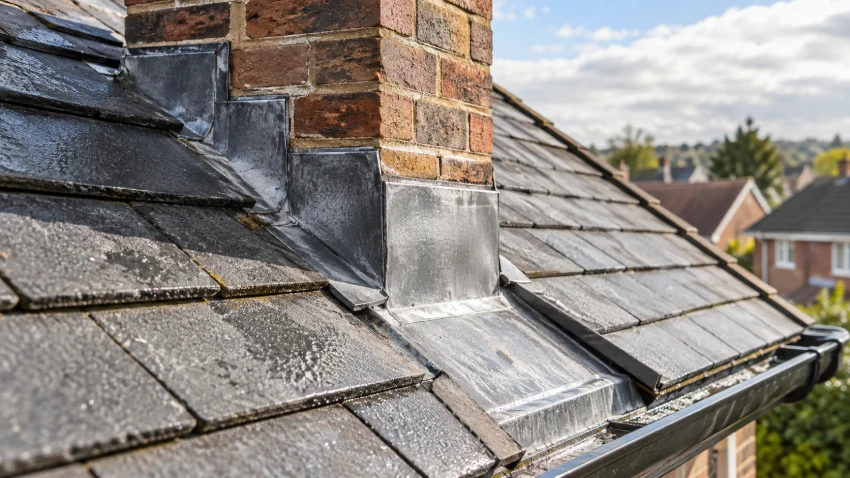
Residential roofing often includes several flashing types on one property: chimney flashing, wall abutment flashing, rooflight flashing, valley leadwork, flat roof upstands, dormer cheeks, and parapet details. Older homes may also have layers of previous repair work around these junctions.
A & A Roofing London checks flashing as part of the whole roof system. A leak near a wall may involve tiles, slates, leadwork, gutters, valleys, chimneys, flat roof membranes, or roof movement. The inspection has to follow the water route, not just the nearest visible crack.
Roof Flashing Problems UK Area Coverage
Local roof layouts, chimneys, extensions, flat roof sections, roof pitch, older masonry, and previous repairs all affect flashing performance. A & A Roofing London covers North London, Essex, and the Hertfordshire borders, helping homeowners inspect flashing leaks safely and choose repair, restoration, or replacement work based on the actual water path.
North London
In North London, Roof Flashing Problems UK often involve terraced homes, shared chimney stacks, wall abutments, dormers, flat roof extensions, and narrow roof access. A & A Roofing London can check whether damp near a wall, stack, or rooflight is caused by failed flashing, poor tile cuts, blocked drainage, or previous patch repairs.
Hertfordshire Borders
Across the Hertfordshire borders, Roof Flashing Problems UK may appear around older slate roofs, tiled pitches, chimneys, valleys, and weather-exposed roof junctions. A & A Roofing London checks leadwork, masonry, roof covering condition, gutters, underlay, and internal damp evidence before recommending flashing repair or wider restoration.
Essex
In Essex, Roof Flashing Problems UK can become visible after wind-driven rain, frost, gutter overflow, moss debris, or ageing leadwork. A & A Roofing London can inspect chimney flashing, roof edges, valleys, flat roof upstands, tiles, slates, and drainage routes so the repair follows the real source of water entry.
Final Roofing Decision
Roof Flashing Problems UK should be handled before water reaches hidden roof layers. A small lifted edge or cracked flashing joint can allow moisture to travel behind tiles, slates, underlay, battens, insulation, masonry, and ceilings.
A & A Roofing London can trace flashing faults through a roof inspection in the UK that checks chimneys, leadwork, tiles, slates, flat roofs, pitched roof junctions, valleys, gutters, rooflights, ridges, and internal damp evidence. The right result may be local flashing repair, leadwork correction, roof restoration, drainage improvement, or wider replacement where the surrounding roof system has failed.
FAQs About Roof Flashing Problems UK
What are the common signs of Roof Flashing Problems UK?
Common signs include damp around chimney breasts, staining below wall abutments, lifted lead edges, cracked flashing, sealant patches, leaks near rooflights, water marks in the loft, or damp after wind-driven rain. A & A Roofing London checks the flashing and the surrounding tiles, slates, gutters, valleys, and internal water route because the visible stain may not be directly below the defect.
Can flashing problems cause roof leaks?
Yes. Flashing problems can cause roof leaks when water gets behind leadwork, step flashing, soakers, aprons, cover flashing, rooflight flashings, or flat roof upstands. Once water passes the junction, it can travel along underlay, battens, rafters, masonry, or insulation before appearing indoors. That is why flashing leak diagnosis should follow the water route rather than only repairing the nearest visible crack.
Is sealant enough to fix roof flashing?
Sealant may provide a short temporary measure in some situations, but it is not a proper fix for failed flashing detail. If the flashing is cracked, too short, poorly chased, badly lapped, or detached, the weathering detail may need to be corrected. A & A Roofing London checks whether the flashing is directing water correctly before recommending repair.
Are chimney flashings the most common flashing problem?
Chimney flashings are a very common problem because the chimney interrupts the roof covering and creates several water paths. Apron flashing, step flashing, soakers, back gutters, lead chases, pointing, and surrounding tile or slate cuts all need to work together. A chimney leak can also involve masonry, valleys, gutters, or roof movement, so it should be diagnosed as a roof junction rather than a single material fault.
Should homeowners climb up to inspect flashing?
No. Homeowners should not climb onto the roof to inspect flashing. HSE says roof work is high risk, and its fragile surface guidance says effective precautions are required for all work on or near fragile surfaces, including maintenance and repair. Homeowners can photograph visible signs from safe ground-level positions and arrange a roof inspection.
When do flashing problems mean roof replacement is needed?
Flashing problems may need replacement planning when the fault is repeated, widespread, connected to failed underlay, caused by roof movement, or paired with extensive tile, slate, flat roof, or timber damage. Planning Portal states that most roof replacement work on existing buildings needs Building Regulations approval, and changing roof covering material may require structural stability, fire safety, and energy efficiency checks.
Can blocked gutters or valleys damage flashing?
Yes. Blocked gutters and valleys can force water against flashing details, especially around chimneys, abutments, roof edges, and flat roof upstands. Planning Portal identifies gutters and rainwater pipes as roof drainage, so flashing should be checked with the wider drainage path. A & A Roofing London checks whether the flashing failed first or whether poor water flow overloaded it.
What should A & A Roofing London inspect around failed flashing?
A proper inspection should include the flashing material, laps, chases, fixing, pointing, surrounding tiles or slates, roof pitch, valleys, gutters, chimneys, flat roof upstands, rooflights, underlay, loft damp, and ceiling stains. A & A Roofing London checks these elements together so the repair addresses the actual entry route rather than covering a symptom.