
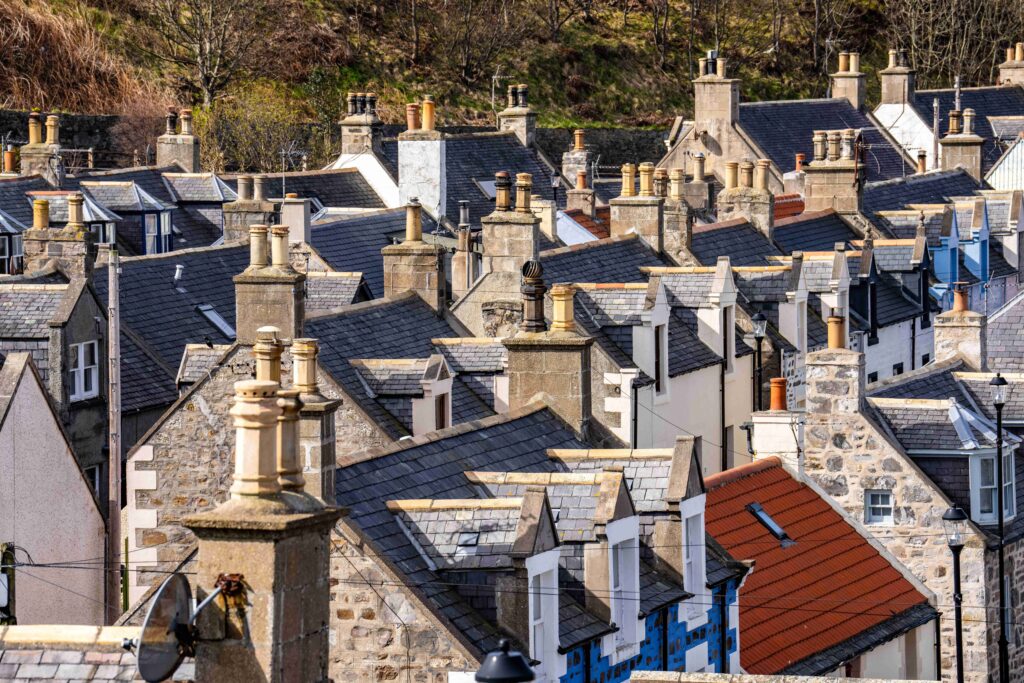
Tile Slate and Flat Roofs in UK: Key Differences
Tile, slate, and flat roofing solve different problems. Tile gives homeowners a durable pitched-roof covering with many profiles, slate offers exceptional potential longevity, while flat systems depend heavily on waterproofing design and drainage.
Roof Type Comparison
Factor | Tile Roof | Slate Roof | Flat Roof |
Typical longevity | Often several decades; some systems can reach 60–100 years | Well-installed slate can exceed 100 years and some systems may approach 150 years | Varies significantly by membrane and system; some certified modern systems can reach 35+ years |
Structural consideration | Concrete and clay tiles add significant dead load | Natural slate is durable but structural suitability still matters | Usually lighter covering systems, but deck condition is critical |
Roof design | Mainly pitched roofs | Mainly pitched roofs | Low-pitch or flat construction |
Main maintenance issue | Broken, slipped, cracked, or displaced tiles | Slipped/broken slates, fixings, flashings | Outlets, falls, seams, waterproofing, ponding |
Key advantage | Durability and broad design choice | Exceptional lifespan and traditional appearance | Efficient use of low-pitch areas and roof space |
Key limitation | Weight and individual tile damage | Higher material demands and specialist repair | Drainage and waterproofing detailing are critical |
Good fit for | Many traditional and modern pitched homes | Properties suited structurally and architecturally to slate | Extensions, garages, commercial areas, and modern low-pitch designs |
When comparing material suitability across UK roof types, avoid ranking coverings by lifespan alone. A material that theoretically lasts longer is not the right choice if the structure, pitch, detailing, or property requirements do not suit it.
The broader lifespan trade-offs between roofing materials also matter because initial durability figures do not tell you everything about maintenance, replacement cycles, or the supporting roof system.
The first question is therefore not “Which material is strongest?” It is “Which material is technically suitable for this particular roof?”
Tile Slate and Flat Roofs in UK: Tile Roofs
Tile roofing is a practical middle ground for many pitched homes. It can provide decades of service, damaged units can often be dealt with individually, and homeowners can choose from different profiles and materials.
Understanding the material profiles of UK roof tile options is useful because clay, concrete, interlocking, and plain tiles can differ considerably in weight, profile, fixing requirements, and suitability.
However, tile weight and roof condition matter. Concrete products in particular should not automatically be installed on an older structure simply because the existing covering looks similar.
Tile Roof Weight Can Change the Decision
A real concern raised by UK homeowners is whether an ageing roof can support a heavier replacement covering. That is legitimate, but it does not mean every concrete tile will overload every old roof.
Different products have different covering weights. The sensible approach is to assess the existing structure and calculate the proposed loading rather than assuming that “concrete is too heavy” or that any roof previously carrying tiles can safely carry a new system.
Signs such as visible deflection, movement, damaged timbers, or an uneven roof line deserve investigation. Understanding structural loading risks behind roof deformation helps explain why the underlying structure must be assessed before a heavier covering is introduced.
Flat-Profile Tiles Can Expose an Uneven Roof
This issue matters particularly on older London houses.
Roof timbers that have been in place for many decades may no longer create a perfectly flat plane. A very clean flat tile profile can make bows and irregularities more noticeable, while some profiled tiles may visually disguise minor variations.
That does not mean flat-profile tiles are unsuitable for every old property. It means the roof plane should be checked before appearance becomes the deciding factor.
The decision factors for choosing roof tile materials should therefore include pitch, structural capacity, weight, exposure, and compatibility rather than colour alone.
Tile Damage Does Not Always Mean Reroofing
A few cracked, slipped, or storm-damaged tiles do not automatically mean the complete covering has failed.
The condition of the battens, underlay, flashings, ridge details, fixings, and surrounding tiles matters. If deterioration is localised, targeted repair may be more appropriate. If nearby tiles break or loosen whenever work begins, that can indicate a wider age or condition problem.
When comparing tile or slate roofing, the condition of the complete roof system matters more than simply counting broken units.
For pitched systems, regular pitched roof maintenance can help reveal displaced coverings, deteriorated junctions, and developing structural concerns before they become larger failures.
Project scope also affects the decision. The budget drivers for tiled roof projects include roof size, access, material selection, detailing, and labour rather than the tile itself alone.
Tile Slate and Flat Roofs in UK: Slate Roofs
Slate is often chosen for its exceptional service life, natural appearance, and suitability for many traditional buildings. Properly selected and installed slate can remain serviceable for generations.
That durability should not be confused with being indestructible. Slates can still slip, crack, lose fixings, or be damaged by inappropriate access.
Slate Longevity Is Its Strongest Advantage
One of the recurring themes in homeowner discussions is how long an existing slate roof can remain functional. Reports of roofs exceeding a century are credible because quality slate can provide exceptionally long service when the supporting roof and detailing remain sound.
The benefits of slate therefore extend beyond appearance. Longevity can reduce how often the primary roof covering needs wholesale replacement.
Reviewing the service-life factors for natural slate roofing also shows why the slate itself should not be considered separately from fixings, battens, flashings, and structural timber.
Flashings, nails, battens, underlay, valleys, ridges, and structural timbers can deteriorate on a different timetable. A century-old slate does not guarantee that every component underneath it has the same remaining life.
Repair Slate Before Assuming It Must Go
A slipped or damaged slate can often be treated as a local repair problem.
This is especially important on older properties where replacing a complete historic covering could be unnecessary. The correct approach is to determine why the slate moved, check surrounding units, and inspect the fixing and supporting details.
Homeowners dealing with deterioration should understand the failure patterns affecting UK slate coverings before deciding whether damage is isolated or part of a wider roof-system problem.
Cleaning also requires care. Aggressive treatment or careless access can damage otherwise serviceable materials, so safe upkeep methods for natural slate matter when moss, dirt, or organic growth needs attention.
The maintenance effects of moss on roof coverings are also worth considering where shade, damp conditions, or debris create persistent organic growth.
Slate Has a Specialist-Access Consideration
Slate may last for decades without major covering failure, yet individual pieces are still vulnerable to impact.
Walking directly across a slate covering creates unnecessary risk because concentrated loads can crack or dislodge units. Appropriate roof-access equipment should be used when inspection or maintenance is required.
This is an important distinction: long lifespan does not mean zero maintenance or unlimited physical strength.
Tile Slate and Flat Roofs in UK: Flat Roofs
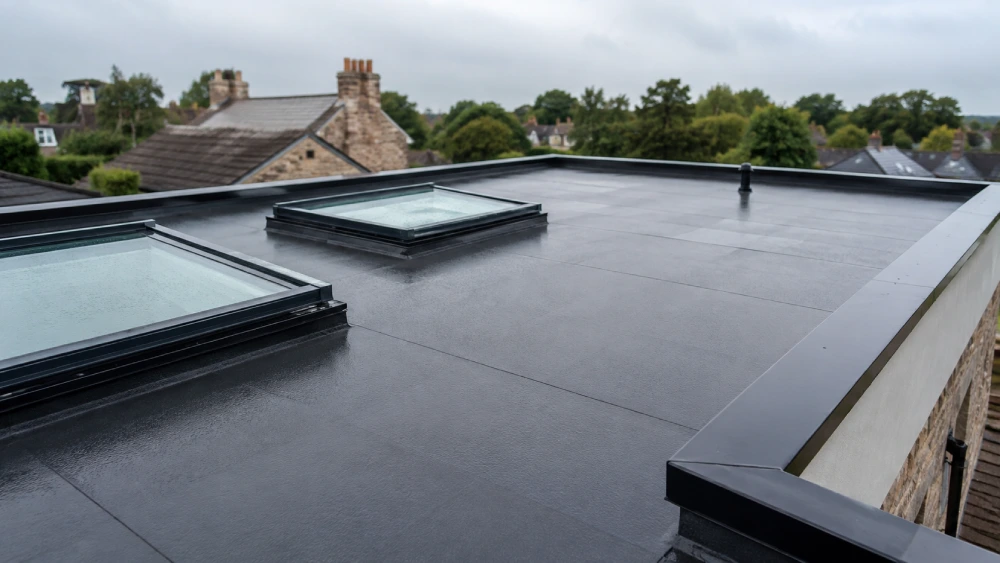
A flat roof solves a different design problem from tile or slate. It is particularly useful where a low roof profile is required, including extensions, garages, commercial areas, and some modern homes.
Its performance depends less on individual overlapping units and more on waterproofing continuity, falls, outlets, edge detailing, and installation quality.
Flat Roof Lifespan Depends on the System
A common comparison gives flat roofs a blanket lifespan of only 10–25 years. That is too simplistic for modern UK systems.
Different membranes and waterproofing products have different assessed service lives. Some current certified single-ply systems are designed for service lives beyond 30 years when correctly specified, installed, and maintained.
The useful comparison is therefore not simply:
tile = long life
slate = very long life
flat = short life
Instead, identify the specific flat-roof system, its certification, detailing requirements, installation quality, and maintenance needs.
Drainage Is the Critical Flat-Roof Issue
A flat roof is not normally designed as a perfectly level waterproof tray.
It needs appropriate falls that move rainfall toward outlets. Current UK flat-roof guidance places significant emphasis on finished falls, drainage design, and avoiding excessive ponding.
Poor falls can leave areas of standing water. Blocked outlets can make the problem worse, particularly during prolonged rainfall.
That means anyone comparing a pitched or flat roof should consider more than appearance and installation space. Drainage design is fundamental to long-term performance.
Weather exposure matters too. Understanding roof covering behaviour in British weather helps show why rain, wind, frost, and persistent moisture should influence material and detailing decisions.
Flat Roofs Need Different Maintenance
Tile and slate inspections often concentrate on displaced individual units. Flat-roof checks focus more on the continuous waterproofing surface and its details.
Look for:
- blocked or restricted outlets
- persistent standing water
- damaged seams or laps
- punctures
- edge deterioration
- failed flashings
- surface damage around roof-mounted equipment
- changes to the roof deck beneath the waterproofing
A well-designed flat roof should move water effectively rather than relying on the membrane to tolerate permanent ponding.
Tile Slate and Flat Roofs in UK: Repair or Replace?
Homeowners often face this decision after a storm, leak, or inspection. Visible damage can look dramatic, but the number of broken roof coverings alone does not determine whether total replacement is justified.
The correct decision follows the cause, extent, and condition of the complete roof system.
What Storm Damage Can Reveal
Strong winds can displace ridge components, tiles, or slates. Falling materials can then damage neighbouring sections.
A particularly useful homeowner experience involved storm damage followed by further tiles becoming unstable during repair. That situation shows why treating only the immediately visible damage can sometimes miss a broader problem.
After severe weather, checking roof covering vulnerabilities after severe storms helps identify displaced tiles, broken coverings, damaged ridges, flashings, and signs that surrounding sections have also been affected.
Roof Repair or Replacement Checks
Check | Repair May Be Reasonable When | Wider Restoration or Replacement May Be Needed When |
Broken tiles/slates | Damage is isolated and matching units can be securely replaced | Breakage is widespread or surrounding coverings fail during repair |
Flashings | Defect is localised and surrounding roof remains sound | Multiple junctions or major details are failing |
Underlay | Local area can be accessed and repaired effectively | Underlay deterioration is extensive |
Roof structure | Timbers remain structurally sound | Sagging, significant movement, decay, or structural weakness is found |
Fixings | A small number have failed | Fixing failure is widespread across an ageing covering |
Storm damage | Damage is limited to defined areas | Storm has exposed extensive pre-existing deterioration |
Overall age | Covering remains serviceable | Multiple components are reaching the end of usable service together |
A diy roof restoration process should still begin by identifying what has actually failed rather than assuming every old or damaged roof needs complete replacement.
Repairing a sound roof is different from repeatedly patching a roof whose covering, fixings, underlay, and structure are all deteriorating at once.
Tile Slate and Flat Roofs in UK: How to Choose
By this stage, the trade-off becomes clearer. The right roof is the one that matches the physical building and the owner’s realistic expectations for maintenance and lifespan.
Use This Decision Order
- Check the roof design and pitch.
Roof coverings have minimum pitch requirements. A material that works on one pitched roof may not be suitable for another. - Check structural capacity.
Understand the weight of the proposed covering and whether existing rafters, trusses, battens, and supporting elements are suitable. - Check the existing condition.
Determine whether problems are isolated or part of widespread deterioration. - Compare realistic service life.
Do not use one generic lifespan figure for every tile, slate, or flat-roof product. - Consider maintenance access.
Slate and tile can be damaged by poor access, while flat roofs require continued attention to waterproofing and drainage. - Match the roof to the property.
Traditional slate may suit one building, tiles another, and a modern membrane system another. - Check planning constraints where relevant.
Older, listed, or conservation-area properties may require closer attention before changing the roof’s material or appearance.
Which Roof Usually Fits Which Priority?
Choose tile roofing when you need a durable pitched covering with broad material and profile choices, provided the proposed product suits the roof structure and pitch.
Choose slate roofing when long potential lifespan and traditional appearance are priorities and the roof is suitable for the selected slate system.
Choose a flat-roof system when the building requires a low-pitch design and you are prepared to give drainage, waterproofing specification, and inspection the attention they require.
There is no universal winner. Technical suitability beats theoretical lifespan.
Choose the Roof That Fits the Building
Before changing your roof covering, establish what the structure and pitch can actually support.
Compare the material, structural load, drainage, expected maintenance, repairability, and exposure rather than selecting a system on appearance or theoretical lifespan alone.
The objective is not to choose the material with the longest headline lifespan. It is to install a roof system that works properly with the property underneath it.
Frequently Asked Questions
Can Solar Panels Go on Tile Slate and Flat Roofs in UK?
Yes, tile slate and flat roofs in UK properties can often accommodate solar panels, but the roof should be assessed before installation. The covering, structure, fixings, and waterproofing details need to be in suitable condition.
An older roof that already requires significant repair may be better dealt with before panels restrict access. With slate or tile, mounting work must avoid unnecessary breakage. On a flat roof, the proposed solar arrangement must also account for waterproofing, loading, and drainage routes.
Can You Walk on Tile Slate and Flat Roofs in UK?
Walking directly on tile slate and flat roofs in UK is not a good general maintenance strategy. Tile and slate units can crack or move when concentrated weight is applied incorrectly, while flat-roof membranes can be punctured or damaged by inappropriate access.
Roof work should use suitable access equipment and methods for the particular covering. A material can be highly durable against weather but still vulnerable to concentrated foot traffic in the wrong place.
Can Tile Slate and Flat Roofs in UK Leak Even When They Look Fine?
Yes. Tile slate and flat roofs in UK can develop leaks from details that are difficult to see from ground level. Flashings, junctions, fixings, underlay, penetrations, outlets, and waterproofing details may fail while the visible covering still appears largely intact.
That is why a leak should be diagnosed rather than blamed automatically on the main roof material. Replacing good tiles or slates will not solve water entry caused by a failed flashing or another underlying detail.
Do Conservation Rules Affect Tile Slate and Flat Roofs in UK?
They can. Changes to tile slate and flat roofs in UK properties may require additional consideration where a building is listed or located within a conservation area. The existing roof material, colour, profile, and overall appearance can all become relevant.
Homeowners should establish the property’s status and check applicable local requirements before replacing a traditional covering with something noticeably different. This is particularly important for older London housing and buildings where the roof contributes to historic character.
Does Installation Quality Matter for Tile Slate and Flat Roofs in UK?
Yes. Installation quality is fundamental to tile slate and flat roofs in UK because the covering works as part of a complete system. Good materials cannot compensate for poorly formed flashings, unsuitable fixings, bad drainage, incorrect pitch, or weak detailing.
For flat roofs, waterproofing continuity and outlets are particularly important. Tile and slate roofs depend on correct laps, fixings, battens, junctions, and supporting construction. Material choice and workmanship should therefore be assessed together.
Which Tile Slate and Flat Roofs in UK Need Most Maintenance?
There is no single answer because tile slate and flat roofs in UK need different types of attention. Tile roofs may need checks for cracked or displaced units. Slate roofs can require attention to slipped slates, fixings, flashings, and safe access.
Flat roofs place more emphasis on waterproofing condition, outlets, falls, and ponding. A well-designed roof may need relatively little intervention, but none of these systems should be treated as permanently maintenance-free.
What Should Be Checked After Storm Damage to Tile Slate and Flat Roofs in UK?
After severe weather, tile slate and flat roofs in UK should be checked for more than the first visible defect. Tile and slate roofs may have displaced ridge materials, broken coverings, damaged flashings, or neighbouring units loosened by impact.
Flat roofs may suffer membrane, edge, flashing, or drainage damage. If several surrounding components become unstable during repair, investigate whether the storm has exposed broader age-related deterioration instead of continuing with isolated patches.