
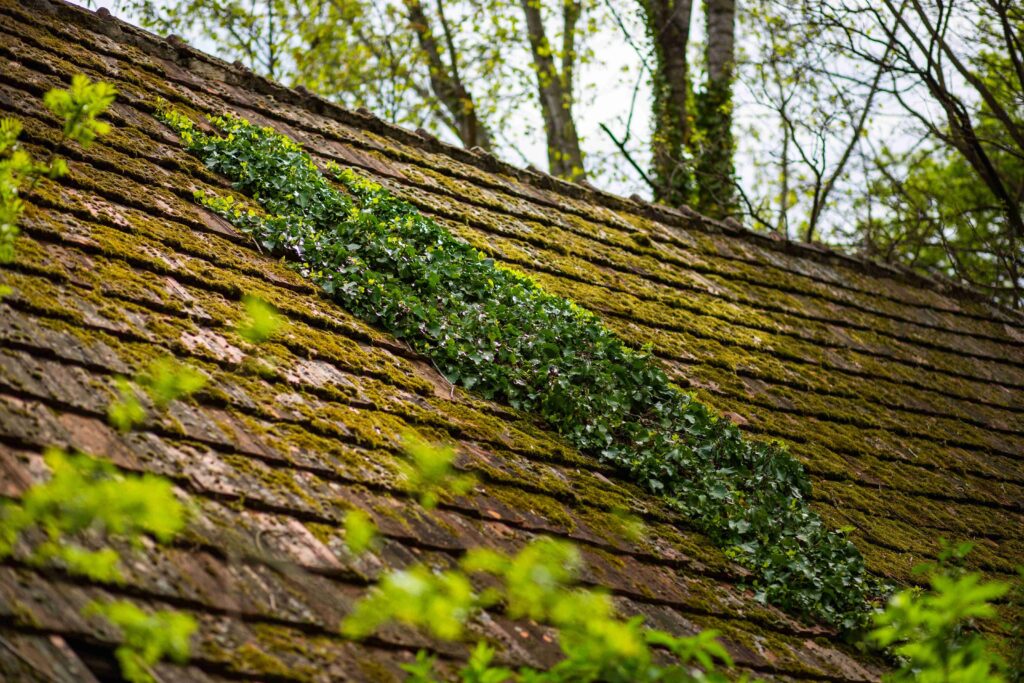
What Causes Moss on Roof: Key Factors
Moss does not appear because of one isolated defect. It establishes where spores meet moisture, shade, accumulated dirt, and a surface capable of holding them long enough to grow.
Main Roof Moss Factors
Factor | Why It Encourages Moss | What to Check |
Shade | Reduces sunlight and slows drying | North-facing slopes, trees, nearby buildings |
Persistent moisture | Keeps the surface damp for longer | Slow drainage, low pitch, sheltered areas |
Organic debris | Gives spores material to establish in | Leaves, twigs, dirt, pollen |
Rough surfaces | Hold dirt and moisture more easily | Weathered concrete, clay and textured coverings |
Nearby trees | Create shade and drop organic matter | Overhanging branches and dense foliage |
Roof orientation | Some slopes receive less direct sun | Moss concentrated on one elevation |
Lower roof pitch | Water can remain on the surface longer | Shallow tiled or low-pitch roof areas |
Poor drainage | Keeps roof edges and junctions wetter | Gutters, valleys and outlets |
One of the strongest real-world clues is uneven growth. If one side is covered in moss while another remains relatively clear, compare sunlight, tree cover and drying time before assuming the roofing material itself is defective.
Homeowners asking what causes moss on roofs UK should therefore begin with conditions around the roof rather than immediately looking for a chemical treatment.
Shade and Dampness Work Together
Shade alone does not create moss, but it changes how long rainwater remains on the covering.
North-facing slopes commonly receive less direct sunlight. Roof sections beneath trees or alongside taller neighbouring buildings may also remain cool and damp long after more exposed areas have dried.
That longer damp period creates a stronger environment for spores to establish.
The effect becomes clearer when comparing UK weather exposure across roofing materials. Frequent rainfall, moisture, frost and limited drying periods can affect different roof surfaces differently.
Trees Add More Than Shade
Overhanging trees create two connected problems.
First, branches and foliage reduce direct sunlight and airflow around the covering. Second, leaves, twigs, pollen and other organic debris settle into roof profiles, valleys and gutters.
That material can trap additional moisture and provide a surface where spores establish.
Cutting back suitable overhanging branches can therefore reduce both shade and debris accumulation. The objective is not removing every tree near a property but preventing dense vegetation from continually keeping the roof wet.
Surface Texture Changes Moss Growth
Not every roof covering holds water and dirt in the same way.
Concrete, clay, slate and manufactured tile surfaces have different textures and weather differently with age. Rougher areas can collect more dust, organic material and moisture than smoother coverings.
Understanding the surface differences among UK roof tile types helps explain why two neighbouring roofs exposed to similar weather may develop noticeably different amounts of growth.
This does not mean one tile material is automatically bad because moss appears on it. Surface condition, age, pitch and exposure all work together.
What Causes Moss on Roof: When It Matters
The sight of moss often creates more concern than the actual condition warrants. The important distinction is between light surface growth and heavy growth that begins to affect water flow or hides roofing defects.
Light Moss Versus Problem Moss
Roof Condition | Likely Response |
Thin isolated moss with clear drainage | Monitor during routine maintenance |
Moss only on a shaded elevation | Investigate shade and drying conditions |
Moss collecting around gutters | Clear drainage and inspect surrounding covering |
Heavy growth between tile profiles | Assess whether water flow is being restricted |
Moss with broken or displaced tiles | Repair covering defects separately |
Moss combined with blocked valleys | Restore drainage promptly |
Moss on fragile ageing slate | Avoid aggressive cleaning and inspect condition first |
Heavy growth returning repeatedly | Treat the environmental cause, not only the surface |
A high-engagement homeowner discussion in the supplied research illustrates the confusion well. The roof owner had manually removed moss years earlier, only for it to return, and the discussion attracted roughly 1.1K upvotes and 285 comments.
The strongest response was not simply “clean it again.” The discussion repeatedly focused on regrowth, moisture, treatment methods, drainage, and the risk of damaging the roof during removal.
That is a more useful way to approach the problem.
Moss Holds Water
The biggest practical issue with substantial moss is its ability to retain moisture.
A thick layer can remain wet after rain and slow the movement of water toward gutters. Large clumps may also break away and enter gutters or outlets.
This does not mean every small patch is creating a leak.
Instead, judge whether growth is altering drainage, keeping an area persistently wet, or concealing another defect.
Moss Can Hide Existing Damage
A moss-covered roof can also make inspections more difficult.
A cracked tile, displaced slate or damaged fixing may sit beneath or alongside organic growth. Removing the moss does not necessarily solve that separate roofing defect.
On slate in particular, understanding slate roof damage causes beyond surface moss helps distinguish cosmetic growth from slipped slate, fixing failure, cracking or water-entry problems.
The same principle applies to tile.
Do not diagnose the roof from the colour of its surface.
What Causes Moss on Roof: Removal Risks
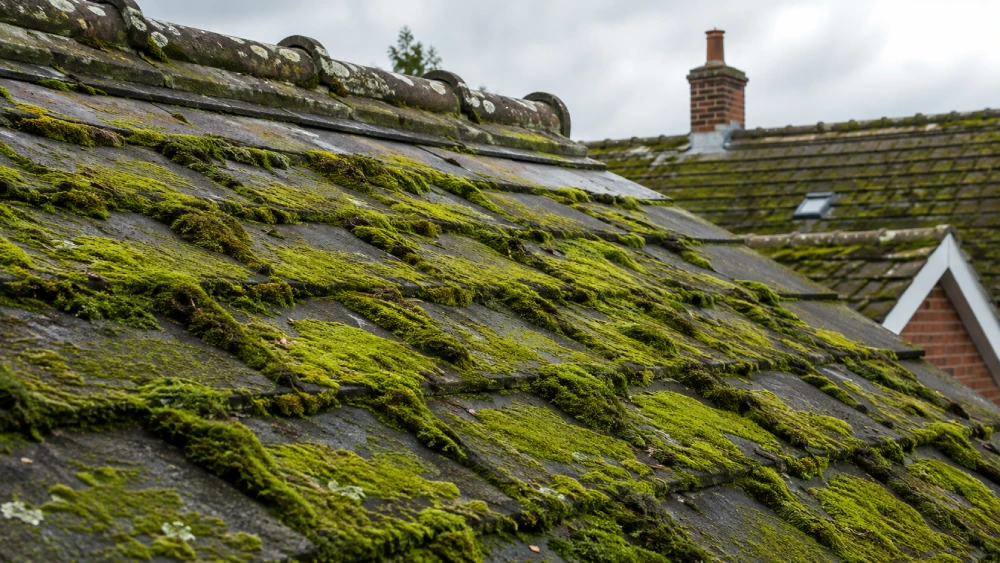
Moss removal can become more damaging than the growth itself when the wrong method is used.
The most important rule is do not choose a cleaning method simply because it removes moss fastest.
Pressure Washing Is Not the Default Answer
High-pressure washing can place unnecessary force on tiles and slates.
Water can also be driven into overlaps and detailing from directions the roof was not designed to receive it. Older or delicate coverings may be particularly vulnerable.
The high-engagement Reddit discussion repeatedly warned against pressure washing, and that concern aligns with UK roofing guidance.
A visually clean roof is not a successful outcome if the cleaning method creates cracked tiles, disturbed fixings or new water-entry points.
Aggressive Scraping Has Similar Problems
Manual removal sounds safer because it avoids high-pressure water, but aggressive scraping can still disturb the surface.
This is especially relevant where material has aged or become brittle.
For natural slate, slate roof cleaning methods for moss removal should be matched to the actual slate condition rather than treating the roof like a patio or driveway.
Good slate roof maintenance in London also means avoiding unnecessary foot traffic across fragile areas.
Working on the Roof Creates Another Risk
A mossy roof may be slippery.
Tiles and slates can also break when weight is concentrated incorrectly. This means climbing directly onto the roof to solve a cosmetic concern can introduce both personal risk and roofing damage.
Regular pitched roofing maintenance in UK should prioritise safe inspection and access rather than encouraging unnecessary walking over the covering.
What Causes Moss on Roof: Prevention
Long-term prevention is more effective when it changes the conditions supporting moss instead of relying on repeated aggressive cleaning.
The order should be:
drying → drainage → debris control → inspection → appropriate treatment where necessary
1. Reduce Excessive Shade
Where practical, trim back branches that heavily shade the roof.
Increasing sunlight can help the covering dry faster after rain. Removing overhanging branches also reduces the amount of leaves and twigs reaching the roof.
Do not treat tree removal as a universal requirement. Concentrate on branches that materially interfere with the roof, drainage or sunlight.
2. Keep Gutters and Outlets Clear
Drainage maintenance is one of the most useful preventive steps.
A clean roof surface does little good if gutters remain blocked with leaves and moss fragments.
Check:
- gutters
- outlets
- valleys
- downpipes
- roof junctions
- areas beneath nearby trees
A practical roof treatment to prevent moss should therefore be considered alongside drainage and general roof condition rather than as a stand-alone spray-and-forget solution.
3. Remove Organic Debris
Leaves, twigs and dirt hold moisture and provide material where moss can establish.
Routine debris removal reduces these conditions without requiring an aggressive full-roof clean every time a small amount of growth appears.
This is particularly useful in autumn and after periods of strong wind.
4. Inspect the Roof Regularly
Prevention becomes much easier when small changes are caught early.
Homeowners asking how often should you inspect a tile roof should think in terms of regular visual checks plus additional attention after significant storms or obvious drainage problems.
Look for:
- displaced coverings
- broken tiles
- blocked gutters
- trapped debris
- local moss concentration
- damaged flashings
- changes around valleys or outlets
5. Consider Roof-Specific Treatments Carefully
Zinc or copper systems are sometimes used to inhibit moss growth.
The important point is to treat these as roof-specific preventative options, not universal guarantees. Roof material, runoff, detailing and manufacturer guidance should be considered before installation.
Do not copy an arbitrary treatment schedule from another property.
What works on a heavily shaded roof in one climate may not be appropriate for a different roof material in London.
6. Treat Different Roof Systems Differently
Moss on a tiled pitched roof presents different questions from organic growth around a flat-roof outlet.
Comparing tile slate and flat roof maintenance differences helps explain why cleaning, drainage and access methods should match the roof construction.
The distinction between a pitched or flat roof in uk matters because flat systems rely heavily on clear outlets, waterproofing continuity and controlled drainage.
What Causes Moss on Roof: Material Effects
Roof material affects how growth appears, how easily it can be removed and how carefully the surface should be handled.
It does not create a universal ranking where one material never grows moss.
Concrete and Clay Tiles
Textured tiles can accumulate dirt and organic material, particularly as surfaces weather.
Moss may establish more easily where the roof receives little sunlight and remains damp.
If a replacement covering is being considered for other reasons, UK roof tile selection and maintenance factors should include pitch, exposure, surface characteristics, weight and expected maintenance rather than moss resistance alone.
Natural Slate
Slate can provide a very long service life.
Surface moss does not automatically mean the material itself has failed.
Reviewing slate roof lifespan factors in UK conditions is useful when an older slate roof looks weathered because the supporting fixings, battens and details may age differently from the slate.
The correct question is what condition is the roof in, not simply how much moss can I see.
Other Roof Materials
Smooth coated surfaces may give moss fewer rough areas to establish on, but every material has its own maintenance considerations.
That is why UK roofing material options by property suitability should be compared according to building type, pitch, exposure, drainage and maintenance requirements.
For longer-term context, pros cons and lifespan across roof materials can help separate surface appearance from actual material durability.
What Causes Moss on Roof: Action Plan
The best prevention plan is simple enough to repeat.
Roof Moss Problem → Action
Problem Found | First Action | What Not to Assume |
Light moss only | Monitor and keep drainage clear | Roof has failed |
Heavy shade | Assess trees and surrounding obstruction | Cleaning alone will stop regrowth |
Leaf accumulation | Remove debris and clear gutters | Moss treatment solves blocked drainage |
Heavy moss build-up | Assess safe removal method | Pressure washing is automatically appropriate |
Broken tile beneath moss | Repair the defect | Moss caused every problem |
Older slate with growth | Check slate and fixing condition | Slate has reached end of life |
Moss keeps returning | Investigate shade, moisture and debris | Stronger chemicals are always the answer |
Flat-roof growth near outlet | Clear and inspect drainage | Same method suits pitched tiles |
Severe widespread growth | Get roof condition assessed | Cosmetic cleaning should come first |
The pattern is consistent:
find the condition → remove the cause where possible → restore drainage → avoid damaging cleaning methods → maintain the roof afterwards.
That approach is far more useful than repeatedly stripping visible moss while leaving the same damp, shaded environment unchanged.
Stop Roof Moss by Fixing the Cause
If moss keeps returning, cleaning is only part of the solution.
Start with sunlight, nearby trees, organic debris, drainage and the condition of the roof covering. Then choose a removal or prevention method suited to the material instead of automatically reaching for pressure washing or aggressive scraping.
Understanding how to prevent moss on roof tiles means preventing the conditions that help heavy growth return, not simply making the roof look clean for a few weeks.
Frequently Asked Questions
Can Roof Moss Grow Under Solar Panels?
Yes, roof moss can become more noticeable around shaded areas created by roof-mounted equipment, including the spaces around some solar-panel arrangements. The relevant issue is the micro-environment: reduced sunlight, trapped debris and slower drying can create conditions where organic growth becomes easier to establish. The presence of solar panels does not automatically mean moss will develop, but drainage and debris around the installation should remain part of routine inspection.
Does Roof Moss Mean the Underlay Is Damaged?
No. Roof moss on the external covering does not by itself prove that underlay, battens or roof decking are damaged. Heavy growth can justify closer inspection where there are leaks, displaced coverings or persistent moisture, but those defects need their own evidence. Do not assume that visible moss proves hidden structural failure. Roof condition should be assessed from the covering, drainage, internal signs of water ingress and supporting components together.
Can a New Roof Develop Roof Moss?
Yes. Roof moss is influenced heavily by environmental conditions, so even a relatively new roof can develop growth if it remains shaded, damp and exposed to organic debris. Age can make some surfaces rougher, but roof age is not the only factor. A new north-facing slope beneath dense trees may develop moss sooner than an older roof that receives strong sunlight and dries quickly after rain.
Does Roof Moss Grow Faster on Concrete Tiles?
Roof moss can establish readily on some concrete tile surfaces because textured or weathered finishes can retain dirt and moisture. That does not mean every concrete roof will develop heavy moss or that concrete is an unsuitable roofing material. Orientation, pitch, nearby trees, local rainfall and drying conditions can be equally important. Compare the complete roof environment instead of blaming the tile material alone.
Can Roof Moss Return After Treatment?
Yes. Roof moss can return if the conditions that supported the original growth remain unchanged. Killing or removing existing moss does not automatically change heavy shade, dampness, leaf accumulation, roof orientation or slow drainage. This is why prevention needs to address the roof environment as well as the visible growth. Repeated regrowth is a strong reason to investigate the cause rather than simply applying increasingly aggressive treatments.
Does Roof Moss Mean Roof Tiles Need Replacing?
Usually not by itself. Roof moss should not be used as the sole reason for replacing tiles. Replacement becomes relevant when the tiles themselves are cracked, broken, displaced, severely deteriorated or otherwise unable to perform properly. Heavy moss may make inspection harder, but it does not prove the covering has reached the end of its service life. Condition should determine replacement, not surface colour.
Can Roof Moss Be Prevented Permanently?
There is no realistic guarantee that roof moss will never return, especially on shaded properties in damp environments. Prevention is better understood as reducing the conditions that favour growth. Keeping drainage clear, managing excessive shade, removing organic debris, monitoring the roof and using material-appropriate preventative measures can reduce recurrence considerably. A promise of permanent zero-moss performance should be treated cautiously.