
Roof Valleys Uk Why Valley Leaks Are So Common
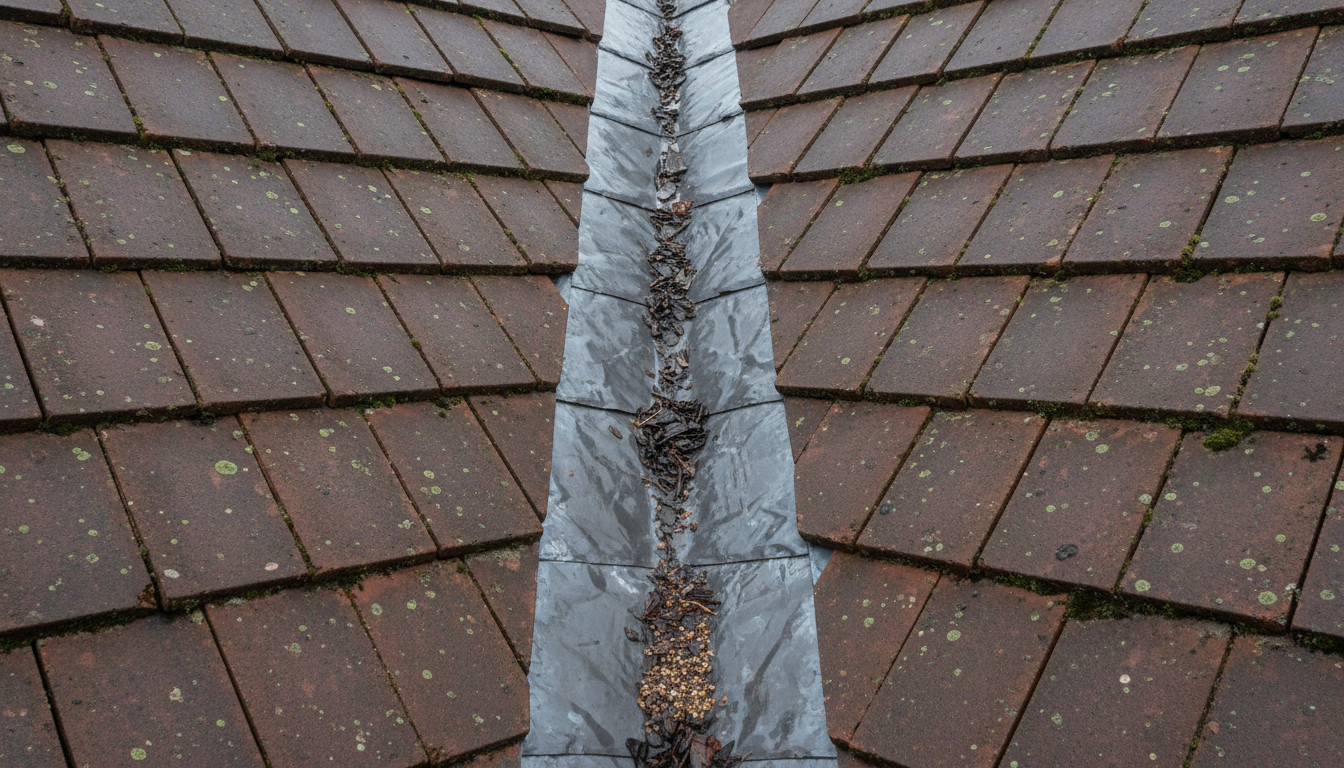
Roof Valleys UK Why Valley Leaks Are So Common is a practical roofing issue because valleys carry concentrated rainwater from two roof slopes into one channel. When that channel is blocked, poorly lined, badly cut, or damaged by weather, water can move sideways beneath tiles or slates instead of draining safely into the gutter. The result may be ceiling stains, damp loft timbers, damaged underlay, or recurring leaks after heavy rain.
A & A Roofing London helps homeowners across London, Essex, and the Hertfordshire borders inspect valley leaks, trace water paths, and choose the right repair, restoration, or replacement route.
Quick Check: If a roof valley is leaking, overflowing, or holding debris, ask A & A Roofing London to trace the valley water path through a roof inspection in the UK before the leak spreads beneath nearby tiles or slates.
Roof Valleys Uk Why Valley Leaks Are So Common
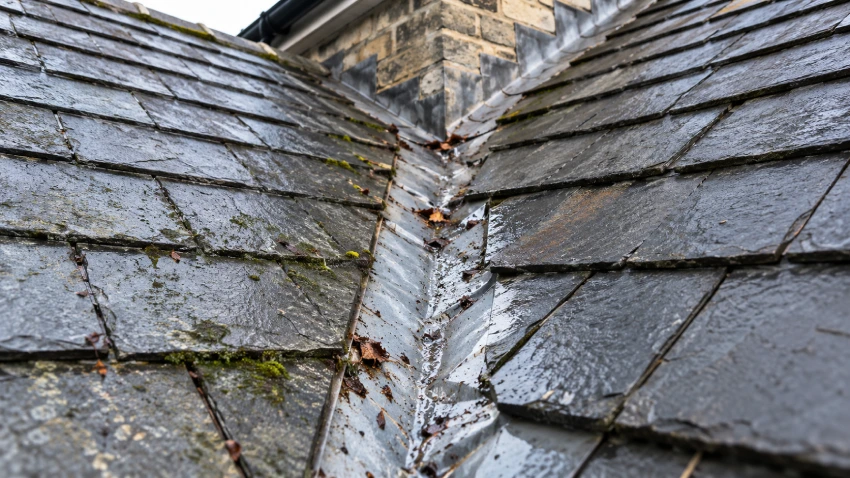
Roof Valleys Uk Why Valley Leaks Are So Common comes down to water concentration. A normal roof slope sheds rain across a wide area, but a valley collects water from two slopes and directs it into one narrow route. Any restriction, poor lining, weak lap, damaged tile cut, or blocked gutter below the valley can quickly overload that route.
Planning Portal explains that the above-ground system of gutters and rainwater pipes is referred to as roof drainage. A valley is not a gutter, but it feeds the same drainage path, so a valley leak should be checked with gutters, outlets, and downpipes rather than treated as a separate surface defect.
| Valley leak factor | What happens | Why it becomes a leak | A & A Roofing London check |
| Debris in the valley | Leaves, moss, grit, or mortar slow water | Water backs up beneath tile or slate edges | Valley channel, lining, and lower gutter flow |
| Poor tile cuts | Water is directed toward weak edges | Rain can enter below the covering | Tile alignment and valley width |
| Failed lining | Lead, GRP, or other lining deteriorates | Water reaches underlay, battens, or roof space | Lining condition and lap detail |
| Blocked gutter below | Valley water cannot discharge properly | Water spills back toward eaves and roof edges | Gutter fall, outlet, and downpipe |
| Poor previous repair | Sealant or patching hides the source | Leak returns after heavy rain | Workmanship, water path, and surrounding materials |
A & A Roofing London checks whether the valley itself has failed or whether the leak is caused by blocked drainage, damaged roof covering, weak flashing, chimney junctions, or poor workmanship nearby. That distinction matters because clearing debris will not solve a cracked valley lining, and relining the valley will not solve a blocked gutter below it.
NFRC lists pitched roofing valleys as a dedicated technical design topic, which reflects how important valley detailing is in professional roofing practice. Valleys are not ordinary roof surfaces; they are high-flow junctions where roofing material, pitch, drainage, underlay, and workmanship meet.
Tile Roofing and Valley Leak Paths
Tile roofing is closely linked to Roof Valleys Uk Why Valley Leaks Are So Common because roof tiles must be cut, aligned, and supported correctly where they meet the valley. If tile cuts are too tight, too uneven, or damaged by movement, water can be pushed under the edges during heavy rain.
A & A Roofing London checks tile roofing in London by reviewing tile courses, valley cuts, battens, underlay, mortar debris, and any signs of loose or broken tiles near the channel. A valley leak on a tiled roof may look like a main-slope leak, but the source is often where the roof planes meet.
Where debris is collecting in the channel, valley debris build-up sequence is the most useful supporting topic. It helps explain why leaves, moss, and broken tile fragments can turn a small restriction into repeated water back-up.
Slate Roofing and Valley Weak Points
Slate roofing can leak at valleys when slate edges, headlaps, fixings, or underlay around the valley are disturbed. Because slate systems rely on accurate laps and clean water shedding, a restricted valley can force water beneath slates that would otherwise perform correctly.
A & A Roofing London checks slate roof maintenance in the UK where valleys sit between slate slopes or where slate sections meet tiled areas. The inspection looks at slipped slates, cracked slate edges, lining condition, valley width, underlay, and signs of moisture inside the loft.
A slate valley leak should not be treated as a simple surface patch. If the slate edges are damaged or the fixing pattern has failed, the valley repair may need careful slate work as well as lining correction.
Flat Roofs Below Valley Discharge
Flat roofs do not have pitched valleys in the same way, but they can still suffer from valley leaks. Many homes have pitched roofs discharging rainwater toward flat roof extensions, dormers, porches, bays, or garages. If the pitched valley above is blocked or poorly detailed, the flat roof below may receive extra water, debris, and impact.
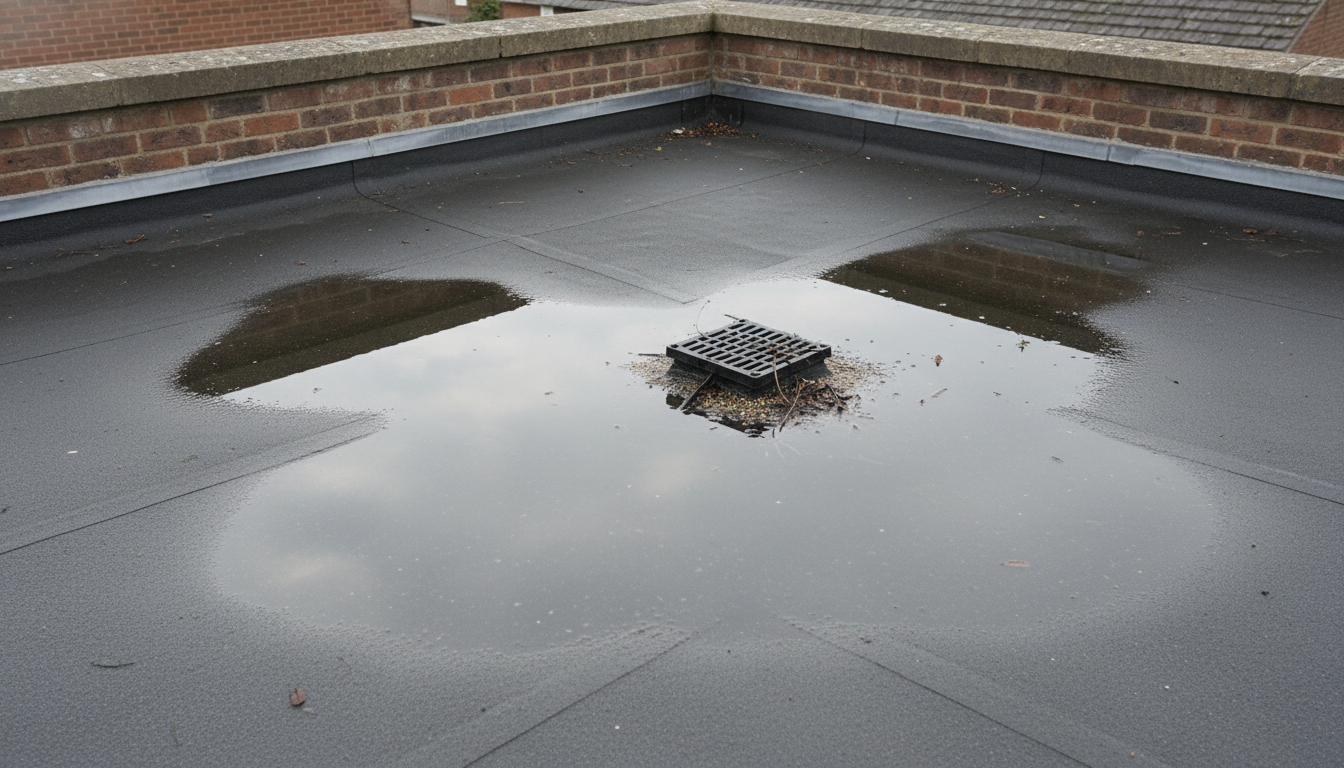
A & A Roofing London checks flat roofs in London where a flat section sits below a pitched valley. The team reviews whether the flat roof surface is ponding, whether outlets are blocked, whether debris is collecting at trims, and whether water from the pitched roof is being directed correctly.
If the flat roof surface already shows cracks or bubbles, flat roof surface warning stages helps explain why valley discharge above can make a weak flat roof deteriorate faster.
Pitched Roof Maintenance and Valley Design
Pitched roof maintenance should always include valleys because valleys carry more water than ordinary roof slopes. The roof pitch, covering type, valley material, underlay, gutter connection, and surrounding tile or slate cuts all affect whether water leaves the roof cleanly.
A & A Roofing London checks pitched roof maintenance in the UK by reviewing valley alignment, lower discharge points, roof slope condition, ridge and hip relationships, and signs of water spread inside the roof space. Poor valley design can make the same leak return even after cleaning.
A valley that leaks only during heavy rain often points to flow capacity, obstruction, or wind-driven water movement. A valley that leaks during lighter rain may suggest failed lining, poor laps, cracked tiles, or damaged underlay close to the valley.
Roof Restoration and Valley Condition
Roof restoration can include valley cleaning, valley repair, tile replacement, slate adjustment, moss management, and correction of drainage details. It should not begin with surface treatment if the valley is actively leaking.
A & A Roofing London checks roof damage in the UK before recommending restoration. If the roof covering is sound but the valley is blocked or lightly worn, restoration may be practical. If the valley lining has failed, underlay is damaged, or leaks have reached timber, the work may need to move beyond cosmetic restoration.
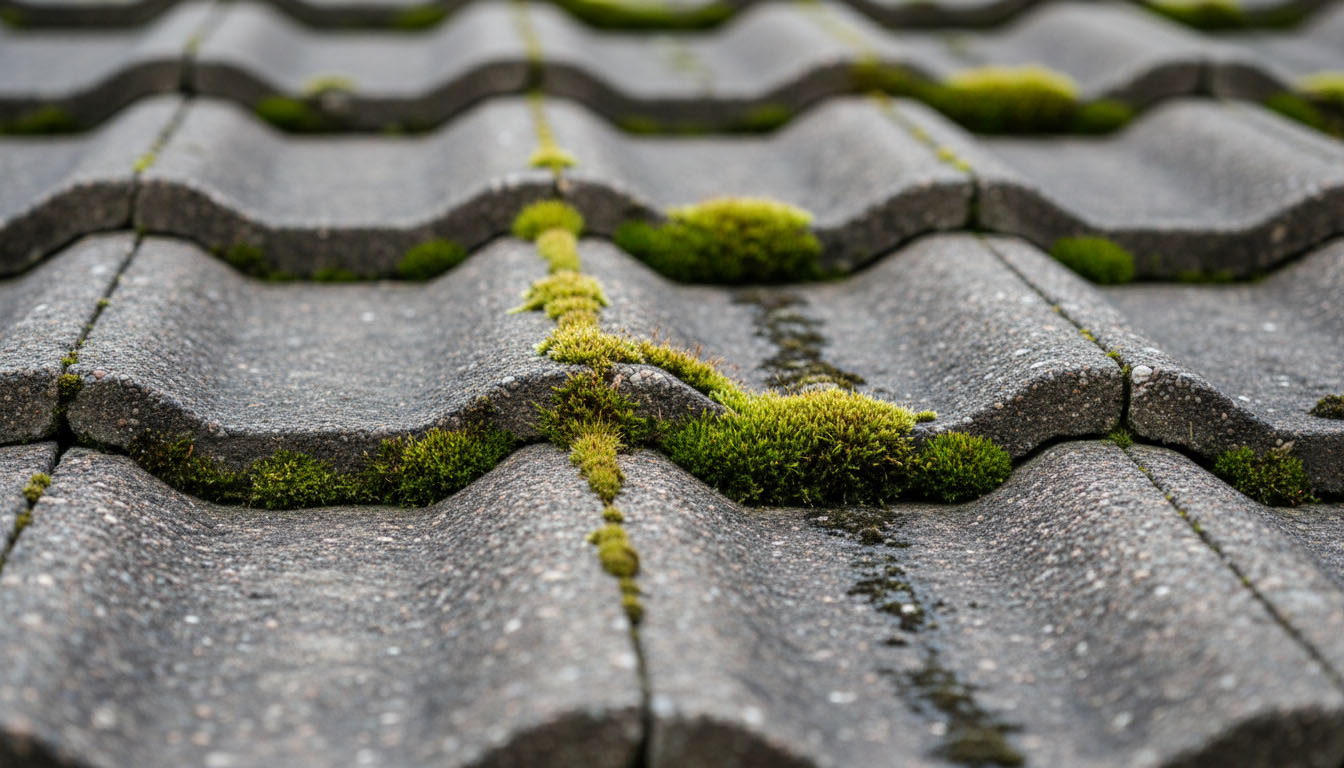
NFRC says moss on roof tiles is rarely a problem in most cases and usually only needs removing where it blocks gutters, outlets, or other drainage points. This matters for valleys because moss becomes important when it slows water flow or collects in the channel. The related topics are moss growth roof conditions and moss removal drainage cautions.
Roof Repairs for Valley Leaks
Roof valley repairs should begin with a clear diagnosis. A stain below a valley may be caused by a blocked channel, failed lining, loose tiles, slipped slates, poor flashing, chimney junctions, or overflow from a gutter that cannot take the valley discharge.
A & A Roofing London traces the leak route before recommending work. That may involve safe debris removal, checking the valley lining, lifting affected tiles or slates, inspecting underlay, testing gutter discharge, and reviewing internal moisture marks.
| Leak symptom | Possible valley-related cause | Repair focus |
| Leak after heavy rain | Valley cannot discharge water quickly enough | Clear flow path and inspect lining |
| Damp near roof junction | Water moving under tile or slate edges | Check cuts, laps, and underlay |
| Stain near chimney | Valley and leadwork may overlap | Inspect flashing, stack, and channel |
| Overflow at eaves | Gutter below valley is restricted | Check gutter fall, outlet, and downpipe |
| Repeated leak after patching | Source was not properly traced | Review workmanship and surrounding roof |
For water-entry diagnosis, roof leak source framework is useful because the internal stain may not sit directly below the valley defect. If water movement is the main problem, roof drainage pathway checks are also relevant.
Re-Roofing and Replacement Decisions

Roof Valleys Uk Why Valley Leaks Are So Common does not mean every valley leak requires full replacement. A localised blockage, cracked tile, or small lining defect may be repairable. Replacement becomes more likely when the valley defect is repeated, widespread, poorly designed, connected to failed underlay, or part of a worn roof covering.
Planning Portal states that most roof replacement work on existing buildings needs Building Regulations approval. It also notes that changing roof covering material can raise structural stability, fire safety, and energy efficiency issues, and that re-covering should include improving thermal insulation because the roof is a thermal element.
A & A Roofing London checks whether the valley can be repaired, relined, restored, or should be addressed during wider re-roofing. For broader decisions, repair and replacement decision markers help homeowners understand when local repair stops being practical.
Lead Work, Chimneys, and Valley Junctions
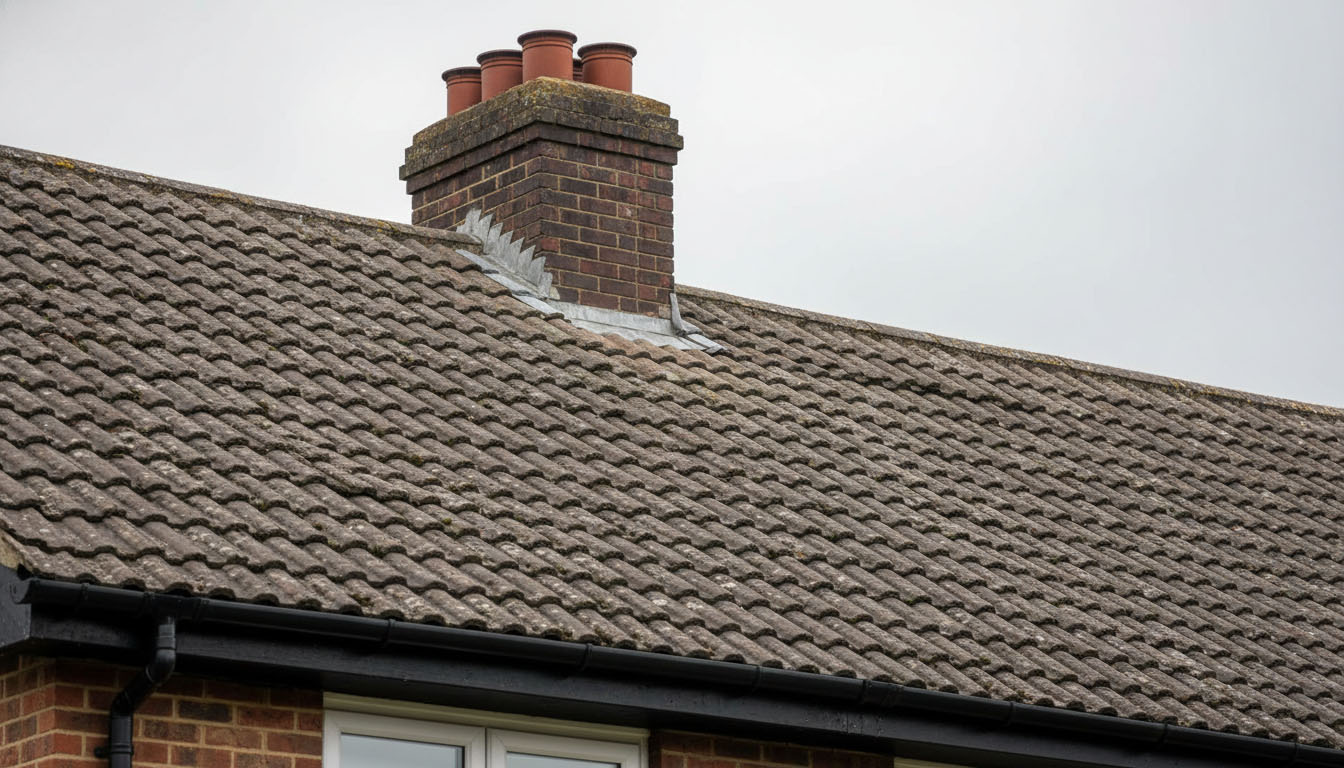
Valleys often meet or sit close to leadwork, chimneys, dormers, walls, rooflights, or abutments. These junctions are common leak points because water from the valley can press against flashing details that were not designed to cope with blocked or redirected flow.
A & A Roofing London checks lead soakers, step flashing, cover flashing, back gutters, chimney pointing, valley edges, roof covering cuts, and underlay. A valley leak may be blamed on tiles when the real weakness sits at a chimney or leadwork junction.
For junction-led leaks, flashing transition fault points gives a useful reference. Where leadwork itself is central to the water route, leadwork weathering principles helps explain why laps, chases, soakers, and cover details matter.
Gutters and Valley Discharge
A valley can be correctly formed and still leak if the gutter below cannot receive the water. Valleys often discharge a heavy flow into one short section of gutter, so outlet size, gutter fall, downpipe capacity, and debris control matter.
A & A Roofing London checks gutters, outlets, brackets, downpipes, eaves details, and whether broken tile or moss debris is entering the gutter from the valley. Overflow at the gutter can push water back toward the roof edge, fascia, soffit, or wall.
The Planning Portal’s drainage guidance separates roof drainage from underground surface water drains, reinforcing that gutters and rainwater pipes are part of the visible above-ground drainage route. For gutter-led valley symptoms, gutter overflow route mapping is a relevant next topic.
Chimney Leaks Near Roof Valleys
Chimney leaks are often connected to valleys because both involve concentrated water and complex junctions. If a valley sits close to a chimney, water can back up, hit flashing, and enter around masonry or leadwork.
A & A Roofing London checks whether the leak comes from the valley, chimney, flashing, roof covering, or a combination of these. The inspection includes pointing, flaunching where visible, leadwork, surrounding tiles or slates, underlay, and internal staining.
Where the damp patch appears near a chimney breast, chimney leak evidence points is a useful supporting read. It helps homeowners understand why valley and chimney problems should be diagnosed together rather than repaired separately by assumption.
Storms and Valley Leak Timing
Storms expose valley problems because heavy rain, wind, loose debris, and broken roof materials all affect the valley at once. A valley that seems fine in normal rain may overflow when leaves, moss, tile grit, and wind-driven rain collect in the channel.
The Met Office advises people not to go outside to repair damage while a storm is in progress. That is important for valley leaks because valleys sit on sloped roof surfaces, often in wet and unstable conditions. HSE also states that roof work is high risk and that all roofs should be treated as fragile until a competent person confirms otherwise.
A & A Roofing London can inspect after conditions are safe, checking whether the storm caused a new valley defect or exposed an existing blockage. Useful supporting topics include storm roof observation notes and urgent leak response sequence.
Weather Exposure and Valley Wear
UK weather makes valley leaks common because valleys handle repeated wetting, drying, wind-driven rain, frost, and debris movement. Water moving through the same narrow channel over years can expose weak lining, poor tile cuts, old mortar, moss build-up, and blocked outlets.
A & A Roofing London checks whether weather exposure has damaged the roof covering around the valley or whether the valley is failing independently. A valley on an exposed slope may need closer inspection than a sheltered section, especially after storms or winter weather.
For wider context, weather stress roof patterns helps explain why rain, wind, frost, and temperature movement can expose defects at roof junctions.
Inspection and Maintenance for Valleys
Roof valleys should be included in routine inspection because early signs can be hard to see from the ground. Warning signs include debris build-up, moss in the channel, staining below the valley, slipped tiles near the cut edges, damp loft patches, or water spilling heavily into one gutter section.
A & A Roofing London checks valley condition during maintenance by reviewing roof covering alignment, channel clearance, lining condition, gutter discharge, flashing junctions, and internal damp evidence. This prevents a valley from being cleared while the hidden cause remains active.
HSE roof guidance covers repair, maintenance, cleaning, and demolition work, and warns that work on or near fragile roof surfaces requires proper precautions. Homeowners should therefore avoid climbing onto the roof to clear valleys themselves. For planning, roof inspection timing framework, roof inspection item structure, and preventive maintenance order are useful references.
Warning Signs Beyond the Valley
Roof Valleys Uk Why Valley Leaks Are So Common should also include the surrounding roof. A valley leak may appear with loose tiles, roofline sagging, poor workmanship, gutter overflow, flashing defects, or moss-heavy slopes.
A & A Roofing London checks the valley in context. If the valley has leaked because the roof covering has moved, the repair should include the loose or failed area. If the valley has leaked because of poor workmanship, another surface patch will not solve the problem.
For broader warning signs, roof defect recognition pattern is useful. If previous work has failed near the valley, roof workmanship review criteria helps explain what should be documented before repair.
Roof Valleys Uk Why Valley Leaks Are So Common Area Coverage
Local property layout, roof pitch, tree debris, extensions, chimneys, roof age, and access all affect valley leak risk. A & A Roofing London covers North London, Essex, and the Hertfordshire borders, helping homeowners inspect valley leaks safely and decide whether the right route is cleaning, repair, restoration, or replacement.
North London
In North London, Roof Valleys Uk Why Valley Leaks Are So Common often applies to terraced homes, pitched roofs, flat roof extensions, dormers, chimneys, and narrow access points. A & A Roofing London can check whether a valley leak is caused by debris, failed lining, tile movement, flashing defects, gutter overflow, or water travelling from a higher roof section.
Hertfordshire Borders
Across the Hertfordshire borders, Roof Valleys Uk Why Valley Leaks Are So Common may involve tiled roofs, slate sections, tree debris, moss build-up, older roof junctions, and weather-exposed slopes. A & A Roofing London checks the valley channel, roof covering, underlay, gutters, leadwork, and internal damp evidence before recommending repair or restoration.
Essex
In Essex, Roof Valleys Uk Why Valley Leaks Are So Common can become obvious after heavy rain, wind-blown debris, moss movement, or repeated gutter overflow. A & A Roofing London can inspect valleys, roof edges, tiles, slates, flat roof sections, chimneys, and drainage routes so the repair follows the true water path.
Final Roofing Decision
Roof Valleys Uk Why Valley Leaks Are So Common has a clear answer: valleys leak often because they collect more water, more debris, and more detailing risk than ordinary roof slopes. A small blockage or weak lining can affect a large roof area because water from two slopes is being forced through one channel.
A & A Roofing London can inspect the valley route through a roof inspection in the UK and check the tiles, slates, lining, underlay, gutters, leadwork, chimneys, flat roof sections, and internal leak evidence. The right result may be safe debris clearance, valley repair, flashing correction, roof restoration, or wider replacement if the surrounding roof system has failed.
FAQs About Roof Valleys Uk Why Valley Leaks Are So Common
Why are roof valleys so common for leaks?
Roof valleys are common for leaks because they collect rainwater from two roof slopes and direct it through a narrow channel. That makes them more exposed to heavy water flow, debris build-up, moss, broken tile fragments, and poor detailing. If the valley lining, surrounding tile cuts, underlay, or gutter discharge is weak, water can move beneath the roof covering and appear indoors as a leak.
What blocks roof valleys in the UK?
Roof valleys are commonly blocked by leaves, moss, grit, old mortar, broken tile fragments, slate pieces, and wind-blown debris. NFRC says moss usually only needs removal where it blocks gutters, outlets, or other drainage points on the roof, and valleys are one of those drainage-sensitive areas. A & A Roofing London checks whether the blockage is only surface debris or whether it has exposed a failed valley lining.
Can a roof valley leak even when the gutter is clear?
Yes. A roof valley can leak even when the gutter is clear if the valley lining is cracked, tile cuts are poor, slates have slipped, underlay has failed, or water is entering at a nearby flashing or chimney junction. A clear gutter only proves that the lower drainage route is open. A & A Roofing London still checks the valley channel, surrounding roof covering, leadwork, and internal water path.
Is it safe to clear a roof valley myself?
Homeowners should avoid climbing onto a roof to clear a valley. HSE says roof work is high risk and that all roofs should be treated as fragile until a competent person confirms otherwise. Its roof-work guidance covers maintenance and cleaning as well as repair work, so valley clearance should be handled with suitable access and precautions. Ground-level photos and safe internal checks are a better first step.
Does a leaking valley mean I need a new roof?
Not always. A leaking valley may only need debris clearance, local tile or slate correction, flashing work, or valley relining. A new roof becomes more likely when the leak is repeated, the valley design is poor, underlay is damaged, surrounding tiles or slates are failing, or water damage has spread. A & A Roofing London uses inspection findings to decide whether repair, restoration, or replacement is the more reliable route.
Can moss in a valley damage roof tiles?
Moss in a valley can contribute to damage when it traps moisture, slows water flow, or blocks the drainage route. NFRC says moss on roof tiles is rarely a problem in most cases, but it may need removal where it blocks gutters, outlets, or other drainage points. A & A Roofing London checks whether moss is cosmetic or whether it is causing water to back up under tiles or slates.
Why does a valley leak appear after storms?
Valley leaks often appear after storms because heavy rain, wind, and debris hit the same channel at once. Loose tiles, broken fragments, leaves, and moss can wash into the valley, while wind-driven rain can push water beneath weak laps or damaged lining. The Met Office advises people not to go outside to repair damage while a storm is in progress, so the safer route is to wait until conditions are safe and arrange inspection.
What should A & A Roofing London inspect around a leaking valley?
A & A Roofing London should inspect the full valley system: the channel, lining, tile or slate cuts, underlay, battens, nearby flashings, chimneys, gutters, downpipes, flat roof sections below, and internal damp evidence. Planning Portal identifies gutters and rainwater pipes as roof drainage, so the valley should be checked with the lower drainage route rather than in isolation.







Comments (7)
[…] hidden leaks, timber damage, and internal damp. Understanding why valleys block up and how debris causes roof valley leaks helps homeowners act early and avoid costly […]
[…] the chimney leak appears after heavy rain, roof valley water-flow behaviour is relevant. Where debris is visible in the valley, valley obstruction warning signs should be […]
[…] damage is really a drainage failure. Supporting topics include gutter overflow after debris fall, two-slope valley overflow clues, valley blockage after storms, and poor water-flow damage […]
[…] valley-related leadwork issues, valley junction water-load basics and valley debris restriction checks are useful supporting […]
[…] flat roof outlets, and roof-edge staining. Supporting topics include drainage overload warning map, valley rain-channel pressure, valley blockage inspection prompts, and gutter winter blockage […]
[…] flow and push moisture beneath adjacent coverings. Understanding roof valley debris buildup and the reasons roof valleys develop leaks prevents the material comparison from becoming too […]
[…] from tiles or slates is blocking the route. For water-flow signs, valley flow restriction evidence, valley leak pressure zones, gutter overflow damage clues, and roof drainage defect route are […]
Comments are closed.