
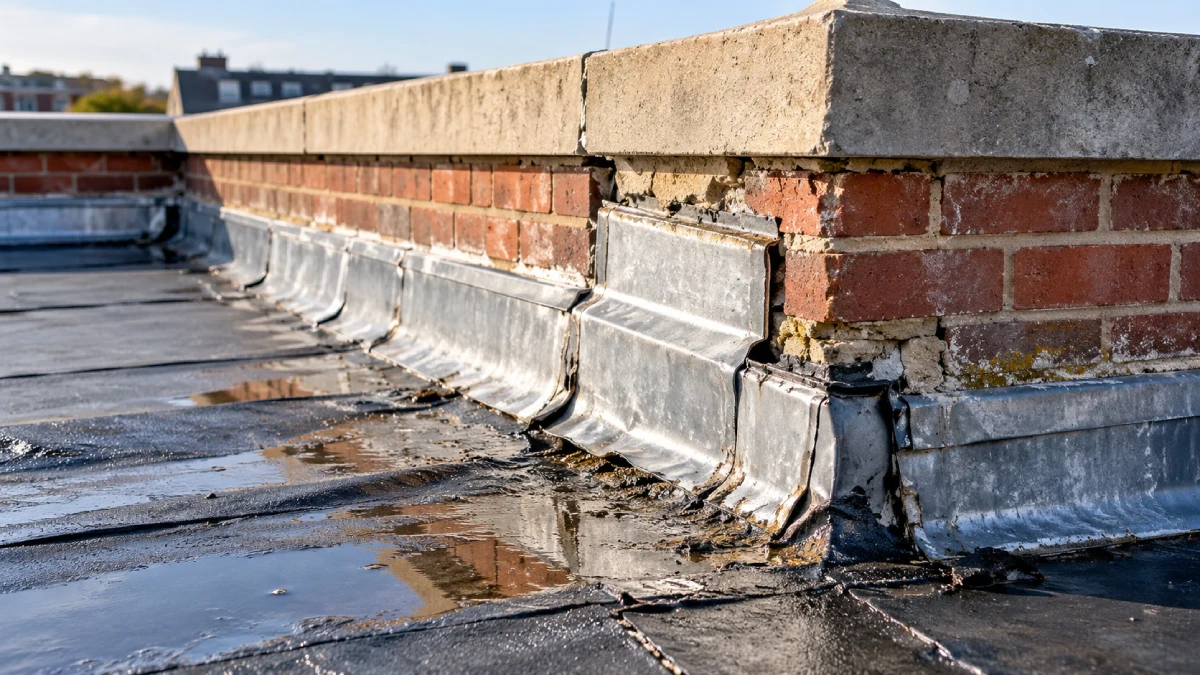
Flashing & Parapet Wall Failures are common causes of roof leaks because they usually happen at junctions where water is already under pressure. A roof may look sound across the main tile, slate, or flat roof surface, but water can still enter through failed leadwork, cracked mortar, open wall chases, poor upstands, blocked outlets, or defective coping stones.
These failures often show as damp walls, ceiling stains, peeling paint, or recurring leaks after heavy rain. A&A Roofing London helps homeowners across London, Essex, and Hertfordshire Borders inspect the roof junctions, wall details, leadwork, and surrounding covering before recommending targeted repair, restoration, or replacement.
Quick Check: If damp appears near a chimney, parapet, wall abutment, or roof edge, A&A Roofing London can provide a broken roof tile inspection in London that checks whether the leak is coming from tiles, flashing, leadwork, or parapet wall failure.
Flashing & Parapet Wall Failures Explained
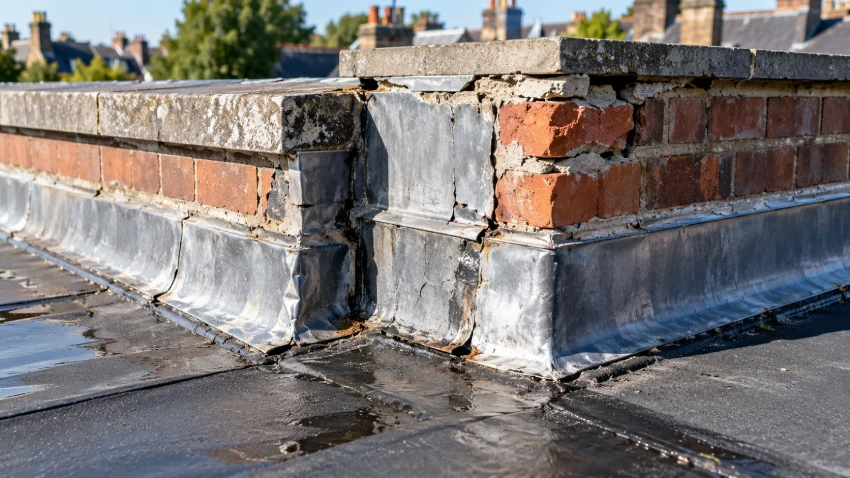
Flashing & Parapet Wall Failures usually begin where the roof meets something vertical. That could be a parapet wall, chimney stack, dormer cheek, side wall, rear extension, valley, rooflight kerb, or abutment. These areas need properly formed weathering details because rainwater can run down walls, gather at edges, or be driven sideways by wind.
Common flashing and parapet failure points
| Failure point | What often goes wrong | What should be checked |
| Lead flashing chase | Mortar loosens or lead pulls away | Chase depth, pointing, lead condition |
| Parapet coping | Cracks, open joints, poor overhang | Coping stones, drip grooves, wall saturation |
| Roof upstand | Waterproofing is too low or split | Upstand height, membrane bond, edge detail |
| Chimney flashing | Step flashing or back gutter fails | Lead laps, soakers, stack condition |
| Wall abutment | Water tracks behind covering | Leadwork, render, brickwork, roof edge |
| Flat roof edge | Trim, felt, GRP, or EPDM detail fails | Edge seal, deck condition, drainage route |
A&A Roofing London checks these details before assuming the visible roof covering is the cause. A leak beside a parapet wall may not come from a broken tile. It may come from split lead, failed pointing, a cracked coping joint, or water entering behind the wall detail.
For homeowners trying to identify early warning signs, a flashing defect pattern guide helps explain how flashing failures show up around chimneys, abutments, roof edges, and wall junctions.
Tile Roofing Near Parapet Walls
Tile roofing is often involved in Flashing & Parapet Wall Failures because tiles frequently meet side walls, chimneys, rear extensions, and parapets. Even when the tiles are in good condition, the junction beside them can fail if the flashing is loose, poorly chased, badly lapped, or installed without proper weathering.
A&A Roofing London checks concrete roof tile replacement in London where broken or displaced tiles sit close to a parapet or wall junction. Tile replacement alone may not stop the leak if the wall flashing is also compromised.
The tile layout around a wall matters. Cut tiles, small tile pieces, weak laps, and poor mortar fillets can create vulnerable edges. If water can pass below the tile course or behind the flashing, damp may appear inside even though the main roof slope looks intact.
A roof leak tracing framework can help homeowners understand why damp near a tile roof is not always caused by the tile itself.
Slate Roofing and Wall Junction Leaks
Slate roofing changes Flashing & Parapet Wall Failures because slate depends on correct lap, secure fixing, and careful edge detailing. Around parapet walls, chimneys, and abutments, even a small flashing defect can allow water to track beneath the slate line.
A&A Roofing London provides slate roof repair service in London where slipped slates, cracked slates, nail fatigue, or poor wall junctions are allowing water into the roof. The repair plan checks the slate and the surrounding leadwork together.
Slate edges beside parapet walls can be vulnerable if the flashing has been patched repeatedly. New sealant over old lead may look like a quick fix, but it rarely solves poor laps, loose chases, or hidden wall saturation.
A chimney leak warning checklist is useful where slate roofs meet chimney stacks, because chimney defects and flashing defects often appear together.
Flat Roofing and Parapet Wall Failures
Flat roofing is one of the main settings for Flashing & Parapet Wall Failures. Flat roofs often terminate against parapet walls, raised edges, outlets, rooflights, or rear extension walls. If the upstand, flashing, coping, or outlet detail fails, water can enter behind the waterproofing layer.
A&A Roofing London provides flat roof installation london support where parapet walls, upstands, outlets, and edge details must be built into the roof system from the start. The flat roof covering is only reliable if the wall junctions are reliable too.
Parapet walls can also trap water. If coping stones are cracked, mortar joints are open, or drainage is poor, water may soak the wall and then appear inside as a roof leak. That is why a flat roof inspection should include the top of the parapet, not only the membrane surface.
A flat roof edge failure checklist helps homeowners spot cracking, blistering, edge lifting, and surface defects that often appear near failed parapet details.
Pitched Roofing Repairs at Abutments
Pitched roofs can suffer Flashing & Parapet Wall Failures where roof slopes meet vertical walls. Common examples include side abutments, chimney sides, roof valleys, dormer returns, and extensions tied into the main roof.
A&A Roofing London handles pitched roofing repairs in london where the roof slope, tile or slate line, underlay, battens, and wall flashing need to work together. If one part is repaired without the others, the leak may return.
On pitched roofs, water moves quickly. When it hits a wall junction, flashing must direct it back onto the roof covering or into a drainage route. Poorly formed flashing can send water behind tiles, into the underlay, or down internal walls.
A valley leak behaviour guide helps explain why water concentration around valleys and adjoining walls can create repeated leaks if the route is restricted.
Roof Restoration for Flashing and Wall Damage
Roof restoration becomes important when Flashing & Parapet Wall Failures have caused wider roof damage. Water entering through a wall junction can affect battens, underlay, insulation, plaster, timber, and the roof covering around the leak.
A&A Roofing London provides roof restoration services in London where the roof needs more than a small patch. Restoration may include renewing leadwork, repairing parapet coping, replacing damaged tiles or slates, checking timber condition, and improving drainage.
Restoration priorities around parapet walls
| Restoration area | What is checked | Why it matters |
| Lead flashing | Splits, laps, chase, pointing | Stops water entering at wall junctions |
| Parapet coping | Cracks, open joints, loose stones | Prevents wall saturation from above |
| Roof covering | Broken tiles, slipped slates, surface wear | Protects the roof area beside the wall |
| Drainage | Outlets, gutters, valley flow | Reduces water pressure at weak points |
| Internal signs | Damp, staining, mould, plaster damage | Helps trace how far water has travelled |
A restoration cost factor overview helps homeowners understand why leadwork, access, material replacement, and water damage can affect the final scope.
Where workmanship has caused the problem, a roof detailing error checklist can help identify weak flashing, poor pointing, bad laps, and patching that leaves the original failure untouched.
Roof Repairs for Flashing Leaks
Roof repairs for Flashing & Parapet Wall Failures must be precise. A visible damp patch may be several metres away from the actual entry point, especially where water travels behind flashing, under tiles, or through a saturated wall.
A&A Roofing London checks whether the flashing can be repaired locally or whether the wall detail needs to be opened and rebuilt. Small repointing may help if the lead and wall are sound, but it will not fix split lead, missing soakers, poor upstand height, or a failed parapet coping.
A roof repair symptom list helps homeowners recognise damp stains, loose flashing, missing mortar, cracked roof edges, and recurring leaks before the damage spreads.
Where the issue appears after severe weather, a post-storm roof damage review can help identify wind-lifted flashing, displaced tiles, blocked outlets, or loose wall details.
Re-Roofing and Parapet Wall Timing
Re-roofing may be needed where Flashing & Parapet Wall Failures are part of a larger roof breakdown. If the covering is old, the underlay has failed, leadwork is repeatedly patched, and parapet walls are letting water in, local repair may only delay the bigger decision.
A&A Roofing London separates isolated flashing repair from wider replacement planning. The inspection considers roof age, roof covering condition, previous repairs, wall saturation, drainage, and whether the roof has reached the end of its practical service life.
A repair and renewal decision guide helps homeowners compare whether another flashing repair is worthwhile or whether the roof needs more substantial renewal.
If replacement is likely, a roof replacement planning outline helps explain how access, roof covering, leadwork, waste, deck condition, and wall details affect the project.
Lead Work and Chimney Flashing Failures
Lead work is central to Flashing & Parapet Wall Failures. Lead flashing is used to weatherproof roof junctions, but it can fail through age, poor fitting, thermal movement, weak pointing, inadequate laps, or damage from previous repairs.
A&A Roofing London provides lead flashing repair in London where chimneys, abutments, parapet walls, valleys, and roof edges need proper weatherproofing. The repair focuses on forming a durable junction rather than sealing over symptoms.
Chimneys are especially vulnerable because they combine brickwork, mortar, lead, roof covering, and water flow in one small area. If a chimney back gutter is blocked or lead steps are loose, water may enter behind the flashing and show as ceiling stains.
A leadwork weathering essentials guide helps homeowners understand why properly formed flashing is more reliable than short-term surface sealants.
Roof Inspections for Hidden Wall Leaks
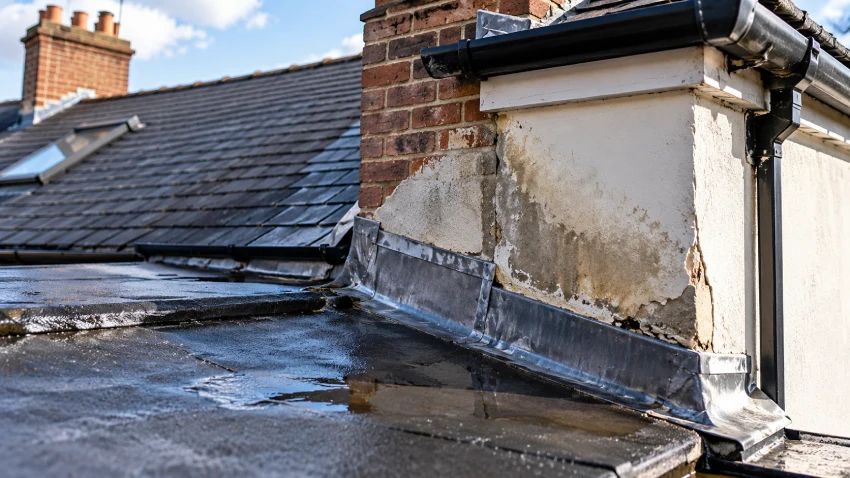
Roof inspections are essential for Flashing & Parapet Wall Failures because the failure is often hidden behind a wall edge, parapet, coping stone, chimney, or abutment. Ground-level inspection may show damp, but it rarely reveals the true entry point.
A&A Roofing London checks the external roof detail, internal damp pattern, parapet coping, lead chases, roof surface, wall condition, gutters, valleys, and drainage route. This helps decide whether the problem is flashing, brickwork, roof covering, or water flow.
A roof junction inspection checklist helps homeowners prepare before arranging an assessment by noting where damp appears, when it gets worse, and whether previous repairs have been made.
Inspection timing also matters. A roof inspection interval plan helps homeowners check vulnerable flashing and parapet details before small movement turns into active leaking.
Residential Roofing and Weather Exposure
Residential roofing makes Flashing & Parapet Wall Failures more varied because homes across London, Essex, and Hertfordshire Borders include terraces, semi-detached properties, older slate roofs, tiled roofs, flat roof extensions, parapets, chimneys, dormers, and valleys.
Weather exposure can worsen weak flashing quickly. Wind-driven rain can push water behind poor wall details, frost can open cracks, and blocked drainage can hold water against parapet walls.
A rain and wind roof wear guide helps homeowners understand why flashing and parapet defects often become more obvious after bad weather.
Preventive care is important because flashing failures often begin small. A roof upkeep planning checklist helps homeowners watch for cracked pointing, blocked gutters, loose lead, damp staining, and roof-edge deterioration.
Flashing & Parapet Wall Failures Area Coverage
Local roof conditions matter because property age, roof access, chimney layout, parapet construction, and weather exposure all affect flashing performance. A&A Roofing London supports homeowners across London, Essex, and the Hertfordshire Borders with roof checks that identify whether water is entering through leadwork, parapet walls, chimneys, roof coverings, or drainage details.
North London
North London homes often include older terraces, parapet walls, chimney stacks, slate roofs, tiled slopes, and rear flat roof extensions. For Flashing & Parapet Wall Failures, A&A Roofing London checks lead chases, coping stones, chimney back gutters, wall abutments, and roof edges before recommending repair. This helps stop repeat leaks where previous patching has not addressed the wall detail.
Hertfordshire Borders
Around the Hertfordshire Borders, homes can include pitched tiled roofs, older slate sections, garages, extensions, and mixed roof junctions. A&A Roofing London assesses Flashing & Parapet Wall Failures by reviewing leadwork condition, roof slopes, gutters, valleys, wall junctions, and damp patterns. Where the failure is local, targeted repair may be enough; where water has spread, restoration may be needed.
Essex
Across Essex service areas, roof edges, chimneys, parapet details, and flat roof junctions can be exposed to rain, wind, frost, and debris build-up. A&A Roofing London reviews Flashing & Parapet Wall Failures by checking whether the water path starts at the wall, leadwork, roof covering, valley, or drainage route. The aim is to stop the entry point before it damages the wider roof.
Choosing A&A Roofing London for Flashing Repairs
Flashing and parapet leaks should be traced before surface repairs are applied. A&A Roofing London checks leadwork, wall chases, parapet coping, roof covering, chimneys, gutters, valleys, and internal damp signs before recommending the right repair. For homeowners dealing with Flashing & Parapet Wall Failures, A&A Roofing London can provide a broken roof tile inspection in London that confirms whether the problem is broken covering, failed flashing, parapet wall saturation, or a hidden junction defect.
FAQs About Flashing & Parapet Wall Failures
What are Flashing & Parapet Wall Failures?
Flashing & Parapet Wall Failures are defects where the roof meets a wall, chimney, parapet, or raised edge. They often involve loose lead flashing, open wall chases, cracked coping stones, failed pointing, poor upstands, or blocked drainage. These failures allow water to enter behind the visible roof covering, which means the leak may appear indoors even when the main roof surface looks intact.
How do I know if flashing is causing a roof leak?
Flashing may be causing a roof leak if damp appears near a chimney breast, wall edge, parapet, rooflight, dormer, or ceiling corner after rain. Flashing & Parapet Wall Failures often show as recurring damp in the same area, staining after wind-driven rain, loose lead, cracked mortar, or water marks below an abutment. A roof inspection should trace the water route before any repair is chosen.
Can parapet walls cause internal damp?
Yes, parapet walls can cause internal damp if coping stones, joints, render, flashing, or wall chases fail. Flashing & Parapet Wall Failures can allow water to soak into the wall and move down behind roof coverings or internal finishes. The damp may not appear directly below the defect because water can travel through the wall or roof build-up before it becomes visible inside.
Is sealant enough to fix flashing leaks?
Sealant may provide a short-term patch in limited cases, but it is rarely a proper fix for Flashing & Parapet Wall Failures. If lead is split, laps are wrong, pointing has failed, or the parapet coping is cracked, sealant will not correct the underlying detail. A durable repair usually requires checking the leadwork, wall chase, roof covering, and drainage route.
Why do flashing leaks return after repair?
Flashing leaks often return when the repair only covers the visible gap and does not address the full junction. Flashing & Parapet Wall Failures can involve poor laps, open mortar joints, saturated brickwork, blocked valleys, weak roof edges, or failed coping stones. If the cause is not corrected, water will keep finding the same weak point after heavy rain.
Should parapet wall leaks be repaired or restored?
The answer depends on how far the damage has spread. Flashing & Parapet Wall Failures may need local repair if the leadwork or pointing has failed in one area. Restoration may be needed where the parapet wall, coping, roof covering, timber, insulation, or internal finishes have been affected by repeated water entry. A roof inspection should confirm the extent before work begins.
What should be inspected before repairing flashing?
Before repairing flashing, the roof should be inspected for lead condition, wall chase depth, pointing, parapet coping, roof covering, chimney details, valleys, gutters, drainage, and internal damp patterns. Flashing & Parapet Wall Failures are often linked to several details at once. A&A Roofing London checks these areas together so the repair targets the real water entry point.