
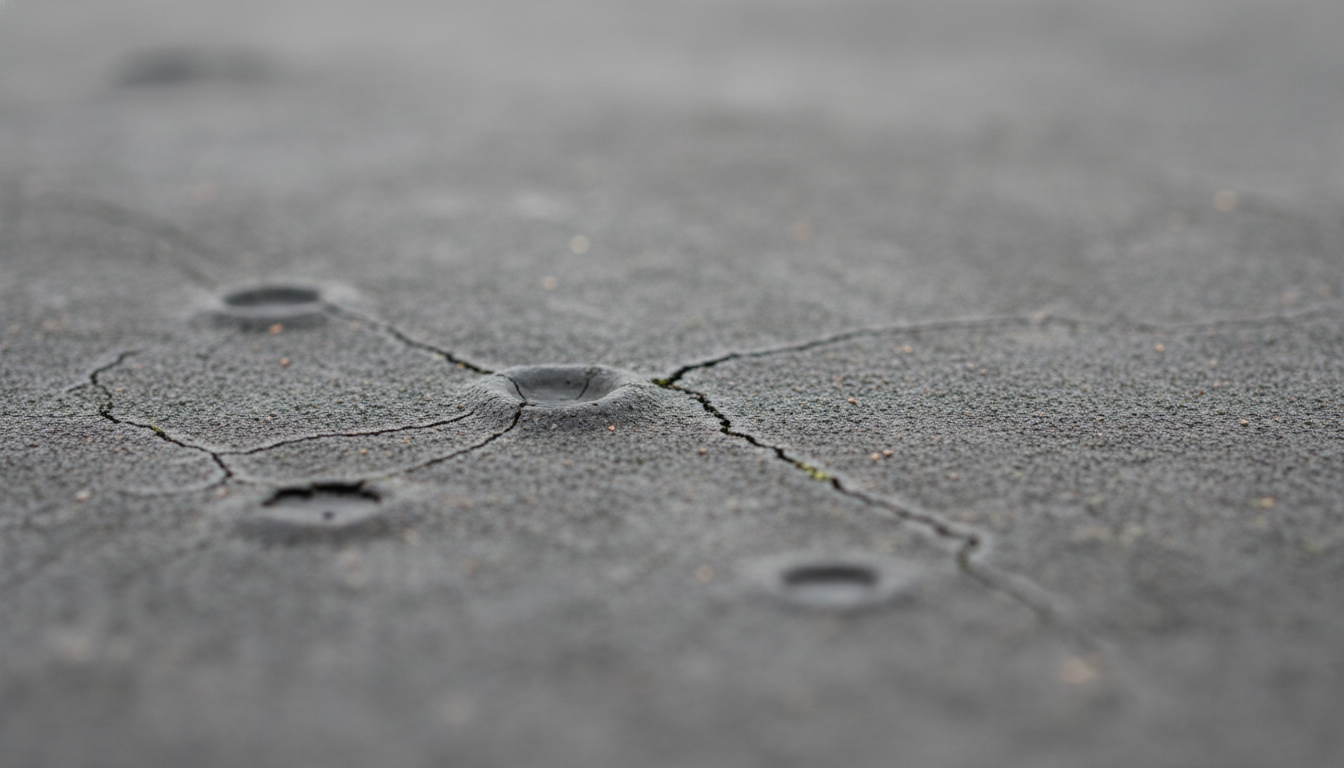
Flat Roof Blisters Cracks Early UK Repair Signs matter because a small bubble, split, open lap, or hairline crack can be the first warning that a flat roof is starting to fail. The surface may still look mostly intact, but water can already be sitting in low spots, tracking under the membrane, weakening the deck, or exposing poor edge details. A & A Roofing London helps homeowners across London, Essex, and the Hertfordshire borders inspect early flat roof defects, identify whether the issue is local or system-wide, and choose the right maintenance, repair, restoration, or replacement route.
Quick Check: If a flat roof has bubbles, cracks, ponding, or damp marks below, arrange a oof inspection in the UK with A & A Roofing London before early signs become hidden roof damage.
Flat Roof Blisters Cracks Early Uk Repair Signs
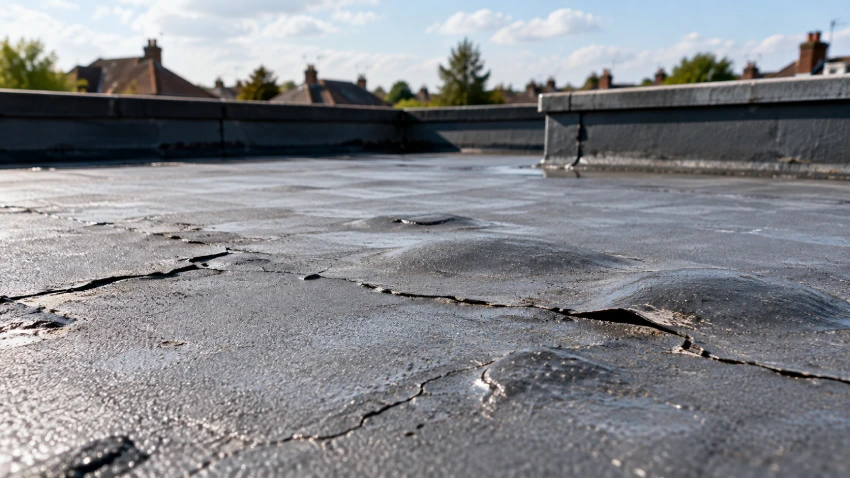
Flat Roof Blisters Cracks Early Uk Repair Signs are usually visible before the roof fully leaks. Blisters can suggest trapped moisture, trapped air, poor adhesion, heat movement, or an ageing surface. Cracks can appear where the membrane has become brittle, stressed, poorly detailed, or repeatedly exposed to standing water.
Energy Saving Trust says flat roof insulation often needs specialist techniques and warns that insulating a flat roof from underneath can lead to condensation problems if not completed correctly. That matters because visible blisters and cracks may be surface symptoms, while the underlying issue may involve deck moisture, trapped vapour, insulation position, or poor roof build-up.
| Early flat roof sign | What it may suggest | Why it matters | A & A Roofing London check |
| Small surface blister | Trapped air or moisture below membrane | Can split under heat and movement | Membrane adhesion, deck condition, surrounding laps |
| Hairline crack | Ageing surface or stress point | Can open during freeze-thaw cycles | Crack length, depth, nearby ponding |
| Open seam or lap | Failed bond or poor workmanship | Gives water a direct entry route | Laps, edge trims, upstands |
| Ponding water | Poor falls, blocked outlet, deck dip | Speeds surface wear and leak risk | Drainage route, outlet, surface level |
| Damp ceiling below | Water already passing through the system | Hidden damage may be active | Internal signs, deck, insulation, membrane |
Flat Roof Blisters Cracks Early Uk Repair Signs should not be judged only from the roof surface. Planning Portal explains that when a roof is re-covered, the roof is treated as a thermal element and the work should include improving its thermal insulation properties. It also notes that most roof replacement work on existing buildings needs Building Regulations approval.
A & A Roofing London checks whether the defect is a small repairable surface issue, an insulation and condensation problem, a drainage failure, or a sign the flat roof system has reached the end of reliable service.
Flat Roofing Blisters: What Bubbles Can Mean
Flat roof blisters are raised areas in the membrane or surface layer. They can stay small for a time, but they become a bigger risk when they split, stretch, soften, or appear in groups across the roof.
A & A Roofing London checks whether the blister is isolated or part of a pattern. One stable blister may be monitored or repaired depending on roof type and condition. Repeated blistering across the surface may point to trapped moisture, poor adhesion, ageing materials, or a failed installation.
Where blistering is widespread, flat roof replacement in London may need to be assessed rather than covering the roof with another patch. For homeowners deciding whether the existing system still has life left, flat roof duration variables gives a useful next comparison.
Cracks, Splits, and Open Seams
Cracks and splits are more urgent than surface staining because they can create a direct water path. A small crack near an outlet, edge trim, rooflight, abutment, or upstand can cause more damage than a larger cosmetic mark in a low-risk area.
A & A Roofing London checks crack depth, length, direction, surrounding surface brittleness, and whether the crack sits in a high-movement zone. The inspection also checks whether the defect is dry, wet, soft, or already connected to internal damp.
Flat Roof Blisters Cracks Early Uk Repair Signs should be connected to roof age and material condition. The useful supporting topic is flat roof age indicators, because a crack on a newer roof raises different questions than a crack on a roof already showing long-term wear.
Tile Roofing Near Flat Roof Junctions
Tile roofing may not be the damaged surface, but it can feed water onto a flat roof below. Many London homes have a pitched tiled roof above a flat extension, dormer, bay, or rear addition. If water is dropping from broken or poorly aligned tiles, the flat roof can take more concentrated water than designed.
A & A Roofing London checks tile courses, valleys, gutters, abutments, and flat roof edges together. This matters because flat roof blisters and cracks can be worsened by water repeatedly hitting one section from the pitched roof above.
If tiled areas are contributing to runoff or debris, tile roofing in London should be assessed with the flat roof. Where the homeowner is unsure whether the mark below is a flat roof issue or a wider roof issue, roof symptom categories can help organise what has been noticed.
Slate Roofing Above Flat Roof Sections
Slate roofing can also affect Flat Roof Blisters Cracks Early Uk Repair Signs when a slate roof drains onto a flat section. Loose slates, damaged flashings, poor valleys, and blocked gutters can overload the flat roof below.
A & A Roofing London checks slate roof maintenance in the UK where slate slopes sit above flat roof extensions. The aim is to separate flat roof membrane failure from water entry that starts higher up the property.
If damp appears below a flat section but the roof above includes slates, the investigation should not stop at the membrane. The water path may begin at a slate, flashing, valley, or gutter before reaching the flat roof area.
Pitched Roofs Draining Onto Flat Roofs
Pitched roof maintenance matters because pitched sections often discharge rainwater toward flat roof areas. If gutters, valleys, leadwork, or outlets are weak, the flat roof can be exposed to overflow, impact, or standing water.
A & A Roofing London checks pitched roof maintenance in the UK as part of the flat roof inspection where water routes overlap. The team reviews whether the pitched section is shedding water properly and whether the flat roof has enough fall and outlet capacity.
The comparison between roof types is important on mixed-layout homes. Flat and pitched roof comparison factors helps explain why the two roof forms fail differently but can still affect each other.
Roof Restoration for Early Flat Roof Defects
Roof restoration can be considered when Flat Roof Blisters Cracks Early Uk Repair Signs are early, contained, and not linked to saturated decking or widespread membrane failure. Restoration may involve cleaning, preparing the surface, correcting local defects, improving drainage, and extending serviceable life where the base roof is still sound.
A & A Roofing London connects restoration to condition, not appearance. If the roof deck is soft, water is trapped below the surface, insulation is wet, or cracks are widespread, restoration may only hide the problem.
Where the roof is still structurally suitable, flat roof restoration criteria can help frame the decision. If surface ageing is part of wider roof damage in the UK, A & A Roofing London checks whether restoration, repair, or replacement is the correct route.
Roof Repairs for Blisters and Cracks
Flat roof repairs should match the defect. A small split, open seam, or local puncture may be repairable if the surrounding membrane is flexible, dry, and still well bonded. A patch over wet, soft, blistered, or brittle material is much less likely to last.
A & A Roofing London checks the surface and the layers below before recommending a repair. This may include checking the deck, insulation, vapour control, drainage, edge trims, upstands, outlets, and the underside of the roof where accessible.
| Repair condition | Repair may make sense | Replacement may be better |
| One dry crack | Yes, if surrounding surface is sound | No, unless cracks repeat elsewhere |
| Grouped blisters | Sometimes, if isolated and stable | Yes, if moisture is trapped widely |
| Ponding plus splits | Limited temporary repair only | Often, if falls or deck have failed |
| Damp below roof | Only after source is traced | Possible if layers are saturated |
| Brittle surface across roof | Usually poor long-term repair value | Often the stronger route |
For decision-making, localised or full-roof decision framework helps homeowners understand when a repair is sensible and when repeated patching becomes a poor investment.
Re-Roofing and Replacement Timing
Flat Roof Blisters Cracks Early Uk Repair Signs can indicate that replacement should be planned before an emergency leak. Replacement becomes more likely when blisters are widespread, cracks are opening, seams are failing, the deck feels soft, water ponds after rain, or internal damp marks are appearing.
Planning Portal states that repairs or re-covering to an existing pitched or flat roof will not normally need a building control application where less than 25% of the building envelope is affected and less than 50% of the roof is affected. It also explains that approval can be needed if these limits are exceeded, structural alterations are carried out, fire performance changes significantly, or the new covering increases roof weight significantly.
A & A Roofing London checks whether the roof can be repaired, restored, or should be replaced before the next heavy weather exposes more defects. For homeowners planning ahead, roof renewal trigger points gives context on when a roof has moved beyond short-term correction.
Drainage, Gutters, and Standing Water
Flat roofs depend on falls, outlets, and clear drainage. Blisters and cracks often become worse where water stands because the membrane is exposed to longer wet periods, temperature movement, and freeze-thaw stress.
The Planning Portal describes roof drainage as the above-ground system of gutters and rainwater pipes that carries rainwater, melted snow, and ice from the roof. A flat roof problem should therefore be checked with the outlets, gutters, and downstream pipework, not only the roof membrane.
A & A Roofing London checks outlet size, debris, gutter discharge, ponding patterns, edge trims, and whether higher roof sections are sending extra water onto the flat roof. Useful supporting references include flat roof drainage failure routes and gutter restriction water paths.
Flashing, Upstands, and Edge Details
Flat roof blisters and cracks are not always in the middle of the roof. Many early repair signs appear at upstands, wall junctions, rooflights, edge trims, parapets, and places where leadwork meets the flat roof covering.
A & A Roofing London checks whether the roof surface is properly turned up at edges, whether flashings are intact, whether water is getting behind the covering, and whether previous sealant patches are hiding a deeper fault.
Where water entry appears near a wall or roof junction, flat roof flashing failure clues are a useful next step. A crack at the edge of a flat roof can do more damage than a larger surface mark if it lets water behind the waterproofing layer.
Condensation and Warm Roof Build-Up
Some Flat Roof Blisters Cracks Early Uk Repair Signs are connected to moisture inside the roof build-up, not just rain from outside. A cold flat roof, poor vapour control layer, or insulation problem can trap condensation in the structure.
Planning Portal explains that a warm flat roof places rigid insulation over roof joists with a board and roof covering above, while a cold flat roof uses insulation below the roof structure and requires a ventilation gap with ventilation openings. Energy Saving Trust says professional installation is necessary where insulation is at the sloping roof or where there is a flat roof, and that flat roof insulation needs specialist techniques.
A & A Roofing London checks whether cracks and blisters sit above poor insulation, poor ventilation, trapped moisture, or failed build-up details. Supporting topics such as warm and cold roof layer differences and roof void moisture control help explain why the surface is only one part of the diagnosis.
Storms, Weather, and Early Flat Roof Signs
Weather can expose Flat Roof Blisters Cracks Early Uk Repair Signs quickly. Wind can lift weak edges, heavy rain can reveal ponding, frost can widen cracks, and heat can expand trapped air or moisture under the surface.
A & A Roofing London checks whether a defect appeared suddenly after weather or whether the storm only exposed an older weakness. That distinction affects whether the roof needs a local repair, emergency weatherproofing, or a planned replacement.
For homeowners checking safely from the ground, post-storm roof observation steps are useful after severe weather. Where water is already entering the property, temporary roof protection sequence gives safer first-response context.
Inspections and Maintenance Before Leaks Spread
Flat roof inspections are valuable because early blistering and cracking can be corrected before water spreads under the membrane. A proper inspection looks at the whole system: surface condition, laps, outlets, edge trims, upstands, deck firmness, internal staining, insulation risk, and water movement.
HSE says all roofs should be treated as fragile until confirmed otherwise by a competent person, and roof work should use suitable precautions. Flat roofs still need edge protection because falls from flat roof edges can be prevented with secure guardrails and toe boards.
A & A Roofing London inspects flat roofs without treating the surface as a casual walking platform. For homeowners planning routine checks, preventive inspection sequence provides a sensible structure without encouraging unsafe roof access.
Residential Roofing and Mixed Roof Layouts
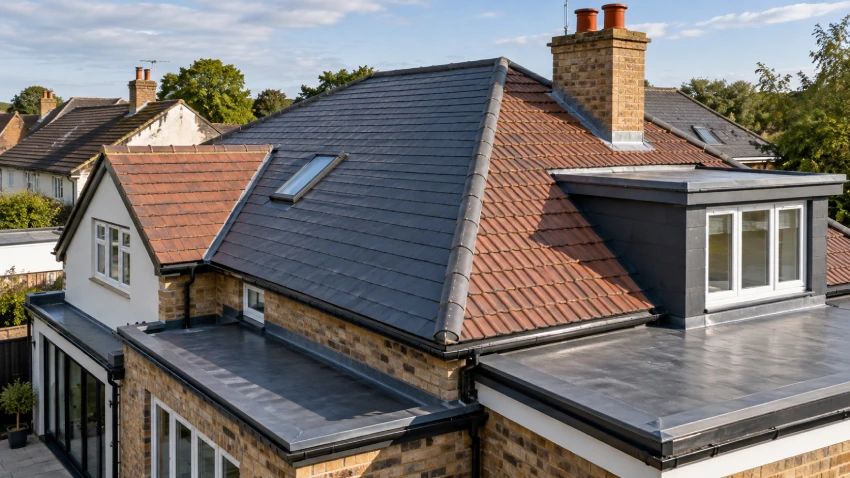
Residential roofing often combines several roof types. A flat roof may sit below tiles, slates, gutters, chimneys, parapets, roof windows, or pitched roof valleys. That makes Flat Roof Blisters Cracks Early Uk Repair Signs harder to diagnose because the water source may not be directly above the damp patch.
A & A Roofing London checks the flat roof and the connected roof areas together. A blister may be caused by membrane age, but a crack near an upstand may be worsened by a leaking flashing or blocked gutter above.
The wider leak investigation should include roof leak source groups and weather-driven surface stress. This prevents the repair from focusing only on the visible flat roof mark while the real water path remains active.
Flat Roof Blisters Cracks Early Uk Repair Signs Area Coverage
Local roof layout, access, previous repairs, and property age all affect how flat roof blisters and cracks should be inspected. A & A Roofing London covers North London, Essex, and the Hertfordshire borders, helping homeowners assess surface defects, drainage, insulation, and connected roof areas before a small sign becomes a larger leak.
North London
In North London, Flat Roof Blisters Cracks Early Uk Repair Signs often appear on rear extensions, dormers, bays, garages, and mixed roof layouts where pitched sections drain onto flat surfaces. A & A Roofing London checks the flat roof membrane, outlets, edge details, and upper roof water routes so the repair plan addresses the true cause.
Hertfordshire Borders
Across the Hertfordshire borders, Flat Roof Blisters Cracks Early Uk Repair Signs may be linked to ageing flat roof coverings, insulation issues, blocked outlets, or water flowing from tiled and slate roof sections. A & A Roofing London inspects the full roof arrangement to decide whether maintenance, restoration, local repair, or replacement is the right route.
Essex
In Essex, Flat Roof Blisters Cracks Early Uk Repair Signs can become more noticeable after heavy rain, frost, heat movement, or previous patch repairs. A & A Roofing London can assess whether the surface defect is contained or whether the flat roof system has wider drainage, flashing, insulation, or deck problems.
Final Roofing Decision
Flat Roof Blisters Cracks Early Uk Repair Signs should be checked before water gets beneath the membrane and spreads out of sight. A & A Roofing London can carry out a roof inspection in the UK to assess blisters, cracks, seams, upstands, outlets, deck condition, insulation risk, drainage, flashings, and internal damp evidence.
The right result may be a small flat roof repair, planned maintenance, roof restoration, or flat roof replacement. The important step is to identify why the blister or crack appeared, not just cover the surface mark.
FAQs About Flat Roof Blisters Cracks Early Uk Repair Signs
What do Flat Roof Blisters Cracks Early Uk Repair Signs usually mean?
Flat Roof Blisters Cracks Early Uk Repair Signs usually mean the roof surface or build-up is under stress. Blisters can indicate trapped air or moisture beneath the membrane, while cracks can point to ageing, brittleness, poor adhesion, standing water, or movement at edges and junctions. A & A Roofing London checks whether the issue is local and dry or whether moisture has already reached the deck, insulation, or internal finishes.
Are flat roof blisters always serious?
Not every flat roof blister is immediately serious, but no blister should be ignored. A stable, isolated blister may be monitored or repaired depending on the roof material and condition. A blister that grows, splits, softens, appears in groups, or sits near a seam or outlet is more concerning because it can open a water path. The safest decision comes from checking the surrounding membrane, roof age, drainage, and any damp below.
Can small flat roof cracks be repaired?
Small flat roof cracks may be repairable if the surrounding membrane is still flexible, well bonded, dry, and not brittle across a wider area. A repair is less reliable if the crack sits in ponding water, runs through a seam, exposes wet layers, or appears with multiple other cracks. A & A Roofing London inspects the roof build-up before recommending a repair so the patch is not placed over a failing surface.
When do blisters and cracks mean replacement is needed?
Replacement becomes more likely when blisters are widespread, cracks are opening, seams are failing, ponding water is present, the deck feels soft, or damp marks appear inside the property. Planning Portal states that most roof replacement work on existing buildings needs Building Regulations approval and that re-covering a roof should include improving thermal insulation because a roof is a thermal element.
Can insulation problems cause flat roof blistering or cracking?
Insulation and moisture problems can contribute to flat roof defects. Energy Saving Trust notes that flat roof insulation often requires specialist techniques and that insulating a flat roof from underneath can cause condensation problems if not done correctly. If moisture is trapped in the build-up, the surface may blister, soften, or crack. A & A Roofing London checks whether the defect is surface wear or a deeper warm roof, cold roof, vapour control, or ventilation issue.
Should homeowners walk on a flat roof to inspect cracks?
Homeowners should not treat a flat roof as a safe inspection platform. HSE says all roofs should be treated as fragile until a competent person confirms otherwise and states that flat roof edge falls can be prevented with guardrails and toe boards. Homeowners can photograph visible signs from safe ground-level positions, but roof-level inspection should be carried out with proper access and safety controls.
Does ponding water make flat roof cracks worse?
Yes, ponding water can make flat roof cracks and blisters more serious. Standing water keeps the membrane wet for longer, increases stress around weak points, and can reveal poor falls or blocked outlets. The Planning Portal describes roof drainage as the above-ground gutter and rainwater pipe system that carries rainwater, melted snow, and ice from the roof, so outlets and gutters should be checked with the flat roof surface.
Can roof restoration fix flat roof blisters and cracks?
Roof restoration can help where the flat roof is still structurally sound and the defects are early, contained, and dry. It is not suitable where moisture is trapped widely, the deck is soft, cracks are widespread, or the waterproofing system has failed. A & A Roofing London checks whether restoration would genuinely protect the roof or whether replacement is the better route for long-term weatherproofing.