
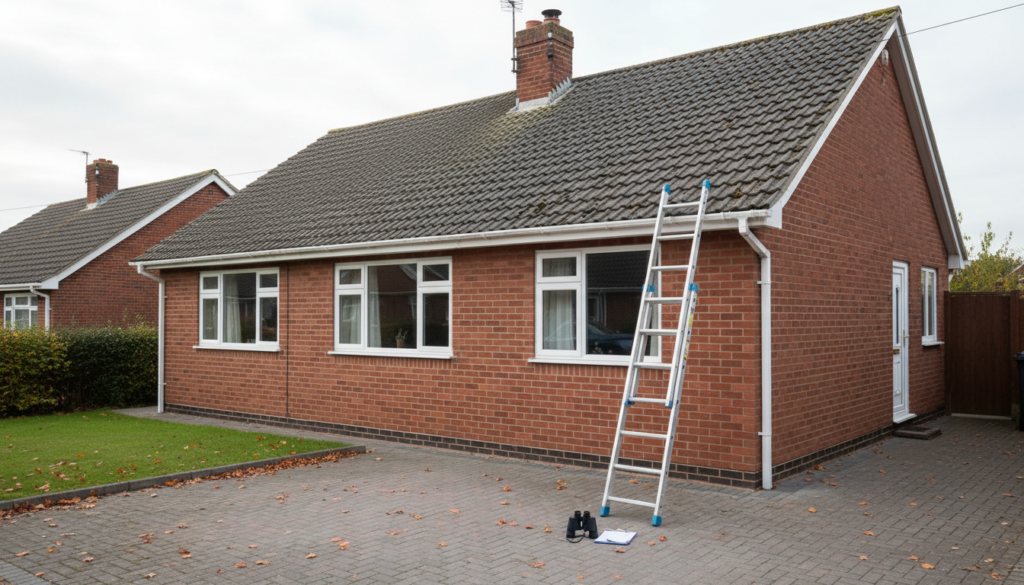
Roof Inspection Frequency UK is about checking the roof often enough to catch small defects before they become leaks, loose materials, damp insulation, blocked drainage, or structural damage. A roof does not need the same inspection schedule in every home. Tile roofs, slate roofs, flat roofs, pitched roofs, chimneys, valleys, gutters, and older roof structures all carry different risks. A & A Roofing London helps homeowners across London, Essex, and the Hertfordshire borders set a practical inspection rhythm based on roof type, age, exposure, recent storms, visible defects, and maintenance history.
Quick Check: Before the next storm season or after visible roof movement, ask A & A Roofing London to set a practical
roofing inspection in the UK
schedule around your roof material, drainage points, chimneys, and repair history.
Roof Inspection Frequency UK: The Practical Rule
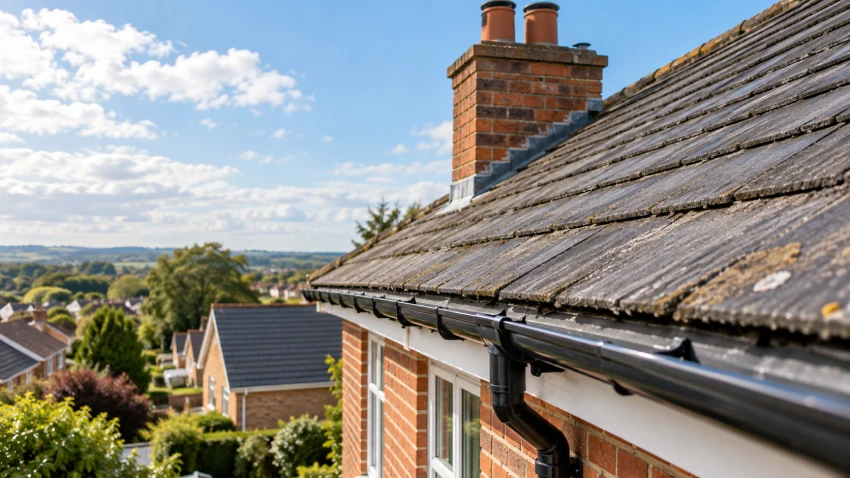
Roof Inspection Frequency UK should be based on risk, not a fixed calendar alone. A newer roof with clear drainage and no visible defects may need a different schedule from an older slate roof with chimneys, valleys, moss, previous repairs, and exposed roof slopes.
A practical inspection plan usually has three layers:
| Inspection trigger | When it applies | What A & A Roofing London checks |
| Routine condition check | For planned maintenance before defects become urgent | Coverings, ridges, valleys, gutters, leadwork, chimneys, flat roof areas |
| Weather-triggered check | After high winds, heavy rain, falling debris, or visible movement | Loose tiles, broken slates, lifted flashings, blocked drainage, internal damp |
| Defect-triggered check | When stains, leaks, sagging, slipped materials, or overflow appear | Water path, roof structure, covering condition, repair scope |
HSE says all roofs should be treated as fragile until a competent person confirms otherwise, and its fragile-surface guidance applies to maintenance, repair, cleaning, and demolition work. That matters because inspection frequency should not encourage homeowners to walk on roof surfaces themselves.
A & A Roofing London checks roofs from the viewpoint of prevention: what is likely to fail next, what already needs correction, and which areas should be monitored more closely. The right schedule may be annual, after-storm, seasonal, or defect-led depending on the property.
Tile Roofing Inspection Frequency
Tile roofs need inspection because tiles can crack, slip, lift, weather, or move after storms. The lower courses, ridges, hips, valleys, gutters, and areas around chimneys usually need closer attention than the middle of a clear roof slope.
A & A Roofing London answers how often should you inspect a tile roof in the UK by looking at roof age, tile type, exposure, moss, drainage, and previous repairs. If tiles are loose, broken, or repeatedly slipping, the inspection frequency should increase until the cause is corrected.
For a tile roof, inspection should include:
| Tile roof area | Why it needs checking |
| Ridge and hip tiles | Wind exposure and mortar or fixing movement |
| Valleys | Debris, moss, broken tile fragments, and water concentration |
| Eaves and gutters | Overflow, tile-edge damp, and blocked discharge |
| Chimney edges | Cut tiles, leadwork, and water entry around masonry |
| Internal roof space | Damp underlay, staining, daylight, or insulation damage |
For homeowners comparing inspection findings with visible roof issues, tile covering upkeep stages can support the maintenance plan without replacing a professional inspection.
Slate Roofing Inspection Frequency
Slate roofs often need a more careful inspection rhythm because slate systems rely on correct laps, fixings, underlay, and roof junctions. Older slate roofs may look sound from the ground while individual slates, nails, ridges, or flashings are beginning to fail.
A & A Roofing London checks slate roof maintenance in the UK by reviewing slipped slates, cracked edges, fixings, valleys, chimneys, ridges, underlay, and internal damp evidence. Slate roofs should not be walked casually because foot traffic can damage sound slates.
A narrower supporting resource such as slate inspection timing factors is useful where the roof is specifically slate. For wider visible defects, slate roof condition item groups can help organise what should be checked.
Flat Roof Inspection Frequency
Flat roofs often need more frequent observation than steep pitched roofs because they rely on shallow falls, outlets, seams, upstands, trims, and waterproof membranes. Early issues can look minor: a blister, small crack, ponding water, soft patch, or open lap.
A & A Roofing London checks flat roofs in London by reviewing surface condition, outlets, ponding, edge details, rooflights, upstands, internal damp, and whether water from higher pitched roofs is discharging onto the flat roof.
Flat roof checks should become more frequent when:
| Flat roof condition | Inspection reason |
| Ponding remains after rain | Drainage or fall may be failing |
| Cracks or blisters appear | Surface or membrane stress may be developing |
| Outlets block repeatedly | Debris source or drainage layout needs checking |
| Damp appears below | Water may already be below the membrane |
| The roof is ageing | Repair value versus replacement should be reviewed |
For early flat roof symptoms, flat roof membrane defect stages gives useful context on why small marks should be checked before water spreads beneath the covering.
Pitched Roof Maintenance Timing
Pitched roofs shed water effectively when tiles, slates, ridges, hips, valleys, flashings, gutters, and underlay are working together. Inspection frequency should increase after storms, visible tile movement, leaks, gutter overflow, or roofline changes.
A & A Roofing London checks pitched roof maintenance in the UK by reviewing water flow, roof pitch, tile or slate condition, ridge stability, valley clearance, flashings, gutter discharge, and internal damp evidence.
The Planning Portal explains that existing pitched roof structures include rafters, purlins, struts, ties, and ceiling joists, and that roof elements help transfer loads from wind and snow down to the walls. That is why inspection should look beyond the visible covering where roof movement, sagging, or repeated leaks are present.
Annual Roof Maintenance and Restoration
Annual roof maintenance is a sensible baseline for many homes, especially where the roof has valleys, trees nearby, moss, chimneys, flat roof sections, previous repairs, or older coverings. It is not a legal rule for every domestic roof, but it is a practical way to stop small roof defects from becoming urgent leaks.
A & A Roofing London uses annual roof maintenance in the UK to check whether a roof is suitable for continued maintenance, targeted repair, or restoration. The inspection may include tiles, slates, gutters, valleys, leadwork, chimneys, moss, drainage, ridges, and flat roof areas.
For routine planning, seasonal roof task sequence helps explain what belongs in a maintenance cycle. If the roof is already weathered but still serviceable, inspection can also decide whether restoration is better than repeated small repairs.
Roof Repairs That Change Inspection Frequency
A roof should be inspected sooner when repair signs appear. Waiting for a routine date can allow water to travel beneath tiles, slates, underlay, decking, insulation, or plaster before the problem becomes obvious indoors.
A & A Roofing London increases inspection priority when homeowners notice:
| Visible sign | Why inspection should happen sooner |
| Slipped or cracked tile | Water can enter beneath neighbouring courses |
| Damp patch indoors | The leak route may already be active |
| Overflowing gutter | Roof-edge damage may be developing |
| Loose ridge tile | Falling-material and water-entry risks increase |
| Sagging roofline | Structural movement may be involved |
| Repeated leaks after repair | The original source may not have been corrected |
For symptom sorting, early roof defect signal groups help homeowners record what they have seen. If the question is whether to patch or plan wider work, repair scope escalation factors give the next level of context.
Re-Roofing and Replacement Inspections
Inspection frequency changes when the roof is approaching replacement. A roof that needs repeated repairs, has widespread defects, failing underlay, soft decking, persistent leaks, or structural movement should not be managed only with routine maintenance checks.
Planning Portal states that repairs or re-covering to an existing pitched or flat roof will not normally need a building control application if less than 25% of the total building envelope and less than 50% of the roof are affected. Approval may be needed if those limits are exceeded, structural alterations are carried out, fire performance changes significantly, or the new covering increases roof weight by 15% or more.
For wider replacement work, Planning Portal says most roof replacement work on existing buildings needs Building Regulations approval, and re-covering should include improving thermal insulation because the roof is a thermal element.
A & A Roofing London uses inspection findings to decide whether roof maintenance is still enough or whether replacement planning is more practical.
Lead Work, Chimneys, and Inspection Timing
Leadwork and chimneys usually need closer inspection than open roof slopes because they contain junctions where water, masonry, tiles, slates, valleys, and flashings meet. A small leadwork split or chimney defect can create a leak even when the rest of the roof covering is sound.
A & A Roofing London checks flashing, soakers, back gutters, chimney pointing, mortar, ridge proximity, valleys, and damp near chimney breasts. These areas should be inspected after heavy rain, strong wind, visible staining, or repeated leaks near upper walls.
For junction-specific checks, flashing detail review points and leadwork overlap principles are useful. If damp appears around a stack, chimney leak tracing markers should be reviewed before assuming the main roof covering is the source.
Valleys, Gutters, and Drainage Checks
Drainage points often decide inspection frequency. A roof with clean slopes but blocked gutters or valleys can still leak because water stops leaving the roof correctly. Valleys, gutters, outlets, downpipes, and flat roof drains should be checked more often where trees, moss, storms, or previous debris problems are present.
A & A Roofing London checks valleys, gutters, lower roof edges, outlets, and downpipes as part of roof inspection. If water backs up in these areas, it can move beneath coverings or soak roof edges.
For drainage-related inspection planning, valley debris inspection cues, valley water concentration factors, and gutter discharge risk cues are useful supporting topics.
Storms and Weather-Triggered Inspections
Roof Inspection Frequency: UK should always include weather-triggered checks. A roof that looked fine in calm weather may show loose materials, blocked drainage, lifted flashing, cracked tiles, or internal damp after a storm.
The Met Office says gales are the most common cause of damage and disruption in the UK, advises people to stay indoors as much as possible during storms, and says not to go outside to repair damage while a storm is in progress. It also advises caution after storms around buildings, walls, trees, and blown-down cables.
A & A Roofing London can inspect after conditions are safe and identify whether the storm caused new damage or exposed an older defect. For safer homeowner observations, post-weather roof observation notes and temporary leak control order are relevant. For seasonal wear, weather exposure inspection triggers help connect rain, wind, frost, and heat movement with inspection timing.
Safety Limits for Homeowners
Inspection frequency does not mean homeowners should climb onto the roof frequently. Most homeowner checks should be ground-level or internal: looking for slipped tiles, gutter overflow, moss build-up, ceiling stains, loft damp, daylight, unusual debris, or roofline changes.
HSE says effective precautions are required for all work on or near fragile surfaces, no matter how short the duration. Its guidance also states that those carrying out the work must be trained, competent, and instructed in the necessary precautions.
A & A Roofing London treats safety as part of inspection planning. For homeowners, homeowner roof safety boundaries are important because the safest inspection schedule is one that identifies defects without unsafe roof access.
Roof Condition Checklist for Inspections
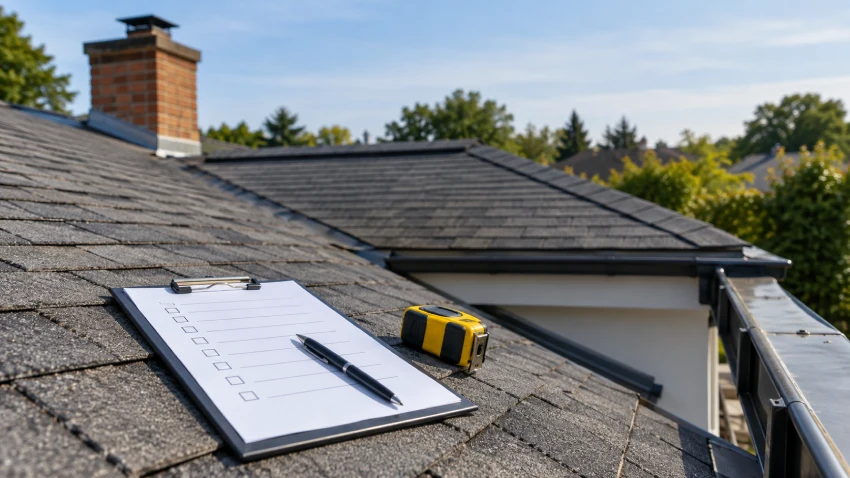
A roof inspection should follow a structured list rather than only checking the first visible defect. The goal is to understand the whole roof system: covering, structure, water flow, weathering, junctions, and internal signs.
A & A Roofing London typically considers:
| Inspection area | What it can reveal |
| Tiles and slates | Cracks, slips, missing coverings, movement |
| Ridges and hips | Loose ridge tiles, failed mortar, fixing issues |
| Valleys | Debris, blocked water flow, worn lining |
| Gutters and downpipes | Overflow, poor fall, blocked outlets |
| Leadwork and chimneys | Flashing splits, open joints, damp routes |
| Flat roof sections | Ponding, blisters, cracks, weak seams |
| Loft and ceilings | Stains, damp insulation, daylight, mould |
| Roofline shape | Sagging, movement, uneven planes |
For a more detailed itemised approach, roof condition item matrix can support preparation before a professional check.
Poor Workmanship and Repeat Inspections
Inspection frequency should increase after poor workmanship or repeated failed repairs. A roof may need follow-up checks if repairs were rushed, details were sealed over, materials were mismatched, or the original cause of the leak was not traced.
A & A Roofing London checks whether previous work corrected the actual issue or only covered the symptom. This is especially important around flashings, valleys, chimneys, ridge tiles, gutters, flat roof laps, and tile replacements.
NFRC says its roofing contractor members must pass an inspection before joining and have inspections every three years after that. It also says installation of roofing components should follow current Building Regulations, industry codes of practice, and manufacturer guidance where specified.
For homeowners reviewing past work, installation detail audit points are useful before approving another repair.
Loose Tiles, Ridge Tiles, and Sagging
Some roof issues should shorten the inspection interval immediately. Loose tiles, moving ridge tiles, and roofline sagging are not just cosmetic signs; they can indicate weather damage, fixing failure, weakened battens, structural movement, or poor previous work.
A & A Roofing London checks whether movement is local or part of a wider roof problem. If the defect is near a ridge, valley, verge, chimney, or eaves, the risk can increase because water and wind pressure are concentrated around junctions.
For movement-related checks, loose tile movement checks, ridge cap stability review, and roofline deflection clues are relevant supporting topics.
Residential Roofing Inspection Planning
Residential roofing inspection planning should match how the property is built. A terraced home with chimneys and shared rooflines may need different attention from a detached home with multiple valleys, a flat roof extension, or an older slate roof.
A & A Roofing London checks residential roofs by combining routine inspection, after-storm inspection, and defect-triggered inspection. The strongest schedule is not just “once a year”; it is “often enough for this roof, its age, its materials, and its risk points.”
Roof Inspection Frequency UK Area Coverage
Local property age, roof access, roof pitch, materials, extensions, trees, and weather exposure all affect inspection timing. A & A Roofing London covers North London, Essex, and the Hertfordshire borders, helping homeowners set inspection schedules around roof condition, maintenance needs, drainage points, and visible defect risks.
North London
In North London, Roof Inspection Frequency UK often applies to terraced homes, older roof coverings, chimneys, dormers, flat roof extensions, shared rooflines, and tight access. A & A Roofing London can set inspection timing around visible defects, storm exposure, gutters, valleys, leadwork, roofline movement, and roof maintenance history.
Hertfordshire Borders
Across the Hertfordshire borders, Roof Inspection Frequency UK may involve tiled roofs, slate roofs, nearby trees, moss, valley debris, weather exposure, and mixed property ages. A & A Roofing London checks roof coverings, drainage, flashings, chimneys, internal damp signs, and maintenance needs so inspection timing reflects the actual roof condition.
Essex
In Essex, Roof Inspection Frequency UK can become important after heavy rain, high wind, frost, gutter overflow, flat roof ponding, or visible roof movement. A & A Roofing London can inspect tiles, slates, flat roofs, pitched roofs, ridges, valleys, leadwork, chimneys, and internal damp evidence to decide how often the roof should be reviewed.
Final Roofing Decision
Roof Inspection Frequency UK should be practical, risk-based, and safe. A roof may need a routine annual condition check, extra checks after storms, quicker inspection when defects appear, and closer monitoring as it ages or after previous repairs.
A & A Roofing London can set a roofing inspection in the UK plan that reflects the real roof: tiles, slates, flat roof sections, pitched roof structure, valleys, gutters, leadwork, chimneys, ridges, internal damp signs, and maintenance history. The right inspection frequency helps decide whether the roof needs maintenance, repair, restoration, or replacement before damage spreads.
FAQs About Roof Inspection Frequency UK
How often should a roof be inspected in the UK?
Roof Inspection Frequency UK should be based on roof age, material, exposure, drainage, visible defects, and repair history. Many homeowners use an annual condition check as a practical baseline, with extra inspections after storms, leaks, tile movement, gutter overflow, or damp stains. A & A Roofing London sets the timing around the actual roof rather than applying one fixed rule to every property.
Should a roof be inspected after a storm?
Yes, a roof should be checked after a significant storm if there are visible changes, leaks, fallen debris, gutter overflow, loose materials, or new damp marks. The Met Office advises people not to go outside to repair damage while a storm is in progress and to be careful around buildings, walls, trees, and blown-down cables after storms. A & A Roofing London can inspect once conditions are safe.
How often should a tile roof be inspected?
Tile roof inspection frequency depends on tile age, roof pitch, exposure, moss, valleys, gutters, and previous damage. A tile roof should be checked sooner if tiles are slipped, cracked, loose, or if debris keeps appearing in gutters. A & A Roofing London checks the tiles, battens, underlay, ridges, valleys, gutters, and internal damp signs before deciding whether routine maintenance or repair is needed.
How often should a slate roof be inspected?
Slate roofs should be inspected based on age, slate condition, fixings, laps, roof exposure, and previous repairs. Older slate roofs or slate roofs with slipped pieces, cracked edges, chimney junctions, or damp signs should be checked more closely. A & A Roofing London inspects slate roofs carefully because careless access can damage the covering and because a small slipped slate can create a hidden water path.
Do flat roofs need more frequent inspection?
Flat roofs often need closer observation because they rely on outlets, falls, seams, upstands, trims, and waterproofing surfaces. Ponding, cracks, blisters, blocked outlets, and soft decking should bring inspection forward. A & A Roofing London checks whether the flat roof issue is a local surface defect, drainage problem, insulation issue, or a sign that replacement should be planned.
Is it safe to inspect my roof myself?
Ground-level and internal checks are sensible, but homeowners should not walk on roof surfaces. HSE states that all roofs should be treated as fragile until a competent person confirms otherwise and that effective precautions are required for work on or near fragile surfaces, including maintenance and cleaning. Homeowners can photograph visible signs safely and arrange a professional inspection.
When does an inspection show that replacement is needed?
An inspection may point to replacement when defects are widespread, leaks are recurring, underlay or battens have failed, flat roof decking is soft, roofline movement is visible, or repairs no longer last. Planning Portal states that most roof replacement work on existing buildings needs Building Regulations approval, and re-covering should include improving thermal insulation because the roof is a thermal element.
What should be included in a roof inspection?
A roof inspection should include tiles, slates, ridges, hips, valleys, gutters, downpipes, leadwork, chimneys, flat roof areas, pitched roof structure, roofline shape, loft damp, ceiling stains, ventilation, drainage, and previous repair points. A & A Roofing London checks these together because the visible symptom may not be where the roof problem started.