
How to Clean a Slate Roof in the UK: Safe Methods and Tips
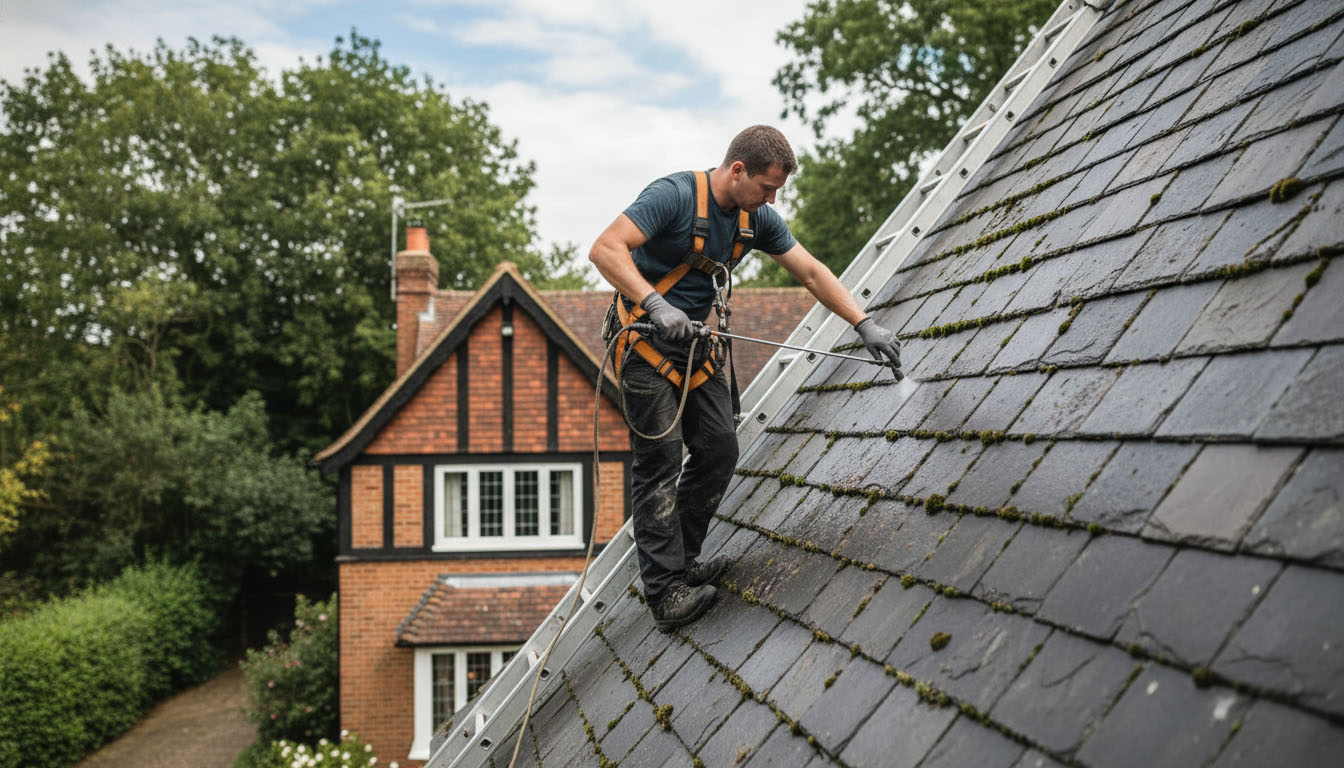
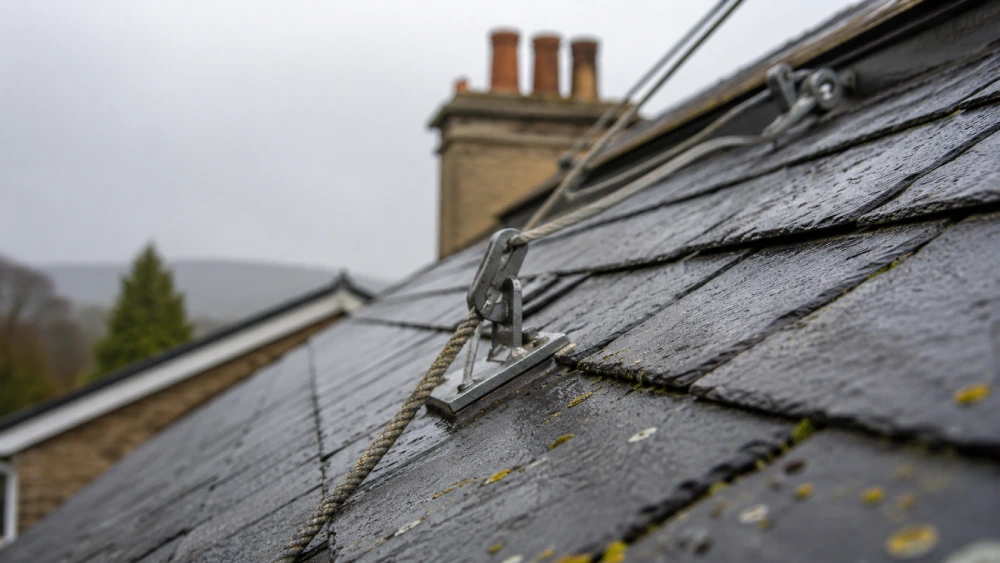
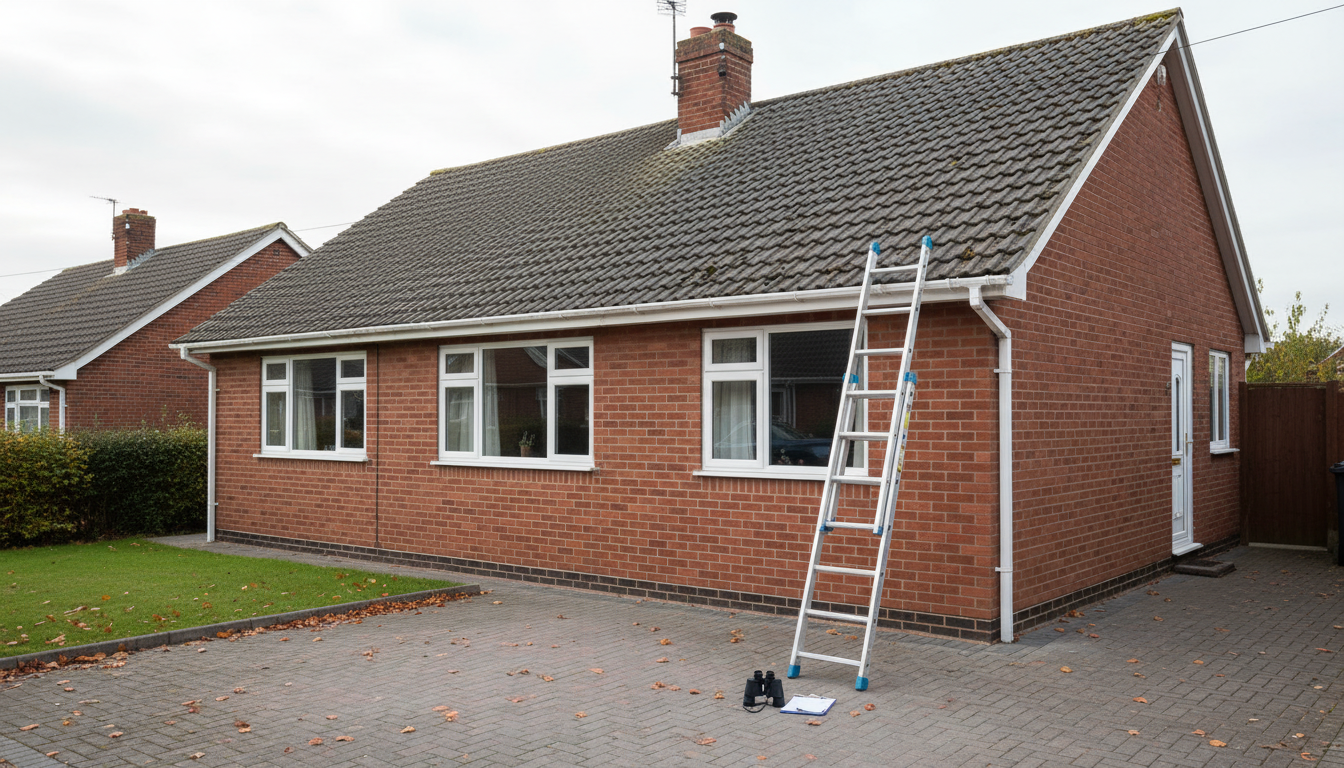
A successful clean starts with preparation rather than chemicals or pressure. Check the roof covering, drainage, weather, access, and existing defects first. Cleaning should never hide the fact that the roof may need repair before maintenance begins.
Slate Roof Cleaning Risk Check
What to Check | Why It Matters | Sensible Action |
Missing or slipped slate | Leaves part of the roof more exposed to rain | Repair before cleaning |
Cracked or loose slate | Cleaning or foot traffic may disturb it further | Mark the area and avoid loading it |
Visible sagging | May indicate a problem beyond surface dirt | Stop and arrange an assessment |
Previous temporary repair | Adhesive or poor fixing may already be failing | Check before disturbing nearby slate |
Heavy moss at gutters | Debris can interfere with drainage | Plan gutter clearing with roof cleaning |
Wet, icy, or windy weather | Increases work-at-height risk | Delay the work |
Unknown slate material | Natural slate and slate-like products may need different handling | Identify the covering first |
Inspect the Slate Before Removing Moss
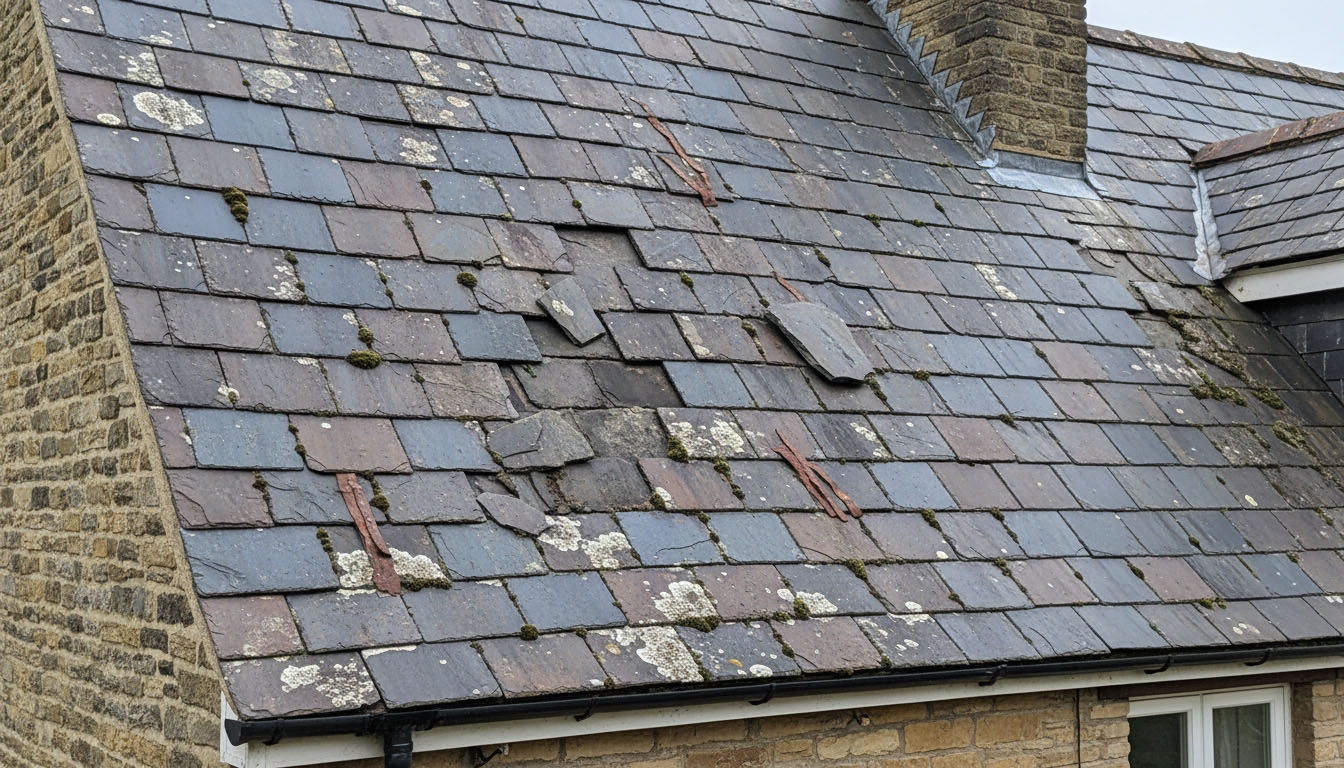
Start with a visual inspection from a safe position. Look for slipped slates, cracked edges, open gaps, damaged flashings, unusual movement, sagging, and previous repairs. Check inside the loft where practical for damp patches or evidence that rain has already entered.
Understanding the causes of slate roof damage helps separate a simple cleaning problem from a roof defect. Moss is visible; failing fixings or a displaced slate may be much more important.
This distinction matters because real homeowners often notice one obvious defect only to discover neighbouring problems once the roof is examined more carefully. Regular roof maintenance should therefore include condition checks rather than focusing only on appearance.
Recent severe weather deserves extra attention. If the roof has been exposed to strong winds or heavy rain, check for roof damage after UK storms before starting any cleaning work.
Stop if the Roof Shows Structural Warning Signs
Surface cleaning is not the correct response to every roof problem. Visible sagging, repeated leaks, multiple displaced slates, unstable areas, or widespread failed fixings deserve assessment before anyone concentrates on moss.
Reviewing the sagging roof causes and risks is especially important when the roof line no longer appears straight. Cleaning cannot correct a structural or fixing problem.
Do not assume that the underlay will make an exposed roof harmless. A small opening may still allow water to travel into the roof structure and affect timber, insulation, ceilings, or decoration.
Confirm What Roofing Material You Have
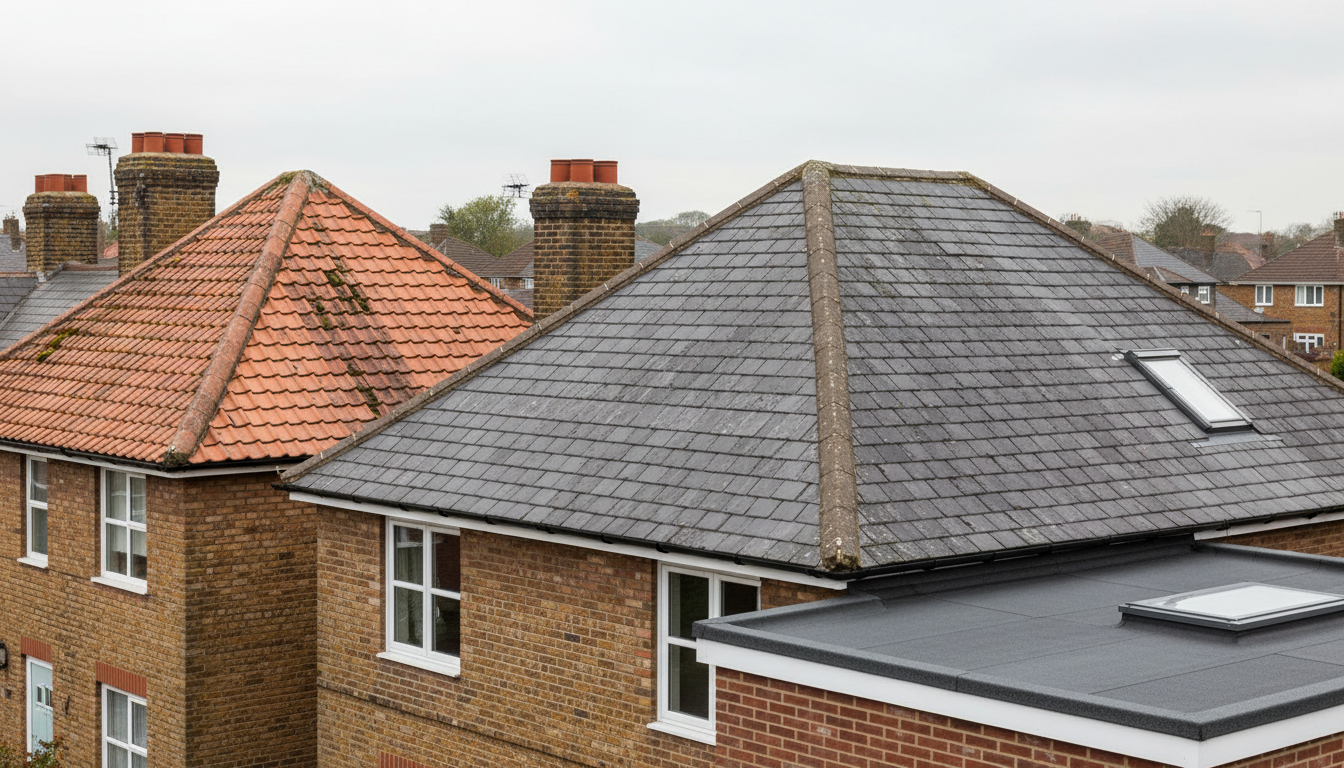
Not every dark grey pitched covering is identical. Before selecting a method, determine whether the roof uses natural slate, another slate product, concrete or clay tiles, or a combination of materials.
A guide to the types of roof tiles in the UK can help establish the basic differences. A homeowner looking after tile roofing london, for example, should not automatically assume every maintenance method transfers directly to natural slate.
Extensions and altered properties can also contain more than one roof type. A section of flat roof london roofing needs its own maintenance approach rather than being treated like the adjacent slate slope.
The same principle applies to pitched roof maintenance london: identify the construction and condition first, then decide what cleaning method is justified.
How to Clean Slate Roof UK: Cleaning Steps
Once the roof is confirmed as suitable for cleaning, work methodically. The objective is to remove problematic organic growth and debris without damaging slate, disturbing fixings, blocking drainage, or creating unnecessary roof traffic.
Step 1: Decide Whether Cleaning Is Necessary
A roof does not need aggressive treatment simply because it has aged or changed colour. Natural slate can develop weathering or surface changes without the slate itself having failed.
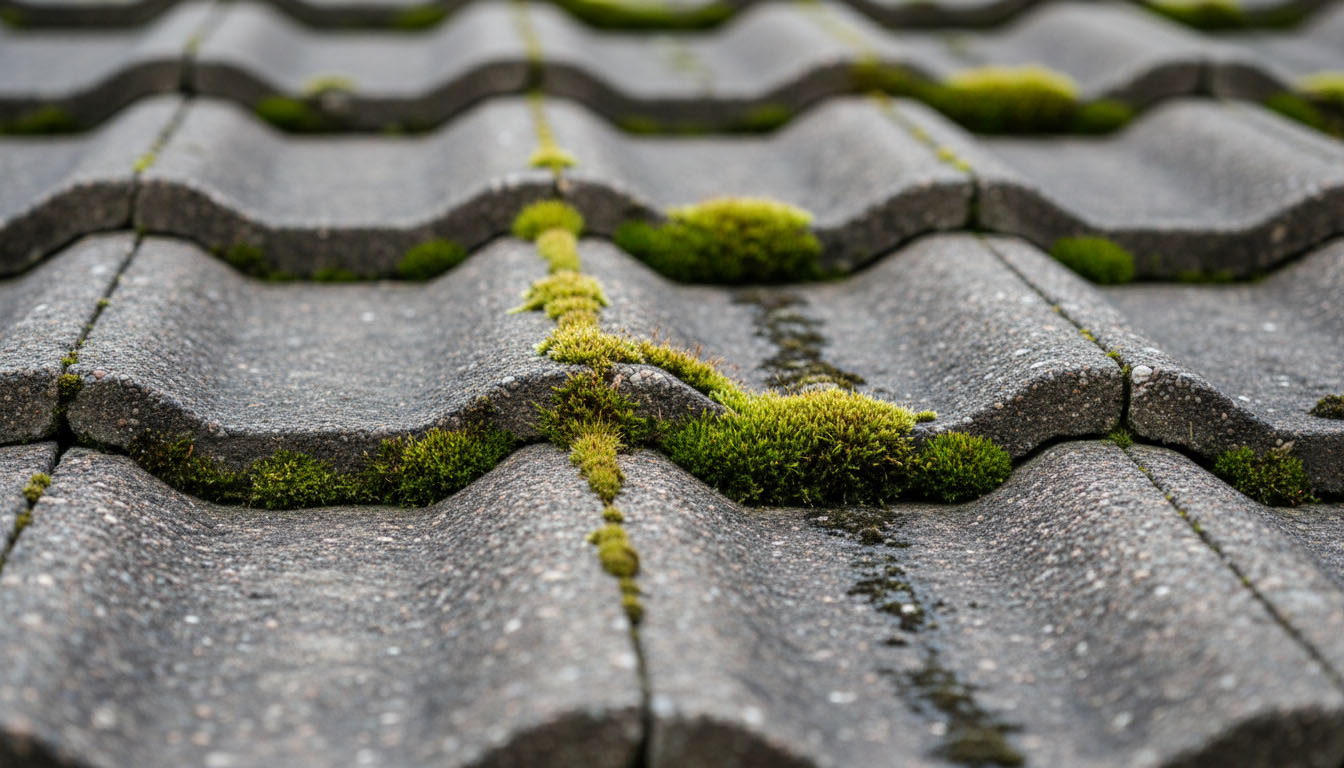
Focus on practical problems. Moss deserves more attention where it becomes heavy, obstructs drainage, holds loose debris around roof details, or falls into gutters and outlets.
Learning about roof moss causes and prevention is more useful than repeatedly removing growth without understanding why it returns. Shaded, damp areas may naturally experience greater biological growth than exposed sections.
Step 2: Plan Safe Access
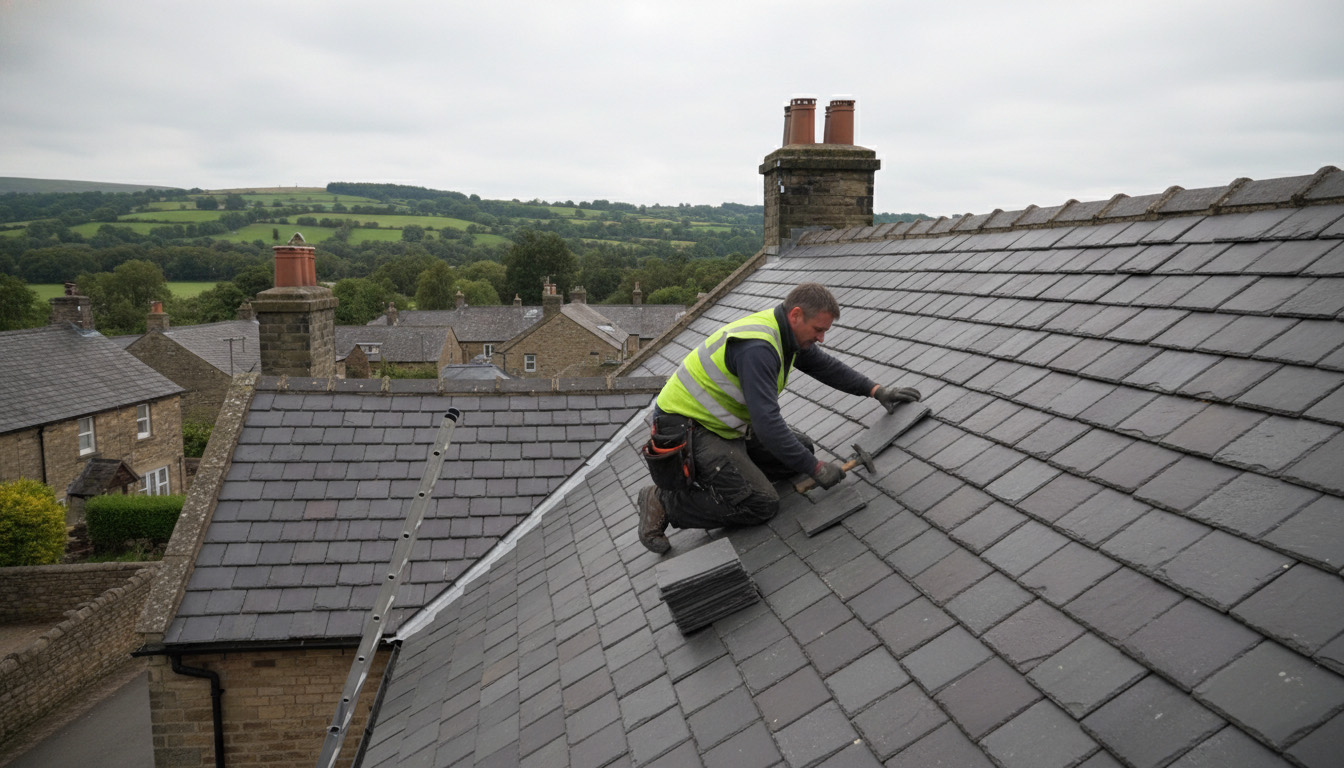
Roof cleaning is work at height. A pitched slate roof can become extremely slippery, and individual slates may crack or move when loaded incorrectly.
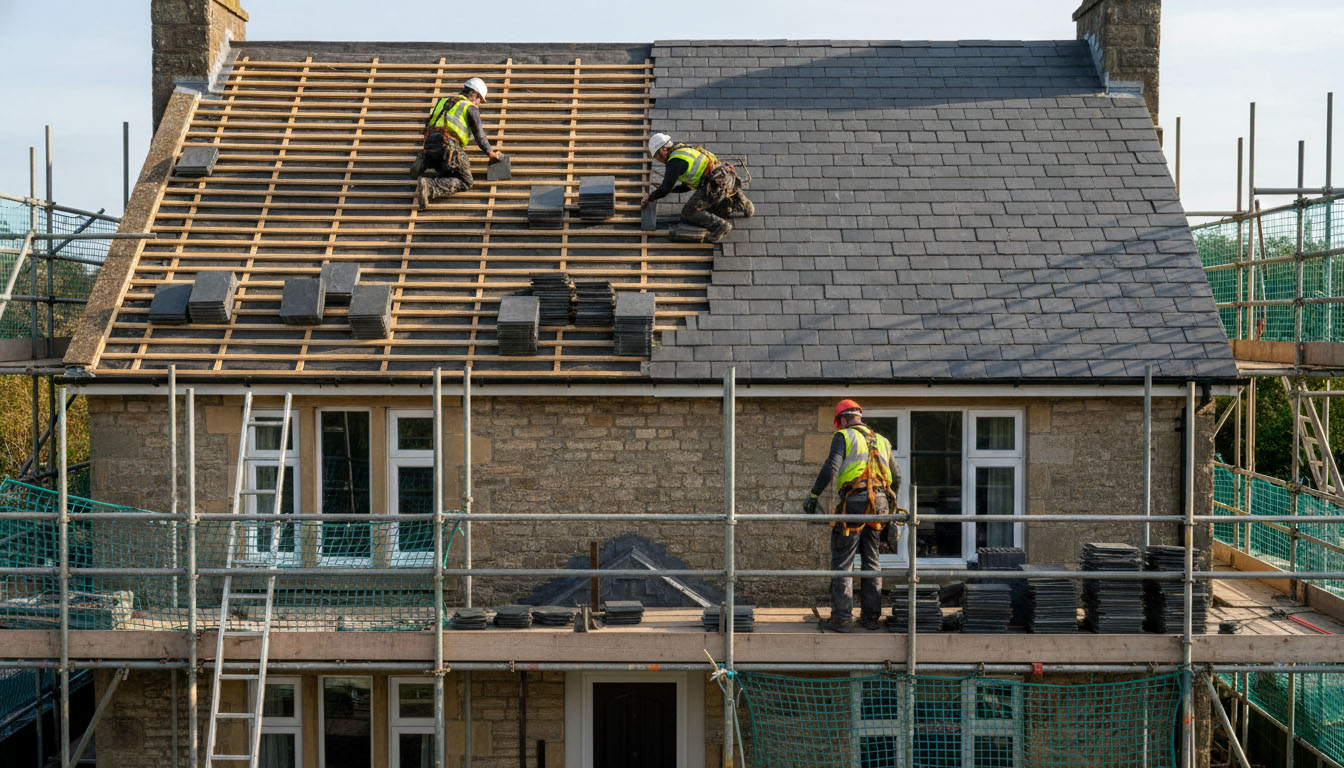
Do not treat walking directly across the roof as the default way to reach dirty areas. Safe access may require suitable roof-access equipment, scaffolding, a properly selected platform, or professional help depending on height, pitch, condition, and location.
Weather is part of the access decision. Rain, frost, ice, and strong wind can turn an otherwise manageable task into an unsafe one.
Step 3: Remove Loose Moss Carefully
Where removal is appropriate, begin with loose or heavy growth rather than immediately reaching for the strongest cleaning equipment available.
Work in a way that respects the slate overlaps. Avoid aggressively lifting edges or driving tools beneath slates. Unnecessary force can disturb individual pieces or older fixings.
The objective is controlled removal, not stripping every visible trace from the roof in one pass.
Step 4: Keep Debris Out of the Drainage System
Removed moss does not disappear simply because it leaves the slate surface. If it is swept directly into gutters or downpipes, one maintenance problem may become another.
Collect loose debris where practical and check gutters, outlets, and downpipes afterwards. Good drainage is part of slate-roof cleaning, particularly on properties with heavy moss growth.
Blocked drainage can allow water to overflow onto walls or collect where it should be moving freely away from the building.
Step 5: Treat Remaining Growth Carefully
Where a roof treatment is appropriate, use a product intended for the surface and follow its manufacturer instructions for dilution, application, dwell time, rinsing, surrounding surfaces, and environmental precautions.
Avoid assuming that a stronger chemical automatically produces a better result. A treatment that is unsuitable for the particular roofing material or surrounding metals, plants, drainage, and finishes may create another problem.
Do not invent your own concentration or combine products unless the manufacturer specifically permits it.
Step 6: Be Cautious With Pressure Cleaning
The useful rule is not that every form of pressure cleaning is automatically forbidden. The more defensible rule is that aggressive, uncontrolled pressure washing can damage roofing and should not be treated as a default cleaning method for slate.
High force can disturb vulnerable slates or fixings, while badly directed water can be driven toward or beneath overlapping material. Professional controlled cleaning may use equipment differently according to roof condition and manufacturer guidance.
For a homeowner, the safest assumption is that more pressure does not equal better cleaning.
Step 7: Replace Damaged Slates Before Finishing
If inspection or cleaning exposes cracked or missing material, deal with those defects rather than treating them as cosmetic imperfections.
The correct replacement needs to suit the existing covering. Guidance on choosing roof tiles in the UK can help explain why material type, size, profile, and compatibility matter.
Where cleaning reveals widespread deterioration instead of isolated surface growth, the question may move from cleaning toward whether a broader roof restore approach is appropriate.
Step 8: Inspect Again After Cleaning
Once the surface and drainage routes are clear, inspect the roof again from a safe position. Check that slates have not moved, gutters are flowing, debris has not collected around outlets, and no previously hidden defect has become visible.
Cleaning should leave the roof easier to assess, not simply cleaner to look at.
Long-term condition matters more than a spotless finish. Understanding the expected slate roofing lifespan in the UK provides better context for deciding whether an older roof needs routine care, individual repairs, or more substantial work.
How to Clean Slate Roof UK: Rules That Matter
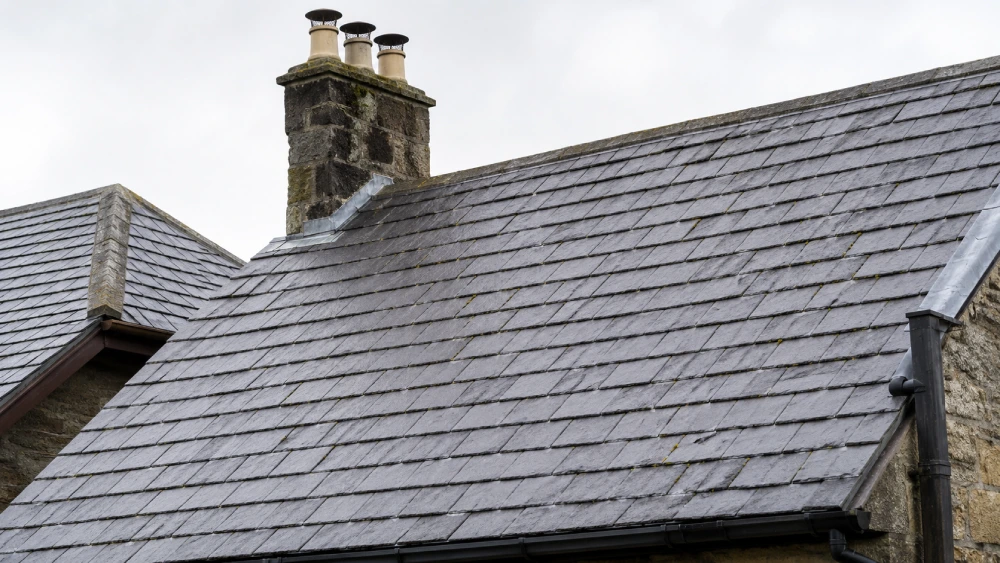
The safest rules are built around prevention. Protect the roof from avoidable damage, keep water moving correctly, respond quickly to defects, and avoid turning cosmetic cleaning into unnecessary mechanical or chemical stress.
What Real Homeowners Prioritized
Homeowner Concern | Engagement in Supplied Discussion | Practical Lesson |
Small missing slate becoming water damage | 381 upvotes | Resolve openings before routine cleaning |
Heavy rain increasing urgency | 80 upvotes | Weather changes the risk of exposed defects |
Evidence of a poor previous repair | 45 upvotes | Inspect old repairs before disturbing nearby slate |
Leak damage becoming much more expensive | 29 upvotes | Prevention can matter more than cosmetic cleaning |
These interactions do not prove how every roof will behave. They do show something useful: homeowners are far more concerned about water ingress and escalating damage than whether a roof looks perfectly clean.
Rule 1: Repair First, Clean Second
If slates are missing, badly slipped, fractured, or obviously unstable, make the covering weather-tight before routine cleaning.
A clean roof with an active leak is still a failed maintenance outcome.
Rule 2: Use the Least Aggressive Method
Start with the lowest level of intervention that solves the real problem. Do not automatically escalate from light moss removal to harsh chemicals or powerful washing.
Slate is a long-life roofing material when properly specified and maintained. Unnecessary aggression can introduce risks that were not present before cleaning.
Rule 3: Consider UK Weather Exposure
Rainfall, shade, frost, seasonal moisture, wind exposure, and surrounding vegetation can affect how quickly organic material builds up.
Comparing roofing materials for UK weather helps explain why the same maintenance routine should not be applied blindly to every roof.
If the property contains mixed roof construction, a tile, slate and flat roof comparison provides useful context for how maintenance priorities change between coverings.
Rule 4: Do Not Ignore Drainage
Moss removal should include gutters and outlets in the plan. Large amounts of organic material pushed downward can obstruct the very drainage system designed to move rain away from the property.
Keep gutters and downpipes clear after cleaning and check them again after subsequent heavy rain.
Rule 5: Make Inspection Part of Maintenance
A roof should not be ignored between major repairs. Routine roof maintenance can reveal a displaced slate, blocked outlet, failed flashing, or developing leak before the problem spreads.
Cleaning is useful when it supports inspection and drainage. It is less useful when appearance becomes the only goal.
Rule 6: Judge Condition, Not Just Age
Slate can have a long service life, but the covering is only one part of the roof. Fixings, flashings, battens, underlay, previous alterations, and individual replacement slates also influence performance.
A roofing material lifespan comparison can provide useful context, but actual condition should guide maintenance decisions.
Clean Slate Roof UK: Know When to Stop
DIY cleaning stops being sensible when access is unsafe or the roof shows signs of more than surface contamination. Multiple loose slates, recurring leaks, visible sagging, unstable previous repairs, difficult access, or widespread deterioration justify professional assessment.
The same applies when you cannot confidently distinguish between harmless surface growth and a condition that requires repair. Cleaning should reduce maintenance problems, not create new ones.
For a roof that needs inspection, repair, or specialist maintenance before cleaning, a slate roofing service in London is the sensible next step. Get the roof condition right first, then decide how much cleaning is actually required.
Clean Slate Roof UK: Frequently Asked Questions
Does slate colour change mean the roof needs cleaning?
No. When deciding how to clean slate roof UK properties, colour change alone should not be treated as proof of damage or heavy contamination. Natural slate can develop surface weathering and mineral-related changes over time. The better question is whether moss, debris, drainage obstruction, or another condition is affecting roof performance. If the roof is sound and drainage remains clear, aggressive cosmetic cleaning may provide little practical benefit.
Can you clean slate roof UK homes with nesting birds?
You should not begin work that could disturb active nests simply because cleaning has been scheduled. When planning how to clean slate roof UK properties, wildlife needs to be considered before access, scraping, or treatment begins. Active wild-bird nests have legal protection, and bats and their roosts also receive strong protection. If wildlife activity is suspected around the roof, obtain appropriate advice before disturbing the area.
How should chemical runoff be handled?
When deciding how to clean slate roof UK properties with a treatment product, runoff should be planned before application. Cleaning water containing chemicals or contaminants should not simply be allowed to enter surface-water drainage. Follow the product instructions, protect surrounding areas where required, and understand where downpipes discharge. If runoff cannot be controlled safely, professional treatment may be more appropriate than improvised chemical cleaning.
Is natural slate cleaned like fibre-cement slate?
Not automatically. A key part of learning how to clean slate roof UK properties is identifying the actual roof covering before choosing equipment or treatments. Natural slate and manufactured slate-like products can have different compositions, ages, fixings, and fragility concerns. Appearance alone may not provide enough certainty. If the covering cannot be confidently identified, establish the material before using an aggressive cleaning method or walking on it.
Can a slate roof with an old adhesive repair be cleaned?
Cleaning around a questionable previous repair deserves caution. Before deciding how to clean slate roof UK properties with previously replaced slates, check whether repaired pieces are stable and correctly secured. The homeowner discussion behind this guide included a slate that appeared to have been held with adhesive and later slipped. Cleaning should not disturb a temporary or failing repair. Have suspect areas assessed first.
How often should you clean a slate roof in the UK?
There is no credible one-size-fits-all interval for how often to clean slate roof UK homes. Roof orientation, shade, surrounding trees, moisture, drainage, material, pitch, and local exposure all affect growth. Condition-based maintenance is more useful than automatically cleaning every fixed number of years. Inspect periodically and act when moss or debris begins interfering with drainage or when the roof needs cleaning to support proper inspection.
Does cleaning make a slate roof last longer?
Cleaning alone should not be presented as a guaranteed way to extend lifespan. When considering how to clean slate roof UK properties, the useful maintenance value comes from controlling problematic debris, keeping drainage clear, and making defects easier to identify. Longevity also depends on slate quality, fixings, flashings, workmanship, weather exposure, and timely repairs. A spotless roof can still have defects, while an older-looking roof can remain serviceable.



Comments (4)
[…] Ignoring proper methods for cleaning slate roofs can create damage if fragile slates are walked on or forceful cleaning disturbs weak fixings. […]
[…] material-appropriate cleaning old slate before condition grading rather than trying to make every piece look […]
[…] slate cleaning is being considered, slate roof cleaning method notes are a relevant next step. For wider slate condition, slate damage cause patterns and common slate […]
[…] cleaning decisions, slate roof cleaning precautions is […]
Comments are closed.