
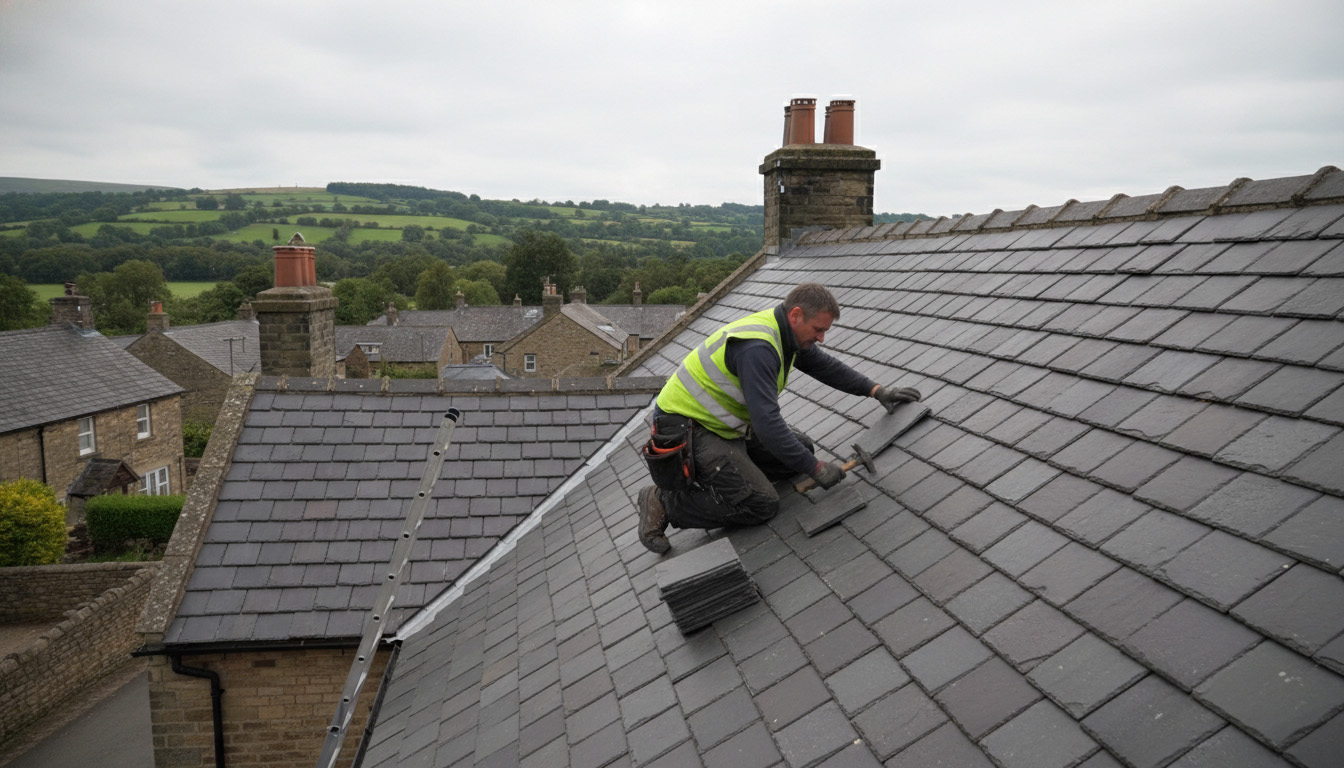
Can You Walk On A Slate Roof Uk? Homeowners should not walk on a slate roof because slate can crack, slip, loosen, or break under foot pressure. The risk increases when the roof is old, wet, moss-covered, steep, storm-damaged, poorly repaired, or hiding weak battens, damaged underlay, loose fixings, and fragile roof edges.
A&A Roofing London helps homeowners across London, Essex, and the Hertfordshire borders check slate roofs safely before maintenance, repair, restoration, or replacement begins. The goal is to inspect the roof without causing extra damage, trace leaks correctly, and decide whether the issue needs cleaning, slate repair, roof restoration, or a wider roof condition review.
Quick Check: If you need to check a slate roof after a leak, storm, slipped slate, moss build-up, or gutter overflow, ask A&A Roofing London to arrange a roof inspection in the UK instead of walking on the roof yourself.
Can You Walk On A Slate Roof UK? Main Safety Answer
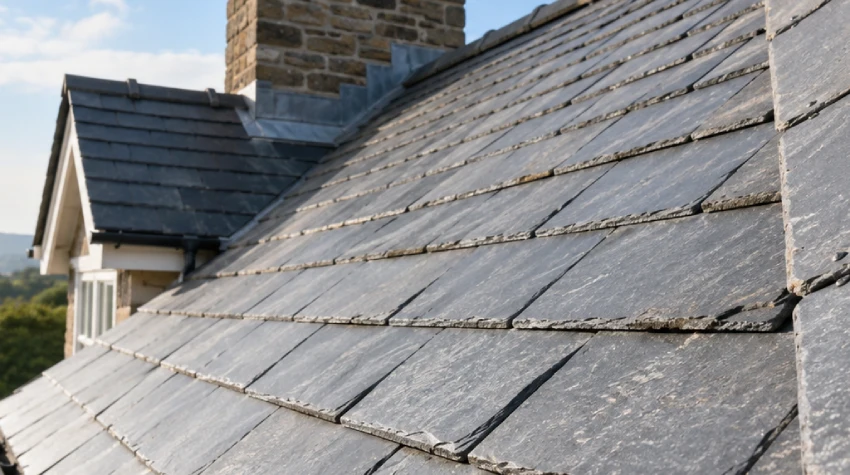
Can You Walk On A Slate Roof UK? For homeowners, the answer is no. Slate roofs are not safe surfaces for casual access. A professional roofer may access a roof with suitable equipment and working methods, but that is different from a homeowner stepping onto the slate surface.
| Risk | Why it matters | What A&A Roofing London checks |
| Cracked slate | Foot pressure can split brittle slate | Broken corners, hairline cracks, loose pieces |
| Slipped slate | Walking can disturb weak fixings | Nail holes, hooks, battens, nearby movement |
| Hidden weak battens | Support below the slate may be aged or damp | Roof build-up and loft evidence |
| Damaged underlay | Foot movement can worsen leak routes | Damp patches, tears, water tracking |
| Leadwork movement | Flashings can be bent, split, or disturbed | Chimneys, valleys, walls, abutments |
| Moss and wet surfaces | Slate can become slippery quickly | Moss, algae, surface moisture, drainage |
| Steep pitch | Fall risk increases on pitched roofs | Roof angle and safe access options |
| Roof edges | Verges, gutters, and ridges are high-risk areas | Edge details, ridges, gutter lines |
| Old repairs | Patched areas may be weaker than they look | Repair quality and recurring damage |
| Storm damage | Loose sections can shift without warning | Slates, ridges, gutters, valleys, chimneys |
A&A Roofing London checks the roof from safe positions first. A slate roof can look stable from the ground while still having loose courses, weak fixings, damp support layers, or fragile repair areas.
Why Should Homeowners Avoid Walking on Slate Roofs?
Homeowners should avoid walking on slate roofs because the risk is both personal and structural. A fall can cause serious injury, and a wrong step can create new roof damage while trying to inspect an existing problem.
Slate roofs are designed to shed rainwater down a pitched surface. They are not designed for unplanned foot traffic across random areas. A&A Roofing London uses safer inspection methods to reduce the risk of cracked slate, disturbed leadwork, and hidden water entry.
For wider homeowner access guidance, homeowner roof safety limits are useful.
What Happens If You Step on Slate?
Stepping on slate can crack the slate, break corners, loosen fixings, shift courses, damage leadwork, or expose old defects. Sometimes the damage is visible straight away. Other times, the slate develops a small crack that later becomes a leak point.
A&A Roofing London checks whether foot damage has affected only one slate or a wider section of the roof. If several slates have moved, the issue may involve weak fixings, aged battens, poor access history, or old repair work.
For fault diagnosis, slate defect recognition points and slate damage source checks are helpful.
How Can You Check a Slate Roof Safely?
Homeowners can check a slate roof from safe ground-level positions. Look for missing slates, slipped slates, broken pieces in gutters, sagging rooflines, moss build-up, overflowing gutters, chimney staining, damp ceilings, loft stains, and daylight visible through roof areas.
A&A Roofing London can then inspect the roof with suitable access. This helps confirm whether the problem is local maintenance, slate repair, roof restoration, or replacement planning.
For inspection structure, roof inspection item guide and roof review timing factors are useful.
When Should a Slate Roof Be Inspected?
A slate roof should be inspected after severe weather, after a new leak, before winter, after gutter overflow, when moss blocks water flow, when slate pieces appear on the ground, or when previous repairs start failing.
A&A Roofing London checks inspection timing based on roof age, pitch, weather exposure, access, chimneys, valleys, gutters, repair history, and internal damp evidence.
For slate-specific timing, slate roof inspection intervals are relevant.
Can Roofers Walk on Slate Roofs?
Roofers may need to access slate roofs, but that does not mean slate roofs should be walked on without planning. Professional access depends on roof pitch, slate condition, weather, scaffold, ladders, fall protection, fragile areas, and the work required.
A&A Roofing London avoids unnecessary pressure on slate roofs. Where access is needed, the inspection and repair approach should protect the roof covering as well as the person carrying out the work.
A homeowner seeing a roofer access a roof should not treat that as permission to do the same.
Slate Roof Maintenance Without Walking
Slate roof maintenance in the UK can often begin without anyone walking directly across the slate surface. Ground checks, loft checks, gutter observations, and safe access planning can reveal many roof problems.
A&A Roofing London checks slipped slates, cracked edges, loose fixings, leadwork, valleys, gutters, moss, chimneys, roof edges, storm damage, and damp evidence before deciding whether direct access is required.
For upkeep planning, slate maintenance access checklist and slate roof care review points are useful.
Can You Clean a Slate Roof Yourself?
Homeowners should not clean a slate roof themselves if cleaning requires climbing onto the roof. Cleaning can become dangerous quickly, especially when moss, rain, frost, steep pitch, or loose slate is present.
A&A Roofing London checks whether cleaning is needed for drainage, not only appearance. Moss and debris are most important when they block valleys, gutters, outlets, or roof edges.
For cleaning guidance, slate cleaning risk factors are useful.
How Do Moss and Wet Weather Affect Slate Access?
Moss and wet weather make slate roofs more dangerous. Moss can hide cracks, hold moisture, block drainage, and make the surface slippery. Wet slate can look stable from below but become unsafe once accessed.
A&A Roofing London checks whether moss is affecting water flow before recommending cleaning or maintenance. The priority is to protect valleys, gutters, outlets, and lower roof sections from blocked drainage.
For wider roof care, preventive roof maintenance steps are helpful.
What Should You Do After Storm Damage?
After storm damage, do not climb onto a slate roof. Wind may have loosened slates, lifted ridges, moved gutter sections, or weakened roof edges. Loose parts can shift when stepped on.
A&A Roofing London checks storm damage from safe positions first. The inspection should review slipped slates, exposed underlay, broken slate pieces, damaged ridges, chimney flashing, valleys, gutters, and internal damp.
For storm checks, storm damage roof review notes and rain wind frost roof effects are useful.
When Is Roof Access Urgent?
Roof access may be urgent when there is active water entry, several missing slates, loose ridge pieces, exposed underlay, dangerous debris, chimney damage, ceiling staining, or sudden roof movement. Urgent does not mean the homeowner should climb up.
A&A Roofing London can inspect the roof and decide whether temporary protection, local repair, restoration, or replacement planning is needed.
For urgent warning signs, roof repair urgency markers and repair replacement decision points are useful.
What If Someone Has Already Walked on the Roof?
If someone has already walked on a slate roof, the roof should be checked for cracked slates, shifted courses, new leaks, loose leadwork, broken pieces in gutters, disturbed valleys, and roof-edge movement.
A&A Roofing London checks whether the damage is local or part of a wider roof condition issue. One cracked slate may be repaired. Several damaged areas may show that the roof is fragile or already failing.
For repair context, slate repair assessment notes are relevant.
When Can Walking Damage Lead to Replacement?
Walking damage can lead to replacement planning when it reveals wider roof weakness. A single cracked slate may be a repair job. Several broken slates, repeated leaks, weak battens, failed fixings, damp underlay, and roofline movement may point toward a roof that needs more than local repair.
A&A Roofing London checks whether maintenance, repair, restoration, or replacement is the right route. The decision should be based on roof condition, not just the fact that foot traffic happened.
For replacement planning, slate replacement risk signs are useful.
How Does Foot Traffic Affect Slate Roof Lifespan?
Foot traffic can shorten slate roof lifespan by cracking slates, loosening fixings, disturbing leadwork, and creating hidden water entry points. Damage from walking may also make future maintenance more difficult if the roof becomes fragile.
A&A Roofing London checks lifespan by reviewing slate condition, repair history, roof pitch, weather exposure, fixings, battens, underlay, leadwork, valleys, and drainage.
For lifespan context, slate lifespan condition factors and slate roof ageing review notes are useful.
How Does Weather Exposure Change the Risk?
Weather exposure increases the risk of walking on slate. Rain makes slate slippery. Frost can make surfaces unsafe. Wind can affect balance and move loose roof parts. Moss can hide cracks and unstable slate edges.
A&A Roofing London checks exposed roof slopes, verges, ridges, valleys, gutters, chimney junctions, and roof edges before recommending access or repair.
For weather planning, weather exposure slate factors are useful.
Slate Installation and Safe Future Access
Good slate installation reduces the need for repeated roof access. Correct pitch, laps, fixings, battens, underlay, leadwork, valleys, gutters, and ventilation all help the roof perform without constant patching.
A&A Roofing London checks whether repeated access is being caused by poor installation, old workmanship, weak fixings, or unresolved drainage problems.
For installation context, slate installation detail checks are useful.
Tile Roofing and Slate Roof Access
Tile roofing in London also needs careful access, but tiles and slates behave differently under pressure. Clay tiles, concrete tiles, and slate can all crack or shift if accessed incorrectly.
A&A Roofing London checks tile and slate sections separately when a home has mixed materials. The access method and repair method should match the roof covering.
Flat Roofs and Slate Roof Access
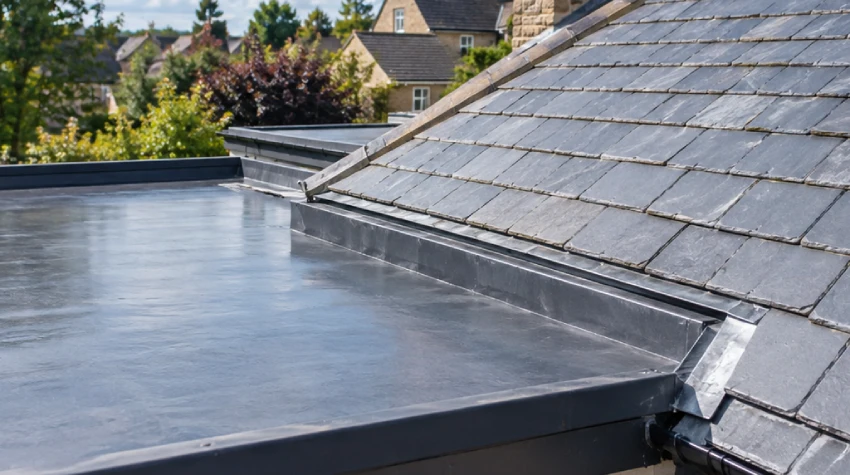
Flat roofs in London should not be treated as casual walking areas either. Flat roofs depend on waterproofing layers, outlets, falls, upstands, trims, and edge details.
Many homes have slate on the main pitched roof and a flat roof on an extension, dormer, porch, or garage. A&A Roofing London checks each roof section separately so the real source of damage is not missed.
Pitched Roof Maintenance and Slate Safety
Slate roofs are pitched roofs, so pitched roof maintenance in the UK needs planned access. Steeper roofs increase fall risk and make direct roof inspection more difficult.
A&A Roofing London checks roof pitch, ridge areas, valleys, gutters, chimneys, leadwork, and roof edges before deciding how the roof should be inspected or repaired.
Roof Restoration After Access Damage
Roof damage in the UK may need restoration when walking damage, storm movement, poor previous repairs, moss blockage, and recurring leaks affect several roof details.
A&A Roofing London checks whether restoration can protect the slate roof or whether the damage has moved beyond practical repair.
| Condition found | Likely next step | Possible outcome |
| One cracked slate | Inspect surrounding courses | Local slate repair |
| Several shifted slates | Check fixings and battens | Repair or restoration |
| New damp patch | Trace the water route | Slate, leadwork, or valley repair |
| Moss-blocked outlet | Check drainage route | Cleaning and maintenance |
| Broken pieces in gutter | Inspect roof surface and edges | Repair or wider review |
| Roofline movement | Structural review | Restoration or replacement planning |
Slate Type and Roof Fragility
Different slate roofs can react differently to foot pressure. Natural slate, synthetic slate, reclaimed slate, older slate, and mismatched replacement slate can vary in thickness, brittleness, strength, and fixing behaviour.
A&A Roofing London checks slate type before recommending maintenance or repair. Older or repaired slate roofs may be more vulnerable to damage from careless access.
For material context, slate type fragility notes and slate roof advantage limitation notes are useful.
Can You Walk On A Slate Roof Uk? Area Coverage
Local roof pitch, property age, slate type, weather exposure, moss, chimneys, gutters, valleys, access limits, and previous repairs all affect safe slate roof inspection. A&A Roofing London covers North London, Essex, and the Hertfordshire borders, helping homeowners avoid unnecessary roof walking and prevent avoidable slate damage.
North London
In North London, Can You Walk On A Slate Roof Uk? often matters for terraced homes, period properties, shared rooflines, chimney stacks, rear extensions, and older slate coverings. A&A Roofing London can check slipped slates, moss, valleys, leadwork, gutters, loft damp, and previous repairs without unnecessary walking across fragile slate.
Hertfordshire Borders
Across the Hertfordshire borders, Can You Walk On A Slate Roof Uk? may involve larger pitched roofs, tree debris, moss, storm movement, older slate details, and mixed roof materials. A&A Roofing London reviews roof pitch, slate condition, access routes, drainage, chimneys, valleys, and maintenance history before recommending repair or restoration.
Essex
In Essex, Can You Walk On A Slate Roof Uk? can depend on wind exposure, rain runoff, roof-edge weathering, gutter flow, chimney junctions, and existing slate condition. A&A Roofing London can inspect slate roofs, pitched roof details, flat roof connections, leadwork, valleys, and internal damp evidence before anyone accesses the roof surface.
Final Roofing Decision
Can You Walk On A Slate Roof Uk? Homeowners should not walk on slate roofs. The risk of injury, cracked slate, slipped courses, disturbed leadwork, broken edges, and hidden leak creation is too high. Safer inspection should come first, followed by controlled access only where needed.
A&A Roofing London can arrange roof inspection in the UK by checking slate condition, fixings, battens, underlay, leadwork, chimneys, valleys, gutters, ridges, roof edges, loft damp, moss, storm damage, flat roof connections, pitched roof details, and previous repairs. That gives homeowners a clear route to maintenance, slate repair, roof restoration, or replacement planning.
FAQs About Can You Walk On A Slate Roof Uk?
Can You Walk On A Slate Roof Uk?
Homeowners should not walk on a slate roof. Slate can crack, slip, or break under foot pressure, and roof access carries serious fall risk.
Why Is Walking on Slate Dangerous?
Walking on slate is dangerous because the surface can be brittle, slippery, steep, moss-covered, or hiding weak support layers. A wrong step can cause injury and roof damage.
Can Walking on Slate Cause a Leak?
Yes. Walking can crack slates, loosen fixings, disturb leadwork, or shift slate courses. Water may then enter below the covering and appear later as damp or staining.
How Can I Check a Slate Roof Without Climbing?
Check safely from the ground for missing slates, broken pieces, gutter overflow, moss, sagging rooflines, and chimney staining. Inside, check the loft for damp, daylight, wet insulation, and timber marks.
Can a Roofer Walk on a Slate Roof?
A roofer may access a slate roof when needed, but only with suitable equipment, planning, and safe working methods. Homeowners should not copy roof access methods.
Should I Clean Moss From a Slate Roof Myself?
No. Cleaning often requires access to a slippery and fragile roof. A&A Roofing London should check whether moss is affecting drainage before cleaning is considered.
What Should I Do After Storm Damage?
Do not climb onto the roof. Look safely from the ground for missing slates, broken pieces, loose ridges, gutter overflow, and new leaks, then arrange inspection.
What Should A&A Roofing London Inspect Before Roof Access?
A&A Roofing London should inspect slate condition, roof pitch, fixings, battens, underlay, leadwork, chimneys, valleys, gutters, ridges, roof edges, moss, storm damage, loft damp, flat roof connections, pitched roof details, and previous repairs.