
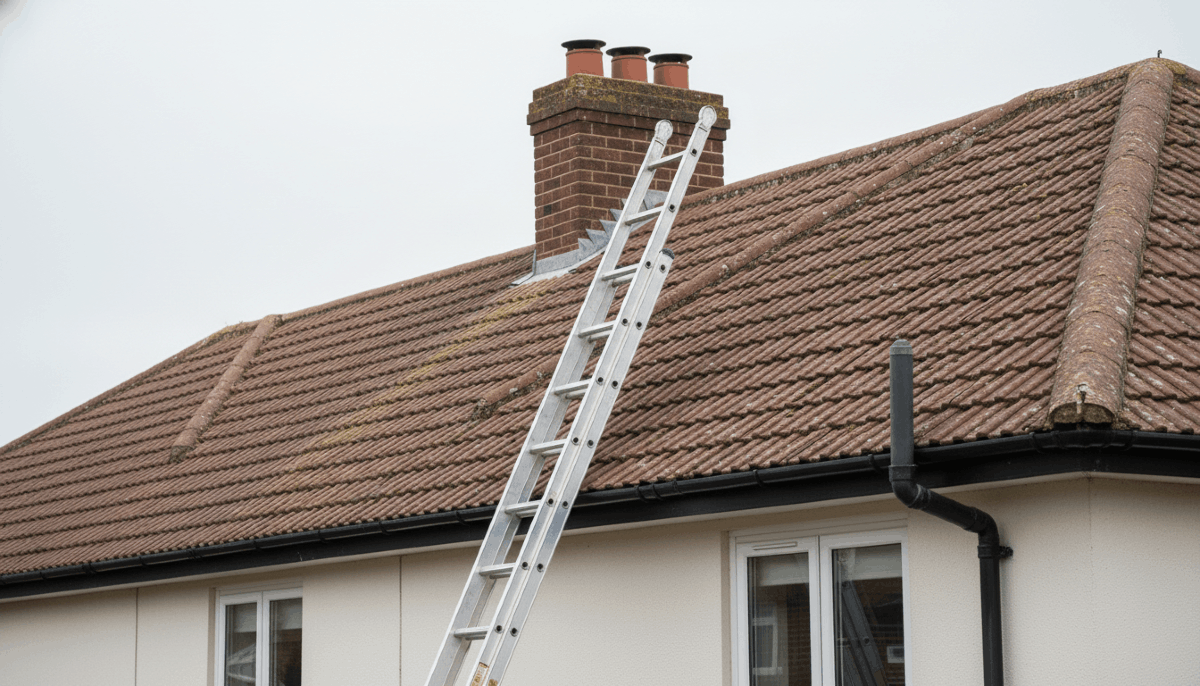
Roof Safety UK: What Homeowners Should Never Do starts with a simple rule: the roof is not a safe inspection platform. A small leak, loose tile, blocked gutter, cracked slate, or storm-damaged ridge can tempt homeowners to climb up “just for a look,” but roof work exposes people to falls, fragile surfaces, falling objects, and unstable materials. HSE says working at height remains one of the biggest causes of fatalities and major injuries, with common cases including falls from ladders and through fragile surfaces.
A & A Roofing London helps homeowners across London, Essex, and the Hertfordshire borders inspect roof damage safely and decide what needs repair, maintenance, restoration, or replacement.
Quick Check: Before climbing a ladder or stepping onto any roof surface, book a roof inspection in the UK with A & A Roofing London so the problem is checked safely and correctly.
Roof Safety Uk What Homeowners Should Never Do
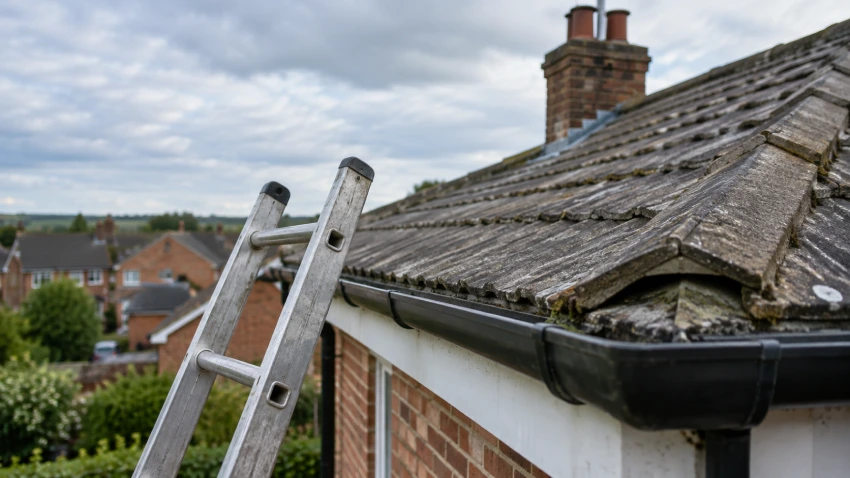
Roof Safety Uk What Homeowners Should Never Do is about avoiding decisions that turn a roof defect into an injury risk. HSE’s roof work guidance states that sloping roofs require scaffolding to prevent people or materials falling from the edge, while flat roof edge falls can be prevented with secure guardrails and toe boards.
| What homeowners should never do | Why it is unsafe | Safer A & A Roofing London route |
| Walk on tiles or slates | They can crack, slip, or fail under foot pressure | Ground-level photos followed by roof inspection |
| Lean a ladder on gutters | Plastic gutters and weak edges are not safe load points | Proper access equipment and safe positioning |
| Step onto a flat roof edge | Flat roofs still carry edge-fall risk | Edge protection and controlled access |
| Clear moss from the roof surface | Wet moss can hide defects and make surfaces slippery | Condition check before safe removal |
| Patch leadwork from a ladder | Reaching sideways increases fall risk | Correct access and junction inspection |
| Inspect storm damage during bad weather | Wind, rain, and loose materials increase danger | Make the area safe and arrange inspection |
Roof work is not ordinary DIY. HSE’s Health and Safety in Roof Work guidance says roof work is hazardous because it involves working at height, and roof work accounts for a quarter of deaths in the construction industry. It also says falls through fragile materials account for more of these deaths than any other single cause.
A & A Roofing London’s role is to remove guesswork. The company checks the roof covering, access risk, visible symptoms, drainage, chimneys, leadwork, ridge lines, valleys, and internal damp evidence before recommending a repair route.
Never Walk on Tile Roofing
Tile roofing can look solid from the ground, but roof tiles are not designed as safe walking surfaces for homeowners. Tiles can crack, dislodge, or slide when stepped on, especially after frost, moss growth, storm movement, or poor previous repairs.
A & A Roofing London checks tile condition from safe access and looks for broken corners, raised tiles, slipped courses, failed battens, and underlay damage. Where the covering itself is part of the risk, tile roofing in London should be assessed before anyone tries to walk across it.
Homeowners can still help without climbing. Take photographs from ground level, note which room shows damp, and record whether the issue appeared after heavy rain or wind. If tiles look displaced, tile displacement warning points can help identify what to report before an inspection.
Never Step on Slate Roofing
Slate roofing needs even more caution because slates can be thin, brittle, and easily cracked by foot traffic. A slate roof may look neat while individual slates are loose, over-nailed, fractured, or supported by ageing battens.
HSE says all roofs should be treated as fragile until a competent person confirms they are not. It also warns not to trust any sheeted roof, ridge, or purlins to bear a person’s weight without confirmation. That principle matters for homeowners because a roof surface is not safe just because it looks complete.
A & A Roofing London checks slate roof maintenance in the UK through safe inspection, not by guesswork. If the question is whether a slate surface can take foot traffic, slate roof access risks is the right supporting topic.
Never Treat Flat Roofs as Safe Platforms
Flat roofs feel less dangerous than pitched roofs, but that confidence is misleading. HSE states that falls from flat roof edges can be prevented by secure double guardrails and toe boards around the edge. Without protection, a flat roof still presents a serious fall risk.
A & A Roofing London checks flat roofs in London for cracks, blisters, ponding, failed trims, outlet blockage, weak deck areas, and edge defects. Homeowners should not use a flat roof as a place to inspect gutters, prune trees, clean moss, or take photographs.
Flat roofs can also hide weakness beneath the surface. Standing water, blistering, and cracked membranes can indicate deeper failure, especially where previous patching has trapped moisture or covered an old defect.
Never Climb Onto a Pitched Roof
Pitched roofs create a fall hazard because the slope, height, surface condition, and edge position all work against safe movement. A homeowner carrying tools, sealant, a camera, or a bucket of debris has even less control.
HSE guidance for working at height says work should be avoided where reasonably practicable, and where it cannot be avoided, falls should be prevented using an existing safe place of work or the right equipment. It also says collective protection such as guardrails, scissor lifts, and tower scaffolds should be considered before personal protection.
A & A Roofing London approaches pitched roof maintenance in the UK by controlling access first. If a pitched roof looks damaged after wind or rain, storm roof condition checks are useful for what to observe safely from the ground.
Never Ignore Sagging or Movement
A sagging roof is not a place for DIY inspection. Roofline movement can indicate structural stress, weakened timbers, water damage, failed supports, or long-term loading problems. Stepping onto that roof can make the situation worse and increase the risk of collapse or further damage.
A & A Roofing London checks roofline movement, internal damp marks, loft condition, coverings, and previous repair areas before deciding what needs urgent action. The key is to identify whether the movement is cosmetic, localised, or connected to structural failure.
When the roof shape has changed, roofline distortion signals are a better starting point than climbing for a closer look. If the roof also shows cracks, stains, or water entry, roof defect symptom patterns can help organise what the homeowner has noticed.
Never Patch Storm Damage in Bad Weather
Roof Safety Uk What Homeowners Should Never Do is especially important after storms. Loose ridge tiles, lifted flashing, slipped tiles, blocked valleys, and gutter overflow can all look urgent, but climbing during wind, rain, or poor visibility is unsafe.
Planning Portal warns that people die every year after falling when working at height and many more suffer life-changing injuries. It also says that when working on a roof, scaffolding is usually required, with handrails, mid rails, and toe boards helping protect people from falls and falling objects.
A & A Roofing London can advise on safe next steps after storm damage, including temporary protection where suitable and follow-up repairs when access is safe. For urgent situations, emergency weatherproofing steps explain what to do without taking roof-level risks.
Never Clean Moss Without Checking the Roof
Moss removal can become dangerous when homeowners climb onto tiles, lean over valleys, or use pressure equipment on fragile roof areas. Wet moss also hides defects and can make surfaces slippery.
A & A Roofing London checks whether moss is causing drainage problems, tile movement, damp retention, or gutter blockage before recommending removal. Where moss has contributed to roof damage in the UK, the route may involve restoration, repair, or controlled maintenance rather than aggressive cleaning.
Moss-related safety should be based on condition, not appearance. Moss removal roof-surface cautions can help homeowners understand why the method matters as much as the moss itself.
Never Clear Valleys or Gutters From Roof Level
Blocked valleys and gutters are common reasons homeowners consider climbing. The problem is that valleys, edges, wet tiles, and ladders create a dangerous combination. Debris can also hide cracked tiles, weak slates, rotten battens, or damaged leadwork.
HSE’s ladder guidance says ladders are not banned, but they should not automatically be the first choice and are only suitable for low-risk, short-duration tasks when the right ladder is used safely. HSE also warns against overreaching, overloading ladders, resting ladders against weak upper surfaces such as plastic gutters, and using ladders for strenuous or heavy tasks.
A & A Roofing London checks gutters, downpipes, valleys, outlets, and surrounding roof materials together. The safest supporting references are valley debris blockage indicators and gutter overflow damage routes.
Never Repair Leadwork or Chimneys From a Ladder
Leadwork and chimney defects often sit at awkward junctions. Reaching sideways from a ladder to apply sealant, push flashing back, or remove loose mortar is unsafe and usually ineffective.
Leadwork needs correct chasing, laps, soakers, cover flashings, and weathering detail. Chimneys may also involve pointing, cracked flaunching, loose pots, damp masonry, and nearby roof covering defects. A quick ladder patch can miss the actual water path.
A & A Roofing London checks chimneys, abutments, flashing junctions, and nearby tiles or slates under safe access. The best supporting topics are lead flashing failure zones and chimney leak investigation points.
Never Delay Roof Inspections After Warning Signs
Roof Safety Uk What Homeowners Should Never Do is not only about avoiding ladders. It is also about not waiting until a roof problem becomes a bigger hazard. Loose materials can fall, leaks can spread, and wet roof structures can weaken.
A & A Roofing London inspects roof coverings, drainage, flashing, chimneys, valleys, ridge tiles, flat roof surfaces, loft signs, and internal water marks. A planned inspection is safer than a rushed climb after the leak worsens.
For timing, roof inspection interval planning helps homeowners understand when checks are sensible. For what is normally reviewed, roof condition checklist items provide a useful structure.
Never Choose Repairs Without Diagnosis
A roof leak does not always start where the ceiling stain appears. Water may travel under tiles, slates, underlay, battens, flashing, valley linings, or flat roof membranes before it enters the room. A DIY patch can seal the wrong point and trap moisture elsewhere.
A & A Roofing London diagnoses the source before recommending repair. The answer may be a small tile correction, leadwork repair, valley clearance, flat roof repair, ridge work, roof restoration, or replacement.
| Symptom | Unsafe homeowner reaction | Better inspection route |
| Ceiling stain | Climb up and seal the nearest tile | Trace the water-entry path |
| Loose ridge tile | Push it back from a ladder | Check bedding, fixings, and ridge line |
| Gutter overflow | Lean over the roof edge | Inspect gutter, outlet, and valley feed |
| Damp near chimney | Apply sealant to flashing | Check leadwork and masonry |
| Repeated leak | Keep patching the same spot | Decide repair vs replacement |
The right supporting references are roof water-entry pathways, ridge tile movement checks, and repair-versus-replacement logic.
Never Accept Unsafe Roofing Workmanship
Homeowners should not ignore unsafe working practices from a contractor. No edge protection, unsecured ladders, workers walking across fragile surfaces, debris falling from height, and rushed roof access are warning signs.
NFRC says roofing components should be installed in line with current building regulations, industry codes of practice, and manufacturer guidance where specified. It also says NFRC members are subject to vetting, site inspections, and membership requirements. While not every safe roofer is an NFRC member, the principle is clear: roofing work should be planned, controlled, and carried out by competent people.
A & A Roofing London focuses on safe access, clear diagnosis, appropriate repair scope, and suitable roofing methods. If previous work appears questionable, workmanship defect markers help homeowners understand what to record and ask about.
Never Skip Maintenance Because the Roof Looks Fine
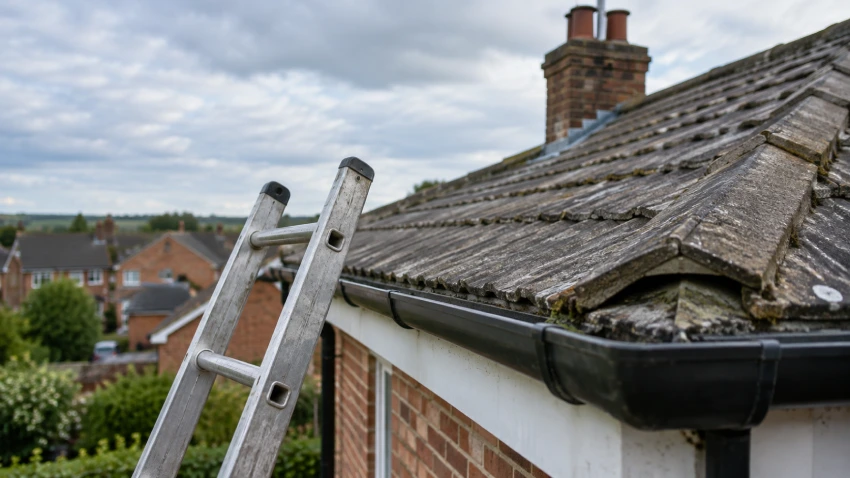
Residential roofing can hide early defects. A roof may look fine from the garden while a gutter outlet is blocked, a ridge tile has loosened, flashing has lifted, or a slate has cracked beneath a lap.
A & A Roofing London recommends planned roof inspections and maintenance rather than roof-level DIY. This is safer for homeowners and better for the property because small issues can be found before they become emergency leaks.
A practical next reference is seasonal roof upkeep sequence. Weather also matters because rain, wind, frost, and temperature changes can expose weaknesses, so weather-related roof stress factors are worth reviewing before winter or after storms.
Roof Safety Uk What Homeowners Should Never Do Area Coverage
Local roof safety depends on roof access, property layout, roof pitch, coverings, extensions, chimneys, and past repairs. A & A Roofing London covers North London, Essex, and the Hertfordshire borders, helping homeowners get roof problems inspected without taking unsafe ladder or roof-level risks.
North London
In North London, Roof Safety Uk What Homeowners Should Never Do often applies to terraced homes, rear extensions, dormers, flat roofs, chimneys, and awkward roof access points. A & A Roofing London can inspect tile, slate, flat, and pitched roof issues safely so homeowners do not have to climb to check leaks, blocked gutters, or storm damage.
Hertfordshire Borders
Across the Hertfordshire borders, Roof Safety Uk What Homeowners Should Never Do includes avoiding DIY roof walks on tiled and slate roofs, especially after wind, rain, moss growth, or visible movement. A & A Roofing London checks roof coverings, valleys, leadwork, chimneys, gutters, and loft signs to decide whether maintenance, repair, restoration, or replacement is needed.
Essex
In Essex, Roof Safety Uk What Homeowners Should Never Do is especially relevant where homeowners notice loose tiles, flat roof cracks, overflowing gutters, or damp ceilings after heavy weather. A & A Roofing London can inspect the roof safely and recommend practical next steps without exposing homeowners to falls, fragile surfaces, or unstable materials.
Final Roofing Decision
Roof Safety Uk What Homeowners Should Never Do is clear: do not walk on the roof, do not lean ladders on weak gutters, do not patch chimneys or leadwork from height, and do not treat flat roofs as safe platforms. The safe route is to document what you can see from the ground and arrange proper inspection.
A & A Roofing London can provide a roof inspection in the UK to assess tiles, slates, flat roofs, pitched roofs, valleys, gutters, leadwork, chimneys, storm damage, and internal leak evidence. That gives homeowners a controlled route to roof repairs, maintenance, restoration, or replacement without turning a roof defect into a personal safety risk.
FAQs About Roof Safety UK: What Homeowners Should Never Do
What is the most important rule in Roof Safety Uk What Homeowners Should Never Do?
The most important rule is not to climb onto the roof for a closer look. HSE states that working at height remains one of the biggest causes of fatalities and major injuries, including falls from ladders and through fragile surfaces. A homeowner can take photographs from the ground, note where damp appears inside, and arrange an inspection, but roof-level diagnosis should be left to competent roofers using suitable access controls.
Can homeowners safely walk on a tiled or slate roof?
Homeowners should not walk on tiled or slate roofs. Tiles and slates can crack, slip, or hide weak support beneath the surface. HSE says all roofs should be treated as fragile until a competent person confirms they are not. A & A Roofing London checks tile and slate defects through safe access, looking at fixings, courses, underlay, battens, and surrounding details before recommending repair or maintenance.
Are ladders safe for checking roof damage?
Ladders are not automatically unsafe, but they are not a safe default for roof damage checks. HSE says ladders can be suitable for low-risk, short-duration tasks, but they should not automatically be the first choice. HSE also warns against overreaching, overloading ladders, resting ladders on weak surfaces such as plastic gutters, and using ladders for strenuous work. Roof inspection usually needs safer access planning.
Should I climb up after storm damage?
No. After storm damage, the roof may have loose tiles, unstable ridge pieces, lifted flashing, wet surfaces, and hidden damage. Climbing during or soon after bad weather increases the safety risk. Planning Portal warns that people die every year after falling when working at height and says scaffolding is usually required for roof work. A safer route is to keep people away from the affected area below, photograph visible damage from the ground, and arrange an inspection.
Can I clear blocked gutters or moss myself?
Ground-level clearing may be possible in limited situations with the right equipment, but climbing onto the roof or leaning over roof edges is unsafe. Gutters can be weak support points, moss can make surfaces slippery, and blocked valleys may hide broken tiles or fragile sections. HSE warns against resting ladders on weak upper surfaces such as plastic gutters. A & A Roofing London can check whether moss or gutter blockage has already caused roof damage.
Is a flat roof safe to stand on?
A flat roof is not automatically safe to stand on. It may have weak decking, hidden deterioration, slippery surface growth, ponding water, or unprotected edges. HSE says flat roof edge falls can be prevented by secure double guardrails and toe boards around the edge. Homeowners should not use a flat roof as a viewing platform, storage area, or DIY repair surface without proper assessment and protection.
What should I do if I think a contractor is working unsafely?
Do not go onto the roof to check or intervene. From a safe position, record what concerns you, keep communication in writing, and ask how the work is being accessed and controlled. NFRC states that roofing components should be installed in line with current building regulations, industry codes of practice, and manufacturer guidance where specified. If there is immediate danger, keep people away from the area below and seek appropriate safety advice.
When should A & A Roofing London inspect the roof?
A & A Roofing London should inspect the roof when homeowners notice leaks, loose tiles, sagging, gutter overflow, storm damage, moss build-up, flat roof cracks, flashing problems, or repeated damp stains. Roof Safety Uk What Homeowners Should Never Do is about avoiding unsafe DIY access while still acting early. A planned inspection allows the roof covering, drainage, leadwork, chimneys, valleys, flat roof surfaces, and internal signs to be checked in a controlled way.