
How Much Are Old Slate Roof Tiles Worth In London?
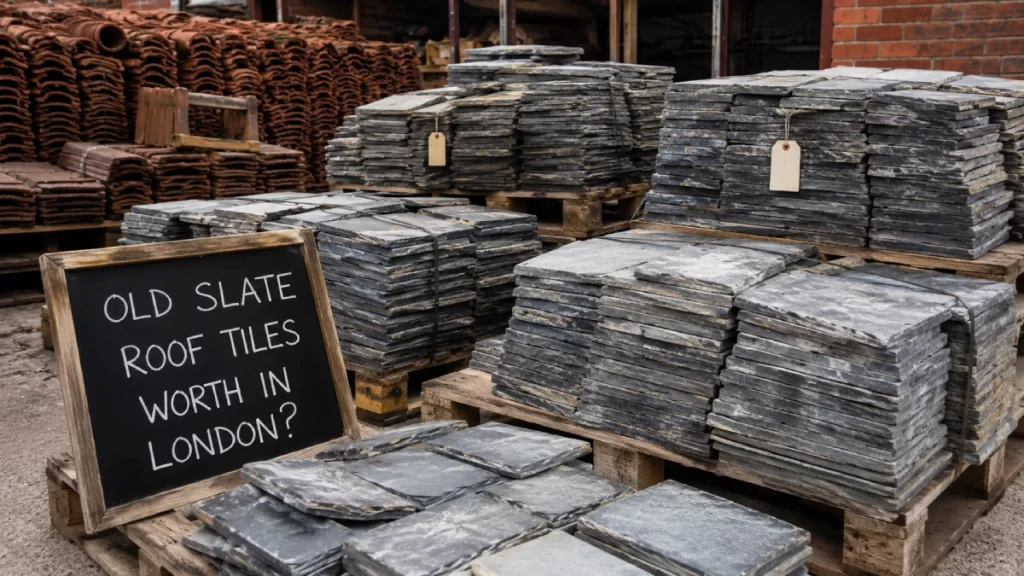
Old Slate Roof Tiles Worth: Value & Reuse
There is no reliable single price for reclaimed slate. Current UK retail references show meaningful differences between sizes and slate types, while a seller’s achievable figure can be lower than a reclamation yard’s advertised selling price.
Reclaimed Slate Value Benchmarks
Reclaimed slate example | Current retail reference | Main value influence |
Smaller reclaimed Welsh slate | Around £1.10 each | Size and condition |
Reclaimed Delabole example | Around £1.50 each | Origin and demand |
20 × 10 Welsh slate example | Around £2.50 each | Useful repair size |
Larger reclaimed Welsh slate | Up to around £4.99 each | Dimensions, scarcity and condition |
Mixed or damaged stock | Highly variable | Reusability and buyer demand |
These figures are retail reference points, not guaranteed homeowner selling prices. A yard preparing reclaimed slate for resale may have sorting, storage, transport, breakage, grading, and stockholding costs that a private seller does not see.
Before comparing prices, start with identifying reclaimed UK tile and slate types. Natural Welsh slate, Delabole slate, generic imported material, fibre-cement products, and other coverings should not be valued as though they were the same product.
Old Does Not Automatically Mean Worthless
One of the biggest mistakes is assuming that an 80-, 100-, or even older slate must be near the end of its useful life.
Natural slate can remain serviceable long after other components of the roof require attention. Nails, battens, flashings, valleys, and supporting details can deteriorate without automatically making every slate unusable.
That is why remaining service potential of historic natural slate matters when judging old material.
The correct question is not simply how old is it?
Ask:
- Is it natural slate?
- Is it structurally sound?
- Is it delaminating?
- Are the fixing holes intact?
- Can its size be matched?
- Is there demand for that particular material?
A sound 100-year-old slate may have more practical value than a damaged younger one.
Reuse Can Be More Valuable Than Sale
Cash resale is not the only form of value.
Where an older London roof needs repairs, retaining original usable slates can reduce the difficulty of finding compatible replacements. Reclaimed material may also preserve the colour, thickness, texture, and character of the existing roof better than newly manufactured alternatives.
Understanding reusing natural slate in roof repairs is therefore important before stripping and selling a complete batch.
If the roof is being refurbished rather than abandoned, retaining original materials during roof restoration can sometimes create greater practical value than treating every removed slate as resale stock.
Old Slate Roof Tiles Worth: Price Factors
Value is determined by a combination of physical and market factors. Two stacks containing the same number of slates can produce very different valuations if one is uniform, sound Welsh slate and the other is cracked mixed stock.
Slate Origin and Material Type
Origin matters because different slate has different durability, appearance, historic relevance, and market demand.
Traditional Welsh material may be attractive for repairs where an owner needs to match an existing roof. Delabole and other regional slate can also have specialist demand.
Generic material may remain reusable but have less scarcity value.
This is why the material suitability of reclaimed roofing stock needs to be established before attaching a price to it.
Do not price an unidentified pile simply from colour.
Dimensions Matter to Repair Buyers
Length and width are major practical factors.
A roofing contractor repairing an older property normally needs slate that works with the existing courses. A large quantity in a useful consistent size is generally easier to place than a random collection with no measurements.
When assessing a batch, record:
- length
- width
- approximate thickness
- quantity of each size
- colour
- condition
- whether pieces came from one roof
The same logic applies to matching reclaimed tiles for older roof repairs. A piece that looks approximately right may still be unsuitable if its dimensions or thickness prevent a proper match.
Thickness Can Change Practical Usefulness
Length and width are not enough.
Thickness can matter when a reclaimed slate needs to sit naturally among existing pieces. A noticeably thinner or thicker replacement can affect how the repaired section lies and looks.
The higher-engagement real-user research included experienced slate workers specifically discussing replacement with material of similar thickness.
That makes thickness grading a useful step before selling a batch to the repair market.
Condition Is the Biggest Filter
A rare slate is not automatically valuable if it cannot be reused.
Look for:
- major cracks
- active delamination
- broken corners affecting weathering
- damaged fixing holes
- excessive face damage
- major contamination
- severe splitting
- pieces broken during removal
Understanding the damage signs that lower reclaimed slate usability helps separate genuinely reusable roofing stock from pieces better suited to secondary uses.
Minor weathering should not automatically be confused with structural failure.
Weathering Is Not the Same as Failure
Old slate frequently shows colour changes, surface marks, dirt, lichen, or pollution staining.
That appearance may reduce cosmetic appeal for some buyers, but it does not automatically establish whether the stone remains sound.
Comparing weathering patterns in older UK roof coverings helps distinguish environmental exposure from defects that genuinely reduce reuse potential.
Likewise, surface moss versus underlying slate condition should be considered separately.
A dirty slate is not necessarily a bad slate.
Cleaning Should Not Destroy Value
Cleaning can make grading easier, but aggressive treatment can work against the seller.
Old slate is a roofing material, not a paving slab. Excessive force can create chips, break fragile edges, or turn reusable pieces into rejects.
Follow material-appropriate cleaning old slate before condition grading rather than trying to make every piece look new.
For valuation, soundness matters more than cosmetic perfection.
Old Slate Roof Tiles Worth: Transaction Contexts
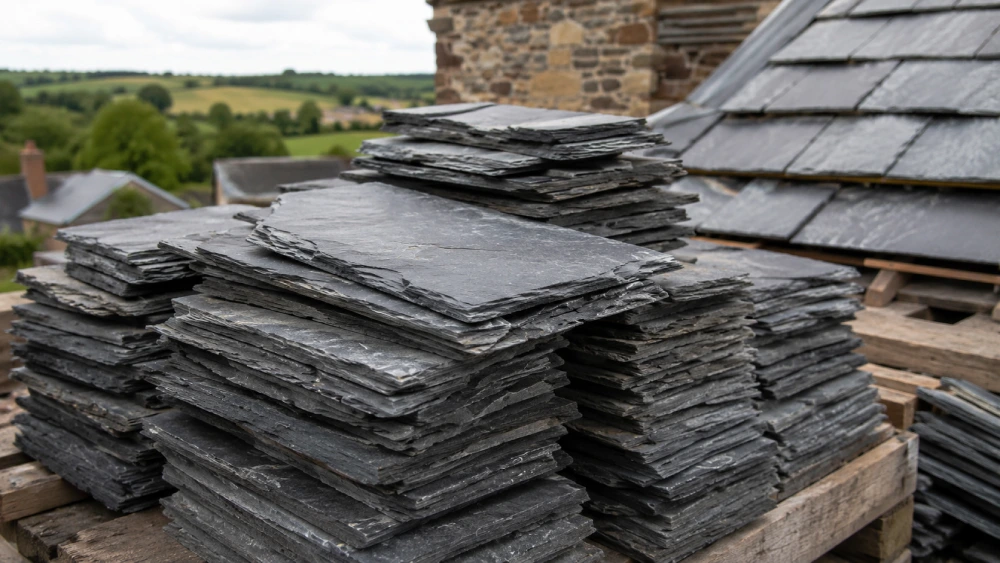
The same slate can have different economic value depending on who needs it and why. A matching repair buyer, reclamation yard, restoration project, and seller clearing a site all approach the batch differently.
Retail Price Versus Seller Price
This distinction is critical.
If a reclamation yard advertises a particular reclaimed slate at £3 each, that does not automatically mean it will pay a homeowner £3 for an unsorted roof load.
Retail stock may already have been:
- removed
- transported
- sorted
- cleaned
- graded
- counted
- stored
- photographed
- marketed
The yard also has to absorb unusable pieces and wait for the right buyer.
Use retail listings to understand market context, not as a guaranteed buyback quotation.
Repair Demand Can Increase Usefulness
Old slate becomes particularly useful when someone needs to repair an existing traditional roof.
A small but accurate batch in the right dimensions and colour can sometimes be more useful than a much larger quantity of generic mismatched material.
That is why tile repair matching on older roofs matters when estimating demand.
The practical question is not only how many slates do I have?
It is who needs this exact slate?
Quantity Still Matters
Buyers need to know whether the batch can cover one small repair, a roof slope, or a substantial restoration.
Before offering material, count usable pieces rather than estimating the total pile.
For larger works, tile quantity planning for reclaimed roof repairs becomes important because breakage, grading, headlap, roof area, and matching requirements influence how many usable units are actually needed.
A batch of 500 slates with 150 rejects is not a 500-slate roofing batch.
Random and Diminishing Courses Need Context
Not every valuable historic roof uses identical slate dimensions.
Traditional roofs may use random widths or diminishing courses, where the slate sizes intentionally change across the roof.
That can make the stock highly relevant to the right restoration and inconvenient to a buyer who simply needs standard repair pieces.
This is where pitched roof checks for reclaimed slate help establish whether an apparently mixed batch originally formed part of a specific traditional layout.
Do not discard unusual sizes before identifying what they came from.
Old Slate Roof Tiles Worth: Salvage Checks
The easiest way to lose reclaimed slate value is to damage usable pieces during stripping. The assessment should therefore begin before the roof is dismantled, not after a mixed pile has landed on the ground.
Slate Salvage Checklist
Check | Why it matters | Better action |
Identify material | Separates natural slate from substitutes | Record type before stripping |
Measure dimensions | Helps establish repair compatibility | Group by size |
Check thickness | Important for matching old roofs | Grade similar pieces together |
Inspect fixing holes | Damaged holes can reduce reuse | Separate questionable units |
Look for delamination | Splitting slate may be unsuitable | Remove from roofing-grade batch |
Check cracks | Major cracking reduces reliability | Grade before storage |
Record quantity | Buyers need realistic batch numbers | Count usable pieces |
Photograph both sides | Shows condition more clearly | Photograph before palletising |
Store carefully | Poor handling creates breakage | Keep graded material protected |
Start with roof condition checks before slate salvage before deciding that an entire covering should be stripped for resale.
If material has recently experienced severe weather, checking storm-exposed slate before salvage can also prevent impact-damaged or loosened pieces from being mixed into sound stock.
Separate Slate Failure From Roof Failure
A leaking old slate roof does not automatically mean every slate has failed.
The defect may involve:
- flashing
- valleys
- fixings
- battens
- previous repairs
- roof junctions
- displaced pieces
- supporting materials
That distinction is critical because stripping a failed roof system may still produce a substantial quantity of reusable natural slate.
The long-term performance of reused roofing materials therefore needs to be judged from the actual covering condition rather than the decision to reroof alone.
Old Slate Roof Tiles Worth: Reuse Decisions
Selling reclaimed material makes sense in some situations, but not every old roof should be treated as a stockpile waiting to be removed. Sometimes retaining compatible original material is the more sensible long-term decision.
Reuse, Sell or Reject?
Reuse on the same property when the slate remains sound and maintaining original appearance and compatibility has practical value.
Sell as reclaimed roofing stock when material can be removed safely, sorted accurately, and has realistic demand.
Hold as repair spares when the property keeps a substantial original slate roof and future matching may become difficult.
Reject from roofing reuse when pieces have serious cracks, delamination, unusable fixing damage, or other structural defects.
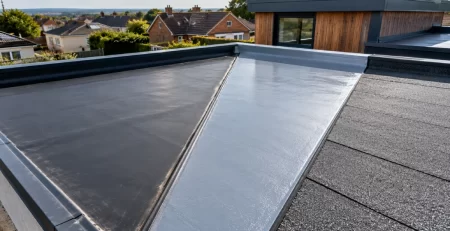
Where different roof sections are involved, roof form differences before material reuse can also matter. A traditional slate covering belongs to a very different roof system from a flat membrane area.
The broader system differences affecting reclaimed material reuse help explain why materials cannot simply be transferred between unrelated roof constructions.
Old Slate Roof Tiles Worth: Get a Real Figure
Do not value an old slate roof from age or a single online price.
First establish what the slate is. Then record dimensions, thickness, quantity, physical condition, fixing-hole condition, colour, and whether you have a consistent batch.
Current retail listings can provide a reference, but the real sale figure depends on who wants the material and how much preparation still sits between your roof and their next repair.
Before discarding reusable material, a reclaimed slate value and condition check can help separate sound original roofing stock from pieces that no longer have practical roofing value.
Frequently Asked Questions
Do Old Slate Roof Tiles Have More Value in One Colour?
Old slate roof tiles can have different practical value by colour when buyers are trying to match an existing historic roof. A distinctive grey, purple, green, or mixed appearance may be useful to a particular repair project, but colour alone does not determine value. Dimensions, origin, thickness, quantity, and physical condition still matter. A visually attractive batch with serious delamination may be less useful than plain-looking sound material.
Do Old Slate Roof Tiles Lose Value With Extra Holes?
Old slate roof tiles with additional or damaged fixing holes may lose roofing reuse value because the fixing area is important when the piece is installed again. The effect depends on where the holes are, whether the slate remains structurally sound, and how it would be refixed. Do not automatically classify every slate with an extra hole as worthless, but separate it from clean, undamaged roofing-grade stock during grading.
Are Painted Old Slate Roof Tiles Still Worth Selling?
Old slate roof tiles with paint, cement, coatings, or heavy contamination can be harder to sell for roofing reuse because buyers cannot assess the natural face as easily and removal may damage the stone. The amount and type of contamination matter. A light removable surface deposit is different from permanent coatings or adhered mortar. Grade contaminated material separately instead of assuming it deserves the same value as clean reusable slate.
Can a Small Batch of Old Slate Roof Tiles Have Value?
Yes. Old slate roof tiles do not need to fill an entire roof to have practical value. Small batches can be useful for repairs when the dimensions, thickness, colour, and material match an existing covering that is difficult to source. In some cases, 20 accurately matched sound slates may be more useful to a repair buyer than hundreds of unrelated pieces. Clear measurements and photographs make a small batch easier to assess.
Does London Collection Access Affect Slate Value?
The practical sale value of old slate roof tiles can be affected by collection and handling conditions even when the material itself is good. Heavy slate stored in a difficult-access London property may involve labour, parking, carrying, loading, or transport that a buyer has to account for. Keep material safely stacked and make the quantity and collection conditions clear when seeking a valuation so buyers can separate material value from logistics.
Are Old Slate Roof Tiles From One Roof More Useful?
A consistent batch of old slate roof tiles from one roof can be easier to assess because the pieces may share similar origin, weathering, thickness, and dimensions. That does not guarantee a higher selling price, but it can make grading and matching simpler. Keep batches together where possible and record which pieces came from the same roof section rather than mixing several unrelated sources into one unsorted pile.
Should Both Sides of Old Slate Roof Tiles Be Photographed?
Photographing both faces of old slate roof tiles can make remote valuation more useful because one front-facing image may hide fixing holes, delamination, mortar residue, or damage on the reverse. Include photographs of representative pieces, edges, fixing areas, stacked quantities, and measurements. Images cannot replace physical grading, but they give reclaimers or repair buyers much better information than a single photograph of an unidentified pile.


Comments (3)
[…] heritage properties are involved, reclaimed slate may be necessary to preserve character. In such cases, professional roof restoration services ensure matching, […]
[…] from lightweight concrete tiles to natural slate may require reinforcement of rafters or […]
[…] from lightweight materials to natural slate often triggers structural assessment requirements due to increased load […]