
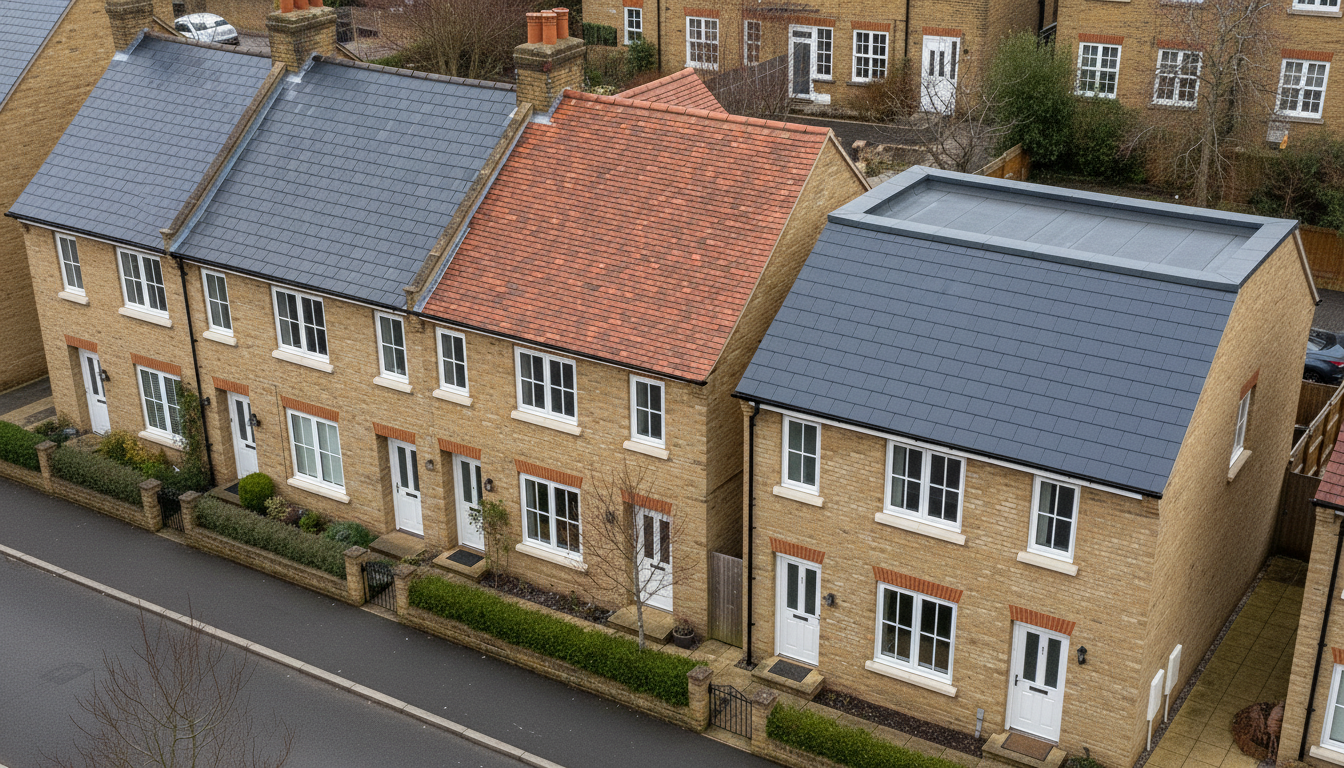
Best Roofing Materials UK: Lifespan & Key Trade-Offs

Best Roofing Materials UK: Core Comparison
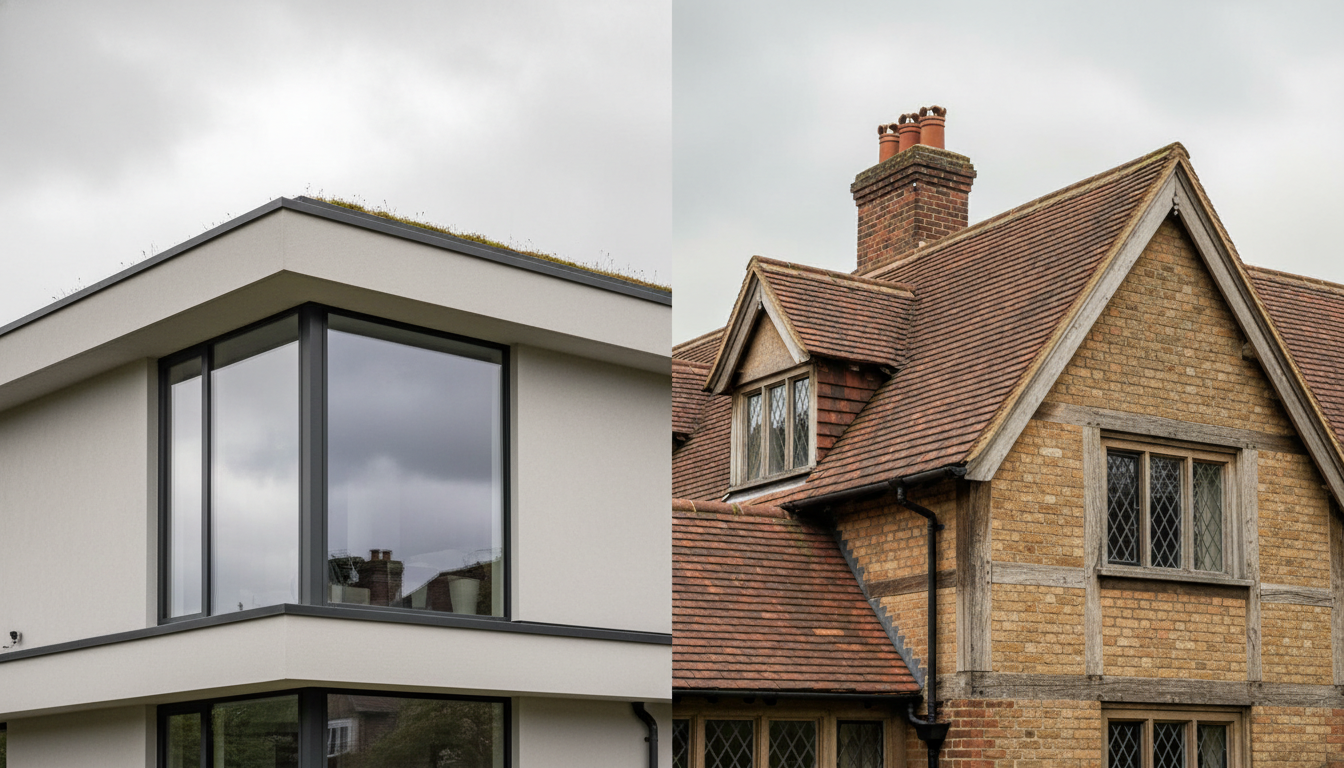
The main roofing options serve different types of buildings. Natural slate is known for exceptional longevity, clay and concrete dominate traditional pitched roofing, metal provides a lightweight alternative, and modern membrane systems solve low-pitch and flat-roof requirements.
Roofing Material Comparison
Material | Typical Roof Type | Research Lifespan Context | Main Strength | Main Limitation |
Natural slate | Pitched | 75–100+ years, with high-quality slate potentially longer | Exceptional material longevity | Weight, access and specialist detailing |
Clay tiles | Pitched | Often several decades, potentially much longer in suitable conditions | Durable traditional covering | Weight and brittle individual units |
Concrete tiles | Pitched | Several decades | Availability and broad profile choice | High covering weight and surface ageing |
Fibre-cement slate | Pitched | Around 20–50 years in supplied research | Lower structural demand | Shorter life than natural slate |
Metal roofing | Pitched / low pitch | Potentially many decades depending on metal and exposure | Lightweight and efficient water shedding | Detailing, thermal movement and corrosion considerations |
EPDM / membrane systems | Flat / low pitch | System-specific | Continuous waterproofing | Detailing and drainage are critical |
GRP / reinforced systems | Flat | System-specific | Rigid seamless finish | Installation conditions matter |
Mastic asphalt | Flat / detailed areas | Long-service system when properly designed | Durable continuous covering | Considerable weight |
These ranges should not be treated as expiry dates. Installation quality, exposure, maintenance, fixings and supporting components can shorten or extend practical roof life.
The UK roofing material suitability by property type is therefore more useful than declaring one covering universally superior.
Best Roofing Materials UK: Slate Trade-Offs
Natural slate earns its reputation because good stone can remain serviceable for generations. Its durability is one of the strongest benchmarks against which other pitched-roof materials are compared.
Why Natural Slate Can Last So Long
Slate is natural stone rather than a coated or moulded roofing product. High-quality material has very low water absorption and can tolerate repeated British weather cycles when correctly specified.
Understanding natural slate longevity and ageing behaviour is important because the slate and the roof underneath it do not necessarily age at the same rate.
Fixings can corrode. Battens can weaken. Flashings can deteriorate. Structural timber can suffer after prolonged leakage even when many original slates remain sound.
That is why a century-old slate roof does not automatically need replacing, but it also should not be assumed healthy simply because the visible stone still looks good.
Slate Maintenance Still Matters
Long service life does not mean zero maintenance.
Individual slates can slip, crack or become damaged during access. Fixing failure can also cause otherwise serviceable slate to move.
The damage mechanisms in UK slate roofing help separate stone deterioration from problems involving nails, battens, detailing or water entry.
Owners maintaining an older roof should also consider natural slate roofing maintenance tips rather than treating the material as maintenance-free.
Where cleaning becomes necessary, maintenance techniques for ageing slate roofs are particularly important because aggressive cleaning or inappropriate access can damage a covering that might otherwise remain serviceable.
Best Roofing Materials UK: Clay and Concrete
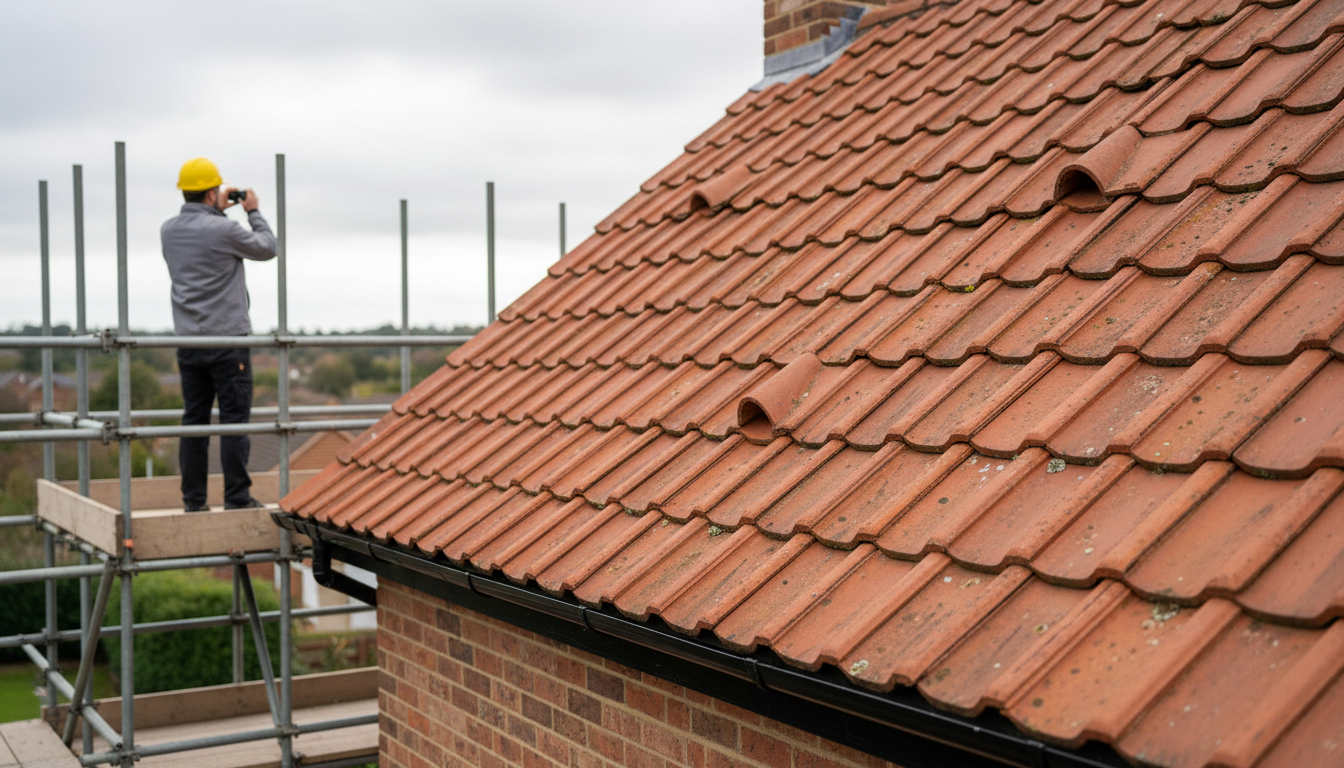
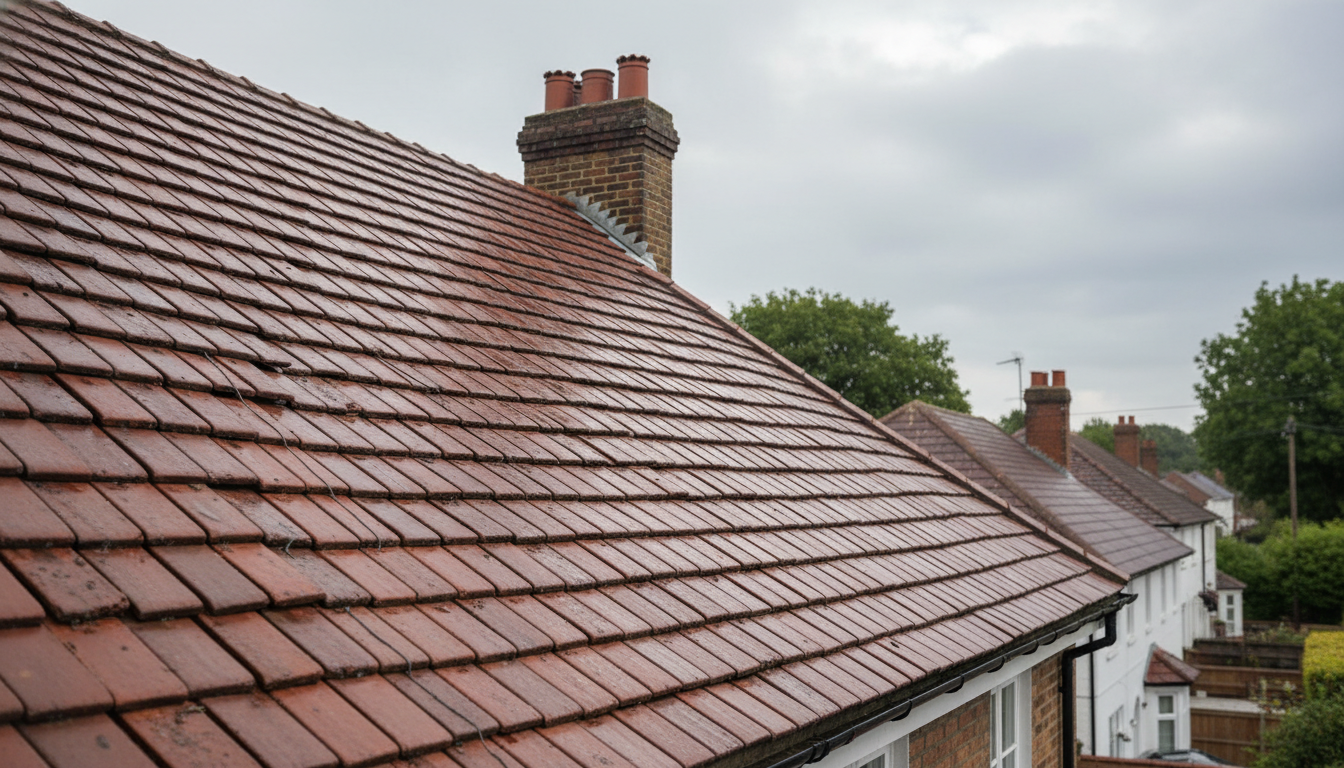
Clay and concrete tiles remain common because they provide practical pitched-roof solutions across a wide range of UK housing.
They should not, however, be treated as interchangeable products.
Clay Roof Tile Strengths
Clay tiles are associated with traditional appearance, colour stability and long-term resistance to normal British weather when the correct product is installed at the correct pitch.
They suit many heritage-style, rural and traditional buildings, but their weight and brittleness still need to be considered.
Individual tiles can crack through impact or inappropriate foot traffic, even when the complete roof system has decades of service remaining.
Concrete Roof Tile Strengths
Concrete products provide broad availability, different colours, multiple profiles and practical compatibility with many residential pitched roofs.
They can also be heavy.
Structural capacity matters particularly when changing from a lighter covering to a substantially heavier system. Visible deflection should not be dismissed as cosmetic before reroofing.
The risks behind roof sagging from load and structural weakness illustrate why covering weight and existing timber condition need to be considered together.
Tile Profile Matters Too
Even within the category of tiled roofing, there are major differences between plain tiles, interlocking systems, clay, concrete and slate-style profiles.
The UK roof tile material and profile types provide useful context before comparing individual products.
A practical roof tile ultimate guide should therefore be read as a starting point for understanding the system, not as permission to install any tile on any pitched roof.
Best Roofing Materials UK: Pitch & Structure
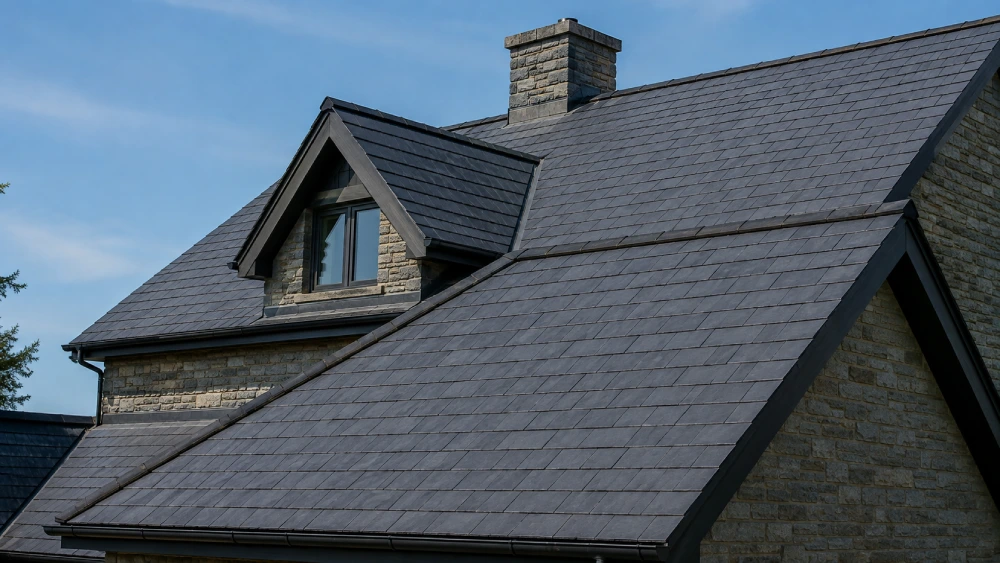
A material can offer excellent durability and still be unsuitable for a particular building.
Two checks should happen before appearance becomes a deciding factor: minimum pitch and structural capacity.
Roof Pitch Can Eliminate Materials
Every roofing product has limitations on the roof angle at which it can be installed.
At too low a pitch, an overlapping tiled system may struggle to shed wind-driven rain correctly. The required overlap, headlap and fixing specification can also change with exposure.
The roof tile selection by pitch and structure is therefore one of the most important checks before switching from one covering to another.
A material should fit the actual roof. The roof should not be forced to fit a preferred sample.
Structural Loading Comes Before Appearance
Heavy slate, clay, concrete and some traditional coverings can impose significant permanent loads.
Older roof timbers may already have decades of deflection or previous alterations. Replacing a lightweight covering with a heavier one without understanding the structure can introduce unnecessary risk.
This does not mean heavier materials are automatically unsafe. It means load suitability must be assessed rather than guessed.
Best Roofing Materials UK: Metal Roofing
Metal roofing is useful in a comparison because it behaves very differently from traditional tile and slate.
Standing-seam zinc, aluminium, steel and copper systems can provide long service lives with relatively low structural weight.
Key Advantages of Metal
Metal systems shed rainwater efficiently and can work on lower-pitched structures where some traditional overlapping coverings would not be appropriate.
Their low weight can also reduce structural demand.
That makes metal particularly relevant to modern extensions, architectural projects and buildings where reducing dead load is useful.
Metal Roofing Limitations
Metal is not a fit-and-forget material.
Thermal expansion must be accommodated. Condensation needs proper design. Coastal exposure can influence material choice because different metals respond differently to salt-laden environments.
Penetrations, joints, valleys and transitions require careful detailing.
The quality of design and workmanship can therefore matter as much as the metal itself.
Best Roofing Materials UK: Flat Roof Systems
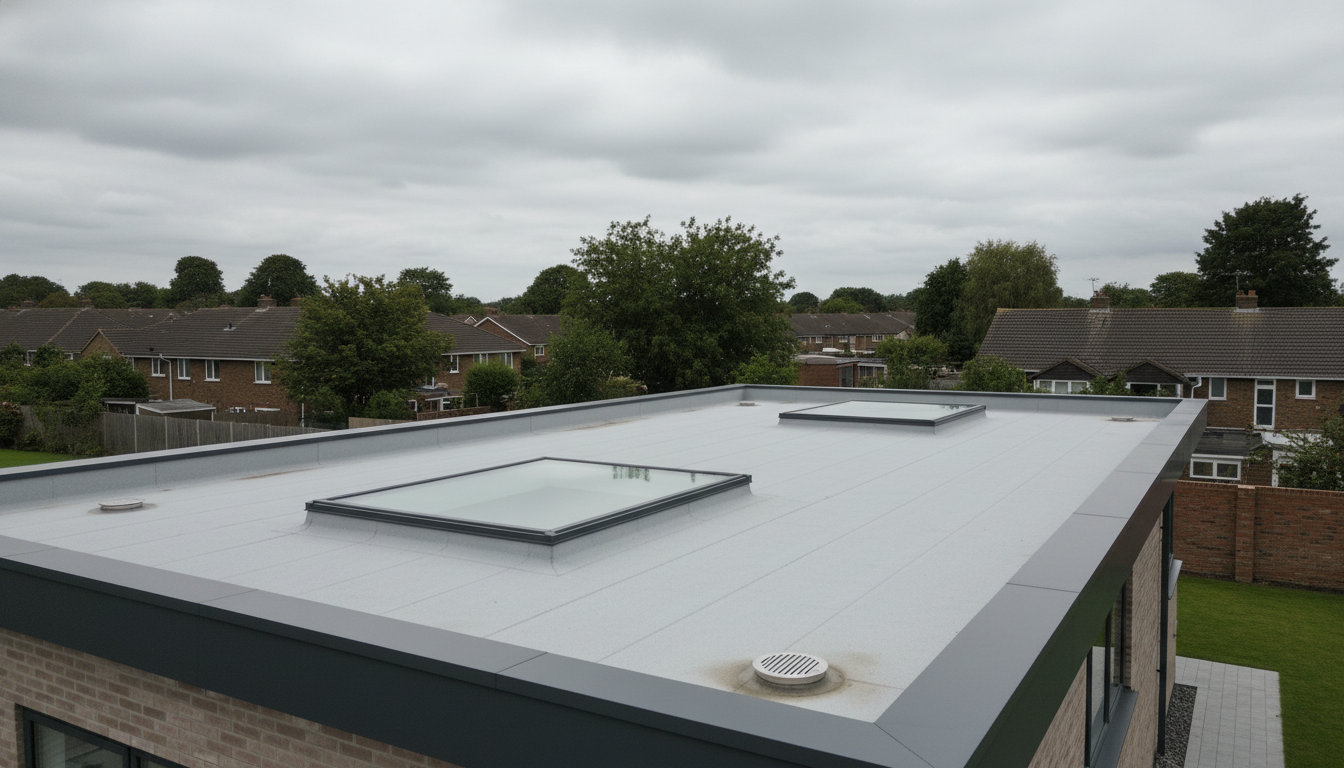
Flat roofing should never be discussed as though it were one material.
EPDM, GRP, single-ply membranes, modified bitumen and mastic asphalt have different construction methods, detailing requirements and expected service profiles.
Why Flat-Roof Lifespans Vary
Modern membrane systems can provide much longer service than the simplistic claim that every flat roof lasts only 10 or 20 years.
The specific system matters.
Its substrate, waterproofing continuity, edge detailing, penetrations, falls and outlets all influence long-term performance.
Understanding flat roof characteristics in UK properties is therefore more useful than comparing flat roofing with pitched materials through lifespan alone.
Drainage Can Matter More Than Material
Flat roofs need effective falls to carry rain toward outlets.
Standing water, restricted drainage and poor detailing can place unnecessary stress on even a durable waterproofing system.
Regular inspection should therefore concentrate on outlets, seams, edges, penetrations and areas where ponding repeatedly develops.
Best Roofing Materials UK: Weather Resistance
British roofs must cope with persistent rain, strong winds, frost, moisture and significant seasonal variation.
Calling a material “weather resistant” is not enough.
Compare Specific Weather Risks
Rain tests water shedding and junction detailing.
Strong winds test fixings, ridges, verges and exposed edges.
Freeze-thaw cycles can worsen defects in porous or already damaged materials.
Coastal sites introduce salt exposure in addition to wind-driven rain.
The weather resistance differences between UK roof materials are therefore best assessed together with the roof pitch, fixing system and local exposure.
After unusually severe weather, severe-weather failure signs across roof coverings can help distinguish isolated breakage from a wider problem affecting ridges, flashings, fixings or neighbouring units.
Best Roofing Materials UK: Maintenance
A long material lifespan does not automatically mean a maintenance-free roof.
Maintenance needs are simply different.
Roof-System Maintenance Priorities
Roof Type | Regular Issues to Watch |
Slate | Slipped units, fixings, flashings, fragile access |
Clay tile | Cracked units, displaced tiles, ridge and flashing defects |
Concrete tile | Moss, surface ageing, displaced or cracked units |
Metal | Joints, fixings, penetrations, corrosion exposure |
Flat membranes | Outlets, seams, punctures, ponding, edge details |
Consistent pitched roofing maintenance in UK properties should cover more than visible tile condition. Junctions, ventilation, drainage and signs of movement also matter.
The same principle applies across other systems. Planned roof maintenance in UK should identify small changes before repeated water ingress damages supporting materials.
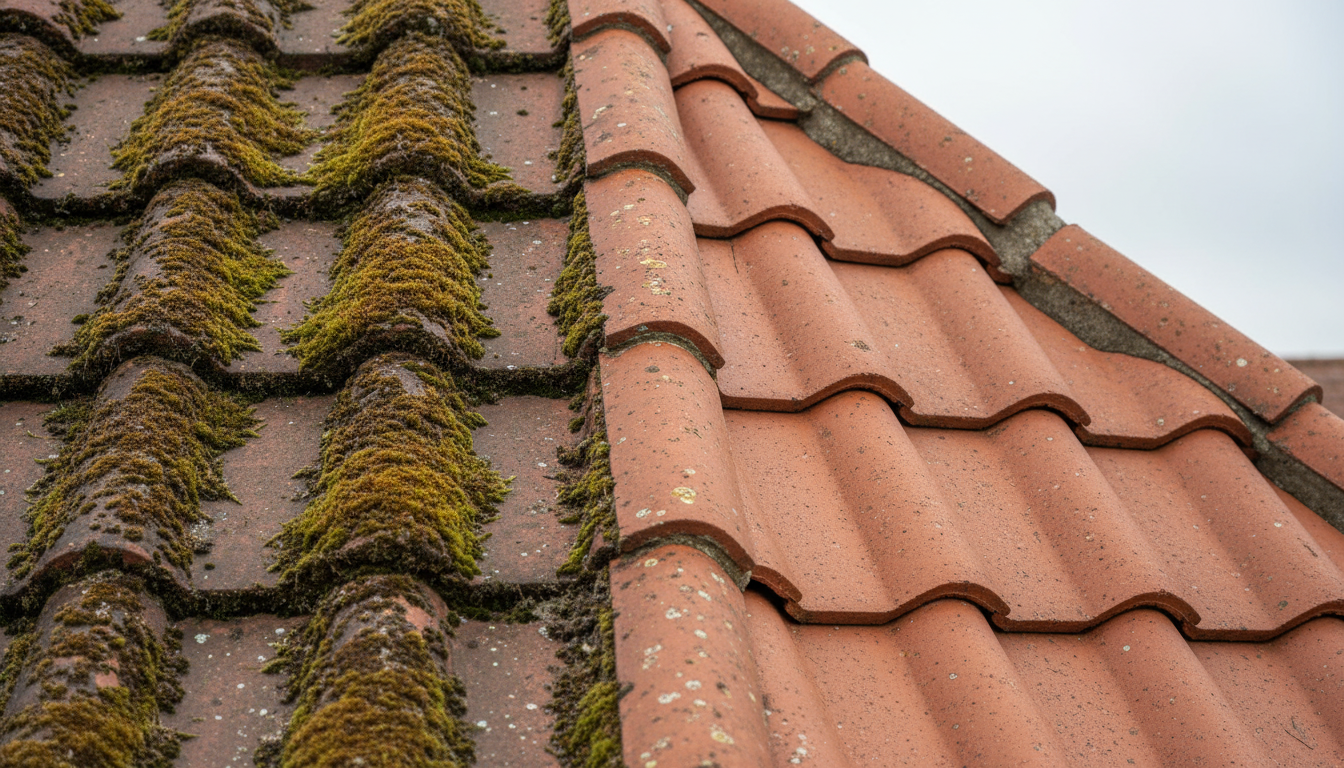
Moss Is a Maintenance Factor
Moss does not mean a roof has failed.
It does, however, indicate conditions where moisture, shade and organic material allow growth to persist.
Different surfaces and exposures develop moss at different rates. The moss formation and prevention on roof coverings therefore belongs in a whole-life maintenance comparison.
The aim should be protecting drainage and roof condition rather than chasing a permanently spotless appearance.
Best Roofing Materials UK: Whole-Roof Lifespan
The covering with the largest lifespan number does not automatically produce the longest-lasting roof.
A complete roof can require major work because of failed underlay, fixings, battens, flashings, structural timber or waterproofing details while the main covering remains partly usable.
Material Life vs Roof-System Life
Consider two separate questions:
How long can the covering material last?
and
How long can the complete roof assembly remain serviceable?
Those answers may be very different.
This is why comparing tile slate and flat roof system trade-offs should include structure, drainage, repairability and maintenance rather than lifespan alone.
Best Roofing Materials UK: How to Choose
There is no universal ranking that works for every property.
A sensible decision follows a sequence.
Material Selection Order
- Confirm roof type and pitch.
Remove options that cannot work technically. - Check structural capacity.
Understand whether the existing roof can carry the proposed material. - Assess local exposure.
Consider wind, rainfall, frost, shade, trees and coastal conditions. - Compare material lifespan.
Use lifespan as one factor rather than the entire decision. - Consider maintenance and access.
Think about how individual defects will be inspected and repaired. - Check repairability.
Replacement units and specialist skills may affect long-term practicality. - Review the complete system.
Include battens, underlay, fixings, flashings, drainage and ventilation.
The best material is the one that fits the roof technically and remains practical to maintain over its expected life.
Choose the Material for the Building
A roofing material should never be selected from appearance or lifespan figures alone.
Start with the building itself: pitch, structure, location, exposure and existing condition. Then compare how each technically suitable option behaves over time.
A material that works with the roof will usually deliver better long-term performance than a theoretically superior covering forced onto an unsuitable structure.
Frequently Asked Questions
Which roofing material lasts longest in the UK?
Natural slate has one of the strongest longevity records among conventional UK pitched-roof materials, with high-quality natural slate potentially remaining serviceable for a century or more. However, best roofing materials UK comparisons should separate material life from complete roof life. Fixings, battens, flashings, underlay and structural timber can require work before the slate itself reaches the end of its usable life.
Does a longer roofing lifespan mean less maintenance?
Not automatically. Best roofing materials UK options can provide very long service while still needing periodic repairs. Slate may need slipped units or failed fixings addressed, tiled roofs may develop cracked or displaced units, metal systems need detailing checked, and flat roofs require attention to drainage and waterproofing. Long lifespan usually means durability, not freedom from inspection.
Can an old roof support heavier roofing materials?
It depends on the structure. When comparing best roofing materials UK properties can use, the existing rafters, purlins, trusses and supporting walls need to be considered before adding substantial weight. Previous alterations and existing deformation are also relevant. A heavier material is not automatically unsuitable, but structural capacity should be established rather than assumed.
Does roof pitch affect which material I can choose?
Yes. Best roofing materials UK selection is limited by the actual pitch of the roof and the tested requirements of the product. Some interlocking coverings can work at lower pitches than traditional plain tiles or certain slate specifications. Installing a product below its intended minimum angle can increase the risk of wind-driven water getting beneath the covering.
Are flat-roof materials shorter-lived than slate and tile?
Some are, but “flat roof” is too broad a category for a useful comparison. Best roofing materials UK decisions should distinguish between EPDM, GRP, single-ply membranes, modified bitumen and other systems. Their expected service lives, installation methods and maintenance requirements vary significantly, so the specific system matters more than the word “flat.”
Is metal roofing suitable for UK homes?
Metal can be a strong option where the building, design and local exposure suit it. Within best roofing materials UK comparisons, its main advantages include low structural weight, efficient rain shedding and compatibility with lower-pitched modern designs. The main considerations are detailing, thermal movement, condensation control, acoustic performance and selecting an appropriate metal for the local environment.
Should maintenance affect which roof material I choose?
Yes. The best roofing materials UK properties can use should be evaluated by realistic ownership requirements as well as installation-day performance. Consider safe access, how individual defects are repaired, replacement-material availability, drainage requirements and likely maintenance over several decades. A durable material that is difficult to maintain on your particular building may not be the most practical choice.


Comments (15)
[…] Understanding roof covering durability and lifespan differences provides useful context, but actual roof condition should always carry more weight than a generic age estimate. […]
[…] stronger comparison considers roofing material longevity and performance differences alongside pitch, structural weight, exposure, planning restrictions and […]
[…] age is relevant too, but it should not be used as the diagnosis. Comparing roof material lifespan and structural performance can provide useful context while the actual condition of rafters, ties, coverings and moisture […]
[…] insulation also protects the roof structure by reducing condensation and thermal stress. This extends roof lifespan and reduces maintenance […]
[…] evaluating broader material performance may also compare best roofing materials UK options to ensure slate remains the optimal […]
[…] material planning, roof material comparison framework and roof tile supply factors provide useful […]
[…] mixed-material comparison, tile slate flat roof comparison notes and roof material comparison framework are useful only when the homeowner is comparing several roof routes, not when the question is […]
[…] wider comparison, tile slate flat roof decision map and roof material selection overview are useful when the decision is not […]
[…] wider comparison, roof material comparison worksheet and roofing material category notes are […]
[…] wider material context, roofing material comparison notes, roof material lifespan table, and roof material planning guide are […]
[…] points are useful supporting topics. Where tile roofing is being compared with other coverings, UK roof covering comparison factors also helps frame the […]
[…] should influence roof covering choice. Where a homeowner needs a broader material comparison, roof covering lifespan comparisons can support the […]
[…] wider material comparison, tile slate and flat roof option guide and roofing material comparison notes are useful when the decision is not […]
[…] wider comparison, tile slate flat roof comparison chart and roofing material comparison worksheet are […]
[…] weather comparison, weather-ready covering notes and roof material weather matrix are […]
Comments are closed.