

Pros And Cons Of Slate Roofing UK Guide
Pros And Cons Of Slate Roofing Uk should be judged against the roof, not only the material. Slate can be long-lasting, visually strong, and suitable for many pitched UK homes, but it also needs the right pitch, structure, fixings, leadwork, maintenance, and installation skill. A & A Roofing London helps homeowners across London, Essex, and the Hertfordshire borders compare slate with tiles, flat roof systems, and other materials so the roof covering fits the property, performs correctly, and can be maintained properly over time.
Quick Check: Before choosing slate for a repair, re-roof, or restoration project, ask A & A Roofing London to compare roofing materials in the UK against pitch, weight, structure, weather exposure, planning context, and long-term maintenance.
Pros And Cons Of Slate Roofing UK: Quick Comparison
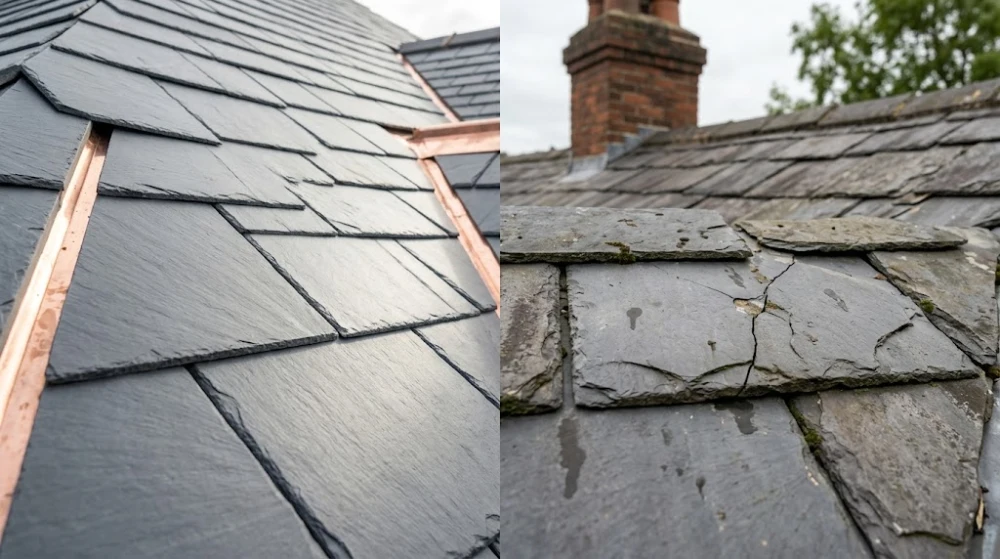
Pros and Cons of Slate Roofing UK are not the same for every house. Slate may be an excellent fit for one pitched roof and unsuitable for another if the structure, pitch, or detailing does not support it. Planning Portal notes that pitched roofs commonly use tiles or slates, and that full details of a new roof are needed for Building Regulations compliance, including materials, dimensions, and performance properties.
| Slate roofing factor | Potential advantage | Possible drawback | A & A Roofing London check |
| Appearance | Natural, clean, traditional roof finish | May not suit every property style | Property type, roof age, surrounding materials |
| Lifespan | Can be a long-term roof covering when correctly installed | Poor fixing or wrong detailing shortens performance | Fixings, laps, pitch, leadwork, ventilation |
| Weight and structure | Suitable where the roof is designed for it | Material changes may need structural review | Rafters, battens, loading, existing covering |
| Weather performance | Strong water-shedding on suitable pitched roofs | Wind exposure and bad detailing can cause slips or leaks | Pitch, fixings, valleys, ridges, gutters |
| Maintenance | Individual slates can often be repaired locally | Slipped or cracked slates need careful access | Slate condition, access, repair history |
| Cost scope | Premium finish and long-term value potential | Higher skill and installation detail required | Roof size, access, leadwork, scaffold, waste |
| Compatibility | Works well on many period and pitched homes | Not suitable for every extension or roof shape | Roof layout, junctions, chimneys, flat roof areas |
A & A Roofing London checks slate as part of the whole roof system. A slate roof can fail early if valleys block, flashings lift, gutters overflow, or the roof structure is not suitable for the covering.
Main Benefits of Slate Roofing
The benefits of slate roofing in the UK usually include appearance, durability, compatibility with many older properties, and strong performance when the roof is correctly specified. Slate has a clean profile and can suit homes where roof character matters.
A & A Roofing London checks whether the roof is actually suitable for slate before recommending it. That includes pitch, loading, underlay, battens, fixings, leadwork, valleys, chimneys, gutters, ventilation, and any lower flat roof areas affected by water discharge.
For homeowners still learning the material, slate roof fundamentals overview is a useful starting point.
Main Drawbacks of Slate Roofing
Slate roofing can be more demanding than some alternatives. It needs careful installation, good fixing, suitable pitch, correct laps, sound structure, and neat junction details. It can also be affected by slipped slates, cracked corners, poor previous repairs, chimney leaks, valley blockage, and difficult access.
A & A Roofing London checks the drawbacks before recommending slate. The aim is not to sell slate as the answer for every home, but to identify when slate is the right material and when tile, flat roofing, restoration, or another approach is more practical.
For a deeper buyer-focused view, slate roof value decision factors helps weigh material fit, roof condition, and long-term expectations.
Slate Roofing Compared With Tile Roofing
Slate and tile roofing can both work well on pitched roofs, but they are not interchangeable without checking the roof. Tiles may suit many residential pitched roofs. Slate may suit homes where appearance, property character, and the existing roof structure support the material.
A & A Roofing London assesses tile roofing in London where slate may not be the best match or where the homeowner is comparing tile and slate options. The inspection reviews roof pitch, material weight, battens, underlay, drainage, and repair history.
Planning Portal says that if an existing roof covering is replaced with a different material, such as slate to tiles, Building Regulations approval is likely to be needed to check structural stability, fire safety, and energy efficiency. For comparison research, tile and slate material differences and slate concrete tile selection notes are useful.
Slate Roofing Compared With Flat Roofs
Slate is a pitched roof covering. Flat roofs work differently because they rely on waterproofing, falls, outlets, upstands, trims, and edge detailing. A flat roof system may be better for extensions, dormers, garages, porches, and low-profile areas where slate would not suit the roof form.
A & A Roofing London assesses flat roofs in London separately from slate. A house may have slate on the main roof and a flat roof system on a rear extension. The right design depends on how each section drains and connects.
Planning Portal notes that flat roofs usually have a slight fall so rainwater can drain away. This makes the flat roof decision different from a slate roof decision.
Slate and Pitched Roof Installation
Slate works on pitched roofs where the roof angle, laps, fixing method, and structure are appropriate. Poor pitch selection, weak battens, incorrect fixing, or bad leadwork can turn a good material into a problem roof.
A & A Roofing London checks pitched roof installation in the UK before slate installation or replacement. The review includes rafters, battens, underlay, ventilation, hips, ridges, valleys, gutters, chimneys, and leadwork.
For process-led planning, slate installation workflow stages helps explain why slate roofing depends on workmanship as much as material quality.
Natural Slate Vs Synthetic Slate
Natural slate and synthetic slate can look similar from a distance, but they are different material routes. Natural slate has its own texture, weathering, and fixing considerations. Synthetic slate may suit some projects where appearance, weight, or budget scope are part of the decision.
A & A Roofing London checks whether the selected slate type suits the roof pitch, structure, detailing, and property style. The choice should also account for surrounding roofs, planning sensitivity, access, and future maintenance.
For material comparison, natural synthetic slate comparison points and slate type selection guide are useful.
Slate Roof Lifespan and Long-Term Value
Slate can be a long-life roofing material when installed correctly and maintained properly. Its lifespan depends on slate quality, fixing, pitch, exposure, leadwork, gutters, valleys, ventilation, and whether defects are repaired before water spreads.
A & A Roofing London checks whether a slate roof is ageing normally or showing early failure. Slipped slates, repeated leaks, cracked edges, failed fixings, and damp in the loft may all reduce expected performance.
For lifespan planning, slate roof service-life factors and slate roof longevity variables are relevant support pages.
Slate Roof Cost Factors
Slate roofing cost depends on more than the slate itself. Access, scaffold, roof size, pitch, waste removal, leadwork, underlay, battens, ventilation, chimneys, valleys, gutters, and hidden damage can all affect the final scope.
A & A Roofing London checks the roof condition before discussing cost because one slate repair is different from a full slate re-roof. A roof with damaged battens, failed underlay, chimney defects, or poor previous repairs may need more than new slates.
For cost planning, slate roof cost component list is useful.
Slate Roof Maintenance
Slate roof maintenance in the UK should focus on keeping the roof weatherproof, not only making it look tidy. Maintenance can include checking slipped slates, cracked edges, fixings, leadwork, gutters, valleys, chimneys, ridges, and loft damp.
HSE says roof work is high risk and all roofs should be treated as fragile until a competent person confirms otherwise. It also states that roof work covers maintenance and repair, not only new construction.
A & A Roofing London inspects slate roofs carefully because unnecessary access can damage the covering. For maintenance details, slate roof care routine steps and slate upkeep inspection tasks support the maintenance plan.
Slate Roof Repairs
Slate roof repairs may involve replacing slipped or cracked slates, correcting fixings, repairing leadwork, clearing valleys, checking chimneys, or addressing leaks around junctions. The main risk is treating one visible slate while missing the reason it failed.
A & A Roofing London checks slate roof repair in London by reviewing the slate, the surrounding area, the water path, and internal damp evidence. A repair should restore the weathering line, not just fill a gap.
For repair-led research, slate repair method checklist and common slate defect categories are useful.
Replacement Signs on Slate Roofs
Slate roof replacement becomes more likely when failures are widespread, slates are slipping across several areas, fixings are failing, underlay has deteriorated, leaks keep returning, or the roofline has changed. A few local defects may be repairable, but repeated failures need wider investigation.
Planning Portal states that most roof replacement work on existing buildings needs Building Regulations approval, and re-covering can involve energy-efficiency considerations because the roof is a thermal element.
A & A Roofing London checks whether the roof needs slate repair, slate restoration, or replacement. For warning signs, slate replacement trigger points is relevant.
Slate Roof Inspection Frequency
Slate roofs should be inspected when there are visible slipped slates, damp marks, chimney leaks, gutter overflow, valley blockage, storm movement, or previous repairs that are failing. Older slate roofs and roofs with difficult access may need a more careful inspection plan.
A & A Roofing London checks slate roofs after severe weather, before major repair decisions, and when internal damp appears. HSE’s fragile-surface guidance says precautions are required for all work on or near fragile surfaces, no matter how short the duration, including maintenance, repair, cleaning, and demolition.
For timing, slate inspection timing factors is useful.
Slate Roofing and UK Weather
Slate can perform well in UK weather when it is installed correctly, but weather performance depends on pitch, laps, fixings, exposure, gutters, valleys, and flashings. Heavy rain tests drainage. Wind tests fixings and laps. Frost can worsen existing cracks or weak pointing around chimneys.
A & A Roofing London checks exposure, roof shape, ridge line, valleys, gutters, and leadwork before recommending slate. A material that suits a sheltered roof may need different detailing on a more exposed elevation.
For weather-specific planning, slate weather exposure factors helps compare risk points.
Slate Roofing and Energy Efficiency
Slate itself is only part of roof performance. Energy efficiency depends on the full roof build-up: insulation, ventilation, underlay, vapour control, loft condition, and whether damp is already present.
Energy Saving Trust says roof and loft insulation helps reduce heat lost through the roof, and it advises professional advice where there is damp, flat roofs, or more complex roof situations. A & A Roofing London checks damp and ventilation alongside slate condition so the roof covering decision does not create hidden moisture problems.
For related reading, slate roof thermal performance factors is useful.
Environmental Considerations
Slate can be considered from an environmental angle through durability, repairability, sourcing, transport, and how long the roof remains serviceable. A longer-lasting roof can reduce the frequency of major replacement work, but the full environmental picture depends on the exact product and project.
A & A Roofing London checks whether repair, restoration, or replacement is the lower-intervention route for the roof. Keeping a sound slate roof working may be better than replacing it too early, but replacement may be necessary if hidden failure is widespread.
For this topic, sustainable slate roof considerations is relevant.
Slate Roofing for Period Homes
Slate is often associated with period properties, but the decision should still be based on roof structure, pitch, local appearance, conservation sensitivity, and condition. Matching the existing roof character can matter where the property has a traditional streetscape or historic detailing.
A & A Roofing London checks whether slate repairs should match existing size, colour, pattern, and detailing. On older homes, the surrounding leadwork, chimneys, battens, and underlay may need as much attention as the slate itself.
For older properties, period home slate roof requirements is a useful support page.
Planning Permission and Regulations
Slate roofing can involve planning or Building Regulations questions, especially when changing materials, working on listed or conservation-sensitive homes, or altering the roof structure. Material changes should not be treated as a purely cosmetic decision.
Planning Portal says changing from one roof covering to another, such as slate to tiles, is likely to need Building Regulations approval to check structural stability, fire safety, and energy efficiency. A & A Roofing London checks whether the project is repair, restoration, re-covering, or replacement before advising on scope.
For compliance-related reading, slate roof planning permission notes, building rules for slate roofs, and slate roofing compliance checklist are useful.
Cleaning a Slate Roof
Cleaning is not automatically a benefit or drawback of slate roofing, but poor cleaning can cause damage. Slate roofs should not be treated as surfaces for harsh pressure washing or unnecessary foot traffic. Cleaning decisions should focus on drainage, moss impact, and roof condition.
A & A Roofing London checks whether moss or debris is affecting gutters, valleys, laps, or water flow before recommending cleaning. A roof that is only discoloured may not need aggressive cleaning.
For cleaning decisions, slate roof cleaning precautions is useful.
Causes of Slate Roof Damage
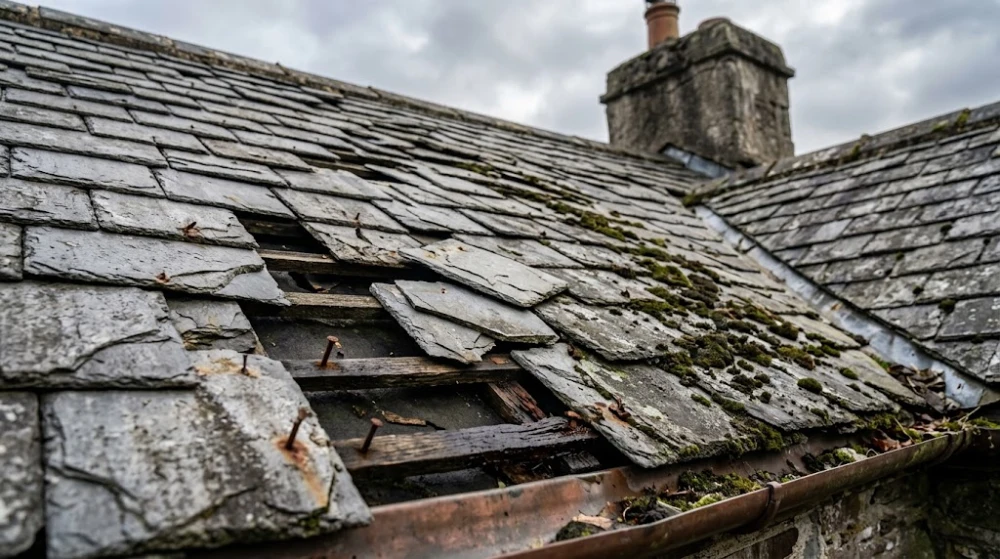
Slate roof damage can be caused by weather exposure, age, impact, slipped fixings, broken corners, poor installation, weak leadwork, blocked drainage, chimney defects, or careless access. The cause matters because replacing a few slates will not solve a recurring water route problem.
A & A Roofing London checks the pattern of damage before recommending repair. If damage appears near valleys, chimneys, gutters, or ridges, the surrounding detail may be the real cause.
For damage diagnosis, slate damage cause framework is relevant.
Slate Roofing in Mixed Roof Homes
Many residential homes are not slate-only. A property may have a slate main roof, tiled extension, flat roof dormer, chimney stack, and shared drainage. The pros and cons of slate should be judged against the whole roof layout.
A & A Roofing London compares slate with other roof types where mixed materials are involved. A slate roof may be correct for the main pitch, while a flat roof system may be correct for an extension and tiles may be used elsewhere.
For mixed-material comparison, tile slate flat roof comparison notes and roof material comparison framework are useful only when the homeowner is comparing several roof routes, not when the question is slate-specific.
Pros And Cons Of Slate Roofing Uk Area Coverage
Local property age, roof pitch, access, chimneys, planning context, weather exposure, and existing roof material all affect whether slate is the right option. A & A Roofing London covers North London, Essex, and the Hertfordshire borders, helping homeowners assess slate roofing as part of a complete roof system.
North London
In North London, Pros And Cons Of Slate Roofing Uk often matters for terraced homes, period properties, shared rooflines, chimney stacks, slate repairs, and mixed roof extensions. A & A Roofing London can check whether slate suits the roof pitch, structure, access, leadwork, and surrounding property character before repair or replacement decisions are made.
Hertfordshire Borders
Across the Hertfordshire borders, Pros And Cons Of Slate Roofing Uk may involve older homes, exposed roofs, tree debris, moss, previous repairs, and properties with mixed tile, slate, and flat roof sections. A & A Roofing London reviews roof structure, drainage, fixings, valleys, chimneys, and maintenance history before recommending slate repair, restoration, or replacement.
Essex
In Essex, Pros And Cons Of Slate Roofing Uk can depend on wind exposure, rain runoff, older roof details, chimney junctions, gutters, and roof-edge weathering. A & A Roofing London can inspect slate condition, roof pitch, underlay clues, leadwork, valleys, and internal damp evidence so the material decision follows the real roof condition.
Final Roofing Decision
Pros And Cons Of Slate Roofing Uk should be decided from roof evidence. Slate can be attractive, durable, repairable, and appropriate for many pitched homes, but it needs the right pitch, structure, fixings, leadwork, drainage, access, and maintenance plan.
A & A Roofing London can compare roofing materials in the UK by checking slate suitability, tile alternatives, flat roof areas, pitched roof structure, chimneys, valleys, insulation, ventilation, previous repairs, and hidden damp. That gives homeowners a practical route to slate roofing, tile roofing, flat roofing, pitched roof installation, roof restoration, repair, or replacement based on the actual roof.
FAQs About Pros And Cons Of Slate Roofing Uk
What are the main pros of slate roofing?
The main pros are appearance, suitability for many pitched and period homes, repairability, and strong long-term performance when slate is correctly specified and installed. A & A Roofing London checks pitch, structure, fixings, leadwork, valleys, and gutters before confirming whether slate is a good fit.
What are the main cons of slate roofing?
The main cons are higher installation skill, careful access needs, structural compatibility checks, possible planning or Building Regulations considerations, and repair complexity where slates are cracked, slipped, or poorly fixed. Slate is not automatically the best choice for every roof.
Is slate better than tile roofing?
Not always. Slate and tile roofing suit different homes, structures, budgets, and roof designs. Planning Portal notes that changing roof covering material may require Building Regulations approval where structural stability, fire safety, and energy efficiency need checking.
Is slate suitable for every pitched roof?
No. Slate must suit the roof pitch, structure, weight capacity, fixing method, exposure, and detailing. A & A Roofing London checks the existing roof before recommending slate installation, repair, or replacement.
Does slate roofing need maintenance?
Yes. Slate roofs need inspection for slipped slates, cracked edges, fixing issues, leadwork faults, gutter overflow, valley debris, chimney leaks, and internal damp. HSE says roof work is high risk, so slate maintenance should not be treated as casual roof walking.
Can slate roofs be repaired instead of replaced?
Often, yes, if damage is local and the surrounding roof is sound. Repair may involve replacing slipped or cracked slates, correcting fixings, repairing leadwork, or clearing drainage. Replacement becomes more likely where failure is widespread or hidden roof layers are damaged.
Does slate roofing affect insulation?
The roof covering is only one part of energy performance. Insulation, ventilation, damp control, underlay, and roof build-up also matter. Energy Saving Trust advises professional advice where damp or complex roof situations are present.
What should A & A Roofing London inspect before recommending slate?
A & A Roofing London should inspect roof pitch, structure, slate condition, fixings, battens, underlay, leadwork, valleys, gutters, chimneys, internal damp, access, planning context, and nearby flat roof or tile sections. That confirms whether slate is suitable or whether another roofing route is better.


Comments (4)
[…] a balanced view, slate advantage drawback framework helps weigh both sides of the […]
[…] a balanced comparison, the slate roofing trade-off review and slate value assessment guide are […]
[…] slate-specific strengths and limits, slate roofing performance balance is […]
[…] material context, slate type fragility notes and slate roof advantage limitation notes are […]