
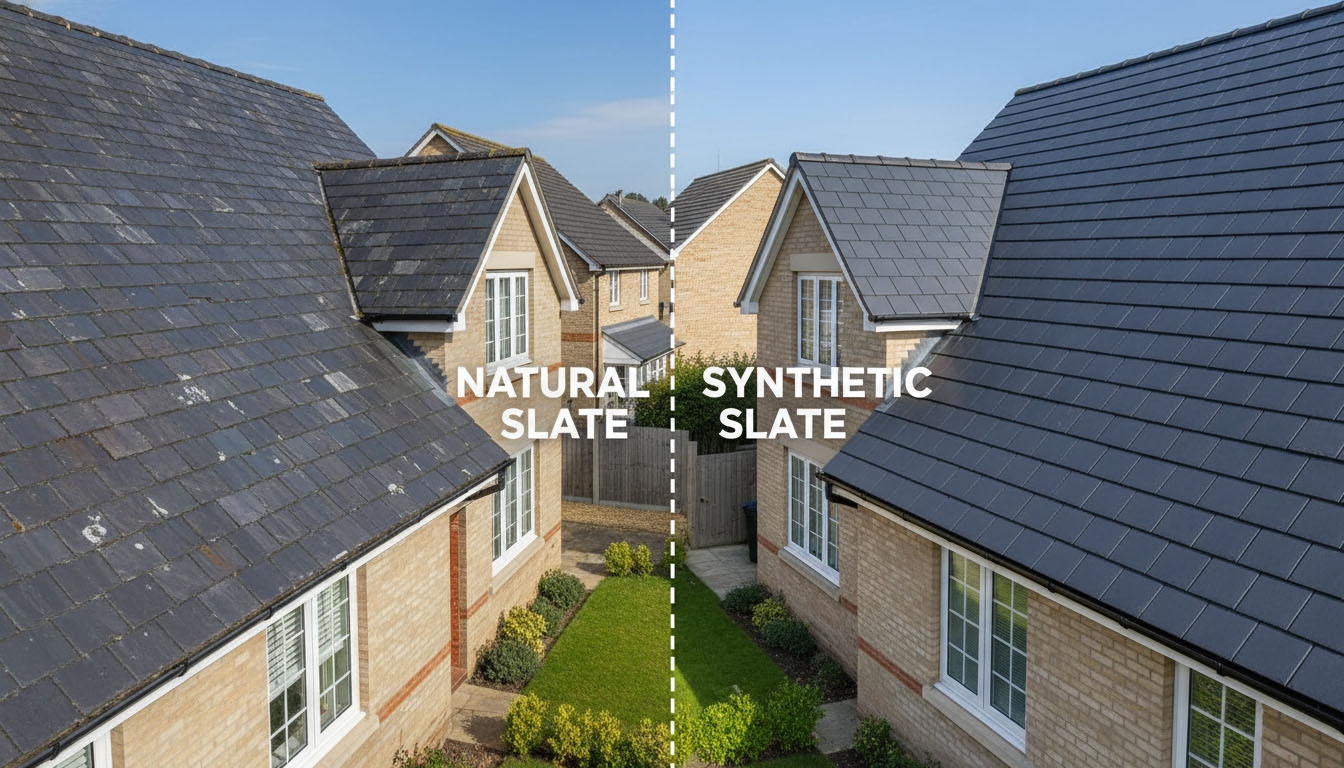
Natural Slate Vs Synthetic Slate Uk is not just a style choice. The right option depends on roof pitch, structure, weight, property age, planning context, appearance, weather exposure, maintenance, and long-term repair expectations. Natural slate can suit homes where traditional character and material authenticity matter. Synthetic slate may suit some projects where appearance, budget scope, or weight are part of the decision.
A & A Roofing London helps homeowners across London, Essex, and the Hertfordshire borders compare slate materials against the actual roof before repair, restoration, or replacement begins.
Quick Check: Before choosing between natural and synthetic slate, ask A & A Roofing London to compare roofing materials in the UK against roof pitch, structure, material weight, planning context, drainage, and long-term maintenance.
Natural Slate Vs Synthetic Slate Uk: Main Differences
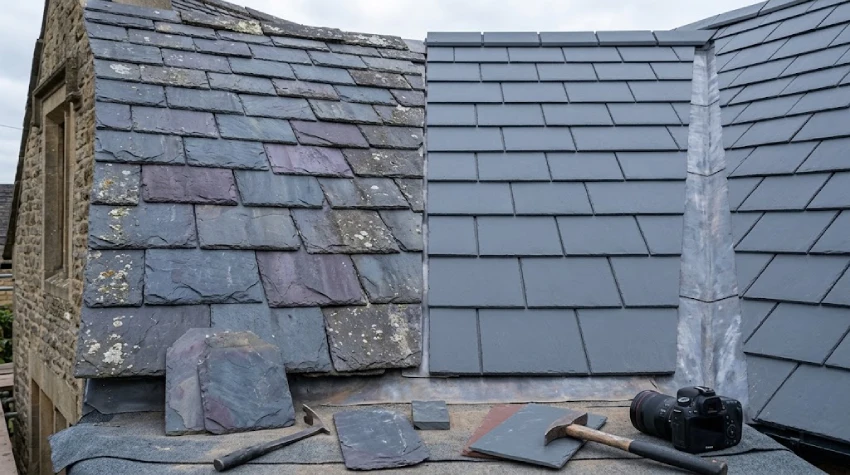
Natural Slate Vs Synthetic Slate Uk should be judged through roof suitability, not appearance alone. Planning Portal explains that pitched roofs commonly use tiles or slates, and that tile or slate choice is partly governed by how steep or shallow the roof slope is. It also says new roof details need to show materials, dimensions, and performance properties for Building Regulations compliance. (planningportal.co.uk)
| Comparison point | Natural slate | Synthetic slate | A & A Roofing London check |
| Appearance | Natural stone texture, colour variation, traditional character | Manufactured slate-style finish with more consistent appearance | Property age, roof style, surrounding roofs |
| Weight | Depends on slate type, size, and thickness | Often chosen where weight and handling are part of the brief | Roof structure, rafters, battens, loading |
| Lifespan | Can perform well when correctly specified and installed | Depends heavily on product quality and correct installation | Manufacturer suitability, fixings, pitch |
| Planning context | Often preferred on period or conservation-sensitive homes | May not suit every traditional setting | Planning context and material match |
| Installation | Requires skilled slate work, correct laps, fixings, and detailing | Still needs correct fixing and detailing | Pitch, laps, battens, underlay, leadwork |
| Repairability | Individual slates may often be replaced if matched correctly | Matching future replacements depends on product availability | Repair access, material match, availability |
| Cost scope | Material and labour can be higher depending on roof | May suit some budget-led projects | Scaffold, access, waste, hidden defects |
| Maintenance | Needs inspection for slipped slates, leadwork, gutters, valleys | Needs inspection for movement, surface wear, and fixings | Roof age, exposure, drainage, previous repairs |
A & A Roofing London checks the whole roof system before recommending either route. A good-looking slate product can still fail if the roof pitch, fixings, drainage, underlay, ventilation, or leadwork are wrong.
What Natural Slate Roofing Means
Natural slate roofing in the UK uses stone slate cut into roofing units and installed on a pitched roof system. Its appeal usually comes from natural texture, traditional appearance, and compatibility with many older or character homes.
A & A Roofing London checks whether natural slate suits the roof before recommending it. The inspection reviews pitch, structure, battens, underlay, fixings, leadwork, chimneys, gutters, valleys, ventilation, access, and existing roof condition.
For basic material understanding, slate roof definition guide is useful.
What Synthetic Slate Roofing Means
Synthetic slate is manufactured to give a slate-style appearance. It may be considered where homeowners want a slate look but also need to weigh cost, handling, consistency, or project constraints. Synthetic slate is not automatically a substitute for natural slate on every roof.
A & A Roofing London checks product suitability, pitch limits, fixing requirements, roof structure, planning context, and long-term repair expectations. The material should be selected for the actual roof, not only the colour or finish.
For broader slate categories, slate product type overview helps explain the main slate options.
Appearance and Property Style
Natural slate is often chosen for its traditional character, colour variation, and suitability on many period homes. Synthetic slate can provide a cleaner, more uniform look, which may suit some projects but may look less appropriate on certain older properties or sensitive streetscapes.
A & A Roofing London compares appearance with the building, roof pitch, neighbouring roofs, chimneys, leadwork, and any existing materials. This matters in London and surrounding areas where roofs often sit within visible streetscapes.
For older homes, period slate material fit helps frame the appearance decision.
Lifespan and Durability
Natural slate can be a strong long-term roofing material when the slate, pitch, fixings, battens, underlay, leadwork, drainage, and ventilation are right. Synthetic slate lifespan depends on the product, manufacturer performance, installation, fixing, weather exposure, and maintenance.
A & A Roofing London checks whether the roof is designed to support the chosen slate type. Lifespan problems often come from slipped units, failed fixings, poor laps, blocked valleys, lifted leadwork, or hidden damp rather than the slate material alone.
For lifespan planning, slate roof durability indicators and slate covering longevity checks are useful support pages.
Cost and Project Scope
Natural slate may involve higher material and labour costs, especially where matching, careful fixing, and skilled installation are needed. Synthetic slate may suit some cost-sensitive projects, but the full scope still includes scaffolding, battens, underlay, ventilation, leadwork, waste removal, access, and hidden repairs.
A & A Roofing London checks the existing roof before discussing cost. A simple slate replacement is different from a roof with failing battens, chimney defects, poor leadwork, or drainage issues.
For cost planning, slate roof cost planning factors gives useful context.
Weight, Structure, and Building Regulations
Weight matters when changing roofing materials. A natural slate roof, synthetic slate roof, tile roof, or alternative covering can affect the load on rafters, battens, and supporting structure.
Planning Portal says that if an existing roof covering is replaced with a different material, such as slate to tiles, Building Regulations approval is likely to be needed to check structural stability, fire safety, and energy efficiency. It also notes that a significantly heavier or lighter covering may require structural modification or strengthening. (planningportal.co.uk)
A & A Roofing London checks the roof frame, battens, slope, existing material, and repair history before recommending natural or synthetic slate.
Natural Slate Vs Tile Roofing
Natural slate and tile roofing can both work well on pitched roofs, but they serve different property needs. Tile may suit many residential roofs. Natural slate may suit homes where roof character, pitch, and existing structure support the material.
A & A Roofing London compares tile or slate roofing in the UK by checking roof pitch, material weight, roof style, drainage, repair history, and long-term maintenance needs.
For detailed comparison, slate tile selection factors and slate concrete tile comparison guide are relevant.
Slate Vs Metal and Other Materials
Slate and metal roofing serve different design and performance goals. Slate is often chosen for pitched roofs where traditional appearance and material character matter. Metal may suit some modern, lightweight, or specialist applications.
A & A Roofing London checks whether the property, pitch, structure, and planning context favour slate or another route. Material changes should be practical, compliant, and visually appropriate.
For this comparison, slate metal roof comparison points is useful.
Flat Roofs and Slate Choices
Slate is a pitched roof covering. Flat roofs work differently because they rely on waterproofing, falls, outlets, upstands, edge trims, and rooflight detailing. A home may need slate on the main roof and a flat roof system on a dormer, porch, garage, or rear extension.
A & A Roofing London checks flat roofs in London separately from slate because the drainage logic is different. Planning Portal notes that flat roofs usually have a slight fall so rainwater can drain away. (planningportal.co.uk)
This prevents homeowners from comparing natural and synthetic slate where a flat roof system is actually the correct design.
Pitched Roof Installation
Natural and synthetic slate both depend on good pitched roof installation. Laps, battens, underlay, fixing method, ridge details, valleys, gutters, leadwork, ventilation, and roof pitch all affect performance.
A & A Roofing London checks pitched roof installation in the UK before slate installation or replacement. Poor installation can shorten the life of both natural and synthetic slate.
For process context, slate installation stage notes is useful.
Weather Performance
Natural slate can perform well in UK weather when correctly specified, fixed, and maintained. Synthetic slate can also perform properly when the product and installation suit the roof. In both cases, rain, wind, frost, valleys, gutters, chimneys, and roof edges matter.
A & A Roofing London checks exposure before recommending a slate type. Heavy rain tests drainage, wind tests fixings, and frost can worsen existing cracks or weak details.
For weather-led decisions, weather suitability for slate roofs helps compare risk points.
Energy Efficiency and Moisture Control
Natural or synthetic slate does not decide energy efficiency on its own. Roof build-up matters: insulation, ventilation, underlay, vapour control, loft condition, and damp risk all affect performance.
Energy Saving Trust says roof and loft insulation helps reduce heat lost through the roof, and it advises professional advice where there are damp problems, flat roofs, or more complex roof situations. (energysavingtrust.org.uk)
A & A Roofing London checks damp, airflow, loft condition, and ventilation with slate selection. For related reading, slate roof insulation factors is useful.
Choosing Between Natural and Synthetic Slate
Choosing between natural and synthetic slate should involve roof suitability, planning context, appearance, cost, weight, repairability, and expected lifespan. Natural slate may be the better fit for period character and authenticity. Synthetic slate may be considered where project constraints make a manufactured slate-style product more practical.
A & A Roofing London checks whether the roof can carry the chosen material, whether the pitch is suitable, whether planning context matters, and whether future repairs can be matched.
For selection planning, slate roof selection criteria is relevant.
Environmental Considerations
Natural slate and synthetic slate should be judged across their full lifecycle: sourcing, transport, durability, repairability, waste, replacement frequency, and whether the existing roof can be maintained instead of replaced.
A & A Roofing London checks whether repair, restoration, or replacement is the lower-intervention route. Keeping a serviceable slate roof working can sometimes be more sensible than replacing it early.
For this topic, slate roof sustainability factors is useful.
Maintenance and Repair
Both natural and synthetic slate need maintenance. Inspections should check slipped units, cracked edges, failed fixings, damaged leadwork, blocked gutters, valley debris, chimney leaks, and internal damp.
A & A Roofing London checks whether the problem is local or part of a wider roof issue. A slipped slate may be repairable, but repeated slips across several areas can point to fixings, underlay, battens, weather exposure, or poor previous work.
For maintenance, slate maintenance task framework and slate upkeep planning notes are useful. For repair diagnosis, slate repair assessment steps and slate roof defect patterns support the repair decision.
Replacement Signs
A slate roof may need replacement when slates are failing widely, fixings have deteriorated, underlay is no longer reliable, leaks keep returning, the roofline has moved, or previous repairs no longer hold.
Planning Portal says most roof replacement work on existing buildings needs Building Regulations approval, and re-covering work can involve energy-efficiency considerations because the roof is a thermal element. (planningportal.co.uk)
A & A Roofing London checks whether the roof needs repair, restoration, or replacement before recommending natural or synthetic slate. For warning signs, slate replacement decision markers is relevant.
Cleaning and Damage Risk
Natural and synthetic slate should not be cleaned aggressively without checking roof condition first. Harsh pressure washing, unnecessary roof walking, and poor access can damage slates or disturb fixings.
HSE says roof work is high risk, and all roofs should be treated as fragile until a competent person confirms otherwise. It also says roof work includes maintenance and repair, not only construction. (hse.gov.uk)
A & A Roofing London checks whether moss or debris is actually affecting drainage before recommending cleaning. For cleaning decisions, slate cleaning method cautions is useful. For deterioration causes, slate damage diagnosis factors is relevant.
Roof Restoration and Material Choice
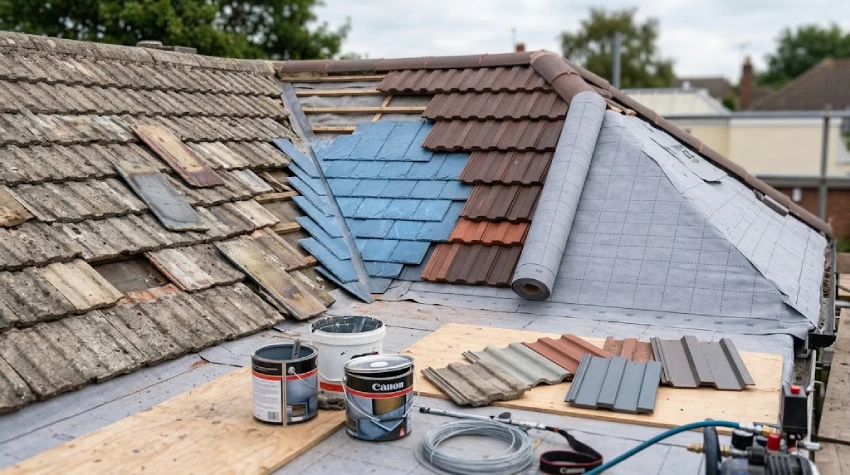
Roof restoration in the UK may be suitable when the roof is still structurally sound and defects are manageable. Restoration can include replacing damaged slates, repairing leadwork, clearing valleys, improving drainage, correcting chimney details, and reviewing internal damp.
A & A Roofing London checks whether the existing natural slate should be retained, whether synthetic slate is appropriate for replacement, or whether another roof covering is more practical. Restoration should solve the cause of failure, not simply refresh appearance.
| Roof condition | Natural slate may suit | Synthetic slate may suit | Other route may suit |
| Period roof with traditional character | Strong fit where structure and pitch allow | May need planning/context review | Repair existing slate if sound |
| Budget-sensitive re-roof | May be less practical if cost is the main limit | May be considered if product suits roof | Tile or restoration review |
| Low-pitch or extension roof | Often not suitable if pitch is wrong | Still must meet product limits | Flat roof system may be better |
| Existing slate roof with local defects | Repair or match natural slate | Not usually needed for local repair | Maintenance may be enough |
| Widespread hidden failure | Full replacement may be needed | Replacement option if suitable | Structure and compliance review |
| Conservation-sensitive property | Often preferred if matching existing | May be unsuitable depending on context | Planning guidance needed |
Natural Slate Vs Synthetic Slate Uk Area Coverage
Local property age, roof pitch, planning context, access, chimneys, drainage, and existing roof material all affect the choice between natural and synthetic slate. A & A Roofing London covers North London, Essex, and the Hertfordshire borders, helping homeowners choose slate materials based on the roof itself.
North London
In North London, Natural Slate Vs Synthetic Slate Uk often matters for terraced homes, period properties, shared rooflines, chimney stacks, slate repairs, and rear extensions. A & A Roofing London can check whether natural slate should be matched, whether synthetic slate is suitable, and whether roof pitch, access, drainage, and leadwork support the chosen material.
Hertfordshire Borders
Across the Hertfordshire borders, Natural Slate Vs Synthetic Slate Uk may involve older homes, mixed roof materials, exposed slopes, tree debris, moss, and previous repairs. A & A Roofing London reviews roof structure, slate condition, gutters, valleys, chimneys, and maintenance history before recommending natural slate, synthetic slate, restoration, or another covering.
Essex
In Essex, Natural Slate Vs Synthetic Slate Uk can depend on wind exposure, rain runoff, roof-edge weathering, chimney junctions, gutter flow, and existing slate condition. A & A Roofing London can inspect natural slate roofs, synthetic slate options, tile alternatives, flat roof connections, and internal damp evidence so the material decision follows the real roof condition.
Final Roofing Decision
Natural Slate Vs Synthetic Slate Uk should be decided from roof evidence. Natural slate may be the better fit for period character, traditional appearance, and matching existing roof details. Synthetic slate may suit some projects where budget, handling, consistency, or design constraints point toward a manufactured slate-style option.
A & A Roofing London can compare roofing materials in the UK by checking natural slate, synthetic slate, tile alternatives, flat roof sections, pitch, structure, leadwork, chimneys, gutters, valleys, insulation, ventilation, planning context, and previous repairs. That gives homeowners a practical material choice based on performance, suitability, and the real condition of the roof.
FAQs About Natural Slate Vs Synthetic Slate Uk
What is the main difference between natural slate and synthetic slate?
Natural slate is a stone roofing material with natural texture and variation. Synthetic slate is a manufactured slate-style product. The right choice depends on roof pitch, structure, planning context, appearance, cost, and long-term maintenance.
Is natural slate better than synthetic slate?
Not always. Natural slate may be better for traditional appearance and period character, while synthetic slate may suit some projects where product consistency, handling, or budget scope matters. A & A Roofing London checks the actual roof before recommending either option.
Can synthetic slate replace natural slate on any roof?
No. Synthetic slate still needs the correct pitch, fixing method, product suitability, structure, and detailing. Planning context may also matter, especially on older or conservation-sensitive properties.
Does changing slate material need Building Regulations approval?
It can. Planning Portal says replacing a roof covering with a different material is likely to need Building Regulations approval to check structural stability, fire safety, and energy efficiency. (planningportal.co.uk)
Which slate type lasts longer?
Lifespan depends on the material, product quality, roof pitch, installation, fixings, drainage, weather exposure, and maintenance. Natural slate can be long-lasting when correctly specified, but synthetic slate performance depends heavily on the product and installation.
Is synthetic slate cheaper than natural slate?
It may be cheaper in some projects, but total cost still depends on scaffold, access, battens, underlay, fixings, leadwork, waste removal, roof size, and hidden defects. A & A Roofing London checks the full roof scope before comparing cost.
Do natural and synthetic slate need maintenance?
Yes. Both need checks for slipped units, cracked edges, fixings, leadwork, gutters, valleys, chimneys, and internal damp. HSE says roof work is high risk, so maintenance should be handled with proper access and precautions. (hse.gov.uk)
What should A & A Roofing London inspect before choosing slate?
A & A Roofing London should inspect roof pitch, structure, existing covering, slate condition, battens, underlay, fixings, leadwork, chimneys, valleys, gutters, loft damp, ventilation, planning context, access, and nearby flat or tiled roof sections.