
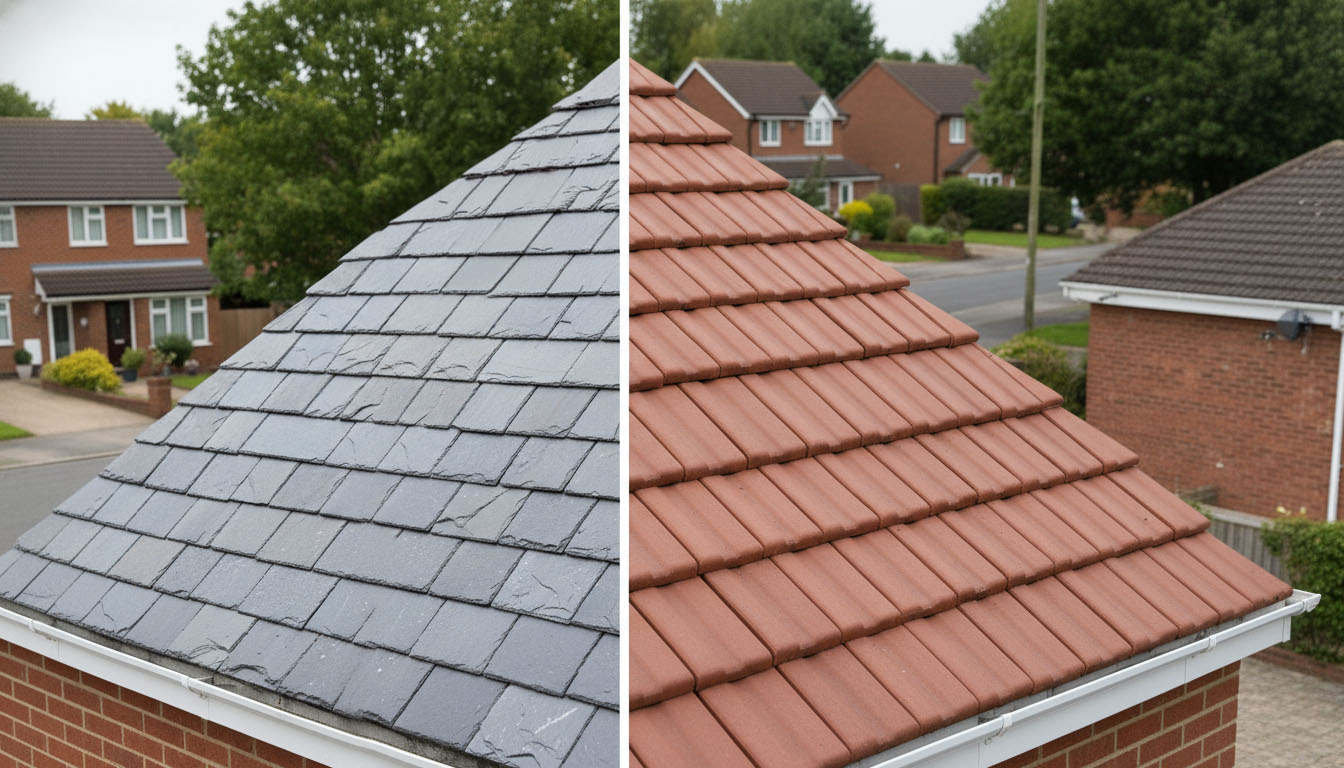
Slate Roof Vs Concrete Tile Uk depends on more than appearance. The right choice can change with roof pitch, structure, weight, weather exposure, property age, budget, planning limits, installation detail, leadwork, gutters, maintenance needs, repair access, and how long the homeowner expects the roof to perform.
A&A Roofing London helps homeowners across London, Essex, and the Hertfordshire borders compare slate and concrete tile roofing before repair, restoration, replacement, or installation begins. The goal is to choose a roof covering that suits the building, controls water properly, and avoids weak material decisions that create leaks, movement, or repeated maintenance later.
Quick Check: If you are comparing slate and concrete tiles for repair, replacement, or a new pitched roof, ask A&A Roofing London to review roofing materials in the UK against your roof pitch, structure, exposure, access, and long-term maintenance needs.
Slate Roof Vs Concrete Tile Uk: Main Comparison
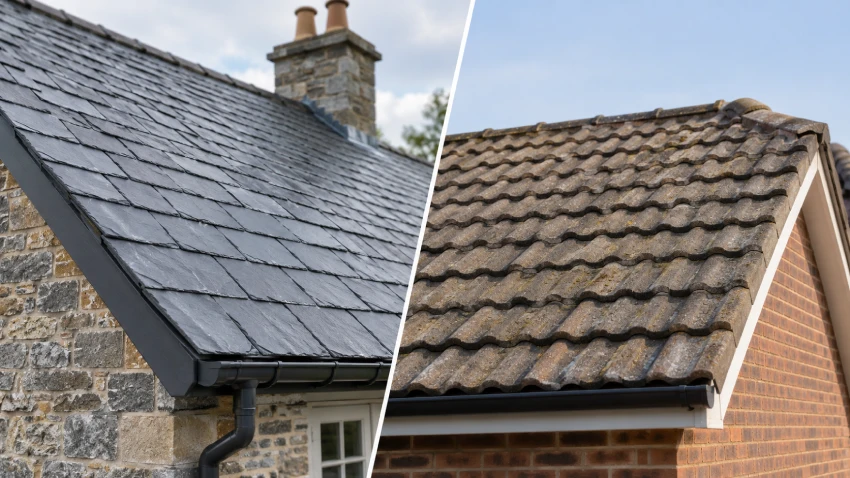
Slate Roof Vs Concrete Tile Uk should be judged by roof suitability, not only by material preference. Slate and concrete tiles can both work well when the roof is designed, installed, and maintained correctly. Problems start when the material is chosen without checking pitch, weight, drainage, fixing method, and building style.
| Comparison point | Slate roof | Concrete tile roof |
| Appearance | Often chosen for a thinner, traditional finish | Often chosen for a wider tile profile range |
| Weight | Depends on slate type and roof build-up | Can be heavier depending on tile profile and specification |
| Roof pitch | Must suit slate size, lap, and exposure | Must suit tile profile and manufacturer guidance |
| Installation | Needs accurate setting, fixing, laps, and detailing | Needs correct gauge, tile alignment, fixings, and ridges |
| Weather performance | Relies on pitch, lap, fixing, leadwork, and drainage | Relies on profile, fixing, pitch, ridges, and drainage |
| Maintenance | Slipped slates, cracked edges, leadwork, valleys, gutters | Cracked tiles, displaced tiles, ridge movement, moss, gutters |
| Repair matching | Slate size, colour, thickness, and type can matter | Tile profile, colour, and availability can matter |
| Period homes | Often considered where traditional detail matters | May suit many modern and replacement projects |
| Lifespan factors | Material quality, installation, exposure, maintenance | Tile quality, profile, installation, exposure, maintenance |
| Cost factors | Slate type, access, labour detail, leadwork, hidden layers | Tile type, roof size, labour, ridges, battens, access |
A&A Roofing London checks the building before recommending either route. The better roof is the one that fits the property, support structure, weather exposure, and maintenance plan.
What Is the Main Difference Between Slate and Concrete Tile?
The main difference is how each material behaves as a roof covering. Slate is a flat, thin covering installed in courses with laps that shed water down the roof slope. Concrete tiles are formed roof tiles with profiles, interlocks, or shapes depending on the product.
A&A Roofing London checks how each covering suits the roof shape. Slate may be chosen for a refined or traditional finish, while concrete tiles may suit many pitched roof projects where tile profile, availability, and replacement matching are important.
For broad material context, slate roof system outline and tile roof covering outline are useful.
Which Looks Better on UK Homes?
Appearance depends on the home. Slate often suits period homes, traditional rooflines, and properties where a slimmer roof finish matters. Concrete tiles can suit many residential properties and come in different profiles and finishes.
A&A Roofing London compares the roof covering against neighbouring roofs, property style, roof pitch, ridge details, chimneys, gutters, and any existing material. The right finish should look appropriate and still perform well.
For style comparison, slate tile appearance comparison and period slate roof matching are relevant.
Is Slate More Durable Than Concrete Tile?
Durability depends on the exact slate, tile, installation, exposure, drainage, roof pitch, leadwork, ventilation, and maintenance. A strong material can still fail early if the roof is poorly detailed. A lower-cost material can also perform well where the roof build-up is correct and maintained.
A&A Roofing London checks durability by looking at the whole roof system. Fixings, battens, underlay, leadwork, gutters, ridges, valleys, and access all affect how long the covering remains reliable.
For slate-specific durability context, slate performance trade-off notes and slate value assessment factors are useful.
How Long Do Slate and Concrete Tiles Last?
Slate and concrete tile lifespan depends on material quality, pitch, exposure, installation, fixing, battens, underlay, drainage, weather, and maintenance. A roof with poor leadwork or blocked gutters may fail before the covering itself reaches the end of its useful life.
A&A Roofing London checks lifespan signs by reviewing slipped slate, cracked tile, loose ridges, moss, gutter debris, damp loft evidence, underlay condition, and previous repairs.
For lifespan planning, slate roof ageing markers, slate service condition review, and concrete tile lifespan indicators are useful.
Which Handles UK Weather Better?
Slate and concrete tiles can both handle UK weather when properly specified and installed. The real test is whether the roof pitch, laps, fixings, ridges, valleys, leadwork, gutters, and edges are suited to rain, wind, frost, moss, and storm exposure.
A&A Roofing London checks weather exposure before recommending a material. Wind-driven rain, blocked valleys, moss growth, and poor gutter flow can affect either roof type.
For weather planning, slate weather suitability points, multi-material weather notes, and roof material lifespan comparison grid are useful.
Which Costs More: Slate or Concrete Tile?
Cost depends on roof size, access, scaffold, material type, labour, battens, underlay, ridges, leadwork, valleys, gutters, insulation, waste removal, and hidden damage found during preparation. Slate is often treated as the higher-spec option, but the final scope can vary widely by project.
A&A Roofing London checks the existing roof before pricing either material. A simple material comparison can be misleading if one roof needs structural work, major leadwork, new gutters, or hidden layer replacement.
For budgeting context, slate roofing allowance factors, tile roofing allowance factors, and roof tile buying factors are useful.
Is Slate Heavier Than Concrete Tile?
Weight depends on the slate or tile product, size, thickness, fixing method, and roof build-up. Some concrete tile systems can be heavy. Some slate systems may also require careful structural review depending on the existing roof and replacement material.
A&A Roofing London checks the roof structure before changing covering type. A material switch should never be based on appearance alone. The rafters, battens, underlay, load path, and roofline must be suitable for the chosen covering.
This is especially important when replacing an older covering with a different material.
Which Is Better for Period Homes?
Slate is often considered for period homes because it can suit older rooflines, traditional finishes, chimney details, and neighbouring property character. Concrete tiles may not always match the same visual detail, although suitability depends on the property and local context.
A&A Roofing London checks the building style, roof shape, existing covering, nearby rooflines, chimneys, leadwork, and planning considerations before recommending a material.
For older homes, older home roof material checks are useful.
Which Is Easier to Repair?
Ease of repair depends on matching materials, roof access, pitch, fixing method, surrounding condition, and the cause of damage. Slate repair may require matching slate size, colour, thickness, and type. Concrete tile repair may require matching tile profile, colour, and availability.
A&A Roofing London checks whether the defect is local or part of a wider problem. Replacing one slate or tile will not solve the issue if the cause is failed leadwork, blocked gutters, weak battens, poor ventilation, or repeated weather movement.
Which Needs More Maintenance?
Both slate and concrete tile roofs need maintenance. Slate roofs should be checked for slipped slates, cracked edges, fixing issues, leadwork, valleys, gutters, and moss. Concrete tile roofs should be checked for cracked tiles, displaced tiles, ridge movement, moss, gutter overflow, and surface wear.
A&A Roofing London creates maintenance plans around the roof material and roof details. The maintenance need is not only the covering; it includes chimneys, valleys, gutters, ridges, flat roof connections, and loft damp evidence.
For maintenance planning, slate care task notes and tile maintenance check points are useful.
Which Is Better for Roof Replacement?
The better material for roof replacement depends on the existing structure, roof pitch, material weight, appearance, budget, regulations, weather exposure, and maintenance expectations. Slate may suit homes where traditional detail and long-term appearance matter. Concrete tiles may suit many pitched roof replacement projects where a tile system fits the roof and structure.
A&A Roofing London checks the existing roof before advising on replacement. A replacement should solve the current roof’s failure points, not simply swap one covering for another.
For wider material selection, roof material decision overview and roof material selection guide are useful.
How Should You Choose Between Slate and Concrete Tile?
The choice should start with the roof, not the material catalogue. The right material must fit the roof pitch, structure, building style, exposure, drainage, access, regulations, maintenance plan, and budget.
A&A Roofing London checks whether slate or concrete tile will work best for the building. This includes reviewing the existing covering, hidden layers, leadwork, ridges, valleys, gutters, chimneys, and future repair access.
For selection guidance, slate choice planning guide and roof tile selection process are useful.
Slate Vs Concrete Tile Installation
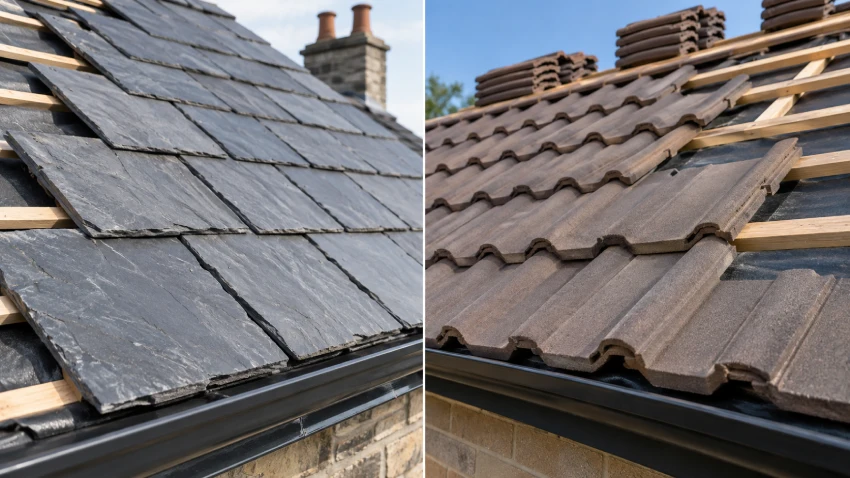
Slate and concrete tile installation require different product handling, fixing, spacing, and detail work. Slate relies on correct course alignment, lap, fixing, underlay, battens, and edge detailing. Concrete tiles rely on correct gauge, profile, interlock or overlap, battens, fixings, ridges, and verges.
A&A Roofing London checks the installation method against the roof design. Poor installation can cause leaks, slipped coverings, uneven rows, ridge problems, and repeated repair needs.
For process context, slate fitting workflow notes and tile installation planning guide are useful.
Natural Slate, Synthetic Slate, and Concrete Tile
A comparison between slate and concrete tile should also separate natural slate from synthetic slate. Natural slate, synthetic slate, and concrete tiles can all have different appearance, thickness, fixing, lifespan, repair matching, and cost factors.
A&A Roofing London checks the product category before comparing options. “Slate” is not one single product, and “tile” is not one single product either.
For material categories, natural synthetic slate comparison notes, slate type identification points, and roof tile type identification points are useful.
Slate Roofing Service in London
Slate roofing in London may suit homeowners who want a traditional-looking pitched roof covering, especially where the roof structure, pitch, property character, and weather exposure support that choice.
A&A Roofing London checks the slate route carefully before installation or replacement. The work should consider slate type, underlay, battens, leadwork, valleys, chimneys, gutters, ventilation, and long-term repair access.
Concrete Roof Tile Replacement in London
Concrete roof tile replacement in London may suit homes where the roof is already tiled or where a concrete tile system is appropriate for the structure, pitch, and appearance of the property.
A&A Roofing London checks whether concrete tile replacement is local, partial, or part of a wider re-roof. Tile profile, ridge detail, gutters, battens, and existing roof condition all affect the final scope.
Flat Roofs and Material Choice
Flat roofs in London should be considered separately from slate or concrete tile roofs. Flat roofs rely on waterproofing systems, falls, outlets, trims, upstands, and edge detailing instead of pitched roof coverings.
Many homes have slate or concrete tile on the main roof with flat roofs on extensions, dormers, porches, or garages. A&A Roofing London checks how water from the pitched roof reaches lower flat roof sections before recommending any repair or replacement route.
Pitched Roof Installation and Material Choice
Slate and concrete tile are both pitched roof materials, so pitched roof installation in the UK is central to the decision. The roof pitch, structure, underlay, battens, fixings, ridges, valleys, gutters, and leadwork must suit the chosen covering.
A&A Roofing London checks whether the roof build-up can support slate, concrete tile, or another material. Choosing the right covering matters, but correct pitched roof installation is what makes the material work.
Roof Restoration Before Changing Materials
Roof restoration in the UK may be suitable if the existing roof is still structurally sound but has repairable defects. Restoration can include replacing damaged slate or tile sections, repairing leadwork, improving gutters, clearing valleys, and checking chimneys.
A&A Roofing London checks whether restoration can preserve the roof before full replacement is recommended. If the roof covering is failing widely, a material change may be considered as part of replacement.
| Roof condition | Slate route | Concrete tile route | A&A Roofing London checks |
| Period appearance matters | Often worth reviewing | May need careful visual fit | Local style, roofline, chimneys |
| Existing concrete tile roof | Slate may need structural review | Like-for-like may be simpler | Weight, battens, tile profile |
| Existing slate roof | Matching may preserve character | Switch may change appearance and weight | Structure, planning, roof pitch |
| Exposed weather | Needs correct lap and fixing | Needs suitable profile and fixing | Rain, wind, ridges, valleys |
| Repair matching concern | Slate match can be specific | Tile profile availability matters | Material source and repair access |
| Hidden layer failure | New slate needs full build-up check | New tiles need full build-up check | Underlay, battens, ventilation |
Slate Roof Vs Concrete Tile Uk Area Coverage
Local property age, roof pitch, material weight, weather exposure, access, chimneys, valleys, gutters, planning context, and existing roof condition all affect Slate Roof Vs Concrete Tile Uk. A&A Roofing London covers North London, Essex, and the Hertfordshire borders, helping homeowners compare slate and concrete tile options before installation, repair, restoration, or replacement.
North London
In North London, Slate Roof Vs Concrete Tile Uk often matters for terraced homes, period properties, shared rooflines, chimney stacks, rear extensions, and mixed roof materials. A&A Roofing London can compare slate and concrete tile against roof pitch, access, leadwork, gutters, valleys, appearance, and flat roof connections.
Hertfordshire Borders
Across the Hertfordshire borders, Slate Roof Vs Concrete Tile Uk may involve larger pitched roofs, tree debris, weather exposure, older roof details, and existing tile or slate coverings. A&A Roofing London reviews roof structure, drainage, chimneys, valleys, material weight, insulation, ventilation, and long-term maintenance before confirming the best route.
Essex
In Essex, Slate Roof Vs Concrete Tile Uk can be affected by wind exposure, rain runoff, gutter flow, roof-edge detailing, chimney junctions, and the existing roof covering. A&A Roofing London can inspect slate and concrete tile suitability, flat roof connections, pitched roof details, leadwork, valleys, and internal damp evidence before replacement work starts.
Final Roofing Decision
Slate Roof Vs Concrete Tile Uk should be decided by the roof’s structure, pitch, appearance needs, exposure, drainage, repair access, budget, and long-term maintenance expectations. Slate may suit traditional rooflines and homes where material character matters. Concrete tile may suit many pitched roof projects where profile, availability, and roof structure align.
A&A Roofing London can compare roofing materials in the UK by checking slate suitability, concrete tile suitability, roof pitch, battens, underlay, leadwork, chimneys, valleys, gutters, flat roof connections, weather exposure, and hidden damage. That gives homeowners a practical route to roof repair, restoration, replacement, or new installation.
FAQs About Slate Roof Vs Concrete Tile Uk
What Is the Main Difference Between Slate and Concrete Tile?
Slate is usually a thinner pitched roof covering laid in overlapping courses, while concrete tiles are formed tiles with profiles or shapes depending on the product. Both need the correct pitch, fixing, battens, underlay, and detailing.
Is Slate Better Than Concrete Tile?
It depends on the roof and property. Slate may suit traditional appearance and certain period rooflines. Concrete tiles may suit many residential pitched roofs where the profile, weight, structure, and budget fit the project.
Which Lasts Longer: Slate or Concrete Tile?
Lifespan depends on material quality, installation, pitch, weather exposure, fixings, battens, underlay, leadwork, drainage, and maintenance. A well-installed roof with good details usually performs better than a poorly installed roof with a strong material.
Is Concrete Tile Cheaper Than Slate?
Concrete tile is often treated as the lower-cost option, but the final cost depends on roof size, access, scaffold, labour, tile type, slate type, underlay, battens, leadwork, gutters, and hidden damage.
Can You Replace Concrete Tiles With Slate?
Sometimes, but the roof structure, pitch, material weight, fixing method, battens, underlay, regulations, and appearance must be checked first. A&A Roofing London should inspect the roof before a material switch.
Can You Replace Slate With Concrete Tile?
Sometimes, but the change may affect appearance, weight, roof detailing, planning context, and repair matching. The roof should be assessed before switching materials.
Which Needs More Maintenance?
Both need maintenance. Slate roofs need checks for slipped slates, cracked edges, leadwork, valleys, and gutters. Concrete tile roofs need checks for cracked tiles, displaced tiles, ridge movement, moss, and drainage.
What Should A&A Roofing London Check Before Choosing?
A&A Roofing London should check roof pitch, structure, existing covering, material weight, access, underlay, battens, leadwork, chimneys, valleys, gutters, insulation, ventilation, weather exposure, appearance, and repair history.