
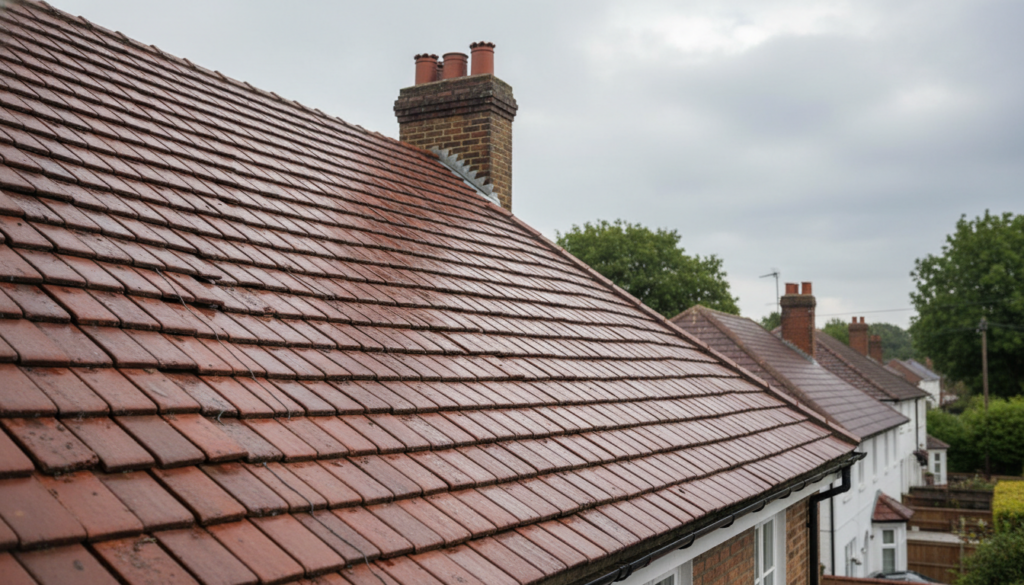
Roof Leak Causes UK: Find the Source Early
Roof Leak Causes Uk can be difficult to diagnose because the stain indoors is not always directly below the entry point. Water can enter through broken tiles, slipped slates, flat roof cracks, failed flashing, blocked valleys, overflowing gutters, chimney defects, poor workmanship, or storm damage, then travel along underlay, rafters, insulation, masonry, or ceiling voids before it appears.
A & A Roofing London helps homeowners across London, Essex, and the Hertfordshire borders trace the source of a roof leak properly, protect the building from further water damage, and choose repair, restoration, or replacement based on evidence.
Quick Check: If a ceiling stain, damp loft, or active drip has appeared, ask A & A Roofing London to carry out a roof inspection in the UK before patching the nearest visible roof mark and missing the true leak source.
Roof Leaks Causes UK: Why the Source Is Hard to Find
Roof Leaks Causes Uk usually involves more than one visible symptom. A cracked tile may be obvious, but the leak could also involve damaged underlay, a blocked valley, lifted flashing, or water backing up from a gutter. Planning Portal defines the above-ground system of gutters and rainwater pipes as roof drainage, which means drainage should be checked whenever a roof leak is investigated.
| Leak clue | Possible cause | Why inspection matters |
| Damp ceiling below chimney | Flashing, stack, pointing, back gutter, or nearby tiles | The chimney area has several leak paths |
| Stain near external wall | Gutter overflow, flashing fault, or roof-edge leak | Water may be entering at the eaves |
| Drip after heavy rain | Valley, gutter, flat roof outlet, tile, or slate issue | High water flow exposes weak points |
| Leak after wind | Loose tile, slipped slate, lifted flashing, or ridge movement | Wind can move coverings before rain enters |
| Flat ceiling stain | Flat roof split, outlet blockage, upstand leak, or hidden deck damp | Water can travel under the membrane |
| Repeated leak after patches | Wrong source was repaired | Surface patching may miss the cause |
A & A Roofing London checks the roof covering, drainage route, junctions, roof void, internal damp marks, and previous repair points together. That avoids the common mistake of sealing the nearest visible gap while the actual water path remains open.
Tile Roofing Leak Causes
Tile roofing leaks often begin when tiles crack, slip, lift in wind, or allow debris to collect around valleys and gutters. A single missing tile can let rain reach underlay; repeated tile movement may point to failing fixings, poor installation, storm exposure, or ageing battens.
A & A Roofing London checks roof tile replacement in London by reviewing broken tiles, slipped courses, ridge movement, valleys, gutters, underlay, and internal staining. The inspection also checks whether tile fragments have fallen into gutters or onto lower flat roof areas.
For tile-specific causes, broken tile entry patterns and tile repair sequence checks help explain why a leak repair must check the surrounding course, not just one visible tile.
Slate Roofing Leak Causes
Slate roof leaks can appear from small defects: slipped slates, cracked corners, corroded fixings, failed laps, damaged underlay, or weak junctions around chimneys and valleys. A slate leak can be hard to spot from ground level because the visible gap may be small.
A & A Roofing London checks slate roof repair in London by reviewing slate alignment, fixings, laps, underlay, leadwork, valleys, chimneys, ridges, and loft damp. Slate roofs should be inspected carefully because unsafe or careless access can damage sound slates.
Where slates are near valleys, gutters, or chimneys, the leak source may be the junction rather than the slate itself. That is why A & A Roofing London traces both the water route and the covering condition.
Flat Roof Leak Causes
Flat roof leaks are often linked to ponding water, cracks, blisters, open seams, blocked outlets, failed upstands, damaged trims, rooflight edges, or soft decking beneath the membrane. A flat roof leak can also be caused by water falling from a higher pitched roof onto a lower flat roof.
A & A Roofing London assesses flat roof replacement in London when leaks keep returning or when the deck, insulation, outlets, or edges are already affected. A local repair may be suitable when the defect is isolated and the surrounding roof is dry. Replacement becomes more likely where water has spread beneath the covering.
Planning Portal notes that a flat roof usually has a slight fall so rainwater can drain away. If the roof is holding water, drainage and outlet condition should be checked as part of leak diagnosis. For surface clues, flat roof split and blister signs are relevant.
Pitched Roof Leak Causes
Pitched roof leaks usually involve the covering, the water route, or a junction. Tiles, slates, ridges, valleys, chimneys, gutters, flashings, and roof edges all work together. If one point fails, water can travel beneath the covering before appearing indoors.
A & A Roofing London checks pitched roof repair in London by reviewing roof pitch, covering condition, ridges, valleys, gutters, leadwork, underlay, and internal damp marks. A pitched roof leak should not be assumed to come from the nearest missing tile until surrounding details have been checked.
For movement-led leaks, tile movement leak triggers and ridge cap leak pathways help explain why wind-exposed roof parts need attention after bad weather.
Flashing and Leadwork Leaks
Flashing leaks are common because roof junctions are vulnerable. Water enters where the roof meets a chimney, wall, dormer, rooflight, parapet, flat roof upstand, or abutment. Leadwork should turn water away from the joint and back onto the roof covering or drainage route.
A & A Roofing London checks flashing, lead aprons, step flashing, soakers, wall chases, upstands, pointing, and surrounding roof coverings. A leak near a junction may come from the leadwork itself, but it may also come from tiles, slates, gutters, valleys, or masonry above it.
For junction diagnosis, flashing moisture entry points and lead apron and soaker roles are useful supporting topics.
Chimney Leak Causes
Chimney leaks can come from several places at once: cracked pointing, failed flashing, open lead chases, back gutter problems, damaged surrounding tiles or slates, or water running down masonry. That is why a damp chimney breast should not be diagnosed from inside the room alone.
A & A Roofing London checks chimney stacks, leadwork, back gutters, soakers, pointing, pots, surrounding tiles or slates, gutters, and nearby valleys. The repair may involve leadwork, masonry, roof covering, or drainage correction.
For chimney-specific evidence, chimney breast leak clues helps homeowners understand why leaks near stacks need a full junction review.
Valley Leak Causes
Roof valleys carry water from two roof slopes, so they are exposed to heavier flow than ordinary roof areas. Leaks can happen when valleys are blocked with leaves, moss, tile grit, broken fragments, or mortar debris, or when the lining, cuts, laps, or surrounding coverings fail.
A & A Roofing London checks valley channels, tile or slate cuts, lining condition, debris, lower gutter discharge, and internal damp marks. A leak may appear to come from a tile beside the valley, while the real cause is water backing up in the valley channel.
For valley-related leaks, valley water concentration risks and debris-dammed valley symptoms are relevant supporting links.
Gutter and Drainage Leak Causes
Gutter problems can create roof leaks by pushing water back toward the eaves, fascia, walls, flat roof edges, and roof covering. The Met Office warns that leaves can fill gutters and drainpipes; when this builds up, water can back up into guttering and leak into the roof and sides of the house.
A & A Roofing London checks gutters, downpipes, outlets, roof edges, fascia boards, eaves, valleys, and flat roof drainage. A roof leak near an external wall may be a drainage failure rather than a broken tile.
For drainage-led leaks, eaves overflow leak sequence and rainwater route failure checks are useful supporting topics.
Storm Damage and Sudden Roof Leaks
Storms can create immediate leaks by moving roof materials, lifting flashing, loosening ridge tiles, forcing rain under laps, blowing debris into valleys, or breaking tiles and slates. The Met Office advises people not to go outside to repair damage while a storm is in progress.
A & A Roofing London inspects storm damage once conditions are safe. The inspection checks visible damage, loose materials, drainage blockage, internal damp, and whether temporary measures are needed before permanent repair.
For safe post-storm checking, post-storm exterior evidence and active leak response order are useful supporting links.
Weather-Related Leak Causes
UK weather can expose small roof weaknesses. Heavy rain tests gutters, valleys, outlets, and flat roof surfaces. Wind tests loose tiles, slates, ridges, verges, and flashings. Frost can worsen cracked materials, trapped moisture, and ageing mortar.
A & A Roofing London checks whether a leak is caused by recent weather or by older defects that weather has exposed. A roof may appear sound in dry conditions, then leak only during wind-driven rain because water is being pushed beneath a weak junction.
For weather-linked roof problems, rain wind frost leak behaviour supports the wider diagnosis.
Roof Damage and Restoration Decisions
A & A Roofing London checks roof damage in the UK before deciding whether a leak needs repair, restoration, or replacement. Some leaks are local. Others show that the roof covering, underlay, battens, drainage, flat roof deck, or leadwork is deteriorating more widely.
| Leak pattern | Likely route | Possible next step |
| One broken tile | Local covering defect | Replace tile and check underlay |
| Repeated damp near chimney | Flashing, stack, or back gutter | Junction repair or chimney work |
| Stains after gutter overflow | Drainage backing up | Clear, realign, or repair drainage |
| Flat roof stain after ponding | Surface, outlet, or deck issue | Repair, restoration, or replacement |
| Leaks in several rooms | Widespread roof deterioration | Full roof condition review |
| Leak after every storm | Movement or poor detailing | Storm-damage inspection |
Restoration may help where the roof is still serviceable, but repeated leaks from different areas may point to a replacement conversation.
Roof Repairs: Fixing the Cause, Not the Symptom
A roof repair should address the water-entry path, not just the stain indoors. Surface sealant, a single tile replacement, or a quick patch can fail if the leak comes from hidden underlay damage, a blocked valley, a failed upstand, or water entering higher up the roof.
A & A Roofing London checks what failed first and what has been affected by water. The repair may involve tiles, slates, leadwork, gutters, valleys, flat roof details, chimneys, or underlay.
For deciding repair depth, local repair boundary clues helps separate isolated leaks from wider roof failure. Where poor previous work is suspected, failed repair detail patterns is also relevant.
When Roof Leaks Point to Replacement
Not every leak means the roof needs replacing. Replacement becomes more likely when leaks keep returning, covering defects are widespread, underlay has failed, battens are damaged, a flat roof deck is soft, the roofline is moving, or patch repairs keep failing.
Planning Portal states that most roof replacement work on existing buildings needs Building Regulations approval. It also says that changing the roof covering material may require checks for structural stability, fire safety, and energy efficiency.
A & A Roofing London checks whether the roof can be repaired locally, restored, or replaced with the correct scope. A leak inspection should identify both the current water entry point and the condition of the surrounding roof.
Inspection Timing for Roof Leaks
Roof leaks should be inspected early because water can damage insulation, plaster, timber, electrics, and hidden roof layers. Energy Saving Trust advises getting professional advice before installing insulation where a loft has damp, and notes that condensation and damp can cause mould or rot in roof timbers over time.
A & A Roofing London checks leak timing, weather conditions, internal damp marks, roof void signs, roof covering defects, and drainage routes. The aim is to connect the indoor symptom with the external source.
For inspection planning, leak investigation timing factors and roof survey leak checkpoints are useful supporting references.
Safety During an Active Leak
If water is entering near lights, sockets, or wiring, electrical safety matters before roof diagnosis. Electrical Safety First advises switching off the electricity supply at the consumer unit or fusebox only if it is safe to do so where water damage creates electrical risk.
Homeowners should also avoid climbing onto wet roofs. HSE says roof work is high risk and all roofs should be treated as fragile until a competent person confirms otherwise. Its fragile-surface guidance says effective precautions are required for work on or near fragile surfaces, no matter how short the duration, including maintenance, repair, cleaning, and demolition.
A & A Roofing London recommends safe internal containment, ground-level observation, and professional inspection once access conditions are safe.
Maintenance That Prevents Roof Leaks
Preventing roof leaks means keeping weak points under review. Tiles, slates, flashings, gutters, valleys, flat roof outlets, chimneys, ridges, and internal damp signs should be checked before bad weather turns small defects into active leaks.
A & A Roofing London can build maintenance around the actual roof: tiled slopes, slate sections, flat roofs, pitched roof areas, leadwork, gutters, valleys, chimneys, and previous repairs.
For prevention, leak prevention task groups and early roof defect groups are relevant.
Sagging and Structural Leak Warnings
A sagging roofline, dipped flat roof area, bowed ceiling, soft deck, or repeated pooling can suggest more than a surface leak. Structural movement can change how water drains and where roof materials overlap.
A & A Roofing London checks roofline shape, deck condition, timbers, water ponding, and internal cracks or stains before recommending repair. If the structure is affected, the leak repair scope may change significantly.
For movement-related warning signs, roofline distortion warning cues is useful supporting information.
Residential Roof Leak Diagnosis
Residential roofs often contain several possible leak points: tiled slopes, slate sections, flat roof extensions, dormers, rooflights, chimneys, valleys, gutters, leadwork, ridges, and old repairs. A leak may begin in one area and show in another.
A & A Roofing London diagnoses roof leaks by matching internal evidence with external roof features. This approach is especially important on homes with mixed roof types, older extensions, shared rooflines, or previous patch repairs.
Roof Leaks Causes Uk Area Coverage
Local roof age, property type, roof pitch, extensions, chimneys, drainage layout, weather exposure, and previous repairs all affect roof leak diagnosis. A & A Roofing London covers North London, Essex, and the Hertfordshire borders, helping homeowners trace leaks safely and choose the right repair route.
North London
In North London, Roof Leaks Causes Uk often involves terraced houses, shared rooflines, chimney stacks, slate details, tiled slopes, rear flat roof extensions, and limited access around gutters and valleys. A & A Roofing London can check whether the leak is coming from tiles, slates, leadwork, chimneys, drainage, flat roof edges, or previous repairs.
Hertfordshire Borders
Across the Hertfordshire borders, Roof Leaks Causes Uk may involve tiled pitched roofs, slate sections, tree debris, moss, blocked valleys, gutter overflow, storm exposure, and ageing roof details. A & A Roofing London reviews the roof covering, drainage route, chimneys, flashings, internal damp marks, and repair history before recommending the next step.
Essex
In Essex, Roof Leaks Causes Uk can become clear after heavy rain, high wind, frost, gutter blockage, or repeated roof-edge damp. A & A Roofing London can inspect flat roofs, pitched roofs, tiles, slates, valleys, gutters, leadwork, chimneys, and internal stains so the repair follows the true water-entry route.
Final Roofing Decision
Roof Leaks Causes Uk should be diagnosed from the water path, not only the visible stain. The cause may be a broken tile, slipped slate, flat roof defect, failed flashing, chimney problem, valley blockage, gutter overflow, storm damage, poor workmanship, or hidden roof movement.
A & A Roofing London can use a roof inspection in the UK to check tiles, slates, flat roofs, pitched roof slopes, gutters, valleys, leadwork, chimneys, rooflines, underlay, internal damp evidence, and previous repair work. That gives homeowners a clear route to targeted repair, roof restoration, or replacement where the leak shows wider roof failure.
FAQs About Roof Leaks Causes Uk
What are the most common Roof Leaks Causes Uk?
Common causes include broken tiles, slipped slates, cracked flat roof surfaces, failed flashing, chimney defects, blocked valleys, overflowing gutters, poor drainage, storm damage, failed ridges, poor workmanship, and ageing underlay. A & A Roofing London checks the full roof system because several causes can appear at the same time.
Why is the leak stain not directly below the roof defect?
Water can travel along underlay, battens, rafters, insulation, masonry, ceiling voids, and flat roof decking before it appears indoors. That is why A & A Roofing London traces the water path from internal damp marks back to roof coverings, drainage, flashings, valleys, and chimneys.
Can blocked gutters cause roof leaks?
Yes. Planning Portal describes gutters and rainwater pipes as roof drainage, and the Met Office warns that blocked gutters can cause water to back up into guttering and leak into the roof and sides of a house. A & A Roofing London checks gutters, downpipes, eaves, valleys, and internal damp signs together.
Are flat roof leaks harder to find?
They can be. Water may enter through a crack, blister, seam, outlet, upstand, rooflight, trim, or edge, then travel beneath the surface before appearing indoors. A & A Roofing London checks ponding, outlets, membrane condition, deck softness, and internal damp before deciding whether repair or replacement is needed.
What should I do if water is coming through near electrics?
Keep away from wet electrics. Electrical Safety First advises switching off the electricity supply at the consumer unit or fusebox only if it is safe to do so where water damage creates electrical risk. A roof inspection should follow once immediate safety risks are controlled.
Should I go onto the roof to find the leak?
No. HSE says roof work is high risk and all roofs should be treated as fragile until a competent person confirms otherwise. Homeowners should use safe ground-level observations, internal photos, and professional inspection rather than climbing onto a wet or damaged roof.
When does a roof leak mean roof replacement?
Replacement becomes more likely when leaks are recurring, defects are widespread, underlay or battens have failed, flat roof decking is soft, roofline movement is visible, or previous repairs keep failing. Planning Portal states that most roof replacement work on existing buildings needs Building Regulations approval.
What should A & A Roofing London inspect during a leak visit?
A & A Roofing London should inspect tiles, slates, flat roof surfaces, pitched roof slopes, gutters, valleys, downpipes, flashings, leadwork, chimneys, ridges, underlay, loft damp, internal stains, roofline movement, and previous repair areas. The aim is to find the leak source and decide whether repair, restoration, or replacement is the right route.