
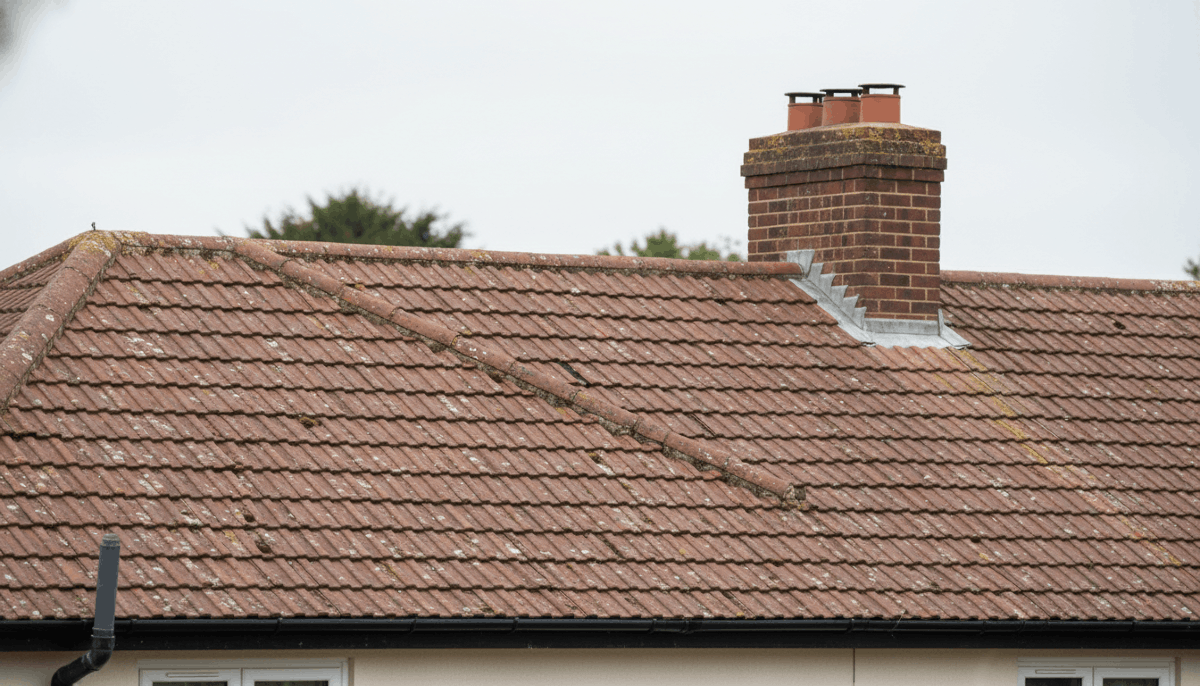
Roof Repair Vs Replacement is one of the most expensive roofing decisions a homeowner can face, but the right answer is not always “replace it” or “patch it.” A small defect may only need targeted work, while repeated leaks, widespread tile movement, failed underlay, sagging, or a worn flat roof system may make replacement the safer long-term route.
A & A Roofing London helps homeowners across London, Essex, and the Hertfordshire borders inspect the roof properly, separate isolated defects from system failure, and choose the repair, restoration, or replacement route that fits the roof’s real condition.
Quick Check: Before choosing a patch repair or full re-roof, arrange a roof inspection in the UK with A & A Roofing London so the decision is based on the roof’s condition, not guesswork.
Roof Repair Vs Replacement: The Core Test
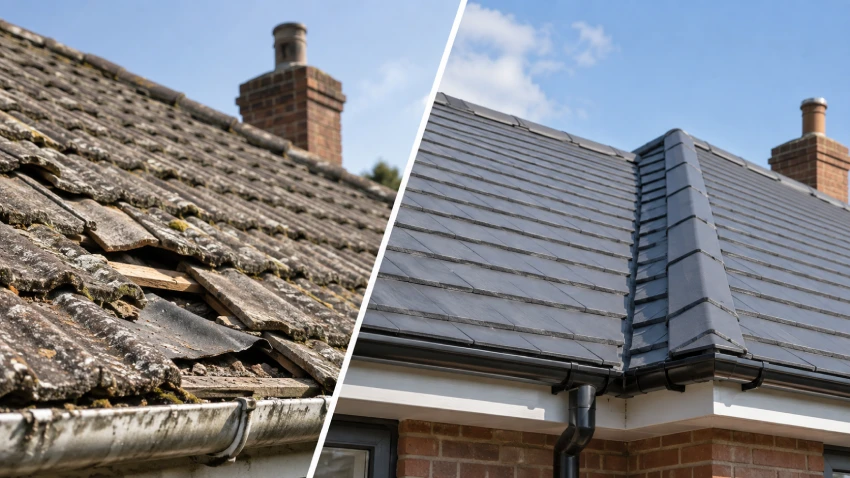
Roof Repair Vs Replacement comes down to scope. A repair deals with a defined fault. Replacement deals with a roof system that is no longer reliable enough to keep correcting in sections. The difficult part is knowing whether the visible symptom is local or only the first sign of wider roof failure.
Planning Portal explains that most roof replacement work on existing buildings needs Building Regulations approval, and changing a roof covering material can raise structural stability, fire safety, and energy efficiency issues. It also states that because a roof is a thermal element, re-covering work should include improving the roof’s thermal insulation properties.
| Roof condition | Repair may be enough | Replacement may be wiser | A & A Roofing London check |
| One slipped tile or slate | Yes, if surrounding fixings are sound | No, unless movement is widespread | Covering, battens, underlay, water path |
| Repeated leak in the same room | Sometimes, if source is traced | Yes, if hidden layers have failed | Flashing, valley, underlay, roof deck |
| Sagging roofline | Rarely without deeper investigation | Possible if structure is compromised | Rafters, loading, timbers, roof shape |
| Flat roof cracks or ponding | Sometimes, if local and early | Often if membrane or deck is ageing | Surface, deck, falls, outlets, edges |
| Widespread tile or slate failure | Limited temporary work only | Often the more practical route | Full covering condition and exposure |
Roof Repair Vs Replacement should start with diagnosis, not a quotation for the largest job. A & A Roofing London checks where water is entering, whether the roof covering is still performing, whether hidden layers are compromised, and whether the roof is safe to keep maintaining.
NFRC advises homeowners that when refurbishment work covers 50% or more of a roof’s area, either a roofing contractor registered with the NFRC Competent Person Scheme should be used or Local Authority Building Control should be contacted before work starts. This matters because a decision that starts as “repair or replacement” can become a Building Regulations matter once the scope grows.
Tile Roofing: Repair One Area or Replace More?
Tile roofing often lends itself to targeted repair when the defect is isolated. A broken tile, slipped course, small ridge issue, or damaged verge may be corrected without replacing the whole roof if the surrounding tiles, battens, underlay, and fixings are still sound.
A & A Roofing London checks whether a tile defect is local or part of a wider pattern. If several tiles are loose, the courses are uneven, or water has reached the underlay, the Roof Repair Vs Replacement decision becomes broader than swapping individual tiles.
Where the tile covering still has life left, roof tile replacement in London may be the practical route. For homeowners comparing visible signs, roof fault warning signs can help separate one-off damage from a roof that needs a larger plan.
Slate Roofing: Repair Depends on Fixings and Laps
Slate roofs can last well when correctly installed and maintained, but they are less forgiving when fixings, headlaps, or supporting battens fail. A slipped slate may be repairable. Repeated slate movement across different roof slopes may indicate nail fatigue, batten deterioration, or wider roof age.
A & A Roofing London checks whether the slate roof is failing tile by tile or as a system. Slate roof repair can be sensible where surrounding slates remain secure and the water path is clear. Replacement becomes more likely where many slates are cracked, slipping, poorly fixed, or letting water reach the underlay.
For slate-specific defects, slate roof repair in London should be judged alongside the condition of the surrounding covering. If the question is whether the slate roof has moved beyond maintenance, slate replacement condition markers provide a useful next comparison.
Flat Roofing: Patch, Overlay, or Replace?
Flat roofs need a different Roof Repair Vs Replacement test because the waterproofing layer, deck, insulation, outlets, and edge details all work together. A small puncture on a relatively sound membrane may be repairable. Blisters, cracks, ponding, failed laps, and repeated leaks usually point to deeper failure.
Energy Saving Trust notes that flat roof insulation often needs specialist techniques and that insulating a flat roof from underneath can lead to condensation problems if not completed correctly. That is why a flat roof replacement decision should consider the full build-up, not just the visible surface.
A & A Roofing London checks whether flat roof replacement in London is required by assessing the membrane, deck, falls, drainage, trims, and any insulation issues. If the surface is already bubbling or splitting, flat roof surface breakdown patterns can help show whether the defect is early-stage or part of wider system failure.
Pitched Roof Maintenance Before Replacement
Pitched roof maintenance can delay replacement when the main roof structure and covering are still sound. Fixing small tile movement, ridge defects, flashing failures, and blocked drainage can protect the roof without unnecessary re-roofing.
A & A Roofing London checks pitched roof maintenance in the UK by looking at the covering, ridge line, valleys, battens, underlay, loft ventilation, and visible water paths. Repair is more likely when the problem is traceable and contained. Replacement becomes more likely when several layers are ageing or failing together.
HSE roof work guidance warns that all roofs should be treated as fragile until a competent person confirms otherwise, and roof work requires suitable fall-prevention measures. That safety point matters because homeowners should not climb onto pitched roofs to decide for themselves whether repair or replacement is needed.
Roof Restoration as the Middle Route
Roof restoration can sit between repair and replacement, but only when the roof is structurally suitable. Restoration may involve cleaning, replacing damaged components, addressing surface wear, improving detailing, and extending service life where the main roof system remains reliable.
A & A Roofing London uses roof restoration in the UK when the roof does not need full replacement but needs more than a single repair. This can apply where defects are spread across the roof but the structure, covering, and drainage route can still be brought back into sound condition.
Restoration should not be used to cover hidden failure. If water has damaged decking, underlay, battens, or timbers, the Roof Repair Vs Replacement decision may need to move toward a larger scope. For budget planning around restoration work, restoration budget factors can help frame the variables without assuming every roof is suitable.
Roof Repairs: When a Targeted Fix Makes Sense
A targeted repair makes sense when the defect has a clear source, limited spread, and sound surrounding materials. Examples include a small flashing defect, one broken tile, a localised ridge issue, a blocked valley, or a minor flat roof puncture on an otherwise healthy system.
A & A Roofing London repairs roofs by tracing the route of water entry before touching the visible symptom. That matters because ceiling stains often appear away from the original roof fault. A patch over the wrong point wastes money and may leave damp spreading inside the roof.
| Repair situation | Why repair may work | What must be checked first |
| One broken tile | Local covering failure | Battens, underlay, nearby tiles |
| Small lead flashing gap | Defined junction defect | Chase, laps, soakers, masonry |
| Loose ridge section | Limited movement | Ridge line, bedding, fixings |
| Blocked valley | Water path obstruction | Valley lining, tile cuts, gutter flow |
| Minor flat roof puncture | Local membrane damage | Deck dryness and surface age |
For tile-specific work, tile repair process basics and broken tile handling steps help homeowners understand what a proper repair should address.
Replacement: When the Roof System Has Failed
Replacement becomes the stronger decision when defects are widespread, repeated, hidden, structural, or built into the roof system. A roof that needs constant patching may be telling the homeowner that its covering, underlay, battens, deck, or drainage design has reached the end of reliable service.
A & A Roofing London recommends replacement only when the inspection supports it. The decision may be driven by repeated leaks, age, storm damage, widespread slate or tile failure, flat roof membrane breakdown, poor workmanship, structural movement, or the need to bring the roof build-up up to current expectations during major work.
NFRC CPS states that where 50% or more of a roof is being replaced, the owner is legally obliged to upgrade insulation and obtain a Building Regulations Compliance Certificate from local authority building control. For homeowners, that means replacement is not only a roofing finish decision; insulation, compliance, and documentation may also be involved.
Lead Work and Chimneys: Small Fault, Big Leak
Lead work and chimney defects often make the Roof Repair Vs Replacement decision harder. A damp stain near a chimney breast can look like major roof failure, but the cause may be failed step flashing, weak soakers, open mortar joints, cracked flaunching, or a damaged back gutter.
A & A Roofing London checks chimney junctions, leadwork, pointing, tiles, slates, valleys, and surrounding underlay together. If the main roof is sound, leadwork or chimney repair may solve the problem without wider replacement. If the same area has been patched repeatedly and the covering around it has deteriorated, broader work may be needed.
For diagnosis, flashing water-entry clues are useful because leadwork failures can mimic general roof leaks. If the defect appeared after poor previous work, workmanship defect evidence helps identify whether the problem is the original roof or the way it was repaired.
Storm Damage: Repair First, Decide Later
After severe weather, homeowners often ask for Roof Repair Vs Replacement immediately. In many cases, the first step is making the roof safe and watertight, then deciding the permanent scope after inspection.
A & A Roofing London checks for lifted tiles, displaced slates, ridge movement, torn flat roof membranes, blocked gutters, damaged flashing, and internal leaks. A storm may cause a repairable defect, but it can also expose an already weakened roof.
The best next checks are storm damage observation steps and temporary storm response sequence. These help homeowners record what they can see safely before the roof is inspected.
Inspection and Maintenance Change the Decision
Roof inspections make the Roof Repair Vs Replacement decision more accurate because they look beyond the obvious symptom. An inspection should check the covering, ridge, valleys, gutters, flashings, flat roof surfaces, chimneys, loft signs, damp marks, and any history of repeated repairs.
A & A Roofing London uses inspection findings to prioritise work. Some roofs need immediate weatherproofing followed by planned replacement. Some only need maintenance and monitoring. Others need restoration because the defects are too spread out for one repair but not severe enough for full replacement.
Energy Saving Trust advises that homeowners who are unable or unsure about insulating a loft or roof should use a professional installer. The same principle applies to roofing diagnosis: the decision should be based on competent inspection, especially where access, structure, water entry, and insulation are connected.
For planned care, inspection timing framework, inspection item sequence, and maintenance task framework all help homeowners avoid waiting until the roof becomes an emergency.
Residential Roofing: How A & A Roofing London Decides
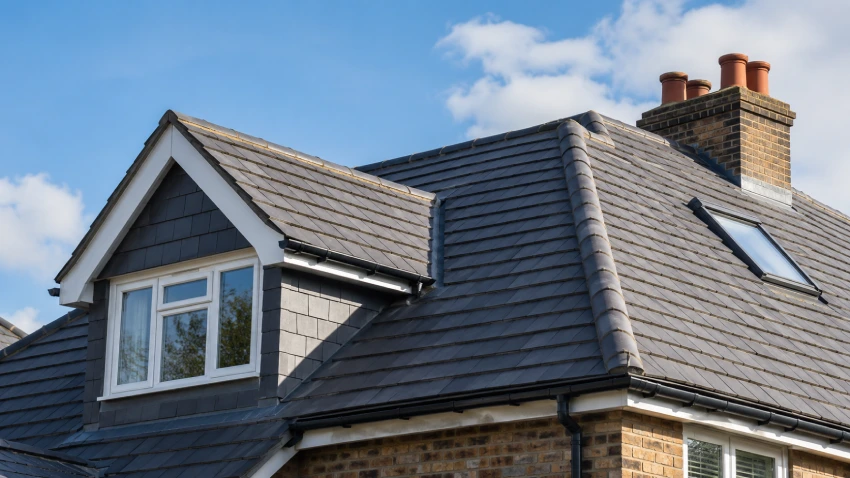
Residential roofing decisions depend on the roof type, property age, material, access, insulation, ventilation, drainage, and previous repair history. A & A Roofing London does not treat Roof Repair Vs Replacement as a single formula because a tiled pitched roof, slate roof, flat roof extension, and chimney junction all fail differently.
The company’s practical route is simple: inspect the roof, identify the source, check surrounding materials, decide the smallest reliable scope, and explain when replacement is the better use of money than repeated patching. That means a homeowner may receive a repair recommendation for one roof section and a replacement recommendation for another.
Loose tiles, ridge defects, and weather exposure often influence the final scope. Useful supporting references include loose covering risk signs, ridge line fault indicators, and weather wear roof patterns.
Roof Repair Vs Replacement Area Coverage
Local roof decisions depend on roof access, property type, covering material, previous work, weather exposure, and whether the roof has flat extensions, valleys, chimneys, or older detailing. A & A Roofing London covers North London, Essex, and the Hertfordshire borders, helping homeowners choose between roof repair, restoration, and replacement after a proper inspection.
North London
In North London, Roof Repair Vs Replacement decisions often involve tiled pitched roofs, slate sections, flat roof extensions, dormers, chimney stacks, and previous patch repairs. A & A Roofing London can inspect the full roof system so homeowners understand whether a leak needs local correction, wider restoration, or replacement of a failing section.
Hertfordshire Borders
Across the Hertfordshire borders, Roof Repair Vs Replacement choices may depend on older roof coverings, storm movement, roofline changes, blocked gutters, and maintenance history. A & A Roofing London checks tiles, slates, flat roofs, leadwork, ridges, valleys, and loft evidence before recommending the repair or replacement route.
Essex
In Essex, Roof Repair Vs Replacement questions often follow heavy rain, wind damage, flat roof wear, loose tiles, or recurring leaks. A & A Roofing London can assess whether the roof needs targeted repair, planned maintenance, restoration, or full replacement based on the actual defect pattern and the condition of the surrounding roof.
Final Roofing Decision
Roof Repair Vs Replacement should be decided after inspection, not after a quick look from the ground. A repair is sensible when the defect is contained and the surrounding roof is sound. Replacement is usually more practical when leaks repeat, materials fail across the roof, hidden layers are damaged, or the roof is already being stripped over a large area.
A & A Roofing London can carry out a roof inspection in the UK to check tiles, slates, flat roofs, pitched roofs, leadwork, chimneys, ridges, valleys, gutters, loft signs, and water-entry routes. The result is a clearer decision: repair what can be fixed, restore what can still perform, and replace what has stopped being reliable.
FAQs About Roof Repair Vs Replacement
How do I decide between Roof Repair Vs Replacement?
Roof Repair Vs Replacement should be decided by defect spread, roof age, material condition, leak history, hidden damage, and whether the surrounding roof is still reliable. A small isolated fault may only need repair, while repeated leaks, sagging, widespread tile or slate movement, and flat roof membrane failure can point toward replacement. A & A Roofing London inspects the covering, underlay, drainage, flashing, chimneys, ridges, and internal signs before recommending the smallest reliable scope.
Does a roof leak always mean replacement?
No. A roof leak does not automatically mean replacement. Many leaks come from a defined issue such as slipped tiles, failed flashing, blocked valleys, cracked ridge mortar, or a small flat roof puncture. Replacement becomes more likely when the leak returns after repair, appears in several areas, or reveals failed underlay, decking, battens, or widespread covering deterioration. The key is tracing the water path before deciding the scope.
When does a repair become a poor investment?
A repair becomes a poor investment when the same roof keeps failing, when the surrounding materials are already worn, or when the defect is part of a larger system problem. Paying for repeated patching can cost more over time than planned replacement if the roof covering, underlay, deck, or fixings are failing. A & A Roofing London checks whether each repair is likely to hold or whether replacement would solve the underlying pattern.
Are Building Regulations relevant to Roof Repair Vs Replacement?
Building Regulations can become relevant when the work moves from minor repair to roof replacement or re-covering. Planning Portal states that most roof replacement work on existing buildings needs Building Regulations approval and that a roof is treated as a thermal element, so re-covering work should include improved thermal insulation. NFRC also advises that refurbishment to 50% or more of a roof’s area should involve a registered Competent Person Scheme contractor or Local Authority Building Control.
Should a flat roof be repaired or replaced?
A flat roof may be repaired if the defect is small, the deck is dry, the surface is still in good condition, and water drains properly. Replacement becomes more likely when there are widespread cracks, blisters, ponding, failed laps, repeated leaks, or hidden moisture beneath the surface. Energy Saving Trust notes that flat roof insulation needs specialist techniques, which is another reason to assess the full build-up before choosing a patch or replacement.
Can restoration replace full roof replacement?
Restoration can sometimes avoid full replacement where the roof is structurally sound and the defects are manageable. It is not suitable where the roof has widespread hidden failure, unstable structure, badly failed underlay, or severe water damage. A & A Roofing London may recommend restoration where the roof needs more than one small repair but still has enough sound material to justify preserving and improving it.
Is roof replacement safer than repeated repairs?
Roof replacement can be safer and more practical where a roof has repeated leaks, loose materials, sagging, failed decking, or widespread covering failure. However, safety also depends on how the work is planned. HSE roof work guidance says roof work needs proper fall-prevention measures and that roofs should be treated as fragile until confirmed otherwise by a competent person. This is why homeowners should not climb up to make the decision themselves.
What should I ask before approving repair or replacement?
Ask what defect was found, whether the surrounding materials are sound, whether hidden layers were checked, whether Building Regulations apply, and why repair or replacement is being recommended. For larger scopes, ask how insulation, ventilation, drainage, and access will be handled. A & A Roofing London’s inspection-led approach gives homeowners a clearer basis for deciding whether a targeted repair, roof restoration, or replacement is the correct route.