
BLOG
home Types of Slate Roofing in the UK: A Complete Guide
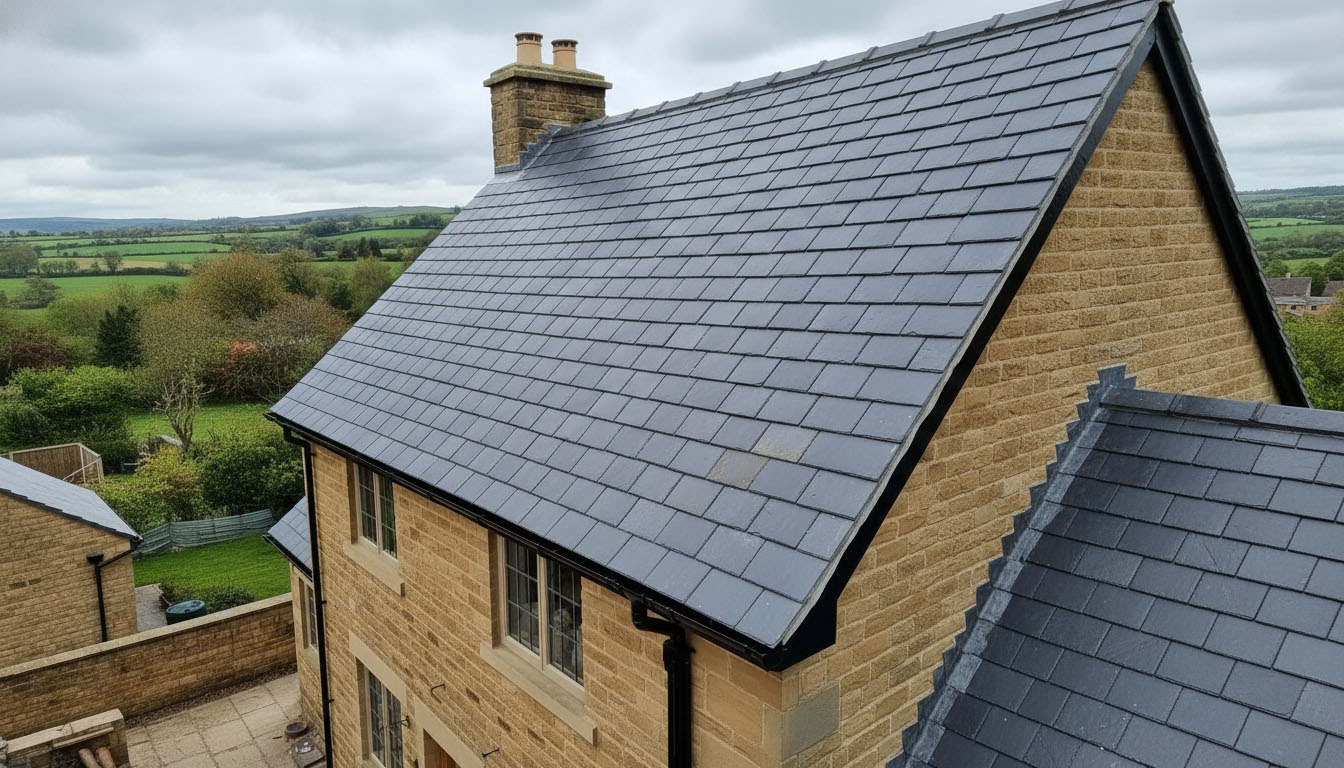
Types of Slate Roofing in the UK: A Complete Guide
Choosing the wrong type of slate roofing can shorten lifespan, increase maintenance costs, and even cause structural strain if weight and installation methods are misunderstood. Many UK homeowners assume all slate performs the same, yet quality, origin, and material composition vary significantly.
In reality, slate roofing decisions affect durability, compliance, kerb appeal, and long-term property value. Understanding the different slate roof options available in the UK allows homeowners to make informed decisions rather than relying solely on price. This guide explains the main types of slate roofing and how to choose the right one.
Types of Slate Roofing UK Homeowners Can Choose From
When reviewing types of slate roofing UK suppliers offer, it is important to understand that slate varies by origin, density, grading, and installation style. Not all slate delivers the same longevity or performance under UK weather conditions.
The main slate categories include:
Natural Welsh slate
Spanish natural slate
Brazilian slate
Reclaimed slate
Synthetic or composite slate
Each option differs in durability, colour consistency, thickness, and cost. Professional slate roofing specialists assess structural compatibility and exposure conditions before recommending a specific type.
Natural vs Synthetic Slate Roofing UK Comparison
The debate around natural vs synthetic slate roofing UK homeowners face is primarily about longevity, weight, and cost. Both materials serve different structural and budget requirements.
Natural slate is quarried stone split into thin sheets and shaped into tiles. It is highly durable, naturally fire resistant, and capable of lasting over 75 years when properly installed.
Synthetic slate is manufactured from composite materials designed to mimic natural slate’s appearance while reducing weight and installation cost.
Comparison overview:
Feature | Natural Slate | Synthetic Slate |
|---|---|---|
Lifespan | 75+ years | 30–50 years |
Weight | Heavy | Lightweight |
Appearance | Natural variation | Uniform finish |
Cost | Higher | Moderate |
Structural Load | High | Lower |
Natural slate offers superior longevity and heritage appeal, while synthetic slate can be suitable where structural reinforcement is not feasible. Consulting experienced slate roofing professionals ensures the material choice aligns with structural limits and long-term expectations.
UK Slate Roof Options by Origin and Grade
UK slate roof options vary significantly based on country of origin and grading standards. The most common sources for UK installations include Welsh, Spanish, and Brazilian slate.
Welsh slate is widely regarded as premium due to its density, low water absorption, and colour stability. It often exceeds 100 years in lifespan when correctly maintained.
Spanish slate is popular for its affordability and good performance, though quality can vary depending on quarry and grading. Brazilian slate typically falls into a mid-range category, offering competitive pricing but shorter lifespan compared to premium Welsh varieties.
When evaluating origin, homeowners should consider:
Frost resistance rating
Thickness uniformity
Nail hole precision
Manufacturer warranty
Where heritage properties are involved, reclaimed slate may be necessary to preserve character. In such cases, professional roof restoration services ensure matching, grading, and structural integrity are maintained.
Installation Styles and Fixing Methods
Slate roofing performance depends heavily on installation method. Incorrect fixing can reduce lifespan regardless of slate quality.
Common installation approaches include:
Double-lap slate systems for maximum water resistance
Traditional nailed installations
Fixing density must match wind exposure classifications. Heavy slate also requires appropriate batten spacing and rafter support.
Where structural reinforcement or redesign is required, professional pitched roof installation expertise ensures compliance with UK building regulations.
Cost Considerations Across Slate Types
Cost varies considerably depending on slate origin, grade, and installation complexity. While synthetic slate offers lower upfront pricing, it typically provides shorter lifespan.
Estimated positioning:
Slate Type | Initial Cost Level | Expected Lifespan | Long-Term Value |
|---|---|---|---|
Welsh Natural | Premium | 75–100+ years | Excellent |
Spanish Natural | Mid-High | 50–75 years | Very Good |
Brazilian Natural | Mid | 40–60 years | Good |
Synthetic | Moderate | 30–50 years | Moderate |
Although natural slate has higher installation costs due to labour intensity and weight, its lifecycle value often justifies the investment.
Homeowners comparing long-term performance may also review tile vs slate vs flat roof comparisons to understand broader roofing alternatives.
Structural Suitability and Weight Assessment
Slate is significantly heavier than many tile or composite alternatives. Before choosing any slate type, structural assessment is essential.
Important structural factors include:
Rafter span and timber condition
Existing batten capacity
Previous material load
Roof age and reinforcement history
Switching from lightweight materials to natural slate without assessment can overload structural elements. Synthetic slate may be recommended where reinforcement is not practical.
Experienced slate roofing specialists calculate load capacity and ensure safe installation standards.
Choosing the Right Slate Roofing Type
Selecting the correct slate roofing type should balance budget, lifespan expectations, property style, and structural feasibility. Premium natural slate suits long-term homeowners and heritage properties, while synthetic options may suit modern builds or weight-restricted structures.
Decision checklist:
Evaluate wind exposure zone
Consider planning or conservation requirements
The right slate choice enhances durability, kerb appeal, and long-term property value when installed correctly.
Frequently Asked Questions
What is the best type of slate roofing in the UK
Welsh natural slate is often considered the highest quality due to durability and longevity.
Is synthetic slate roofing reliable in the UK
Yes, synthetic slate performs well when properly installed, though its lifespan is typically shorter than natural slate.
Does natural slate require structural reinforcement
In some cases, yes. Structural assessment is necessary before upgrading from lighter materials.
Which slate lasts the longest
High-grade natural slate, particularly Welsh varieties, can exceed 75 to 100 years.
Are all slate roofs double-lapped in the UK
Most traditional slate systems use double-lap installation for maximum weather resistance.