
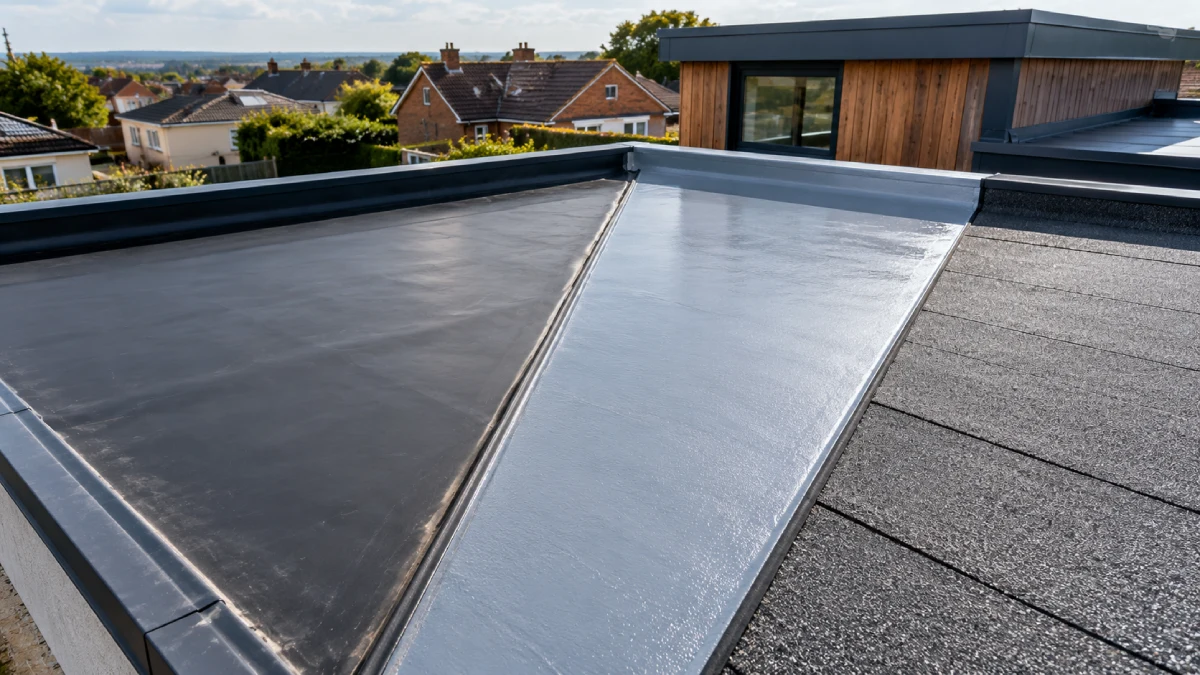
EPDM Rubber Vs. GRP Fibreglass Vs. Torch-On Felt is one of the most important choices when replacing or repairing a flat roof. Each system can work well, but not on every property, budget, or roof shape. EPDM is flexible and sheet-based, GRP creates a rigid fibreglass surface, and torch-on felt uses layered bituminous membranes. The right answer depends on roof size, drainage, access, foot traffic, insulation, detailing, and how long the homeowner expects the roof to last. A&A Roofing London helps homeowners across London, Essex, and Hertfordshire compare roofing materials before choosing a flat roof system.
Quick Check: Before choosing EPDM, GRP, or torch-on felt, A&A Roofing London can review your roofing materials and explain which flat roof option suits the property, budget, drainage, and repair condition.
EPDM Rubber Vs. GRP Fibreglass Vs. Torch-On Felt Compared
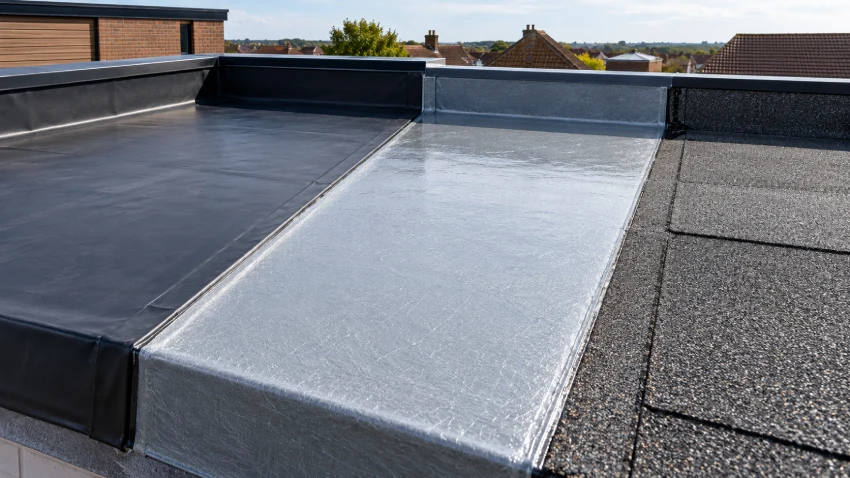
EPDM Rubber Vs. GRP Fibreglass Vs. Torch-On Felt is not simply a question of which material lasts longest. The right flat roof covering depends on the existing roof deck, falls, roof size, adjoining walls, outlets, rooflights, roof use, and the installer’s skill.
The National Federation of Roofing Contractors describes torch-on felt as bitumen felt applied with a propane torch or hot-air gun, EPDM as a synthetic rubber membrane commonly used on domestic roofs, and GRP as glass-reinforced plastic made from polyester resin and glass fibre reinforcement.
Flat roof material comparison
| Flat roof system | Main strength | Main limitation | Best-fit situation |
| EPDM rubber | Flexible sheet membrane with fewer joints on simple roofs | Can look less rigid and needs good edge detailing | Garages, extensions, and simple flat roof areas |
| GRP fibreglass | Tough, clean, hard finish with neat detailing | Rigid system can be sensitive to deck movement | Smaller roofs, balconies, and roofs needing a sharp finish |
| Torch-on felt | Familiar layered system with good installer availability | Flame work needs safe specification and careful detailing | Domestic flat roofs, garages, and cost-sensitive replacements |
| Any system | Works only with correct drainage, deck, and detailing | Poor workmanship shortens service life | Roofs inspected before material choice |
A&A Roofing London begins by checking whether the flat roof needs a direct replacement or whether the roof deck, insulation, outlets, leadwork, and drainage also need work. Where a home has mixed roof areas, the choice may sit alongside tile or slate roofing because flat roofs often connect to pitched roof sections, valleys, and abutments.
For a homeowner weighing up roofing materials, a flat roof service life overview helps explain why lifespan depends on installation quality, maintenance, water flow, and roof use rather than material name alone.
Tile Roofing Connections to Flat Roof Choices
Tile roofing still matters in Epdm Rubber Vs. Grp Fibreglass Vs. Torch-On Felt comparisons because many London homes include both pitched tile sections and flat roof extensions. A rear extension, dormer, bay roof, or porch may be flat, while the main roof remains tiled.
A flat roof leak can appear where it meets tile courses, lead flashing, or a pitched roof wall junction. Choosing EPDM, GRP, or felt without checking the adjoining tiled roof can leave the true water route unresolved.
A&A Roofing London checks how the flat roof connects to tiled slopes, gutters, outlets, and wall details. If a tiled section is part of the same leak path, the flat roof material choice should not be made in isolation.
A practical tile and flat roof material comparison can help homeowners understand how roof forms differ before assuming the flat roof covering is the only issue.
Slate Roofing and Flat Roof Junctions
Slate roofing affects EPDM rubber vs. GRP fibreglass vs. Torch-On Felt where the flat roof meets a slate slope, dormer cheek, valley, chimney, or abutment. Slate is thinner and more delicate than many roof tiles, so the junction between slate and flat roofing needs careful detailing.
A&A Roofing London considers the benefits of slate when a property has natural slate beside a flat roof area. Slate can last well when installed correctly, but it still needs compatible leadwork, correct laps, and proper support around adjacent flat roof details.
EPDM, GRP, and felt can each work near slate roofs, but the edge detail, outlet route, and flashing method must be suitable. A flat roof replacement that ignores the slate side can disturb old fixings, expose weak underlay, or create a new leak path.
Where older properties are involved, roof age also matters. A roof age and material differences guide helps explain why older slate and tile roofs need a more careful flat roof junction plan than many newer properties.
Flat Roofing: EPDM, GRP, and Felt Use Cases
Flat roofing is the core of EPDM Rubber Vs. GRP Fibreglass Vs. Torch-On Felt. Each covering has a place, but each one depends on the roof build-up below it.
A&A Roofing London provides flat roofing solutions in London for homes where the roof covering, deck, insulation, outlets, and edge details all need checking before the material is chosen. The service focuses on the roof as a system, not just the top layer.
EPDM rubber is often suitable for simple roof shapes because larger sheets can reduce jointing. It is flexible, which can help where the roof structure moves slightly. The detailing at edges, upstands, rooflights, and outlets still has to be accurate.
GRP fibreglass provides a hard, clean finish and can suit smaller roofs with good decking. It needs a stable substrate and correct resin application. Poor deck preparation or movement can lead to cracking.
Torch-on felt remains common on UK domestic flat roofs. The NFRC’s Safe2Torch guidance exists because torch-applied membranes require safe specification and safe working around combustible details.
Pitched Roof Installation and Flat Roof Planning
Pitched roof installation may seem separate from EPDM rubber vs. GRP fibreglass vs. Torch-On Felt, but many flat roof decisions happen beside pitched roof work. Extensions, dormers, mansards, rear additions, and roof valleys often combine pitched and flat roof details.
A&A Roofing London checks pitched roof installation where the flat roof connects to the main roof structure. The aim is to make sure roof falls, flashings, gutters, and covering materials all move water in the right direction.
The Planning Portal states that flat roofs usually consist of felting with a slight fall to allow rainwater to drain away, and Building Regulations details may need to cover materials, dimensions, and performance properties for new roof work.
That guidance is important because a flat roof should never be treated as a level tray. EPDM, GRP, and felt all need drainage. If the roof holds water due to poor falls or blocked outlets, the chosen material will age faster.
Roof Restoration for Existing Flat Roofs
Roof restoration changes EPDM rubber vs. GRP fibreglass vs. Torch-On Felt because some roofs do not need a full replacement immediately. Others look repairable from the surface but have failed decking, saturated insulation, or repeated leak paths.
A&A Roofing London can roof restore areas where the existing flat roof has localised wear, flashing issues, drainage problems, or early material breakdown. The inspection decides whether restoration is sensible or whether replacement is more economical.
Repair, restore, or replace decision table
| Roof condition | Likely route | Why it matters |
| Small split near edge trim | Local repair may be possible | Material may still have service life |
| Blisters and widespread cracks | Restoration or replacement review | Surface failure may indicate deeper issues |
| Ponding around outlets | Drainage correction first | New covering alone may not solve water retention |
| Soft or rotten deck | Replacement likely | Membrane cannot compensate for failed support |
| Repeated leaks after patching | Full assessment needed | Underlying detailing may be wrong |
A flat roof restoration process helps homeowners understand why cleaning, inspection, deck checks, edge details, and drainage review come before choosing a material.
For early warning signs, a flat roof surface defect checklist can help identify whether blistering, cracking, bubbling, or splits are minor or part of a larger failure pattern.
Roof Repairs and Material-Specific Problems
Roof repairs differ across EPDM Rubber Vs. GRP Fibreglass Vs. Torch-On Felt because each material fails in different ways. EPDM may suffer from edge detail issues, punctures, or poor bonding. GRP may crack if the deck moves or the finish is poorly applied. Felt may split, blister, or fail around laps and upstands.
A&A Roofing London checks the roof surface, deck, falls, flashing, drainage, rooflights, and surrounding walls before suggesting a patch or replacement. A quick patch can be useful, but only if the defect is isolated and the roof below remains sound.
A flat roof leak source guide helps homeowners understand why water entry may come from outlets, flashings, parapets, rooflights, or failed laps rather than the obvious surface mark.
Poor installation is a major cause of premature flat roof failure. A flat roof workmanship fault list can help homeowners spot weak detailing, poor preparation, inadequate falls, untidy joints, and unfinished edges before problems spread.
Re-Roofing and Roof Replacement Timing
Re-roofing is where EPDM Rubber Vs. GRP Fibreglass Vs. Torch-On Felt becomes a long-term value decision. The cheapest material isn’t always the best value if it needs more frequent replacement or fails because the deck, drainage, or flashing wasn’t corrected.
The Planning Portal notes that when an existing roof covering is replaced with a different material, Building Regulations approval may be required where structural stability, fire safety, or energy efficiency are affected, and re-covering a roof may also involve thermal element considerations. Planning Portal
For domestic flat roofs, this means the replacement decision should include insulation, fire safety, deck condition, roof falls, outlets, and the effect of changing the roof covering. A&A Roofing London checks these items before recommending a system.
A flat roof replacement timing guide helps homeowners decide whether another repair is sensible or whether the roof has reached the point where replacement is the better route.
Where price is a major concern, a roof restoration budget structure helps separate access, labour, material, waste, deck repair, and finishing costs.
Lead Work, Flashing, and Flat Roof Edges
Lead work and flashings are critical in EPDM rubber vs. GRP fibreglass vs. Torch-On Felt because many flat roof leaks occur at the edges rather than in the middle of the roof. Upstands, abutments, parapets, wall chases, chimney details, and rooflight corners all need careful treatment.
A&A Roofing London checks roof flashing and leadwork services in the UK where a flat roof joins brickwork, tiles, slate, chimneys, or parapet walls. The flat roof material is only as reliable as the details around it.
EPDM needs well-formed edge trims and flashing details. GRP needs accurate trims, resin application, and waterproof transitions. Felt needs properly formed laps, upstands, and safe torching or hot-air application where appropriate.
A roof flashing problem overview helps homeowners understand why leaks around walls and chimneys may continue even after the main flat roof covering has been replaced.
Roof Inspections and Maintenance Planning
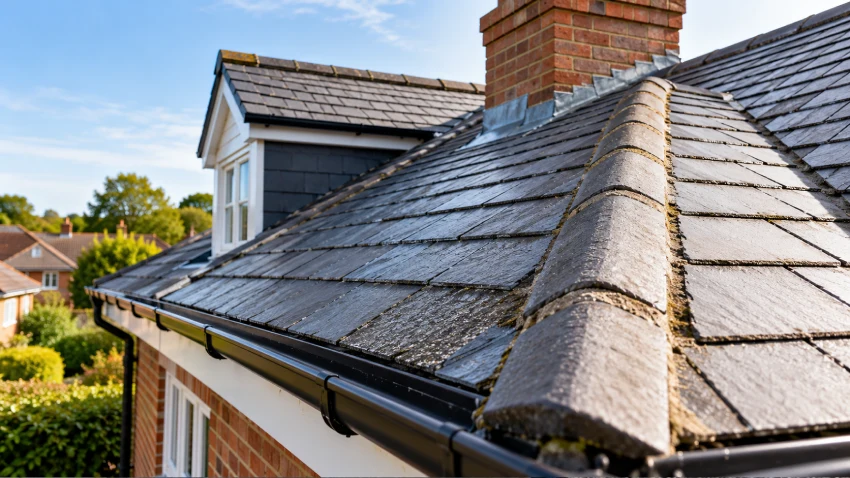
Roof inspections are essential before deciding between Epdm Rubber Vs. Grp Fibreglass Vs. Torch-On Felt. A roof that looks tired may only need maintenance, while a roof that looks acceptable from the ground may have hidden deck failure or drainage problems.
A&A Roofing London checks the covering, deck firmness, edge trims, outlets, gutters, flashing, insulation clues, ponding areas, rooflights, and safe access. The inspection helps identify whether EPDM, GRP, or felt suits the actual roof condition.
A flat roof inspection checklist helps homeowners prepare useful notes before a visit, including leak locations, damp marks, roof age, previous repairs, and drainage concerns.
Flat roof maintenance is also important after installation. A roof maintenance prevention plan can help reduce blocked outlets, standing water, debris build-up, and missed early defects.
Residential Roofing and UK Weather Exposure
Residential roofing makes Epdm Rubber Vs. Grp Fibreglass Vs. Torch-On Felt more specific because UK homes vary widely. A small garage roof, a dormer flat roof, a rear extension, and a walk-on balcony do not need the same material choice.
Weather exposure also matters. Rain, wind, frost, UV, standing water, and temperature changes all affect flat roof coverings. A rigid GRP roof, a flexible EPDM sheet, and a layered felt roof respond differently to movement and ageing.
A UK weather roof damage guide can help homeowners understand how rain, frost, and wind speed up roof wear when drainage, edges, or materials are already weak.
Safety also belongs in the decision. Homeowners should not climb onto flat roofs to test membranes or inspect outlets if access is unsafe. A roof safety basics guide explains why inspection and repair should be planned with proper access rather than guesswork.
EPDM Rubber Vs. GRP Fibreglass Vs. Torch-On Felt Area Coverage
Local roof conditions matter because property age, access, drainage, extensions, weather exposure, and roof form can all affect the best flat roofing material. A&A Roofing London supports homeowners across London, Essex, and the Hertfordshire Borders with flat roof inspections, repair planning, and material comparisons.
North London
North London properties often include rear extensions, dormers, bay roofs, older tiled sections, slate roofs, and mixed flat roof details. For Epdm Rubber Vs. Grp Fibreglass Vs. Torch-On Felt, A&A Roofing London checks access, roof falls, drainage, wall abutments, and neighbouring pitched roof sections before recommending a material. This helps avoid choosing a covering that looks suitable but fails at the junctions.
Hertfordshire Borders
Around the Hertfordshire Borders, homes can include older properties, modern extensions, garages, and mixed roof forms. A&A Roofing London assesses Epdm Rubber Vs. Grp Fibreglass Vs. Torch-On Felt by reviewing roof size, use, drainage, deck condition, and expected maintenance. EPDM may suit some simple roofs, GRP may suit certain neat-detail areas, and felt may suit practical replacement where correctly specified.
Essex
Across Essex service areas, flat roofs may face wind, rain, frost, and drainage issues depending on exposure and roof design. A&A Roofing London reviews Epdm Rubber Vs. Grp Fibreglass Vs. Torch-On Felt by checking whether the existing roof has ponding, edge failure, flashing problems, or deck weakness. The result is a material choice based on the actual roof, not a generic preference.
Choosing A&A Roofing London for Flat Roof Materials
Flat roof materials should be chosen after the roof has been inspected, not before. A&A Roofing London checks deck condition, roof falls, outlets, flashing, insulation, access, and adjoining pitched roof details before recommending EPDM rubber, GRP fibreglass, or torch-on felt. For homeowners comparing EPDM rubber vs. GRP fibreglass vs. Torch-On Felt, A&A Roofing London can review your roofing materials and explain which option fits the roof’s condition, use, and long-term maintenance needs.
FAQs About EPDM Rubber Vs. GRP Fibreglass Vs. Torch-On Felt
Which is better: EPDM rubber, GRP fibreglass, or torch-on felt?
The better option depends on the roof. EPDM rubber often suits simple domestic flat roofs because it is flexible and can reduce seams. GRP fibreglass can suit smaller roofs where a hard, neat finish is wanted and the deck is stable. Torch-on felt can be practical and cost-effective when properly specified and safely installed. The roof deck, drainage, detailing, access, and expected lifespan should decide the final choice.
Is EPDM rubber good for UK flat roofs?
EPDM rubber can be a strong option for UK flat roofs, especially on simple roof shapes with good edge detailing and correct drainage. It is flexible, sheet-based, and commonly used for domestic roofs. However, it still needs a sound deck, correct bonding, suitable trims, and good outlet details. Poor installation can cause problems even when the material itself is suitable.
Does GRP fibreglass crack on flat roofs?
GRP fibreglass can crack if the deck moves, the substrate is unsuitable, the installation is poor, or the roof is exposed to stress that the system was not designed to handle. When fitted correctly on a stable deck, GRP can provide a clean, tough finish. It is important to inspect the roof structure and movement risk before selecting GRP over EPDM or felt.
Is torch-on felt still used for flat roofs?
Torch-on felt is still widely used for flat roofs in the UK. Modern felt systems are more advanced than older basic felt coverings, but installation quality and safe working remain critical. Torch-applied systems involve heat, so specification and safety procedures matter. Felt can be practical for many domestic flat roofs when the deck, falls, laps, upstands, and details are completed properly.
Which flat roof material lasts longest?
Lifespan varies by product quality, installation, roof use, drainage, maintenance, and exposure. EPDM is often chosen for long service life on suitable roofs, GRP can also last well where the deck is stable, and torch-on felt can perform strongly when a high-quality system is installed correctly. A roof that holds standing water or has poor detailing will age faster regardless of material.
Can a flat roof be repaired instead of replaced?
A flat roof can sometimes be repaired if the damage is localised and the deck below remains sound. Small punctures, edge defects, or isolated flashing problems may be repairable. Replacement becomes more likely when there are widespread cracks, repeated leaks, saturated insulation, soft decking, failed outlets, or large areas of ponding. A roof inspection should decide whether repair or replacement is more economical.
What should be checked before choosing a flat roof material?
Before choosing between EPDM rubber, GRP fibreglass, and torch-on felt, the roof should be checked for deck condition, falls, ponding, outlets, rooflights, flashing, insulation, access, and adjoining roof details. The property owner should also consider whether the roof will be walked on, whether future maintenance is easy, and whether the chosen system suits the roof size and shape.