
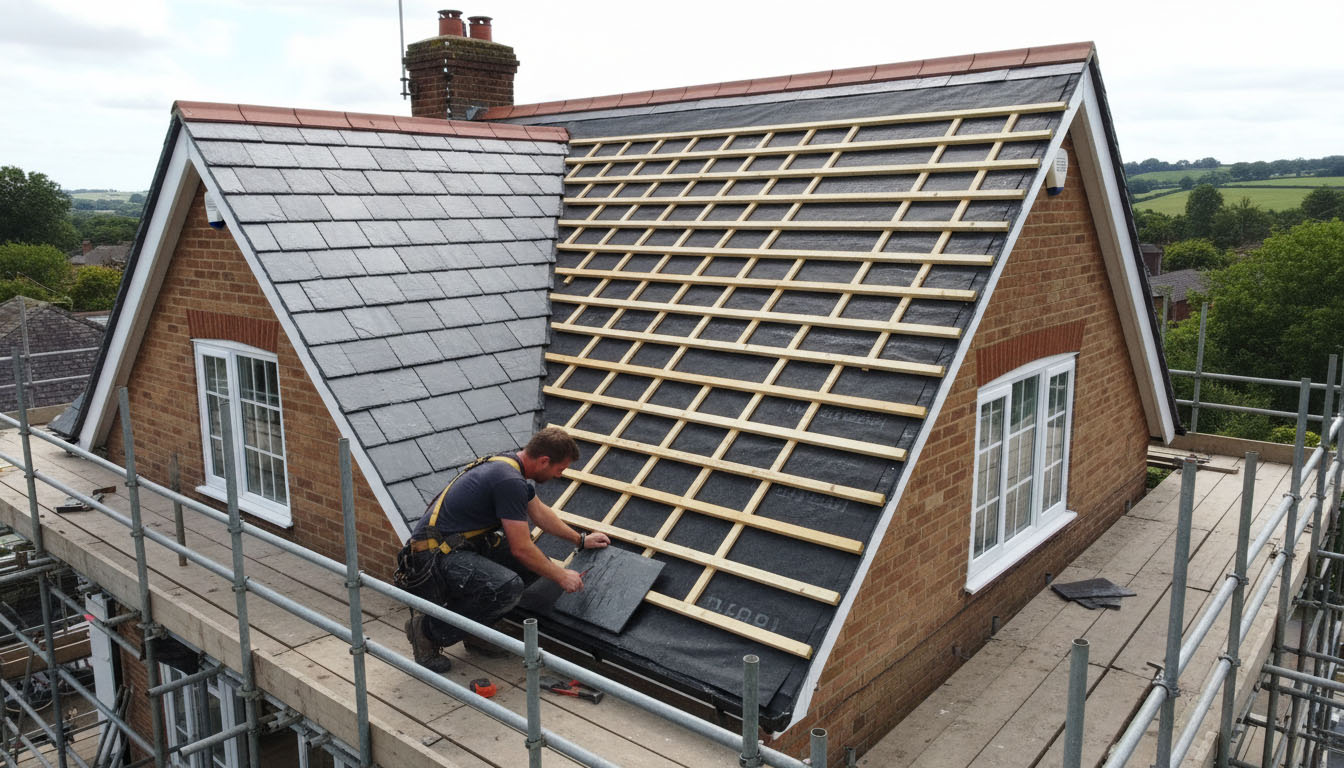
Building Regulations For Slate Roofing In The UK depend on the type of work, the existing roof covering, whether the roof is being repaired, re-covered, replaced, converted, insulated, or newly built, and whether the proposed slate changes the roof’s structure, weight, fire performance, ventilation, drainage, or energy efficiency.
A&A Roofing London helps homeowners across London, Essex, and the Hertfordshire borders plan slate roof work before installation, restoration, replacement, or repair begins. The goal is to check the roof structure, material choice, insulation, ventilation, underlay, battens, leadwork, weather resistance, and compliance route before work creates safety, damp, heat-loss, or approval problems.
Quick Check: If your slate roof project involves replacement, material change, insulation upgrade, period property work, or structural concerns, ask A&A Roofing London to review historic roofing contractors in London before the roofing scope is agreed.
Building Regulations For Slate Roofing In The UK: Main Checks
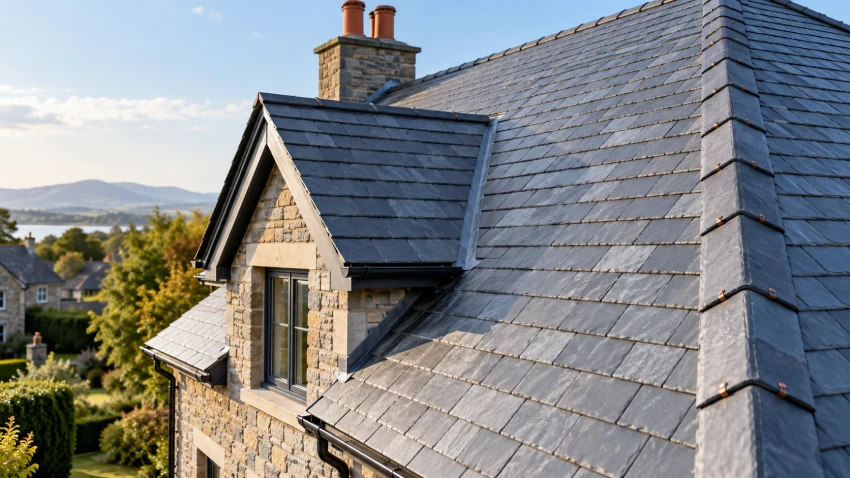
Building Regulations For Slate Roofing In The Uk should be checked before roof work begins. The Planning Portal says a new roof generally needs to resist weather, resist fire spread between properties, support loads, resist heat loss, provide ventilation in most cases, and have adequate drainage. It also notes that full roof details may be needed to demonstrate compliance, including materials, dimensions, and performance properties.
| Building Regulations area | Why it matters | What A&A Roofing London checks |
| Structure | Slate weight, wind load, snow load, and roof support must be suitable | Rafters, battens, roofline, load path |
| Material change | Switching covering can affect load and performance | Slate type, existing covering, roof strength |
| Weather resistance | The roof must shed rain and resist UK weather | Pitch, laps, underlay, valleys, gutters |
| Fire performance | Roof covering and boundary conditions can matter | Material specification and roof location |
| Thermal performance | Re-roofing can trigger insulation review | Loft insulation, roof build-up, heat loss |
| Ventilation | Poor airflow can cause condensation and mould | Eaves, ridge, roof void, insulation position |
| Drainage | Water must leave the roof properly | Gutters, valleys, outlets, downpipes |
| Work extent | Larger re-covering works may need approval | Roof area affected and scope of works |
| Existing roof condition | Weak roofs may need strengthening before slate | Timbers, battens, damp, movement |
| Final inspection | Work should be checked before completion | Details, fixings, leadwork, finish |
A&A Roofing London checks compliance risk alongside practical roof condition. A small slate repair is different from full re-roofing, material change, insulation work, or roof replacement.
Do Building Regulations Apply to Slate Roofing?
Building Regulations can apply to slate roofing when the work is a new roof, re-roof, material change, structural alteration, insulation upgrade, significant roof repair, or replacement. Small like-for-like repairs may be simpler, but larger work should be checked before starting.
For existing pitched or flat roofs, the Planning Portal says a building control application is not normally needed if less than 25% of the total building envelope is affected and less than 50% of the roof is affected. Approval is needed if those limits are exceeded, if structural alterations are carried out, if fire performance changes significantly, or if a new covering increases roof covering weight by 15% or more.
A&A Roofing London checks the scope of the slate work before advising the route. The key question is whether the work is a minor repair, re-covering, material change, or full replacement.
For planning-side context, slate roof planning consent notes are useful.
Is Planning Permission the Same as Building Regulations?
Planning permission and Building Regulations are separate. Planning permission deals with external appearance, development rights, conservation context, listed buildings, roof shape, and local restrictions. Building Regulations deal with technical performance, including structure, fire safety, insulation, ventilation, weather resistance, and drainage.
A&A Roofing London checks both routes where needed. A slate roof can be acceptable visually but still needs technical review, or it can be technically possible but need planning or heritage checks because of appearance.
For wider compliance context, a slate roofing compliance overview is useful.
When Does Re-Roofing Need Building Control?
Re-roofing often needs Building Regulations approval. The Planning Portal states that replacing an existing roof covering with a different original material, such as changing slate to tiles, is likely to need approval so the roof can be checked for structural stability, fire safety, and energy efficiency. It also advises checking with a structural engineer or surveyor if the new covering is significantly heavier or lighter than the existing one.
A&A Roofing London checks whether the roof is being repaired, re-covered, or fully replaced. Full slate replacement should review structure, underlay, battens, ventilation, insulation, leadwork, drainage, and compliance before work starts.
For replacement planning, slate replacement condition review and whole-roof renewal scope notes are useful.
What Structural Checks Matter for Slate Roofing?
Structural checks matter because the roof must support its covering and transfer loads safely. Slate type, existing roof covering, battens, rafters, purlins, roofline movement, damp timber, and roof pitch all affect structural suitability.
The Planning Portal warns that removing or altering roof elements can affect how the roof works, causing movement, cracking, and possible collapse if the roof no longer performs effectively.
A&A Roofing London checks the roof structure before recommending slate installation or replacement. This is especially important when changing from tile to slate, changing slate type, replacing old battens, or working on older properties.
How Do Fire Safety Rules Affect Slate Roofs?
Fire safety can affect slate roofing where roof coverings, property boundaries, roof materials, and the roof build-up need to limit fire spread. The Planning Portal notes that new roofs should resist the spread of fire from one property to another, and roof coverings close to boundaries may need to be properties that limit fire spread across the boundary.
A&A Roofing London checks roof covering choice and roof details before work begins. Fire performance should be treated as part of material selection and roof specification, not an afterthought.
This is especially relevant for terraced homes, closely spaced properties, extensions, and replacement projects.
How Do Insulation Rules Affect Slate Roofing?
Insulation matters because a roof is a thermal element. The Planning Portal states that significant changes to thermal elements such as roofs would normally require Building Regulations approval and may require thermal insulation to be upgraded to a reasonable standard. It also states that re-covering a roof should include improving the roof’s thermal insulation properties.
A&A Roofing London checks insulation condition before slate work is completed. Damp insulation, gaps, poor eaves detail, or blocked ventilation can reduce performance even where the slate covering is sound.
For energy planning, slate roof energy performance notes and roof heat retention checklist are useful.
Why Does Ventilation Matter for Slate Roof Compliance?
Ventilation matters because roofs must manage moisture as well as heat loss. The Planning Portal says new roofs should be ventilated to protect from condensation in most cases, and explains that cold roof systems require ventilation while warm roof systems do not require ventilation in the same way.
A&A Roofing London checks whether insulation, underlay, eaves, ridge areas, roof voids, and rafters allow the roof to breathe properly. Poor ventilation can lead to condensation, mould, damp insulation, and timber staining.
For airflow planning, roof moisture-control airflow notes are useful.
What About Warm Roof Installation?
Warm roof installation places insulation above the roof structure in a different build-up from a ventilated cold roof. Warm roof systems are often discussed with flat roofs, but the concept matters when comparing roof insulation methods and condensation control.
A&A Roofing London checks the roof build-up before recommending insulation changes. A slate pitched roof, a flat roof, and a warm roof section should not be treated as the same system.
Warm roof installation in London may be relevant where a property has flat roof sections, dormers, porches, garages, or extensions connected to slate roof areas.
What Slate Material Checks Are Needed?
Slate material checks should include slate type, size, weight, thickness, fixing method, weather suitability, appearance, roof pitch, and repair matching. The chosen slate must suit the roof design and Building Regulations route.
A&A Roofing London checks whether natural slate, synthetic slate, or another slate product is right for the project. The material should be suitable for the roof, not just visually preferred.
For material planning, slate product selection checks, slate type specification notes, and natural synthetic slate approval factors are useful.
What Does Slate Roof Installation Need to Show?
Slate roof installation should show that the roof covering, underlay, battens, fixings, pitch, laps, ventilation, insulation, leadwork, drainage, and structural support have been planned correctly.
A&A Roofing London checks installation as a complete roof build-up. The visible slate surface is only one part of compliance; the hidden layers below it often decide whether the roof performs properly.
For installation sequence, slate installation compliance stages is useful.
Leadwork, Flashing, and Junction Details
Leadwork and flashing details matter because many slate roof leaks begin around chimneys, abutments, valleys, dormers, walls, and roof edges. Building Regulations focus on the roof performing properly, and poor junction detailing can undermine weather resistance.
A&A Roofing London checks lead aprons, soakers, flashings, chases, valley details, chimney junctions, roof edges, gutters, and previous patch repairs.
For junction planning, leadwork detailing sequence and flashing fault prevention checks are useful.
Period Homes and Historic Slate Roofs
Period homes need careful Building Regulations planning because historic appearance, original roof structure, old timbers, chimneys, leadwork, and material matching all affect the project. Technical upgrades should not be planned without checking the building’s character and roof condition.
A&A Roofing London checks whether the roof can be restored, repaired, or re-covered without damaging important roof details. Historic homes may also need planning or listed building checks before work begins.
For older property context, period slate specification review and older home roof build-up notes are useful.
Poor Workmanship and Building Regulations Risk
Poor workmanship can create Building Regulations risk because the roof may fail structurally, leak, trap moisture, drain badly, or underperform thermally. Common problems include wrong batten gauge, poor underlay laps, weak fixings, bad leadwork, poor ventilation, blocked drainage, and mismatched materials.
A&A Roofing London checks workmanship before, during, and after slate roof work. A roof can use good materials and still fail if the installation details are poor.
For quality control, roof workmanship defect checklist is useful.
Planning, Regulations, and Sustainability
Sustainability should be considered alongside Building Regulations. A durable slate roof can reduce waste where the structure, material, and detailing are suitable, but the roof must still meet safety, fire, insulation, ventilation, drainage, and weather-resistance requirements.
A&A Roofing London checks whether repair, restoration, replacement, or new installation is the right route. Keeping a roof that is beyond practical repair can create leaks and energy problems, while replacing a sound roof too early can create unnecessary waste.
For material lifecycle context, slate roof environmental planning is useful.
Tile or Slate Roofing in the UK
Tile or slate roofing in the UK may be relevant where a homeowner is changing material or comparing a slate roof against tile. Material change can affect structure, appearance, fire performance, energy performance, and future repair matching.
A&A Roofing London checks whether tile or slate is technically suitable before work begins. The choice should fit the roof pitch, structure, exposure, and approval route.
Slate Roof Installation in London
Slate roof installation in London should be planned around Building Regulations from the start. The project should check structure, pitch, underlay, battens, fixings, ventilation, insulation, leadwork, gutters, valleys, chimneys, and final roof performance.
A&A Roofing London checks slate suitability before installation so the finished roof is not only attractive, but also technically sound.
Pitched Roof Installation and Regulations
Slate roofs are pitched roofs, so pitched roof installation in the UK must account for slope, slate lap, underlay, battens, fixings, ridges, valleys, gutters, leadwork, ventilation, and insulation.
A&A Roofing London checks the pitched roof build-up before work begins. If the hidden layers are wrong, the finished slate surface will not solve the roof’s performance problems.
Roof Replacement and Compliance
Roof replacement in the UK may be needed when the existing roof has widespread slate failure, weak battens, failed underlay, repeated leaks, structural movement, or insulation problems. Replacement should be planned with Building Regulations in mind from the start.
A&A Roofing London checks whether restoration can preserve the roof or whether replacement is needed. Where the work becomes full re-roofing, structure, energy efficiency, drainage, ventilation, and fire performance all need review.
| Project situation | Building Regulations concern | A&A Roofing London checks |
| Small slate repair | Usually lower compliance risk | Local slate match, weatherproofing, safe access |
| Full re-roof | Approval and thermal review may apply | Structure, insulation, ventilation, fire, drainage |
| Material change | Weight and performance may change | Existing covering, load, roof pitch, appearance |
| Insulation upgrade | Moisture and heat-loss control matter | Roof void, airflow, thermal layer, damp signs |
| Period roof work | Technical work must respect roof character | Historic slate, timbers, chimneys, leadwork |
| Flat roof connection | Different roof build-up applies | Warm roof detail, outlets, junctions, falls |
Building Regulations For Slate Roofing In The Uk Area Coverage
Local property age, roof pitch, slate type, structure, insulation, ventilation, fire context, access, chimneys, valleys, gutters, and existing roof condition all affect Building Regulations For Slate Roofing In The Uk. A&A Roofing London covers North London, Essex, and the Hertfordshire borders, helping homeowners plan compliant slate roof repair, restoration, replacement, or installation.
North London
In North London, Building Regulations For Slate Roofing In The Uk often matter for terraced homes, period properties, shared rooflines, chimney stacks, rear extensions, and visible roof slopes. A&A Roofing London can check roof structure, slate suitability, insulation, ventilation, leadwork, gutters, valleys, flat roof connections, and replacement scope before work starts.
Hertfordshire Borders
Across the Hertfordshire borders, Building Regulations For Slate Roofing In The Uk may involve larger pitched roofs, older roof details, mixed materials, insulation upgrades, and weather-exposed slopes. A&A Roofing London reviews structure, slate type, drainage, chimneys, valleys, ventilation, insulation, and maintenance history before confirming the right route.
Essex
In Essex, Building Regulations For Slate Roofing In The Uk can be affected by wind exposure, rain runoff, roof-edge detailing, chimney junctions, existing covering, and hidden roof condition. A&A Roofing London can inspect slate suitability, tile alternatives, flat roof sections, pitched roof details, leadwork, valleys, and internal damp evidence before replacement work begins.
Final Roofing Decision
Building Regulations For Slate Roofing In The Uk should be checked before slate roof installation, re-roofing, material change, insulation upgrade, flat roof connection work, or full replacement. The main issues are structure, fire performance, heat loss, ventilation, weather resistance, drainage, material suitability, and the size of the work.
A&A Roofing London can support historic roofing contractors in London by checking roof condition, slate suitability, structure, underlay, battens, insulation, ventilation, leadwork, chimneys, valleys, gutters, roof edges, flat roof sections, and replacement scope. That gives homeowners a clearer route to compliant slate repair, restoration, replacement, or installation.
FAQs About Building Regulations For Slate Roofing In The Uk
Do Building Regulations Apply to Slate Roofing?
Yes, they can. Building Regulations may apply to new roofs, re-roofing, material changes, structural work, insulation upgrades, significant repairs, and replacement projects.
Is Planning Permission the Same as Building Regulations?
No. Planning permission deals with appearance, development rights, conservation areas, listed buildings, and roof shape. Building Regulations deal with technical performance such as structure, fire safety, insulation, ventilation, drainage, and weather resistance.
Does Re-Roofing Need Building Regulations Approval?
Often, yes. Re-roofing may need approval, especially where the work affects a large roof area, changes the covering material, changes weight, affects fire performance, or involves insulation improvements.
Can You Replace Tiles With Slate Under Building Regulations?
Sometimes, but the roof structure, pitch, covering weight, fire performance, insulation, ventilation, and drainage should be checked first. A&A Roofing London should inspect the roof before a material change is agreed.
Does Slate Roof Work Need Insulation Upgrades?
It can. Roofs are thermal elements, and significant re-covering or renovation work may trigger insulation review or upgrades where required and practical.
Why Does Ventilation Matter for Slate Roofs?
Ventilation helps control condensation and roof-space moisture. Poor airflow can lead to damp insulation, mould, timber staining, and reduced roof performance.
What Should Be Checked Before Slate Roof Installation?
A&A Roofing London should check roof pitch, structure, slate type, underlay, battens, fixings, insulation, ventilation, leadwork, chimneys, valleys, gutters, drainage, fire context, and Building Regulations implications.
What Should A&A Roofing London Inspect First?
A&A Roofing London should inspect the existing roof covering, roof structure, roofline, damp evidence, loft insulation, ventilation, leadwork, chimneys, valleys, gutters, flat roof connections, access, and whether the proposed work changes material, weight, or performance.