
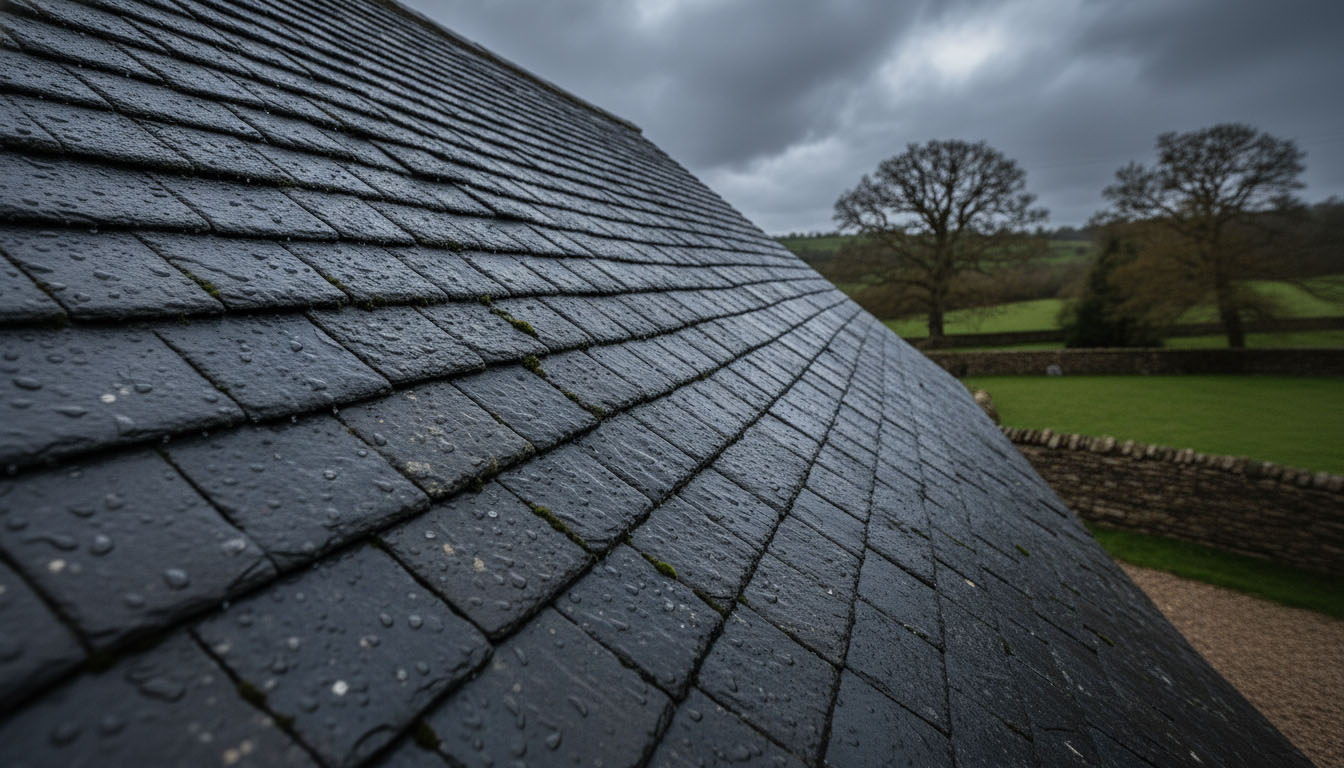
Best Slate Roofing UK Weather depends on more than choosing a strong-looking slate. A weather-ready slate roof needs the right pitch, slate type, fixing method, lap, underlay, battens, leadwork, gutters, valleys, ventilation, maintenance plan, and safe repair access to handle rain, wind, frost, moss, and storm exposure.
A & A Roofing London helps homeowners across London, Essex, and the Hertfordshire borders choose, inspect, repair, restore, and maintain slate roofing for UK weather. The goal is to match the roof covering to the property, control water properly, reduce weather-related damage, and avoid weak details that lead to leaks after heavy rain or strong wind.
Quick Check: Before choosing slate for exposed weather conditions, ask A & A Roofing London to compare roofing materials in the UK against roof pitch, wind exposure, rain flow, frost risk, drainage, leadwork, and long-term maintenance.
Best Slate Roofing UK Weather: Main Factors
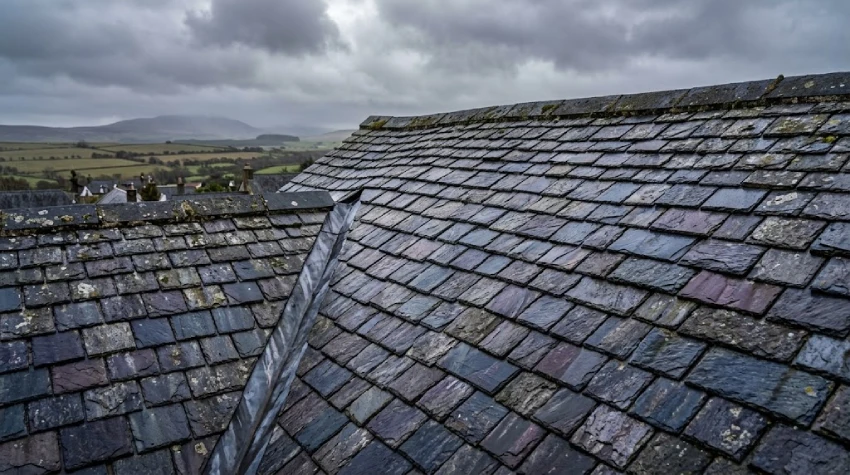
Best Slate Roofing UK Weather is really about how the full roof system performs. Slate can be a strong pitched roof covering, but the roof must also control rainwater, resist wind movement, drain correctly, and avoid trapped moisture.
| Weather factor | How it affects a slate roof | A & A Roofing London check |
| Heavy rain | Tests laps, valleys, gutters, flashing, and roof edges | Water path from ridge to downpipe |
| Wind | Can lift weak slates, expose poor fixings, and move ridge areas | Fixings, roof edges, ridges, exposed slopes |
| Frost | Can worsen cracks, weak pointing, and damp roof details | Cracked slates, chimneys, leadwork, damp signs |
| Moss and debris | Can block valleys, gutters, and drainage routes | Moss build-up, silt, leaves, broken slate pieces |
| Storms | Can expose loose slates, weak leadwork, and old repairs | Post-storm movement and leak tracing |
| Condensation | Can affect loft timbers and insulation if airflow is poor | Ventilation, insulation, damp evidence |
| Previous repairs | Weak patches can fail first during bad weather | Repair quality and recurring leak areas |
A & A Roofing London checks slate roofs as complete weather systems. A slate covering can be suitable, but weak leadwork, blocked gutters, poor fixings, or shallow detailing can still allow weather damage.
What Makes Slate Suitable for UK Weather?
Slate can suit UK weather because it is a pitched roof covering designed to shed rainwater down the slope. When slates are correctly fixed, overlapped, and supported by the right roof build-up, they can handle regular rain and seasonal weather changes.
A & A Roofing London checks natural slate roofing in the UK by reviewing slate type, pitch, fixing, laps, leadwork, valleys, gutters, chimneys, roof edges, and internal damp. Weather suitability is not only about the slate; it is about whether the whole roof controls water.
For the basic roof structure, slate water-shedding framework is useful.
How Does Rain Affect Slate Roofing?
Rain affects slate roofing through laps, valleys, gutters, flashings, chimneys, roof edges, and any previous repair points. A good slate roof should move water cleanly down the slope and away from the building. Problems start when water is blocked, diverted, or pushed beneath the covering.
A & A Roofing London checks whether heavy rain is entering through the slate field or through details around the roof. Many leaks blamed on slate are actually caused by blocked valleys, failed flashing, chimney defects, or gutter overflow.
For broader weather damage context, rain wind frost roof pathways is useful.
How Does Wind Affect Slate Roofing?
Wind can expose weak slate fixings, open vulnerable roof edges, move loose slates, and worsen existing ridge or verge problems. Wind-driven rain can also enter areas that may not leak during ordinary vertical rainfall.
A & A Roofing London checks exposed slopes, roof edges, ridges, hips, fixings, slate movement, leadwork, and previous patch repairs after windy weather. If slates have shifted once, the cause should be traced before more movement follows.
For post-weather checking, storm damage observation sequence helps homeowners understand what to look for safely.
How Does Frost Affect Slate Roofing?
Frost can worsen existing cracks, weak mortar, damp chimneys, open joints, and poor drainage. Slate itself may be weather-resistant when suitable for the roof, but surrounding details can still suffer if water sits in cracks, blocked gutters, valleys, or chimney areas.
A & A Roofing London checks frost-related warning signs such as cracked slate corners, ridge movement, chimney damp, lifted leadwork, and repeated leaks after cold weather. The inspection should look at where water is sitting before it freezes.
Frost risk is often made worse by poor drainage, moss build-up, and neglected repair points.
Slate Roofing Compared With Tile Roofing in Weather
Slate and tile roofing can both work well in UK weather when installed correctly. The better choice depends on pitch, structure, material weight, exposure, repair access, and property style.
A & A Roofing London compares tile or slate roofing in the UK by checking whether slate or tile is more suitable for the roof’s weather exposure. Tiles may suit many residential roofs, while slate may suit homes where traditional appearance and roof character matter.
For comparison reading, slate tile exposure comparison and concrete tile weather notes are useful.
Slate Roofing Compared With Metal Roofing in Weather
Slate and metal roofs handle weather differently. Slate is usually chosen for pitched roofs where a traditional finish and material character matter. Metal may suit some modern or specialist roof designs, but it has different detailing and movement requirements.
A & A Roofing London checks whether slate, tile, metal, or another covering is suitable before recommending a route. Weather suitability should include pitch, fixing, roof shape, roof edges, gutters, valleys, leadwork, and future maintenance.
For comparison, metal slate exposure review is relevant.
Natural Slate Vs Synthetic Slate in Weather
Natural slate and synthetic slate can both be considered for weather-exposed roofs, but they should not be treated as identical. Natural slate has its own texture, thickness, and long-term weathering behaviour. Synthetic slate depends heavily on product quality, fixing method, pitch suitability, and manufacturer requirements.
A & A Roofing London checks roof exposure before recommending either material. A slate product should be judged against rain flow, wind exposure, frost risk, repair matching, and long-term availability.
For material comparison, natural synthetic weather behaviour and slate format exposure guide are useful.
Slate Roof Lifespan in UK Weather
Weather affects slate roof lifespan through repeated rain, wind, frost, debris, moss, and temperature changes. A slate roof with clear drainage, secure fixings, sound leadwork, and regular maintenance can stay serviceable longer than one with recurring leaks or blocked water routes.
A & A Roofing London checks lifespan by reviewing slipped slates, cracked edges, weak fixings, damp loft signs, chimney leaks, blocked valleys, and repair history.
For lifespan context, slate lifespan weather influences and slate ageing exposure signs are useful.
Slate Roof Maintenance for Weather Protection
Slate roof maintenance should focus on water control. That means checking slipped slates, cracked corners, leadwork, gutters, valleys, chimneys, ridges, roof edges, moss, and loft damp before bad weather exposes weak points.
A & A Roofing London checks slate roofs safely and avoids unnecessary movement across the roof. Maintenance should be planned before heavy seasonal rain, after storms, and whenever internal damp appears.
For planned upkeep, weather-focused slate care plan and routine slate exposure checks are useful.
Common Weather Problems on Slate Roofs
Common slate roof weather problems include slipped slates, cracked corners, lifted leadwork, blocked valleys, overflowing gutters, chimney damp, ridge movement, moss build-up, and leaks that only appear during wind-driven rain.
A & A Roofing London checks whether the defect is local or part of a wider roof condition issue. A slipped slate after a storm may be isolated, but repeated movement on the same slope can suggest fixing failure, exposure issues, or poor previous installation.
For diagnosis, slate fault weather categories and slate deterioration cause notes help identify the root cause.
Weather-Related Slate Roof Repairs
Weather-related slate roof repairs may include replacing slipped slates, fixing cracked slates, repairing leadwork, clearing valleys, correcting chimney details, checking gutters, or repairing ridge and edge movement.
A & A Roofing London checks the water route before repairing. A visible slate gap may not be the only issue if water is also entering through failed leadwork, blocked drainage, or chimney defects.
For repair planning, weather repair scope steps is useful.
When Does Weather Damage Mean Replacement?
Weather damage may mean replacement when defects are widespread, leaks keep returning, slates are slipping across several areas, underlay has failed, battens are weak, fixings are unreliable, or the roofline has moved.
A & A Roofing London checks whether maintenance, repair, restoration, or replacement is the correct route. A roof should not be replaced too early if local repair will solve the problem, but repeated patching is not useful when the full system is failing.
For replacement signals, weather-related replacement indicators is relevant.
Pitched Roof Installation for Weather Exposure
Slate depends on correct pitched roof installation in the UK. The roof pitch, lap, fixing method, battens, underlay, ventilation, valleys, ridges, gutters, and leadwork must suit the material and exposure level.
A & A Roofing London checks pitched roof details before slate installation or replacement. A good slate product can still fail if the roof pitch is wrong, fixings are weak, or leadwork is poorly detailed.
For installation context, slate fixing sequence notes help explain why workmanship matters in bad weather.
Flat Roofs and Slate Roof Weather Connections
Flat roofs in London need different weather detailing from slate roofs. Flat roofs rely on waterproofing layers, falls, outlets, upstands, trims, and edge details rather than overlapping slates.
A & A Roofing London checks flat roof sections separately, especially where water from a slate roof discharges onto an extension, dormer, porch, or garage roof. Broken slate pieces, blocked gutters, and poor downpipe routes can affect lower flat roof areas.
A mixed roof should be inspected as one drainage system.
Roof Restoration After Weather Damage
Storm damage to roofs in the UK can expose old defects in slate roofs. Restoration may be suitable when the roof is still structurally sound but needs more than routine maintenance.
A & A Roofing London checks whether restoration can correct slipped slates, leadwork defects, valley blockage, chimney leaks, gutter overflow, ridge movement, and damp roof layers.
| Weather issue | Repair may be enough | Restoration may be needed |
| One slipped slate | Replace and check nearby fixings | Slips repeat across the same slope |
| Blocked valley | Clear debris and check flow | Valley lining or adjacent slates are damaged |
| Local flashing gap | Repair the junction | Multiple junctions are failing |
| Gutter overflow | Clear and reset drainage | Eaves or fascia have water damage |
| Storm movement | Correct local movement | Ridges, edges, and fixings show wider weakness |
| Repeated leak | Trace and repair source | Hidden layers are damp or failing |
A weather-damaged roof should be assessed before cosmetic work is considered.
Choosing Slate for Exposed Roofs
Choosing slate for exposed roofs should include material type, pitch, laps, fixings, roof edges, ridges, gutters, valleys, leadwork, ventilation, maintenance access, and future repair matching.
A & A Roofing London checks the property before recommending slate. A sheltered rear roof and an exposed front elevation may not need the same specification or repair approach.
For selection planning, slate exposure selection checklist is useful.
Slate Roofing for Period Homes in Weather
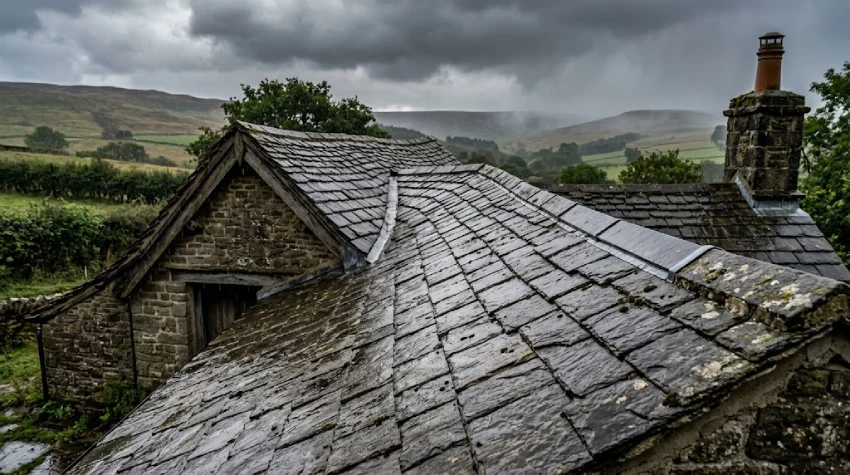
Period homes often have slate roofs, chimneys, leadwork, shared rooflines, and traditional details. These can perform well in UK weather when maintained, but older roofs may also have hidden damp, old fixings, weak battens, or previous repairs.
A & A Roofing London checks period slate roofs carefully so repairs match the roof’s character and control weather properly. Matching slate size, texture, colour, and detail can matter as much as stopping the immediate leak.
For older properties, period slate weather detailing is useful.
Energy Efficiency and Moisture in Wet Weather
Slate weather performance is connected to moisture control. A roof may shed rain well outside but still suffer condensation or damp if insulation and ventilation are wrong.
A & A Roofing London checks loft damp, airflow, insulation condition, and ventilation during slate roof inspections. This helps separate external leaks from internal moisture problems.
For related reading, slate moisture and insulation notes is relevant.
Environmental Value of Weather-Ready Slate
A weather-ready slate roof can have environmental value when it lasts, remains repairable, and avoids unnecessary early replacement. Durability depends on the material, installation, maintenance, drainage, repair timing, and whether the existing roof can be restored.
A & A Roofing London checks whether repair or restoration can preserve a serviceable slate roof before replacement is recommended.
For this topic, slate durability lifecycle notes is useful.
Roofing Materials for UK Weather
Slate should be compared with other materials only after the roof has been assessed. Tile, slate, metal, and flat roof systems all respond differently to pitch, exposure, drainage, fixing, maintenance, and property style.
A & A Roofing London compares material suitability before recommending slate. This helps avoid choosing a covering because it sounds weather-resistant while ignoring the actual roof structure and water route.
For broader comparison, UK weather roof material notes, roof covering weather comparison, and material lifespan weather matrix are useful.
Best Slate Roofing UK Weather Area Coverage
Local roof pitch, property age, wind exposure, rainfall, chimneys, gutters, valleys, nearby trees, and previous repairs all affect slate roof weather performance. A & A Roofing London covers North London, Essex, and the Hertfordshire borders, helping homeowners choose and maintain slate roofs for real weather conditions.
North London
In North London, Best Slate Roofing UK Weather often matters for terraced homes, period properties, shared rooflines, chimney stacks, slate repairs, and rear extensions. A & A Roofing London can check rain flow, wind-exposed roof edges, leadwork, valleys, gutters, and flat roof connections before recommending slate repair or restoration.
Hertfordshire Borders
Across the Hertfordshire borders, Best Slate Roofing UK weather may involve exposed pitched roofs, tree debris, moss, older slate details, mixed roof materials, and storm movement. A & A Roofing London reviews slate condition, fixings, drainage, chimneys, roof pitch, gutters, and maintenance history before recommending the right roof route.
Essex
In Essex, Best Slate Roofing Uk Weather can depend on wind exposure, rain runoff, gutter flow, roof-edge weathering, chimney junctions, and existing slate condition. A & A Roofing London can inspect slate roofs, tile alternatives, flat roof sections, leadwork, valleys, and internal damp evidence so the roof is prepared for weather pressure.
Final Roofing Decision
Best Slate Roofing UK weather should be judged by how the full roof performs in rain, wind, frost, moss, and storm conditions. Slate can be a strong weather-ready material when the roof pitch, fixing, lap, leadwork, valleys, gutters, ventilation, and maintenance plan are right.
A & A Roofing London can compare roofing materials in the UK by checking slate suitability, tile alternatives, flat roof sections, pitched roof structure, storm damage, leadwork, chimneys, gutters, valleys, insulation, ventilation, and previous repairs. That gives homeowners a practical weather-focused roofing decision based on the roof’s real condition.
FAQs About Best Slate Roofing Uk Weather
What Makes Slate Roofing Suitable for UK Weather?
Slate roofing can suit UK weather when it is installed on the right pitch with correct laps, fixings, battens, underlay, leadwork, valleys, gutters, ventilation, and maintenance. The full roof system matters as much as the slate material.
Is Slate Good for Heavy Rain?
Slate can perform well in heavy rain when the roof slope, laps, valleys, gutters, and leadwork are correct. Problems usually appear when drainage is blocked, flashing fails, or slates have moved.
Can Wind Damage a Slate Roof?
Yes. Wind can move loose slates, expose weak fixings, affect roof edges, and push rain into vulnerable junctions. A & A Roofing London checks exposed slopes, ridges, edges, and previous repairs after strong weather.
Does Frost Damage Slate Roofing?
Frost can worsen existing cracks, damp chimney details, weak pointing, blocked gutters, and areas where water is sitting. Slate roof maintenance should reduce trapped water before cold weather.
Is Natural Slate Better Than Synthetic Slate for Weather?
It depends on the roof and product. Natural slate may suit traditional roofs and period homes, while synthetic slate may suit some projects where product requirements match the roof. Pitch, fixing, exposure, and maintenance decide performance.
How Should Slate Roofs Be Maintained for Weather?
Slate roofs should be checked for slipped slates, cracked edges, lifted leadwork, blocked valleys, gutter overflow, chimney damp, moss build-up, roof-edge movement, and internal damp signs.
When Does Weather Damage Need Roof Restoration?
Restoration may be needed when weather damage affects several parts of the roof, such as repeated slate movement, failing leadwork, blocked valleys, gutter damage, chimney leaks, and damp hidden layers.
What Should A & A Roofing London Inspect on a Weather-Exposed Slate Roof?
A & A Roofing London should inspect slate condition, roof pitch, fixings, battens, underlay, leadwork, chimneys, valleys, gutters, ridges, roof edges, flat roof connections, loft damp, insulation, ventilation, previous repairs, and storm damage.