
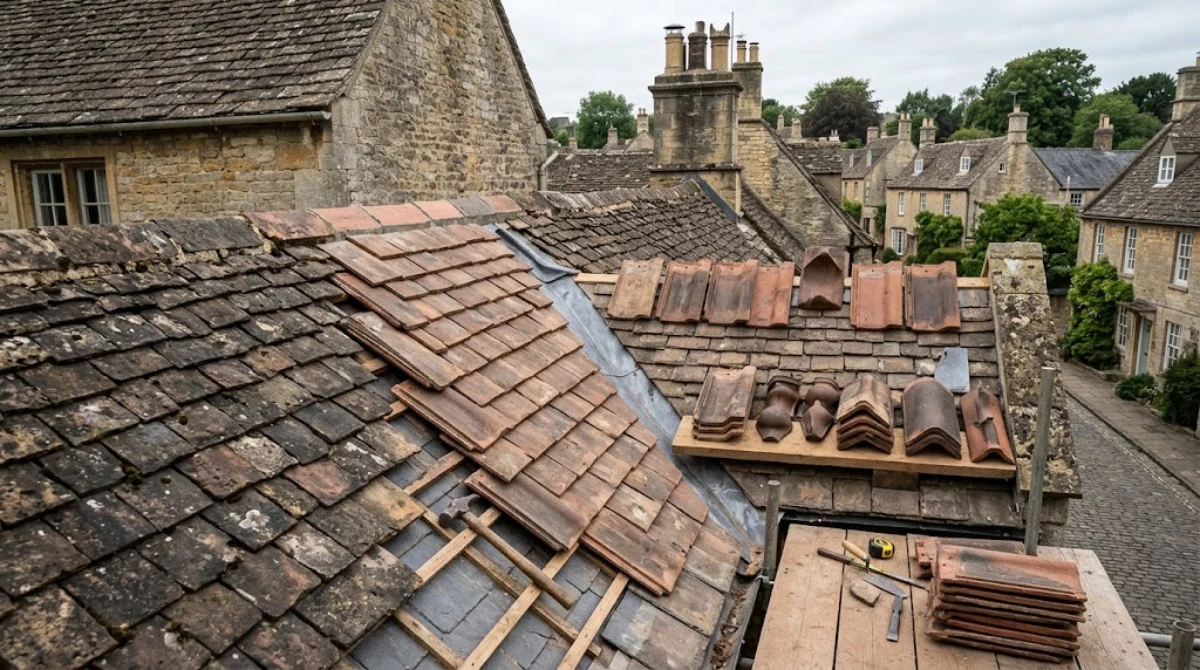
Victorian & Conservation Area Tile Matching is not a normal roof repair decision. On older London-area homes, the wrong tile can change the roofline, disrupt a terrace, create planning problems, or shorten the life of the repair.
Victorian roofs often include clay plain tiles, natural slate, decorative ridge details, chimney leadwork, and older roof structures that need careful handling. In conservation areas, visible roof changes may also need local authority checks, especially where the replacement material changes the external appearance.
A&A Roofing London approaches tile matching by assessing the existing material, roof form, local character, and repair scope before recommending a like-for-like repair, reclaimed material, or wider restoration.
CTA: For older homes where tile matching affects appearance, planning, and long-term roof condition, A&A Roofing London can provide historic roofing contractors in London support that checks the roof covering, structure, and conservation-sensitive details before work begins.
Victorian & Conservation Area Tile Matching Rules

Victorian & Conservation Area Tile Matching starts with one principle: the replacement should respect the original roof covering, the building’s age, and the surrounding roofscape. Historic England advises that older roofs should be handled by professionals who understand old buildings and local roof types, and it notes that conservation area properties may need planning permission, so owners should check with the local authority before making changes.
Tile matching decision table
| Roof issue | Matching priority | Practical roofing decision |
| One or two broken clay tiles | Size, profile, colour, weathering | Use carefully matched replacement tiles where possible |
| Slipped or cracked slate | Slate type, thickness, lap, fixing pattern | Check whether reclaimed or matching slate is suitable |
| Widespread tile failure | Roof age, structure, material availability | Decide between targeted repair and roof restoration |
| Conservation area roof change | External appearance and local rules | Check planning position before changing material |
| Chimney or lead junction leak | Lead detail and tile interface | Repair weatherproofing before blaming tile mismatch |
| Mixed old and modern tiles | Weight, colour, texture, profile | Avoid patchwork that harms roof performance and appearance |
A&A Roofing London uses this first assessment to decide whether the roof needs a small tile match, a slate replacement plan, or a wider restoration. Where the roof covering is clay or concrete tile, tile repair matching on older roofs helps keep the repair visually consistent and technically sound.
Matching is not only about colour. Tile size, camber, nib position, thickness, surface texture, and weathering all affect whether the new tile sits properly among older tiles. A homeowner comparing materials can also use a UK roof tile type overview to understand why plain clay, concrete, slate, and interlocking tiles should not be treated as interchangeable.
Tile Roofing on Victorian Homes
Tile roofing is central to Victorian & Conservation Area Tile Matching because many older homes rely on clay plain tiles or other traditional profiles that do not behave like modern interlocking tiles. A small mismatch can affect lap, water shedding, weight, and the roof’s street-facing appearance.
Victorian clay tiles often weather unevenly, so a newly manufactured tile may look too sharp or bright even if the size is close. Reclaimed tiles may blend better, but they still need checking for cracks, frost damage, thickness variation, and compatibility with the existing battens and roof pitch.
A&A Roofing London checks the existing tile shape, gauge, roof pitch, fixing method, and neighbouring roof appearance before choosing replacement material. Where several options are possible, a roof tile selection framework helps narrow the choice without losing the roof’s original character.
Tile replacement also needs careful handling. Removing surrounding old tiles roughly can cause additional breakage, especially where clay has become brittle with age. For targeted repairs, the London roof tile replacement process is useful because it explains how localised replacement differs from a full roof renewal.
Slate Roofing and Period Roof Character
Slate roofing often plays a major role in Victorian & Conservation Area Tile Matching, especially on period homes where Welsh slate or other natural slate has shaped the original roofline. Historic England notes that matching materials may be available from specialist manufacturers and that older roof coverings should be assessed in relation to the building’s character.
Slate matching requires more than choosing a grey tile. Thickness, size, edge finish, colour tone, fixing method, and lap all affect how the roof performs and looks. A slate that is close in colour but wrong in thickness can sit proud, interrupt water flow, or make the repair obvious from the street.
A&A Roofing London uses reclaimed slate roofing assessment where the roof needs material compatibility rather than a generic replacement. Reclaimed slate may be appropriate when it matches the existing roof, but it must be inspected carefully before reuse.
For older homes, slate choice also connects to planning and heritage expectations. A period home slate roof overview can help homeowners understand why natural slate is often treated differently from synthetic alternatives on historic properties.
Flat Roofing Near Historic Tile Details
Flat roofing is not usually the main focus of Victorian & Conservation Area Tile Matching, but many older London homes have flat roof extensions, dormers, bay coverings, rear additions, or parapet gutters connected to pitched tiled roofs. These junctions can make a tile problem look worse than it is.
When a leak appears near an older tiled roof, the true cause may be a flat roof upstand, outlet, flashing junction, or parapet detail. Replacing roof tiles without checking the adjoining flat roof can leave the original defect unresolved.
A&A Roofing London reviews roof form differences before material reuse before deciding whether tile matching is the real priority. On conservation-sensitive homes, the visible pitched roof and the hidden flat roof details both need to work together.
This is especially important where a rear extension meets an older clay or slate roof. Matching the visible roof covering is important, but the waterproofing junction behind it can decide whether the repair actually lasts.
Pitched Roof Installation With Reclaimed Materials
Pitched roof installation affects Victorian & Conservation Area Tile Matching because older roof coverings depend on pitch, lap, gauge, and fixing. A reclaimed tile or slate that looks right on the ground may not suit the roof once its pitch and structure are checked.
The Planning Portal notes that replacing an existing roof covering with a different material may require Building Regulations approval where structural stability, fire safety, or energy efficiency are affected, especially if the new covering is significantly heavier or lighter. planningportal.co.uk
That matters for older properties. Replacing slate with heavier tile, or changing from clay plain tiles to a different covering, can create structural questions as well as visual ones. A&A Roofing London uses pitched roof checks for reclaimed slate to confirm whether reused material is suitable for the roof, not just visually close.
The installation method also matters because conservation-sensitive roofs are often less forgiving of shortcuts. The tile roof laying sequence helps show why battens, laps, fixing, underlay, and ridge details must be set out properly before matched tiles are installed.
Roof Restoration Without Losing Original Material
Roof restoration is often the best setting for Victorian & Conservation Area Tile Matching because it allows the roof to be treated as a whole. Instead of replacing isolated tiles without context, restoration checks what can be retained, what must be replaced, and what should be matched carefully.
Historic England’s guidance on older roofs notes that replacing battens is common when a roof covering is replaced, but rafters do not usually need replacing unless their condition requires it. That distinction matters because a roof can often be repaired or restored without stripping away more historic fabric than necessary.
A&A Roofing London focuses on retaining original materials during roof restoration where the roof still has salvageable tiles, slate, ridge pieces, or traditional detailing. Good restoration keeps sound original material where possible and uses compatible replacements where the roof has failed.
Restoration matching priorities
| Restoration stage | What is checked | Why it matters |
| Material survey | Tile or slate type, age, size, and condition | Confirms what can be retained or matched |
| Roof structure review | Rafters, battens, pitch, load, and movement | Prevents unsuitable replacement materials |
| Weathering assessment | Colour variation, surface texture, moss, and ageing | Helps new material blend into the existing roof |
| Junction check | Chimneys, valleys, leadwork, abutments | Stops leaks being mistaken for tile failure |
| Planning review | Conservation area status and visible changes | Reduces risk of non-compliant alterations |
The life of the existing material should also guide the decision. A clay tile roof lifespan outline can help homeowners understand whether the roof is suitable for selective repair or approaching broader restoration.
Roof Repairs and Localised Tile Matching
Roof repairs are where Victorian & Conservation Area Tile Matching needs the most restraint. A single broken tile should not automatically trigger a wider roof change, but a patch repair should not ignore deeper wear in the surrounding roof.
Localised matching works best when the surrounding tiles are sound and the defect is limited. A&A Roofing London checks whether the damage is from impact, frost, tile fatigue, poor previous repair, or movement in the roof structure. That diagnosis decides whether a matched tile is enough.
Clay tile repairs need particular care because older clay can crack when lifted or forced. A clay tile repair method gives useful context for why matching and handling are linked.
Broken tiles should also be assessed before replacement material is ordered. The broken tile inspection steps help separate an isolated tile failure from wider roof wear, underlay failure, or poor previous workmanship.
Re-Roofing and Roof Replacement in Conservation Areas
Re-roofing changes Victorian & Conservation Area Tile Matching because the decision moves from replacing a few tiles to preserving the character of the whole roof. In conservation areas, this is where local appearance, planning controls, and neighbouring rooflines become more important.
The Planning Portal says re-roofing that does not materially affect external appearance will usually not require planning permission, but planning permission may be needed where conditions are not met or permitted development rights have been removed. planningportal.co.uk GOV.UK guidance also notes that local planning authorities can remove permitted development rights through Article 4 Directions, which can make external changes more restricted.
For Victorian and conservation area roofs, this means like-for-like work should still be checked before a visible change is made. A&A Roofing London considers whether the new roof covering will match the existing roofscape, whether the property is listed, whether an Article 4 Direction applies, and whether Building Regulations approval is needed for material changes.
Tile age also affects replacement planning. A tile roof service life comparison can help determine whether matching individual units is sensible or whether the roof has reached a stage where full replacement should be discussed.
Concrete tiles need separate judgement. The concrete tile ageing factors can help homeowners avoid mixing modern concrete replacements into a roof where the original character depends on clay or slate.
Lead Work, Chimneys, and Historic Roof Details
Lead work and chimneys are often tied closely to Victorian & Conservation Area Tile Matching because older roofs rarely fail in one place only. Chimney flashings, back gutters, valley details, and abutment lead can all affect the same area where tiles or slates are being replaced.
A&A Roofing London checks lead flashing around chimneys in London before assuming a tile mismatch is the cause of staining or damp. A matched tile will not fix water entry from split lead, poor step flashing, failed mortar joints, or a worn chimney back gutter.
Conservation-sensitive roof work also needs attention to visible details. Ornamental ridges, bonnet hips, clay finials, slate edges, and chimney weathering can all affect the roof’s character. Removing these details or replacing them with modern substitutes can change the appearance of the property even if the main tile field is similar.
Historic roof repairs should therefore include the details around the tile, not just the tile itself. The goal is a roof that sheds water properly while still looking like it belongs on the building.
Roof Inspections Before Tile Matching
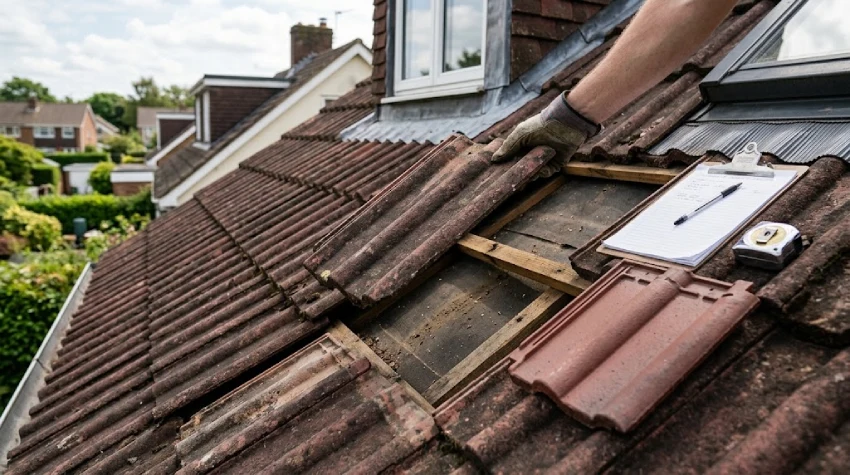
Roof inspections make Victorian & Conservation Area Tile Matching more accurate because many older roofs have mixed materials from previous repairs. A roof may contain original clay, later concrete replacements, reclaimed slate, modern patching, and altered leadwork in one slope.
A&A Roofing London inspects the existing roof covering, sample tiles, roof pitch, ridge, hips, valleys, chimneys, leadwork, battens where accessible, and signs of water tracking. This helps identify whether matching should be based on the original roof material or the most recent repair material.
Maintenance also affects how replacement tiles blend in. A roof with heavy moss, lichen, soot, or uneven weathering may need a more careful colour and surface match. The tile roof maintenance routine helps explain why ongoing care affects both appearance and repair quality.
For tiled roofs specifically, a tiled roof condition checklist can help homeowners note slipped tiles, cracked units, blocked gutters, ridge wear, and visible patch repairs before arranging a professional inspection.
Residential Roofing and Street-Facing Character
Residential roofing is where Victorian & Conservation Area Tile Matching becomes most visible. In a terrace, semi-detached pair, or conservation area street, one roof repair can affect the appearance of more than one property.
The issue is not only whether the tile works technically. It is whether the replacement respects the roofline, colour rhythm, texture, and age of the neighbouring buildings. In some areas, the roofscape is part of the conservation value, so a mismatched roof covering can stand out sharply.
A&A Roofing London approaches residential tile matching by looking at both the individual roof and the surrounding street. That includes checking whether the home is Victorian, Edwardian, interwar, or modern, and whether the roof has already been altered by previous owners.
Older homes often need a different judgement from new builds. A new-build and older-roof comparison helps explain why a material that suits a recent roof may not suit a Victorian or conservation area property.
Victorian & Conservation Area Tile Matching Area Coverage
Local knowledge matters because conservation-sensitive roofing is shaped by property age, street character, roof materials, and local planning expectations. A&A Roofing London supports homeowners across London, Essex, and the Hertfordshire Borders with roof checks that focus on matching, repair suitability, and original roof character.
North London
North London includes many older terraces, period homes, converted properties, and conservation-sensitive streets. For Victorian & Conservation Area Tile Matching, A&A Roofing London checks clay tiles, natural slate, chimney leadwork, ridge details, and previous patch repairs before recommending replacement material. This helps avoid obvious mismatches on visible roof slopes and supports a repair approach that respects the property’s age.
Hertfordshire Borders
Around the Hertfordshire Borders, residential roofs can include older tiled and slate roofs as well as later replacements. A&A Roofing London assesses Victorian & Conservation Area Tile Matching by checking roof pitch, tile profile, slate condition, and the surrounding roofscape. Where reclaimed material is suitable, the team checks whether it can be reused safely and whether it blends with the existing roof.
Essex
Across Essex service areas, A&A Roofing London reviews Victorian & Conservation Area Tile Matching with attention to the roof’s visible appearance, repair history, and material condition. Older clay tiles, slate sections, chimney details, and previous replacements are checked together so that repairs do not create a patchwork finish or introduce unsuitable roof weight.
Choosing A&A Roofing London for Careful Tile Matching
Victorian and conservation area roofs need a measured roofing decision, not a quick material swap. A&A Roofing London checks the roof covering, local character, tile or slate compatibility, leadwork, chimneys, and restoration options before recommending repair or replacement. For homeowners who need careful Victorian & Conservation Area Tile Matching, A&A Roofing London provides historic roofing contractors in London support that keeps the repair practical, compatible, and sensitive to the building’s roof character.
FAQs About Victorian & Conservation Area Tile Matching
What is Victorian & Conservation Area Tile Matching?
Victorian & Conservation Area Tile Matching means choosing replacement roof tiles or slates that suit the age, appearance, structure, and local setting of an older property. It considers tile size, profile, colour, thickness, weathering, roof pitch, and surrounding roof details. In conservation areas, it may also involve checking whether a visible material change needs local authority approval before roofing work begins.
Do I need planning permission for tile matching in a conservation area?
For Victorian & Conservation Area Tile Matching, planning permission depends on the property, the area, and whether the work changes the roof’s external appearance. Like-for-like repairs are often treated differently from visible material changes, but local rules can vary, and Article 4 Directions may remove some permitted development rights. A&A Roofing London recommends checking the local authority position before changing roof material on conservation-sensitive homes.
Can reclaimed tiles be used on a Victorian roof?
Reclaimed tiles can sometimes be suitable for Victorian & Conservation Area Tile Matching, especially where new tiles would look too bright, flat, or modern. They still need careful assessment for cracks, frost damage, thickness, size, camber, and compatibility with the existing roof. A reclaimed tile that looks right but sits badly can create water-shedding problems or make the repair less durable.
Is natural slate better than synthetic slate for older homes?
For Victorian & Conservation Area Tile Matching, natural slate is often more appropriate where the original roof was natural slate and the property’s character depends on that appearance. Synthetic slate may be suitable in some contexts, but it should not be assumed to match the texture, thickness, edge detail, or weathering of a historic slate roof. The right answer depends on the roof, local rules, and visual sensitivity.
Why does tile colour matching become difficult on older roofs?
Tile colour matching is difficult in Victorian & Conservation Area Tile Matching because older roofs weather over many decades. Clay, slate, and concrete can change colour through sunlight, rain, soot, moss, lichen, and mineral variation. A new tile may technically match the product type but still look too clean or uniform. That is why texture, surface age, and neighbouring roof appearance are checked alongside colour.
Should a conservation area roof be repaired or fully replaced?
The answer depends on the condition of the covering, structure, fixings, leadwork, and how much original material remains. For Victorian & Conservation Area Tile Matching, localised repair may be better where most tiles or slates are sound. Full replacement may be more appropriate where the covering has widespread failure, but material choice and external appearance should be reviewed carefully before work begins.
What should be checked before replacing tiles on a Victorian roof?
Before Victorian & Conservation Area Tile Matching, the roof should be checked for tile or slate type, pitch, battens, underlay, leadwork, chimneys, valleys, ridge details, and previous repairs. The property’s conservation status should also be checked where the work is visible. A&A Roofing London uses this inspection to decide whether like-for-like replacement, reclaimed material, or restoration is the right route.