
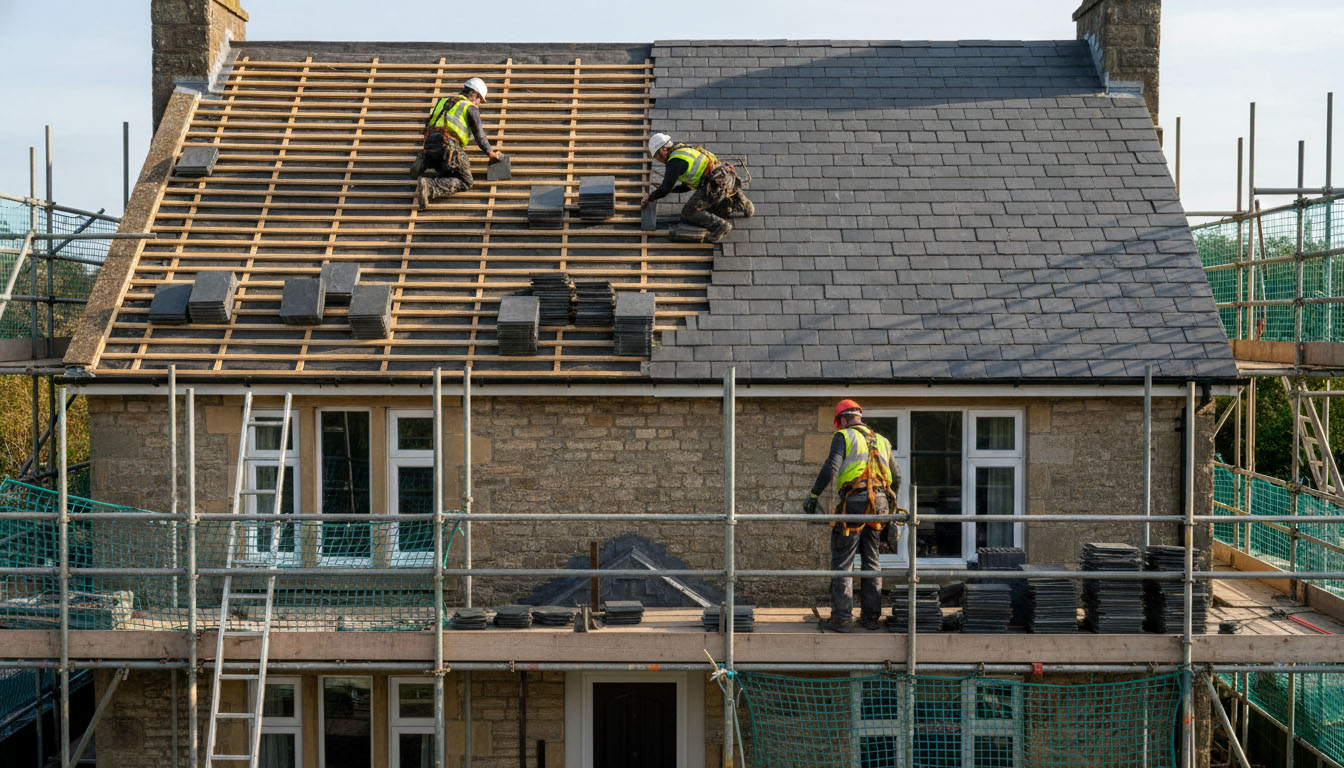
Slate Roof Installation Process UK depends on more than laying new slate across a roof slope. A proper installation should consider roof pitch, structure, access, scaffold, slate type, underlay, battens, fixings, headlap, ventilation, insulation, leadwork, chimneys, valleys, gutters, regulations, weather exposure, and finishing checks.
A&A Roofing London helps homeowners across London, Essex, and the Hertfordshire borders plan slate roofing work from inspection to completion. The goal is to install the roof correctly from the hidden layers upward, so the slate covering looks right, sheds water properly, and supports long-term maintenance, repair, restoration, or replacement planning.
Quick Check: If you are planning a new slate roof, re-roof, or major roof upgrade, ask A&A Roofing London to review expert roofing installation in London before the installation scope is agreed.
Slate Roof Installation Process UK: Main Stages
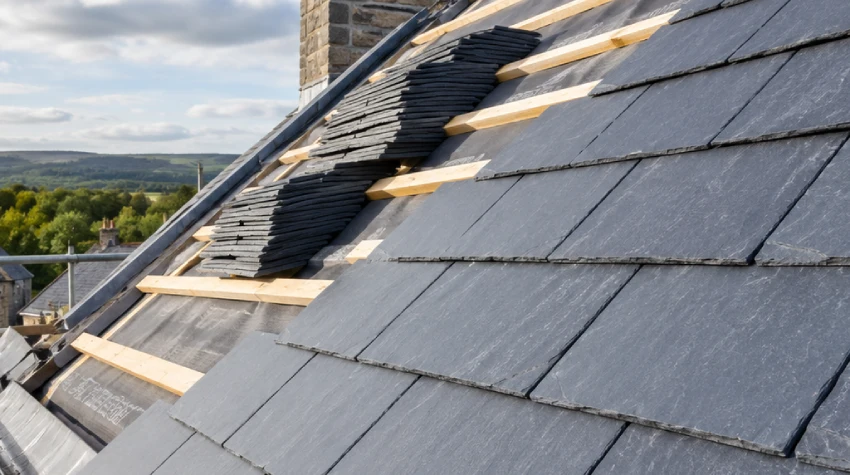
Slate Roof Installation Process UK should follow a clear sequence. The visible slate finish is only one part of the work; the structure, underlay, battens, ventilation, insulation, leadwork, valleys, and drainage all affect the final roof.
| Installation stage | What happens | Why it matters |
| Initial roof survey | Check structure, pitch, access, defects, and roof shape | Confirms whether slate is suitable |
| Material selection | Choose slate type, size, colour, and fixing approach | Affects appearance, weight, repair matching, and lifespan |
| Access planning | Arrange safe working access and protection | Reduces risk during roof work |
| Strip-out or preparation | Remove old coverings where needed and expose roof layers | Reveals hidden timber, underlay, and batten issues |
| Structural checks | Review rafters, deck areas, roofline, and support | Confirms the roof can carry the covering |
| Underlay installation | Fit breathable or specified underlay correctly | Adds secondary weather protection |
| Batten setting | Install battens at the right gauge for the slate | Controls slate spacing and support |
| Slate fixing | Lay and fix slates in courses with correct laps | Creates the main water-shedding surface |
| Leadwork and junctions | Detail chimneys, valleys, abutments, and roof edges | Prevents leaks at vulnerable points |
| Ventilation and insulation review | Check airflow and thermal build-up | Helps reduce condensation and heat loss issues |
| Gutter and drainage checks | Confirm water flows away properly | Protects eaves, walls, and lower roofs |
| Final inspection | Check alignment, fixings, details, and clean-up | Confirms the installation has been completed properly |
A&A Roofing London checks every stage because slate roofing failure often starts at the details, not the middle of the roof slope.
What Is a Slate Roof Installation?
A slate roof installation is the process of fitting slate as a pitched roof covering over a prepared roof structure. The installation should include the roof build-up beneath the slate, not only the visible surface.
A&A Roofing London checks the roof pitch, structure, underlay, battens, fixings, slate type, ventilation, insulation, leadwork, gutters, chimneys, valleys, ridges, verges, and roof edges before recommending the installation route.
For background on how the system works, slate roof layer basics are useful.
First Stage: Roof Survey and Installation Planning
The first stage is a roof survey. This should check the existing covering, roof pitch, roofline, structure, access, chimney areas, valleys, gutters, leadwork, insulation, ventilation, previous repairs, damp evidence, and any signs of movement.
A&A Roofing London uses the survey to decide whether the roof needs new slate installation, roof restoration, or full replacement. A survey also helps identify hidden items that can change the scope once the old covering is removed.
Poor planning can lead to weak detailing, wrong material choice, poor drainage, and later leaks.
Choosing the Right Slate Type
Slate choice affects appearance, weight, weather performance, matching, maintenance, and long-term repair planning. The roof pitch, building age, property style, budget, exposure, and roof structure all affect the correct choice.
A&A Roofing London helps homeowners compare slate types before installation begins. Natural slate, synthetic slate, reclaimed slate, and different slate sizes should be considered against the property and roof shape.
For material selection, slate category selection notes, natural synthetic specification checks, and slate selection planning points are useful.
Natural Slate and Synthetic Slate Installation
Natural slate and synthetic slate should not be treated as identical products. Natural slate may suit period properties and traditional rooflines, while synthetic slate may suit some projects where the product specification fits the roof pitch, fixing method, and appearance requirement.
A&A Roofing London checks product suitability before installation. The wrong slate type can affect fixing, headlap, weather resistance, repair matching, and the final appearance of the roof.
The installation process should follow the slate product requirements, not a generic approach.
Roof Pitch, Headlap, and Water Shedding
Slate roofs depend on pitch and lap to shed water properly. If the pitch, slate size, headlap, or fixing layout is wrong, wind-driven rain can reach areas it should not reach.
A&A Roofing London checks roof angle, exposure, slate format, underlay, batten spacing, and drainage routes before laying slate. The roof must be planned so water moves down the slope into valleys and gutters without being forced beneath the covering.
This is why slate installation should be designed around the roof, not copied from another property.
Underlay and Batten Installation
Underlay and battens form the support layer below the slate. Underlay provides secondary weather protection, while battens create the fixing surface and spacing for the slate courses.
A&A Roofing London checks underlay laps, batten gauge, fixing lines, ventilation paths, eaves details, valley junctions, and roof edges. If battens are set incorrectly, the slate rows may sit badly and the roof may not shed water as intended.
A good slate roof is built from the hidden layers outward.
Slate Fixing and Course Alignment
Slate fixing should create a secure, even, water-shedding surface. Each course needs correct alignment, correct lap, and suitable fixing. Poor fixing can lead to slipped slates, uneven rows, wind movement, and early repair needs.
A&A Roofing London checks fixing method, slate size, course alignment, edge details, valleys, ridges, and vulnerable exposed areas. The finished roof should look consistent while also performing properly in rain and wind.
For workmanship issues to avoid, roofing detail error checks are useful.
Leadwork, Flashing, Chimneys, and Valleys
Leadwork and flashing are critical parts of slate roof installation. Many future leaks happen around chimneys, abutments, dormers, valleys, walls, and roof edges rather than in the middle of the slate field.
A&A Roofing London checks lead aprons, soakers, flashings, valley details, chimney junctions, wall abutments, and gutter connections. These details must be installed alongside the slate, not treated as an afterthought.
For junction planning, lead flashing installation principles and flashing defect prevention notes are useful.
Insulation and Ventilation During Slate Installation
Slate roof installation is a good time to check roof insulation and ventilation. If insulation is upgraded without proper ventilation and moisture control, condensation can become a problem.
A&A Roofing London checks loft airflow, insulation layout, roof void condition, underlay type, eaves ventilation, and damp signs. A new slate roof should not trap moisture in the roof space.
For related planning, roof insulation upgrade factors and roof airflow design notes are useful.
Planning Permission and Building Regulations
Slate roof installation may need checks around planning, building regulations, material changes, structural loading, thermal performance, fire considerations, and property type. This is especially important when changing the roof covering, working on older homes, or altering the roof build-up.
A&A Roofing London helps homeowners understand which parts of the installation need to be checked before work begins. Planning and regulation issues should be considered early, not after the roof has been stripped.
For compliance context, slate planning permission review, slate roofing building rule points, and slate compliance planning notes are useful.
Slate Roof Installation for Period Homes
Period homes need careful slate roof installation because appearance, slate size, roofline, chimneys, leadwork, and original detailing often matter. A poor material match can affect both roof performance and the character of the property.
A&A Roofing London checks whether the new slate should match existing features, neighbouring rooflines, or period details. The installation should protect the roof while respecting the building style.
For older properties, period roof slate matching notes are useful.
Slate Roof Installation Cost Factors
Slate roof installation cost depends on roof size, access, scaffold, slate type, strip-out, underlay, battens, leadwork, chimneys, valleys, gutters, insulation, ventilation, waste removal, and hidden damage found during preparation.
A&A Roofing London checks the roof before confirming scope because hidden timber, underlay, or drainage issues can change the work required.
For budgeting context, slate installation budget items are useful.
Slate Roof Lifespan After Installation
The lifespan of a slate roof depends on material quality, installation quality, roof pitch, fixings, battens, underlay, leadwork, drainage, ventilation, weather exposure, and maintenance.
A&A Roofing London checks installation details that affect long-term performance. A strong slate product can still fail early if the roof pitch, fixing, drainage, leadwork, or ventilation is wrong.
For lifespan context, slate life expectancy planning and slate roof service-life review are useful.
Weather Suitability During Slate Installation
Slate roof installation should account for rain, wind, frost, moss, and storm exposure. Roof edges, ridges, valleys, gutters, chimneys, and leadwork are especially important in exposed weather.
A&A Roofing London checks weather exposure before deciding slate type, fixing method, laps, drainage, and edge detailing. The roof should be installed for the conditions it will face, not only for appearance.
For weather planning, slate exposure design checks are relevant.
Tile Roofing Compared With Slate Installation
Tile roof installers in London and slate installers follow different material requirements. Tiles and slates vary in weight, profile, fixing method, appearance, and repair matching.
A&A Roofing London compares tile and slate options when a homeowner is choosing a new pitched roof covering. The right option depends on structure, roof pitch, property style, exposure, maintenance needs, and budget.
For material comparison, slate tile installation comparison, concrete tile slate fitting notes, and metal roof slate comparison notes are useful.
Flat Roof Installation Near Slate Roofs
Flat roof installation in London is different from slate roof installation because flat roofs rely on waterproofing systems, outlets, upstands, falls, trims, and edge detailing rather than overlapping slate courses.
Many homes have a slate main roof with a flat roof extension, dormer, garage, or porch. A&A Roofing London checks how water from the slate roof drains onto lower flat roof areas so the two roof systems work together.
Pitched Roof Installation and Slate Roofing
Slate roofs are pitched roofs, so pitched roof installation in the UK is central to the process. Pitch, laps, underlay, battens, fixings, ridges, valleys, gutters, and leadwork all need to work together.
A&A Roofing London checks the pitched roof build-up before slate is installed. If the structure, support layers, or drainage are wrong, the finished slate surface will not solve the underlying problem.
Roof Replacement and Slate Installation
Roof replacement in the UK may be needed when the existing roof has widespread failure, weak battens, failed underlay, repeated leaks, or structural concerns. Slate installation may form part of that replacement scope.
A&A Roofing London checks whether the roof can be restored or whether replacement is the correct route. A new slate covering should be installed only after the support structure and hidden layers are ready.
| Project type | Main focus | A&A Roofing London checks |
| New slate roof | Full installation from roof build-up to finish | Structure, pitch, slate type, underlay, battens |
| Slate re-roof | Replace failed covering and hidden layers | Old roof condition, battens, underlay, leadwork |
| Roof restoration | Keep serviceable roof while correcting defects | Damaged slates, leadwork, valleys, chimneys |
| Material change | Switch from another covering to slate | Weight, pitch, regulations, appearance |
| Period roof work | Preserve character while improving function | Matching slate, chimney details, roofline |
| Mixed roof project | Link slate with flat or tile sections | Drainage, junctions, outlets, roof edges |
Environmental and Energy Considerations
Slate roof installation can support long-term value when the material is durable, repairable, and installed correctly. Energy performance also depends on insulation, ventilation, damp control, and the roof build-up below the slate.
A&A Roofing London checks whether the project can improve roof performance without creating condensation or moisture issues. Installation should consider both external weatherproofing and internal roof conditions.
For related context, slate sustainability planning notes and slate energy performance checks are useful.
Slate Roof Installation Process Uk Area Coverage
Local property age, roof pitch, access, scaffold, slate type, regulations, weather exposure, chimneys, valleys, gutters, and existing roof condition all affect Slate Roof Installation Process Uk. A&A Roofing London covers North London, Essex, and the Hertfordshire borders, helping homeowners plan slate roof installation properly from survey to completion.
North London
In North London, Slate Roof Installation Process Uk often matters for terraced homes, period properties, shared rooflines, chimney stacks, rear extensions, and older roof coverings. A&A Roofing London can check roof pitch, access, leadwork, slate matching, gutters, valleys, and flat roof connections before installation begins.
Hertfordshire Borders
Across the Hertfordshire borders, Slate Roof Installation Process Uk may involve larger pitched roofs, mixed materials, tree debris, weather exposure, and older roof details. A&A Roofing London reviews the roof structure, drainage, chimneys, valleys, slate type, insulation, and ventilation before confirming the installation scope.
Essex
In Essex, Slate Roof Installation Process Uk can be affected by wind exposure, rain runoff, gutter flow, roof-edge detailing, chimney junctions, and the existing roof condition. A&A Roofing London can inspect slate roof suitability, flat roof connections, pitched roof details, leadwork, valleys, and internal damp evidence before installation work starts.
Final Roofing Decision
Slate Roof Installation Process Uk should be planned from the roof structure upward. Slate type, pitch, underlay, battens, fixings, ventilation, insulation, leadwork, valleys, gutters, chimneys, regulations, weather exposure, and final inspection all affect the finished roof.
A&A Roofing London can provide expert roofing installation in London by checking the roof condition, recommending the right slate route, planning the hidden layers properly, and installing details that help the roof shed water correctly. That gives homeowners a clear path from survey to slate installation, restoration, or replacement where needed.
FAQs About Slate Roof Installation Process Uk
What Is the Slate Roof Installation Process Uk?
The process usually includes survey, access planning, material selection, preparation, structural checks, underlay, battens, slate fixing, leadwork, ventilation, insulation review, drainage checks, and final inspection.
How Do You Choose Slate for a Roof?
Slate should be chosen based on roof pitch, structure, property style, weather exposure, weight, fixing method, repair matching, appearance, and budget. A&A Roofing London checks these factors before installation.
Does Slate Roof Installation Need Underlay and Battens?
Yes. Underlay and battens are important hidden layers. Underlay provides secondary weather protection, while battens support and space the slate courses correctly.
Why Is Leadwork Important in Slate Installation?
Leadwork protects junctions around chimneys, walls, valleys, dormers, and abutments. Poor leadwork can cause leaks even if the slate surface is installed neatly.
Should Insulation and Ventilation Be Checked During Installation?
Yes. Slate roof installation is a good time to check insulation and ventilation because poor airflow or trapped moisture can cause condensation and roof mould problems.
Can Slate Be Installed on Any Pitched Roof?
Not always. The roof pitch, structure, weight capacity, exposure, and material specification must be checked before slate is installed.
When Is Slate Installation Part of Roof Replacement?
Slate installation becomes part of roof replacement when the existing roof covering, battens, underlay, fixings, or support details have failed widely and a full re-roof is needed.
What Should A&A Roofing London Check Before Installing Slate?
A&A Roofing London should check roof pitch, structure, access, existing covering, slate type, underlay, battens, fixings, leadwork, chimneys, valleys, gutters, ventilation, insulation, regulations, weather exposure, and previous damage.