Are Slate Roofs Energy Efficient in the UK? Insulation and Thermal Performance Explained
admin2026-04-29T10:29:40+00:00BLOG
Are Slate Roofs Energy Efficient in the UK?
Insulation and Thermal Performance Explained
Energy efficiency is now a major consideration for UK homeowners upgrading or replacing their roofs. While slate is often chosen for durability and appearance, many question whether it contributes to thermal performance or simply acts as a weather barrier. Assuming slate alone improves insulation can lead to unrealistic expectations and missed energy-saving opportunities.
In reality, roof energy efficiency depends on system design, ventilation, and insulation layers beneath the slate. Understanding how slate interacts with insulation helps homeowners make informed decisions. This guide explains whether slate roofs are energy efficient in the UK and what truly determines performance.
Are Slate Roofs Energy Efficient UK Homeowners Should Know
When asking are slate roofs energy efficient UK properties must consider that slate itself is not an insulating material. Slate is dense natural stone, which provides durability and moisture resistance but limited thermal insulation on its own.
However, slate contributes to energy efficiency indirectly through:
Long lifespan reducing replacement waste
Breathable roof construction compatibility
Natural density helping regulate heat flow
Strong weather resistance preventing moisture ingress
Energy efficiency depends primarily on the insulation system beneath the slate layer. Professional slate roofing ensures correct integration with modern breathable membranes and insulation upgrades.
Slate Roof Insulation UK: What Really Matters
Slate roof insulation UK performance is determined by what sits below the tiles rather than the slate itself. The insulation layer, ventilation design, and airtightness measures define thermal retention.
Key insulation components include:
Rigid board insulation between rafters
Over-rafter insulation systems
Breathable underlay membranes
Properly ventilated roof voids
Without adequate insulation, heat escapes regardless of roofing material. Upgrading insulation during re-roofing significantly improves overall energy efficiency.
Where structural modification is required to accommodate insulation upgrades, professional pitched roof installation ensures compliance with UK building regulations.
Thermal Performance of Slate Roofing UK Compared to Other Materials
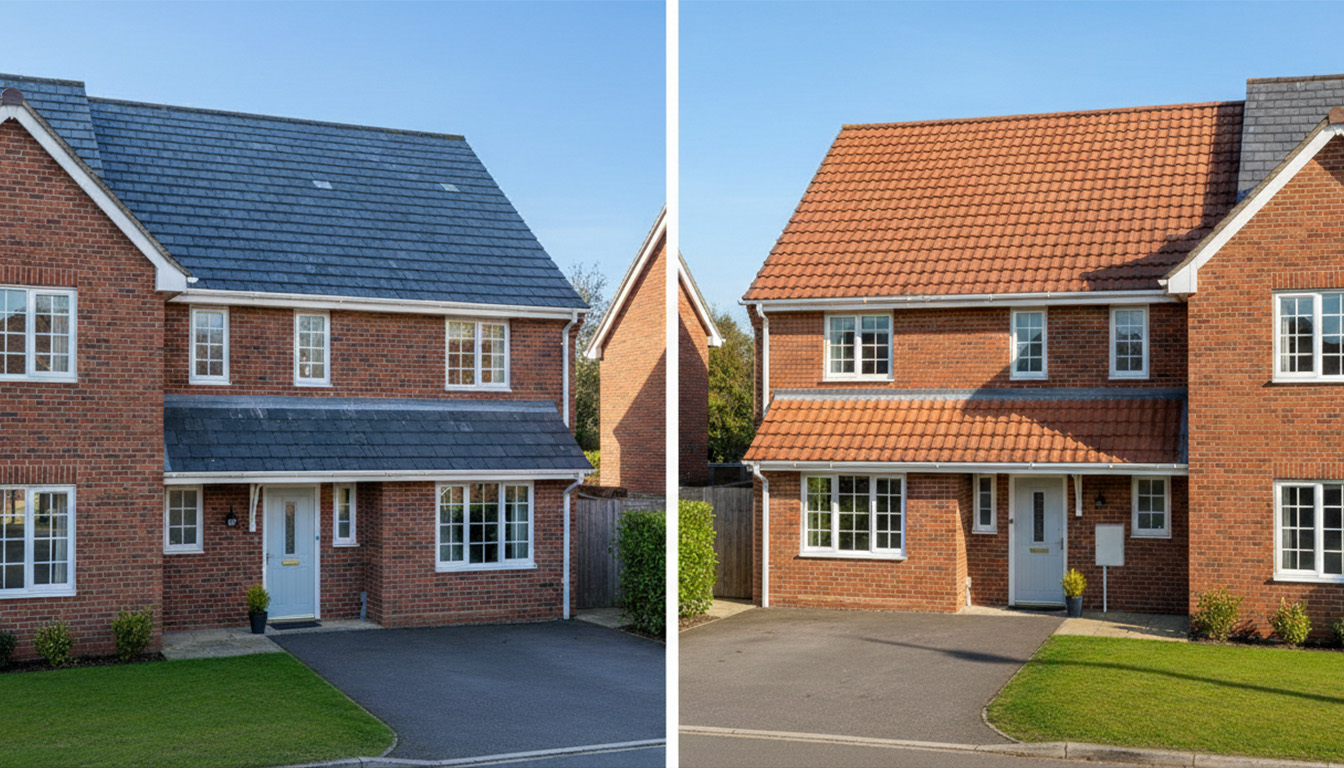
The thermal performance of slate roofing UK homes experience is comparable to other pitched roofing materials when installed with proper insulation. The material itself does not dramatically outperform clay or concrete tiles in insulation value.
Thermal comparison overview:
Roofing Material | Insulation Value Alone | Requires Insulation Upgrade | Breathability |
|---|---|---|---|
Low | Yes | Excellent | |
Low | Yes | Good | |
Clay Tile | Low | Yes | Good |
Metal Roofing | Very Low | Yes | Moderate |
Slate performs well as part of a breathable roofing system, allowing moisture control without trapping condensation. This helps maintain insulation effectiveness over time.
Professional slate roofing installation ensures correct ventilation spacing and membrane integration to optimise thermal performance.
Ventilation and Moisture Control Impact
Energy efficiency is closely linked to moisture control. Poor ventilation can reduce insulation performance and increase heat loss.
Important ventilation factors include:
Adequate airflow at eaves and ridge
Preventing condensation build-up
Correct placement of vapour control layers
Avoiding blocked ventilation gaps
Slate’s natural breathability works effectively when combined with modern underlay systems. Incorrect installation can trap moisture and reduce insulation efficiency.
Homeowners upgrading ageing roofs may consider combining insulation improvements with roof restoration services to enhance both durability and energy performance.
Summer Heat and Thermal Regulation
Slate’s density provides some thermal mass, which can help regulate indoor temperatures during warmer months. The material absorbs heat during the day and releases it gradually.
Benefits include:
Reduced rapid heat gain
Stable internal roof temperatures
Improved comfort in loft conversions
However, insulation thickness remains the dominant factor in controlling both heat loss and heat gain.
Energy Efficiency Upgrades During Slate Re-Roofing
Re-roofing presents an ideal opportunity to upgrade insulation and improve overall energy performance.
Recommended upgrades during slate replacement include:
Increasing insulation thickness
Installing modern breathable membranes
Upgrading vapour control layers
Improving airtightness at junctions
Integrating these measures during re-roofing is more cost-effective than retrofitting later.
Professional slate roofing services coordinate insulation upgrades alongside tile installation to maximise efficiency gains.
Long-Term Value and Sustainability
Slate offers sustainability advantages due to its longevity and natural composition. Fewer replacement cycles reduce material waste over decades.
Additional sustainability benefits include:
Recyclable and reusable tiles
Reduced lifetime carbon footprint compared to frequent replacements
While slate itself is not an insulator, it supports long-term sustainable roofing when integrated correctly.
Frequently Asked Questions
Are slate roofs good for insulation in the UK
Slate itself is not insulating, but it works effectively with high-quality insulation systems.
Does a slate roof keep heat in
Heat retention depends on insulation thickness rather than the slate material alone.
Can insulation be upgraded under an existing slate roof
Yes, insulation upgrades are often completed during re-roofing or restoration projects.
Is slate better than metal roofing for energy efficiency
Both require insulation, but slate integrates well with breathable systems.
Do slate roofs reduce energy bills
When combined with proper insulation and ventilation, slate roofing systems can contribute to improved energy efficiency.