
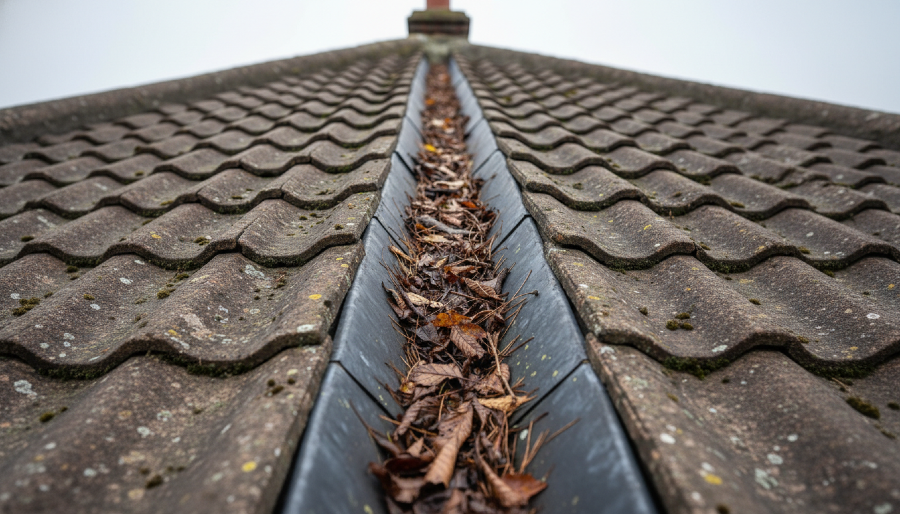
Roof valley blockage UK problems often begin quietly. Leaves, moss, grit, broken tile fragments, and wind-blown debris settle where two roof slopes meet, then slow the route rainwater should take into the guttering. Once water backs up, it can creep beneath tiles or slates, soak underlay, stain ceilings, and damage timbers before the valley looks serious from ground level.
A & A Roofing London helps homeowners across London, Essex, and the Hertfordshire borders inspect blocked valleys, trace hidden leaks, clear drainage routes, and decide whether the roof needs maintenance, repair, restoration, or replacement.
Quick Check: If water is backing up around a valley, arrange a roof inspection in the UK with A & A Roofing London before the blockage spreads into hidden roof damage.
Roof Valley Blockage Uk: What It Means
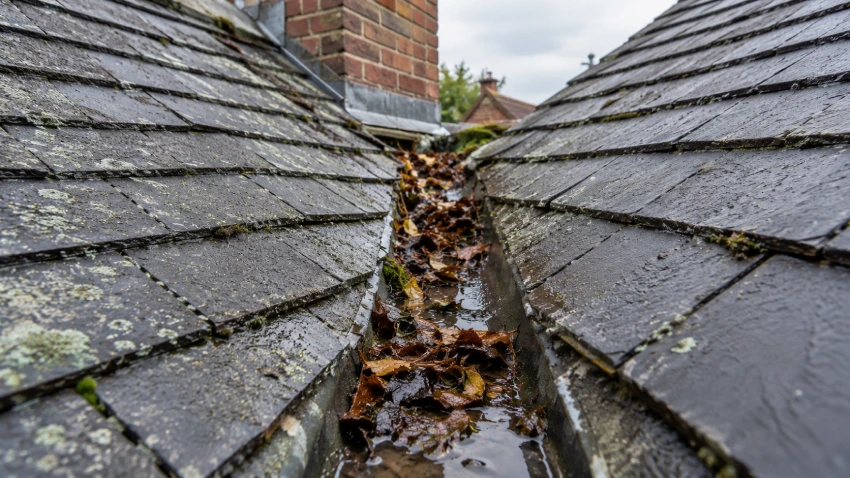
Roof Valley Blockage Uk describes debris or failed roof detailing that prevents a valley from moving rainwater cleanly off the roof. A roof valley is naturally high-risk because two slopes discharge into one channel, so the valley handles more water than a normal tile or slate course.
The Planning Portal explains that surface water drainage carries rainwater, melted snow, and ice, and that the above-ground system of gutters and rainwater pipes is roof drainage. That matters because a blocked valley is part of the same rainwater path; if the valley slows down, the guttering below often becomes overloaded too.
| Valley blockage source | What it does | Likely sign | A & A Roofing London check |
| Leaves and twigs | Trap water and slow discharge | Overflow after heavy rain | Clear valley and inspect lining |
| Moss and roof grit | Forms a dense mat in the channel | Damp near valley line | Check tiles, slates, and gutters |
| Broken tile or slate pieces | Obstruct the water route | Sudden leak after wind | Inspect surrounding covering |
| Failed mortar or old pointing | Sheds loose material into the valley | Crumbling debris in channel | Review valley edges and junctions |
| Poor valley design | Holds water even when clear | Repeated leak in same area | Assess pitch, lining, and discharge |
Roof Valley Blockage Uk should not be treated as a simple cleaning job until the valley lining, surrounding roof covering, underlay, flashings, and gutter discharge have been checked. NFRC lists a dedicated technical bulletin on pitched roofing valley design considerations, which reflects how specific valley detailing is within professional roofing practice.
A & A Roofing London starts by identifying whether the valley is only blocked, whether the blockage has exposed a weak lining, or whether the surrounding roof covering is moving water into the wrong place. That difference decides whether the right route is maintenance, targeted repair, restoration, or re-roofing.
Tile Roofing and Valley Blockage
Tile roofing is especially vulnerable to roof valley blockage because moss, grit, and broken tile fragments can wash down the slopes and gather in the valley. Once the channel narrows, water can push sideways under the cut tile edges instead of running straight down to the gutter.
A & A Roofing London checks whether the tile courses are cut correctly into the valley, whether loose tiles are feeding debris into the channel, and whether the gutter below is clear enough to receive the water. A blocked valley beside tiled roofing can look like a leak from the main roof surface, but the water may be entering at the valley edge.
Where tiles are part of the failure pattern, tile roofing in London should be assessed with the valley, not separately. For the wider leak mechanism, the most useful next topic is valley leak behaviour, because it explains why small valley faults often produce large internal symptoms.
Slate Roofing Valley Maintenance
Slate roofs can suffer roof valley blockage when thin slate fragments, moss, leaf debris, and old mortar collect where the roof planes meet. Because slate roofs rely on accurate laps and clean water shedding, a blocked valley can force water beneath the surrounding slates.
A & A Roofing London checks whether the slates beside the valley are sound, whether any pieces have slipped, and whether the lining can still carry water without ponding. On older slate roofs, the problem may be a mixture of blockage, worn edges, poor previous repair work, and ageing lead or valley lining.
For properties with slate sections, slate roof maintenance in the UK can be linked to valley cleaning, slate refixing, and junction checks. If rainwater is also backing up farther down the roofline, roof drainage restriction signs can help show whether the valley issue is part of a wider drainage fault.
Flat Roofs and Adjacent Valley Problems
Flat roofs do not always have pitched valleys, but they can still be affected by nearby valley blockage. A pitched main roof may discharge toward a flat roof extension, a parapet gutter, or a shared outlet. If the valley above is blocked, water can spill into areas that were not designed to take that volume.
A & A Roofing London checks how pitched roof valleys, flat roof outlets, gutters, and downpipes work together. This is important on London homes with rear extensions, dormers, and mixed roof layouts where water moves from one roof type to another before reaching the drainage system.
Where a flat section is involved, flat roofs in London need to be checked for ponding, edge failure, outlet blockage, cracks, or blistering. If surface defects are already visible, flat roof surface warning patterns can help separate surface ageing from water-flow problems caused by the valley above.
Pitched Roof Installation and Valley Design
Pitched roof installation has to get valley design right from the start. The roof pitch, tile or slate type, underlay, battening, valley lining, flashing, and gutter discharge all affect how quickly rainwater leaves the roof.
Roof Valley Blockage Uk becomes more likely when valleys are narrow, poorly cut, badly lined, or positioned beneath overhanging trees without a maintenance plan. Even if the valley is temporarily cleared, poor detailing can allow debris to collect again quickly.
A & A Roofing London reviews pitched roof maintenance in the UK by checking whether the valley has enough clearance, whether the surrounding covering is secure, and whether the water path is direct. If the issue appeared after severe weather, storm inspection checkpoints can help homeowners record slipped tiles, broken pieces, and new valley debris before inspection.
Roof Restoration After Valley Blockage
Roof restoration can be suitable after roof valley blockage, but only if the valley, lining, covering, and supporting structure are sound. Cleaning the roof surface without correcting valley drainage can leave the same water path problem in place.
NFRC warns that moss on roof tiles is rarely a problem by itself and usually only needs removal if it is blocking gutters, outlets, or other drainage points. NFRC also warns that aggressive moss removal methods such as power-washing can damage roofs, especially when combined with unnecessary foot traffic.
A & A Roofing London checks whether roof restoration in the UK is realistic after the valley has been cleared. If moss is involved, the useful supporting topics are moss growth conditions and moss removal risk factors, because both affect whether cleaning should be light maintenance or part of wider roof work.
Roof Repairs When Valleys Overflow
Roof Valley Blockage Uk repairs should start with the water route. A ceiling stain below a valley does not always mean the valley lining has failed. Water may be backing up from leaves, overflowing from a gutter, tracking behind flashing, or entering where tiles have shifted beside the channel.
A & A Roofing London traces the leak from the external valley to the internal symptom. This may include clearing debris, checking valley lining, lifting affected tiles or slates, inspecting underlay, testing gutter discharge, and checking nearby flashing or chimney junctions.
| Symptom | Possible valley-related cause | What should be checked |
| Leak after heavy rain only | Water backing up over valley edges | Valley clearance and gutter capacity |
| Damp patch away from valley | Water travelling under covering | Underlay and batten condition |
| Staining near chimney breast | Valley and flashing both involved | Leadwork, stack, and valley junction |
| Overflow at eaves | Blocked gutter below the valley | Outlet, downpipe, and gutter fall |
| Repeated leak after cleaning | Lining or design defect remains | Valley material, laps, and detailing |
For diagnosis, leak origin categories are useful because the visible damp mark is often not directly below the blockage. If the gutter is overflowing at the same time, gutter blockage overflow paths should be checked before assuming the valley alone has failed.
Re-Roofing and Replacement Decisions
Roof Valley Blockage Uk does not automatically mean the whole roof needs replacing. A blocked valley may only need safe clearance and a check of the lining. Replacement becomes more likely when the valley is cracked, corroded, poorly detailed, repeatedly leaking, or connected to wider roof covering failure.
Planning Portal states that most roof replacement work on existing buildings needs Building Regulations approval. It also notes that changing a pitched roof covering material, such as slate to tiles, may require approval because structural stability, fire safety, and energy efficiency can be affected.
A & A Roofing London helps homeowners decide whether the valley can be maintained, repaired, relined, or addressed during a wider re-roofing project. For broader decision-making, scope comparison markers and replacement timing indicators give useful context without forcing a larger project where a defined valley correction is enough.
Lead Work, Chimneys, and Valley Junctions
Valleys often meet leadwork, chimneys, dormers, or abutments. This is where roof valley blockage becomes harder to diagnose. Water can collect in the valley, hit weak leadwork, then appear inside as a chimney or wall leak.
A & A Roofing London checks whether valley linings, step flashing, soakers, back gutters, mortar, and surrounding roof coverings are working together. If the blockage has been there for a long time, timber, underlay, and internal finishes may also need checking.
The most relevant supporting references are flashing detail fault lines and leadwork water-shedding basics. If the damp is close to a stack, chimney leak tracing points can help explain why the valley and chimney should be inspected together.
Inspections and Maintenance for Blocked Valleys
Roof valley blockage inspection should be safe, structured, and recorded. Homeowners can usually spot warning signs from the ground, such as vegetation in the channel, staining under eaves, overflowing gutters, displaced tiles, or water spilling unevenly during rain. The close inspection should be left to a competent roofer with safe access.
HSE states that all roofs should be treated as fragile until a competent person confirms they are not, and roof work on or near fragile surfaces requires a safe system of work. This applies directly to valley cleaning because blocked valleys often tempt homeowners or untrained workers onto pitched or fragile areas.
A & A Roofing London can inspect the valley, photograph the condition, clear accessible debris safely, and advise whether maintenance is enough. A seasonal roof care schedule is especially useful after autumn leaf fall, heavy rain, or high winds.
Residential Roofing Risks From Blocked Valleys
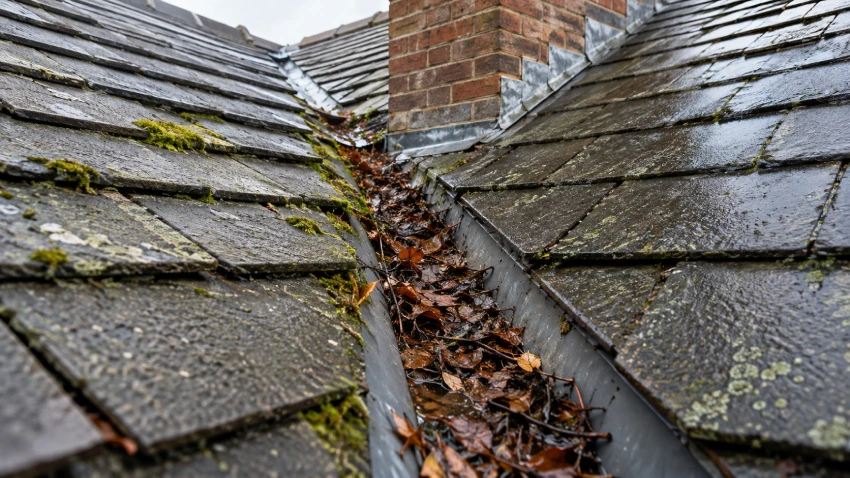
Residential roofing often has valleys hidden from easy view. Rear slopes, dormers, roof extensions, shared walls, and chimney positions can make a valley hard to see until water has already reached the ceiling.
Roof Valley Blockage Uk is also common where trees overhang the roof, where moss breaks away during wet weather, or where previous roof work has left loose fragments in the channel. The blockage can then overload gutters, send water sideways under the covering, or keep timber and underlay wet for longer than the roof was designed to tolerate.
A & A Roofing London checks both the visible valley and the downstream drainage path. If the valley issue follows repeated rain, wind, frost, or storms, weather-load roof patterns and urgent storm-water steps can help homeowners understand what needs immediate attention and what can be planned after the roof is made safe.
Roof Valley Blockage Uk Area Coverage
Local access, roof style, tree cover, older repairs, and mixed roof layouts all affect how roof valley blockage is inspected. A & A Roofing London covers North London, Essex, and the Hertfordshire borders, helping homeowners identify whether the issue is debris, poor drainage, failed leadwork, damaged tiles, or a roof covering that now needs more than cleaning.
North London
In North London, Roof Valley Blockage Uk issues often involve pitched roofs, flat roof extensions, dormers, chimneys, and gutters that collect debris from several roof sections. A & A Roofing London can inspect the valley and the downstream drainage route so the repair deals with water movement across the whole roof, not just the visible pile of leaves.
Hertfordshire Borders
Across the Hertfordshire borders, Roof Valley Blockage Uk may affect tiled roofs, slate roofs, older roof junctions, and properties with nearby trees. A & A Roofing London checks the valley lining, surrounding tiles or slates, underlay, gutters, and internal damp signs to decide whether clearing, maintenance, repair, restoration, or replacement is the right route.
Essex
In Essex, Roof Valley Blockage Uk problems can show after heavy rain, wind-blown debris, or moss movement from the roof surface. A & A Roofing London can assess whether the valley is simply obstructed or whether repeated blockage has exposed a deeper fault with roof covering, flashing, drainage, or previous workmanship.
Final Roofing Decision
Roof Valley Blockage Uk should be dealt with before water starts travelling under the roof covering. A & A Roofing London can carry out a roof inspection in the UK to check the valley, tiles, slates, leadwork, gutters, drainage outlets, and internal leak evidence. The right answer may be careful clearance, minor correction, flashing work, valley relining, roof restoration, or wider replacement. The important point is to restore the water path, not just remove the visible debris.
FAQs About Roof Valley Blockage Uk
What causes Roof Valley Blockage Uk on pitched roofs?
Roof Valley Blockage Uk is usually caused by leaves, moss, grit, broken tile fragments, old mortar, and wind-blown debris collecting where two roof slopes meet. The valley carries concentrated rainwater, so even a small obstruction can slow the flow and push water sideways. NFRC notes that moss usually only needs removal if it is blocking gutters, outlets, or other roof drainage points, which is exactly why valley checks matter.
How do I know if a blocked valley is causing a leak?
A blocked valley may be the cause if the leak appears after heavy rain, sits below a valley line, shows near a chimney junction, or returns after gutters overflow. The internal stain may not appear directly beneath the blockage because water can travel under tiles, slates, battens, or underlay before it drips inside. A & A Roofing London checks the external valley and internal moisture signs together so the diagnosis is not based only on the ceiling stain.
Can I clear Roof Valley Blockage Uk myself?
Clearing Roof Valley Blockage Uk from ground level is rarely practical, and climbing onto a roof can be dangerous. HSE says all roofs should be treated as fragile until a competent person confirms otherwise, and roof work requires a safe system of work. A homeowner may safely record visible symptoms from ground level, but close valley cleaning and inspection should be handled with proper access, fall protection, and roofing knowledge.
Does moss always need removing from a roof valley?
Moss does not always need removing from the whole roof, but it should be addressed when it blocks valleys, gutters, outlets, or drainage points. NFRC says moss on roof tiles is rarely a problem in most cases and usually only needs removal when it blocks drainage. The key is method: aggressive power-washing can damage roof coverings, so the valley should be assessed and cleared carefully rather than treated as a cosmetic cleaning job.
When does a blocked valley need replacement instead of cleaning?
A blocked valley may need replacement or relining if the lining is cracked, corroded, badly installed, repeatedly leaking, or allowing water under the surrounding roof covering after clearance. Cleaning removes the obstruction, but it does not correct failed leadwork, poor tile cuts, weak underlay, or bad valley geometry. A & A Roofing London checks whether the valley performs once clear; if it still holds water or leaks, replacement may be the more reliable route.
Can Roof Valley Blockage Uk damage gutters too?
Yes. A blocked valley can overload the gutter below by releasing water unevenly or sending debris straight into the outlet. Planning Portal describes gutters and rainwater pipes as the above-ground roof drainage system, so the valley and gutter should be considered together. If the gutter is already restricted, water can back up further, overflow at the eaves, and cause staining, fascia damage, damp walls, or hidden timber decay.
Do Building Regulations matter for valley repairs?
Simple valley cleaning or minor like-for-like maintenance may not involve Building Regulations, but larger roof replacement or material changes can. Planning Portal states that most roof replacement work needs Building Regulations approval and that changing covering materials can affect structural stability, fire safety, and energy efficiency. If Roof Valley Blockage Uk has led to wider re-roofing, the compliance side should be checked before work starts.