
BLOG
home Emergency Roof Repairs in the UK: What to Do After Storm Damage
Emergency Roof Repairs in the UK: What to Do After Storm Damage
Storm damage can turn a minor roofing issue into an emergency within hours. High winds, driving rain, and flying debris often expose weaknesses that were previously unnoticed, allowing water to enter the roof structure almost immediately. Many UK homeowners make the situation worse by delaying action or attempting unsafe repairs.
Knowing exactly what to do after storm damage occurs is critical. The right response limits internal damage, protects the structure, and reduces overall repair costs. Understanding emergency roof repairs, temporary protection measures, and when professional help is required can make the difference between a manageable repair and a full roof replacement.
Emergency roof repairs UK: First actions after a storm
Emergency roof repairs UK situations require calm, methodical action. The first priority is safety, not fixing the roof. Storm-damaged roofs are unstable, and attempting access without training or equipment is dangerous.
Homeowners should begin by checking for internal signs of damage such as leaks, damp patches, or dripping water. Buckets, towels, and temporary containment help prevent further interior damage. Electricity should be isolated in affected areas if water ingress is severe.
Once immediate risks are controlled, contacting professional roof repair services ensures the situation is stabilised safely and correctly.
Storm damage roof: Common types of emergency failure
Storm damage roof issues follow predictable patterns after extreme weather. High winds dislodge tiles, damage ridges, and lift flashing, while heavy rain exploits these openings. Debris impact can crack tiles or puncture membranes, creating immediate leak paths.
The most common storm-related failures include missing or slipped tiles, damaged ridge systems, torn lead flashing, and blocked or detached gutters. Flat roofs may suffer membrane uplift or pooling caused by drainage overload.
These issues are often highlighted in
how to spot roof damage after a storm in the UK, which explains why post-storm inspections are essential even if damage is not immediately obvious.
Temporary roof repairs: What can and cannot be done safely
Temporary roof repairs are designed to limit damage until permanent work can be carried out. They are not long-term solutions, but they play a crucial role in emergency response. The goal is to keep water out, not to fully repair the roof.
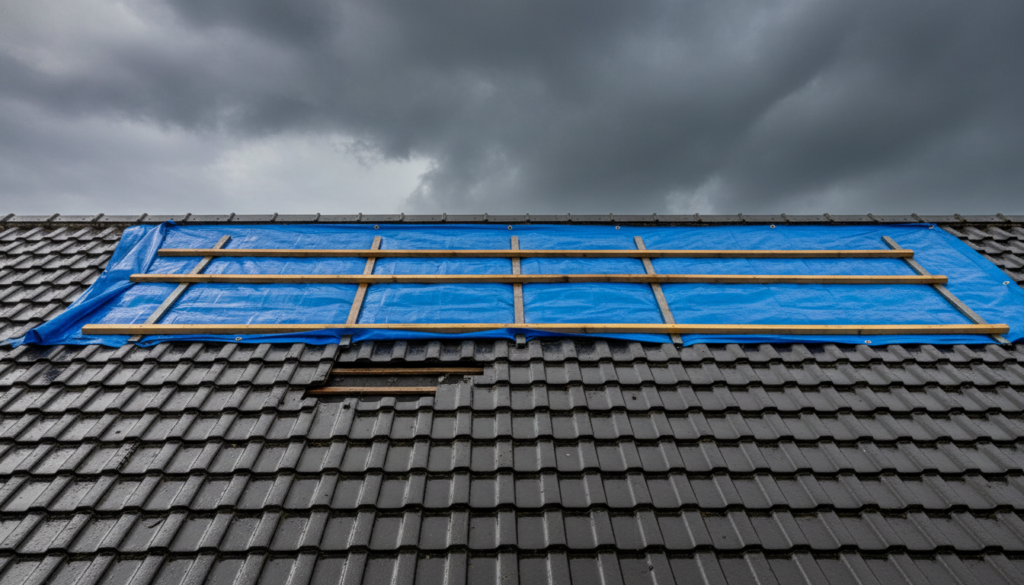
Temporary measures may include tarping exposed areas, securing loose tiles where safely accessible, and sealing minor openings from inside the loft space. However, climbing onto a storm-damaged roof without safety equipment is extremely dangerous and should be avoided.
Professional contractors use temporary coverings and fixings that are secure and weather-resistant. This ensures the roof remains protected until permanent repairs can be completed.
Emergency roof repairs UK: Why speed matters
Emergency roof repairs UK situations escalate quickly if ignored. Water entering the roof spreads laterally, soaking insulation, timbers, and ceilings. What starts as a small leak can result in widespread internal damage within days.
Moisture trapped inside the roof structure increases the risk of mould growth and timber decay. Electrical systems and plasterwork are also vulnerable once water penetrates living spaces. Acting quickly significantly reduces the scope and cost of repairs.
Early intervention often prevents the need for extensive roof replacement services following storm-related damage.
Storm damage roof: Flat roofs versus pitched roofs
Storm damage roof patterns differ depending on roof type. Pitched roofs typically suffer from tile displacement, ridge damage, and flashing failure. Flat roofs are more prone to membrane uplift, pooling, and drainage overload during heavy rainfall.
Flat roof damage often appears subtle at first, with water entering beneath the surface layer before becoming visible internally. This makes prompt inspection critical after storms, even if no leaks are immediately apparent.
Professional flat roof solutions are designed to withstand severe weather when installed correctly, but storm damage still requires urgent assessment.
Temporary roof repairs: Insurance and documentation
Temporary roof repairs play an important role in insurance claims. Most insurers require homeowners to take reasonable steps to prevent further damage after an incident. Failure to act may affect claim outcomes.
Photographing damage as soon as it is safe to do so helps document the extent of storm impact. Temporary measures should also be recorded, including dates and actions taken. This documentation supports claims and repair approvals.
Professional contractors often provide written assessments that assist with insurance processes and repair planning.
Emergency roof repairs UK: When repair becomes restoration
Emergency roof repairs UK responses sometimes reveal deeper issues beneath the surface. Storms often expose pre-existing weaknesses such as rotten battens, failing underlay, or aged materials.
If damage is widespread or structural elements are compromised, simple repairs may not be sufficient. In these cases, broader intervention may be required to restore the roof’s integrity and weather resistance.
Homeowners facing extensive storm-related damage may need to consider roof restoration services rather than repeated emergency fixes.
Storm damage roof: Preventing repeat emergencies
Storm damage roof emergencies are often repeat events when underlying issues are left unresolved. Loose tiles, aging flashings, and blocked drainage increase vulnerability during future storms.
Preventative maintenance, including regular inspections and timely repairs, significantly reduces emergency call-outs. Addressing minor issues early strengthens the roof’s ability to withstand severe weather.
Many early warning signs are detailed in
10 signs your roof needs immediate repair and should prompt action before the next storm hits.
Temporary roof repairs: Transitioning to permanent solutions
Temporary roof repairs should always be followed by permanent remedial work. Temporary coverings deteriorate quickly and are not designed for prolonged exposure to UK weather.
Once conditions are safe, a full inspection identifies the scope of permanent repairs required. Addressing all affected areas at once prevents recurring leaks and repeated call-outs.
For homes with extensive storm exposure, combining repairs with broader upgrades ensures long-term resilience.
Emergency roof repairs UK: Final expert guidance
Emergency roof repairs UK situations are stressful, but informed action prevents panic-driven mistakes. Prioritising safety, acting quickly, and involving professionals protects both the property and its occupants.
Storms will continue to test UK roofs, but proper response determines the outcome. Temporary protection, followed by expert repair or restoration, ensures storm damage does not turn into long-term structural failure.
Frequently Asked Questions
What should I do first after storm damage to my roof?
Ensure safety, contain internal leaks, and contact a professional roofer.
Are temporary roof repairs safe?
Yes, when carried out by professionals using proper equipment.
Will insurance cover emergency roof repairs?
Most policies cover storm damage, but prompt action and documentation are required.
How long can temporary repairs last?
Only short-term, until permanent repairs are completed.
When is roof replacement necessary after storm damage?
When structural damage or widespread failure is identified.