
BLOG
home Natural Slate vs Synthetic Slate in the UK: Key Differences Explained
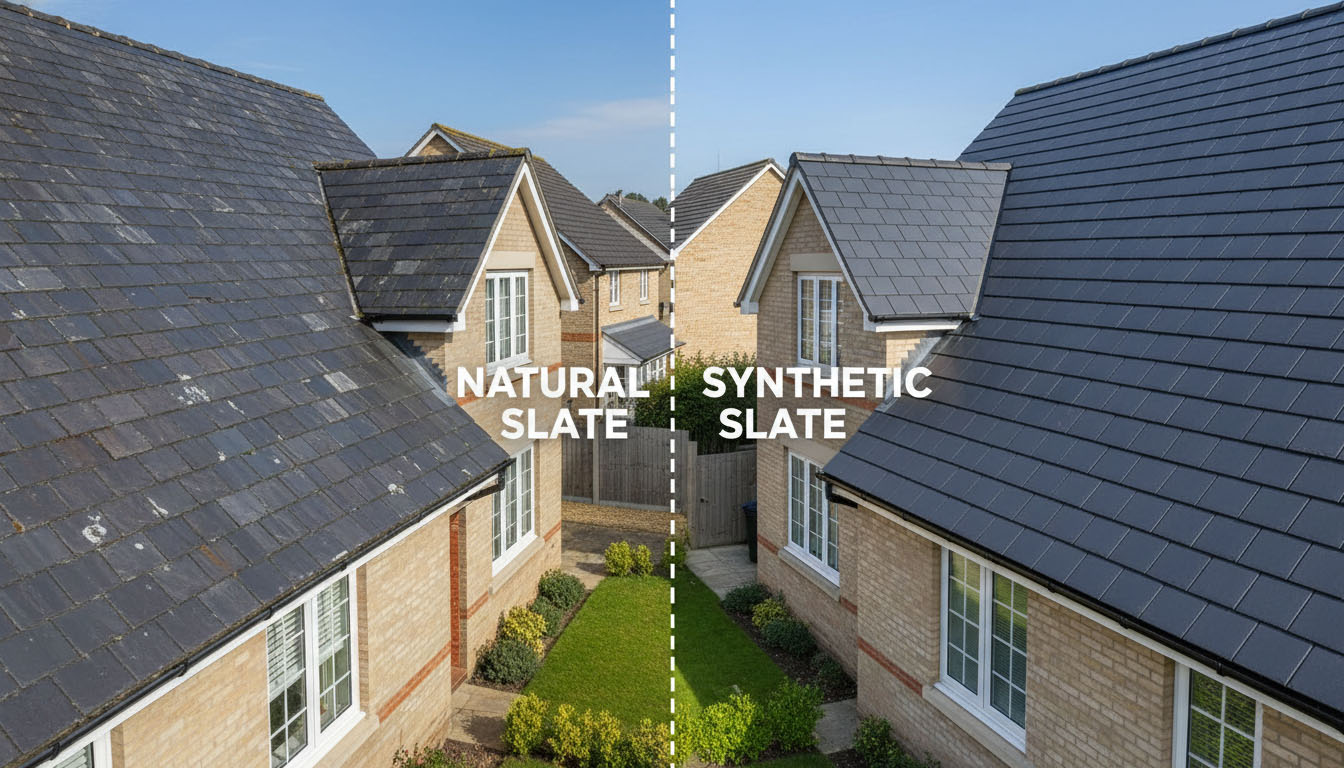
Natural Slate vs Synthetic Slate in the UK: Key Differences Explained
Choosing between natural and synthetic slate is not just a cosmetic decision. The wrong selection can impact roof lifespan, structural load, maintenance frequency, and long-term property value. Many UK homeowners assume synthetic slate is simply a cheaper version of natural stone, but the performance differences are more complex.
With rising material costs and evolving building standards, understanding how these two options compare is essential. This guide breaks down the structural, financial, and durability differences to help homeowners determine the best slate roofing option for their property.
Natural Slate vs Synthetic Slate UK Performance Comparison
When assessing natural slate vs synthetic slate UK homeowners must consider composition, weight, and lifespan. Natural slate is quarried stone split into thin tiles, while synthetic slate is manufactured from composite polymers, fibre cement, or recycled materials.
The fundamental difference lies in durability and authenticity. Natural slate has been used for centuries and can last over 75 years when properly installed. Synthetic slate aims to replicate this appearance while reducing cost and structural weight.
Performance overview:
Feature | Natural Slate | Synthetic Slate |
|---|---|---|
Material | Natural stone | Engineered composite |
Lifespan | 30–50 years | |
Weight | Heavy | Lightweight |
Appearance | Natural variation | Uniform finish |
Environmental Impact | Quarry sourced | Often recycled materials |
Professional slate roofing specialists assess structural capacity before recommending either option, as weight differences significantly affect installation planning.
Slate Roofing Comparison UK: Structural Impact and Weight
One of the most critical aspects of any slate roofing comparison UK homeowners should evaluate is structural load. Natural slate is substantially heavier than synthetic alternatives and places greater demand on rafters and battens.
Key structural considerations include:
Rafter span and timber condition
Batten grade and spacing
Previous roof material load
Wind exposure classification
Upgrading from lightweight tiles to natural slate may require reinforcement, particularly in older properties. Synthetic slate is often recommended where structural strengthening is not practical.
Where full structural evaluation or redesign is required, professional pitched roof installation ensures compliance with UK building regulations and wind uplift requirements.
Lifespan and Long-Term Value Differences
Durability is often the deciding factor when comparing slate types. Natural slate’s density and low water absorption allow it to withstand freeze-thaw cycles common in the UK climate.
Synthetic slate offers respectable durability but generally cannot match natural slate’s lifespan. Over time, manufactured materials may fade or degrade faster than stone.
Lifecycle comparison:
Factor | Natural Slate | Synthetic Slate |
|---|---|---|
Average Lifespan | 75+ years | 30–50 years |
Maintenance Level | Low | Moderate |
Replacement Frequency | Rare | More frequent |
Resale Value Impact | Premium appeal | Good appeal |
Although natural slate involves higher upfront cost, its lifecycle value often exceeds synthetic alternatives. Consulting experienced slate roofing professionals helps align material choice with long-term ownership plans.
Aesthetic and Planning Considerations
Appearance plays a major role in roofing decisions, particularly in conservation areas and period properties. Natural slate offers subtle colour variation and texture that many synthetic products attempt to replicate.
In heritage zones, planning authorities may require genuine slate to preserve architectural character. Synthetic slate may not always meet conservation expectations.
Homeowners should evaluate:
Conservation area restrictions
Listed building requirements
Colour fade resistance
Edge detail and finish quality
Where existing slate requires repair or partial replacement, roof restoration services can preserve original materials while upgrading structural integrity.
Installation Complexity and Labour Requirements
Installation methods differ slightly between natural and synthetic slate. Natural slate requires careful handling, double-lap fixing, and precise alignment due to weight and material brittleness.
Synthetic slate is lighter and often easier to cut and position, reducing labour time. However, improper fixing can still lead to wind uplift failures.
Key installation differences:
Natural slate requires heavier-duty battens
Synthetic slate may allow faster installation
Fixing density must match wind exposure
Ridge and verge detailing affects compliance
Professional slate roofing teams ensure correct fixing methods are used regardless of material type.
Cost Breakdown: Upfront vs Lifetime Investment
Cost comparisons should account for both installation and lifecycle performance. While synthetic slate generally reduces initial expense, natural slate may offer better value over several decades.
Cost positioning overview:
Cost Factor | Natural Slate | Synthetic Slate |
|---|---|---|
Material Cost | Higher | Moderate |
Installation Cost | Higher | Lower |
Maintenance Over Time | Low | Moderate |
Long-Term Value | Excellent | Good |
Homeowners planning to stay long-term often benefit from investing in natural slate. Those prioritising short-to-medium term affordability may find synthetic slate suitable.
Comparing broader material alternatives in tile vs slate vs flat roof discussions can also provide additional clarity before committing.
Best Slate Roofing Option UK Homeowners Should Choose
Determining the best slate roofing option UK homeowners should select depends on structural feasibility, budget, and long-term property plans.
Natural slate is ideal for:
Heritage or conservation properties
Long-term homeowners
Premium property upgrades
Maximum lifespan expectations
Synthetic slate may suit:
Budget-conscious renovations
Properties with structural weight limitations
Modern developments with uniform aesthetic goals
The best choice balances durability, cost, structural capacity, and regulatory compliance.
Frequently Asked Questions
Is natural slate better than synthetic slate in the UK
Natural slate typically offers longer lifespan and higher resale value, but synthetic slate can be suitable for weight-restricted properties.
Does synthetic slate last as long as natural slate
No, synthetic slate generally lasts between 30 and 50 years, while natural slate can exceed 75 years.
Is natural slate worth the extra cost
For long-term homeowners, the durability and premium appeal often justify the higher initial investment.
Can I replace synthetic slate with natural slate
Possibly, but structural assessment is required to confirm the roof can support the additional weight.
Which slate option is best for conservation areas
Natural slate is usually preferred and sometimes required for listed or heritage properties.