
BLOG
home Chimney Repairs in the UK: Signs Your Chimney Is Causing Roof Issues
Chimney Repairs in the UK: Signs Your Chimney Is Causing Roof Issues
Chimneys are one of the most common sources of roof leaks in UK homes, yet they are often overlooked until serious damage appears. Because chimneys penetrate the roof structure, they create multiple vulnerable junctions where water can enter if materials fail. Small defects around a chimney rarely stay small, especially in the UK’s wet and windy climate.
Understanding how chimney defects cause roof problems allows homeowners to act before water ingress spreads. Recognising early warning signs such as cracked mortar, failing flashing, or internal damp can prevent extensive roof and structural damage.
Chimney repair UK: Why chimneys are high-risk roof areas
Chimney repair UK work is frequently required because chimneys interrupt the roof covering on all sides. Unlike open roof slopes, these junctions rely on mortar, lead flashing, and brickwork integrity to remain watertight. When any of these elements fail, water finds a direct path into the roof structure.
Age is a major factor. Many UK chimneys were built decades ago using lime mortar that naturally degrades over time. Weather exposure accelerates this process, particularly in elevated or exposed locations. Without regular maintenance, even a well-built chimney becomes a liability.
Professional chimney repair UK services focus on restoring these junctions rather than masking symptoms with temporary fixes.
Chimney leaks roof: Early internal warning signs
Chimney leaks roof issues often reveal themselves internally before any external damage is obvious. Water entering around the chimney travels along roof timbers and underlay, emerging some distance from the source.
Common internal signs include damp patches near chimney breasts, peeling wallpaper on upper floors, mould growth in loft spaces, and musty smells after rainfall. These symptoms are often misdiagnosed as condensation, delaying proper repair.
Many of these warning signs overlap with those outlined in 10 signs your roof needs immediate repair, making chimney checks a critical part of any roof assessment.
Cracked chimney mortar: A silent but serious issue
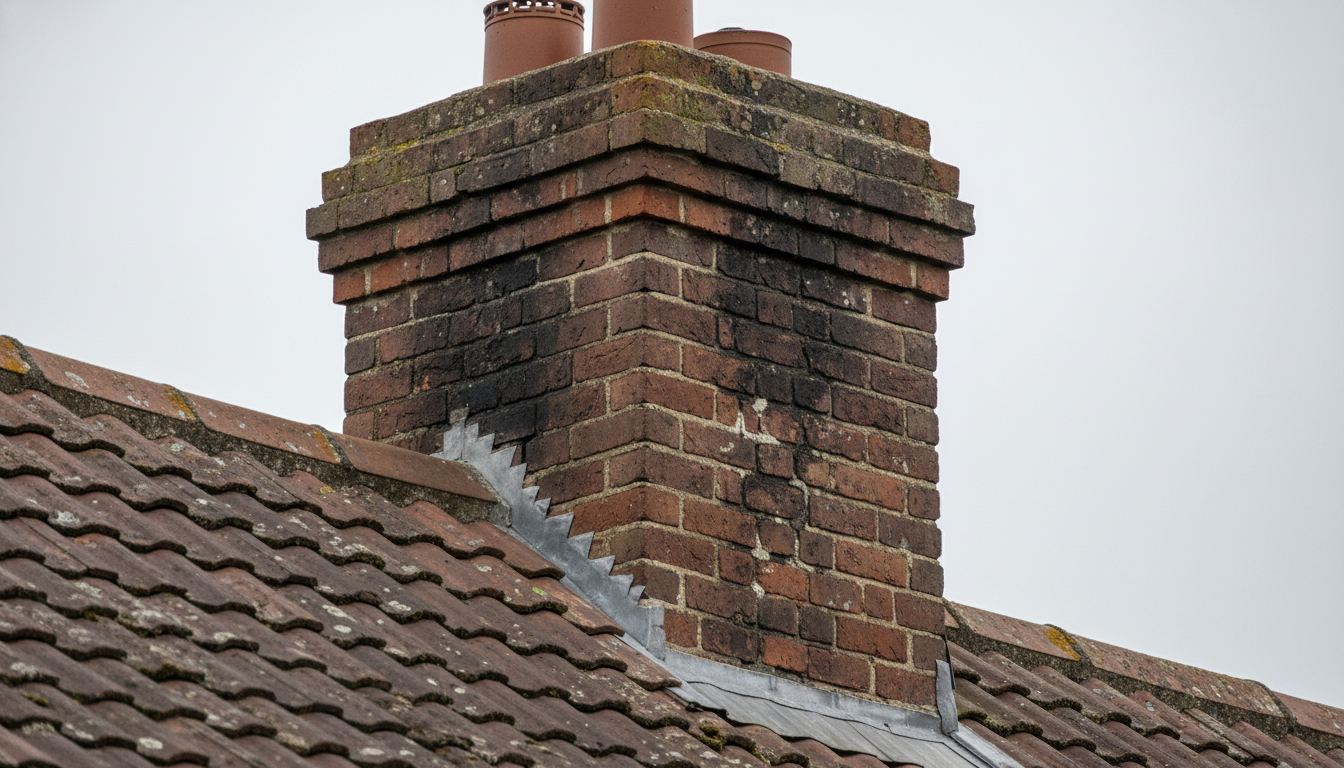
Cracked chimney mortar is one of the most common and dangerous chimney defects. Mortar joints hold bricks together and seal gaps that would otherwise allow water penetration. Once mortar cracks or erodes, water enters the chimney structure directly.
Freeze-thaw cycles worsen this problem. Moisture absorbed into cracks expands when frozen, causing further separation and brick movement. Over time, this leads to loose bricks, structural instability, and increased leak risk.
Repointing or rebuilding sections of the chimney restores stability and prevents further roof damage when carried out correctly.
Chimney repair UK: Flashing failure and lead deterioration
Chimney repair UK projects frequently involve addressing flashing failure. Lead flashing seals the joint between the chimney and roof covering, making it one of the most critical waterproofing elements.
Over time, lead can crack, lift, or separate from mortar joints due to thermal movement and weather exposure. Poor original installation or short flashing lengths increase failure risk. Once flashing integrity is compromised, water ingress becomes inevitable.
Specialist lead work roofing solutions ensure flashing is correctly detailed, dressed, and fixed for long-term protection.
Chimney leaks roof: Storm-related escalation
Chimney leaks roof problems often worsen suddenly after storms. Wind-driven rain forces water into small gaps around flashing and mortar joints, exposing weaknesses that may have existed unnoticed for years.
Storms rarely create new chimney defects. Instead, they push already compromised materials beyond their limits. This is why leaks often appear immediately after severe weather, even if the chimney looked fine beforehand.
Guidance in how to spot roof damage after a storm in the UK explains why post-storm inspections should always include chimney checks.
Cracked chimney mortar: External signs homeowners miss
Cracked chimney mortar is not always obvious from ground level, but there are external signs homeowners can watch for. These include loose or missing mortar joints, vegetation growing from brickwork, white staining from salt deposits, and visibly displaced bricks.
Chimney stacks exposed above the roofline deteriorate faster than other masonry due to constant weather exposure. Even small gaps allow water ingress that spreads internally over time.
Early intervention prevents the need for extensive rebuilding and protects the surrounding roof structure.
Chimney repair UK: How chimney issues damage the roof system
Chimney repair UK work is often required because chimney defects do not stay isolated. Water entering around the chimney affects surrounding tiles, battens, underlay, and insulation. Over time, this leads to widespread roof damage beyond the chimney itself.
Persistent moisture weakens roof timbers, reduces insulation effectiveness, and increases mould risk. Repairing the roof covering without addressing the chimney almost guarantees recurring leaks.
Integrated repairs that address both chimney and roof components provide the most reliable long-term solution.
Chimney leaks roof: Repair versus replacement decisions
Chimney leaks roof problems raise important decisions about repair versus replacement. Localised issues such as minor mortar cracks or flashing defects can often be repaired effectively if addressed early.
However, widespread mortar failure, leaning stacks, or repeated leaks may require partial or full chimney rebuilding. Patch repairs in these cases often fail quickly, increasing long-term costs.
Professional assessment determines whether chimney repair is sufficient or whether more extensive work is necessary to protect the roof.
Cracked chimney mortar: Connection to roof flashing failure
Cracked chimney mortar often contributes directly to flashing failure. Flashings are typically embedded into mortar joints, and when those joints deteriorate, flashing loses its secure fixing.
Once flashing becomes loose, wind and water exploit the gap, accelerating deterioration. This interaction between mortar and flashing explains why chimney leaks often involve both components.
Addressing mortar and flashing together ensures repairs last and prevents repeat failures.
Chimney repair UK: Preventative maintenance and inspections
Chimney repair UK issues are best managed through regular inspection rather than emergency response. Chimneys should be checked annually and after major storms, especially on older properties.
Routine roof inspections often include chimney assessments, identifying early signs of mortar degradation or flashing movement before leaks develop.
Preventative maintenance costs far less than structural repairs caused by prolonged water ingress.
Chimney repair UK: Final expert guidance
Chimney repair UK work is not optional maintenance. Chimneys are one of the most vulnerable parts of any roof, and ignoring early warning signs almost always leads to roof damage.
By recognising symptoms such as cracked mortar, failing flashing, and internal damp early, homeowners can protect both the chimney and the roof system. Proper repairs restore waterproofing, structural stability, and peace of mind.
Frequently Asked Questions
What causes chimney leaks in UK homes?
Most leaks are caused by failed flashing or cracked mortar joints.
Can chimney leaks damage the roof structure?
Yes, prolonged leaks lead to timber rot and insulation damage.
Is cracked chimney mortar dangerous?
Yes, it allows water ingress and can lead to structural instability.
Can chimney leaks be repaired without rebuilding?
Often yes, if damage is localised and addressed early.
How often should chimneys be inspected?
At least once a year and after severe storms.