
How to Spot Roof Damage After a Storm in the UK?
Use four inspection zones instead of scanning the roof without a plan. Each zone reveals a different failure pattern. This sequence separates an urgent hazard from damage that still needs prompt professional attention.
Inspection zone | What to look for | What it may indicate | First safe action |
External Signs | Missing, slipped, raised, cracked, or uneven tiles and slates | Wind uplift, failed fixings, impact damage, or exposed overlaps | View from several ground-level angles using binoculars or camera zoom |
Internal Signs | Damp insulation, water tracks, ceiling stains, wet timber, or new daylight | Water ingress through tiles, flashing, valleys, roof windows, or underlay | Check the loft from secure boarding and avoid wet electrics |
Flat Roof Vulnerabilities | Lifted edges, tears, blisters, blocked outlets, or persistent ponding | Membrane movement, puncture damage, drainage failure, or deck deflection | Keep off the surface and arrange specialist inspection |
Insurance and Repair | Multiple missing units, active leaks, chimney damage, fallen branches, or sagging | A claim-level event, emergency work, or possible structural concern | Photograph evidence, record the storm date, and contact the appropriate party |
Fast answer clue
- One slipped tile matters, even when no ceiling stain is visible.
- Fallen fragments identify damage, but not always the exact entry point.
- Water may travel along rafters, so an indoor stain can appear away from the failed tile.
- A sagging roofline, unstable chimney, or bulging ceiling needs immediate escalation.
For safer viewing positions, ladder risks, and post-storm precautions, follow this safe roof inspection guidance. Never place a ladder beneath loose tiles, hanging gutters, or unstable masonry. A damaged roof can release further material without warning.
External Signs That Reveal Storm Damage
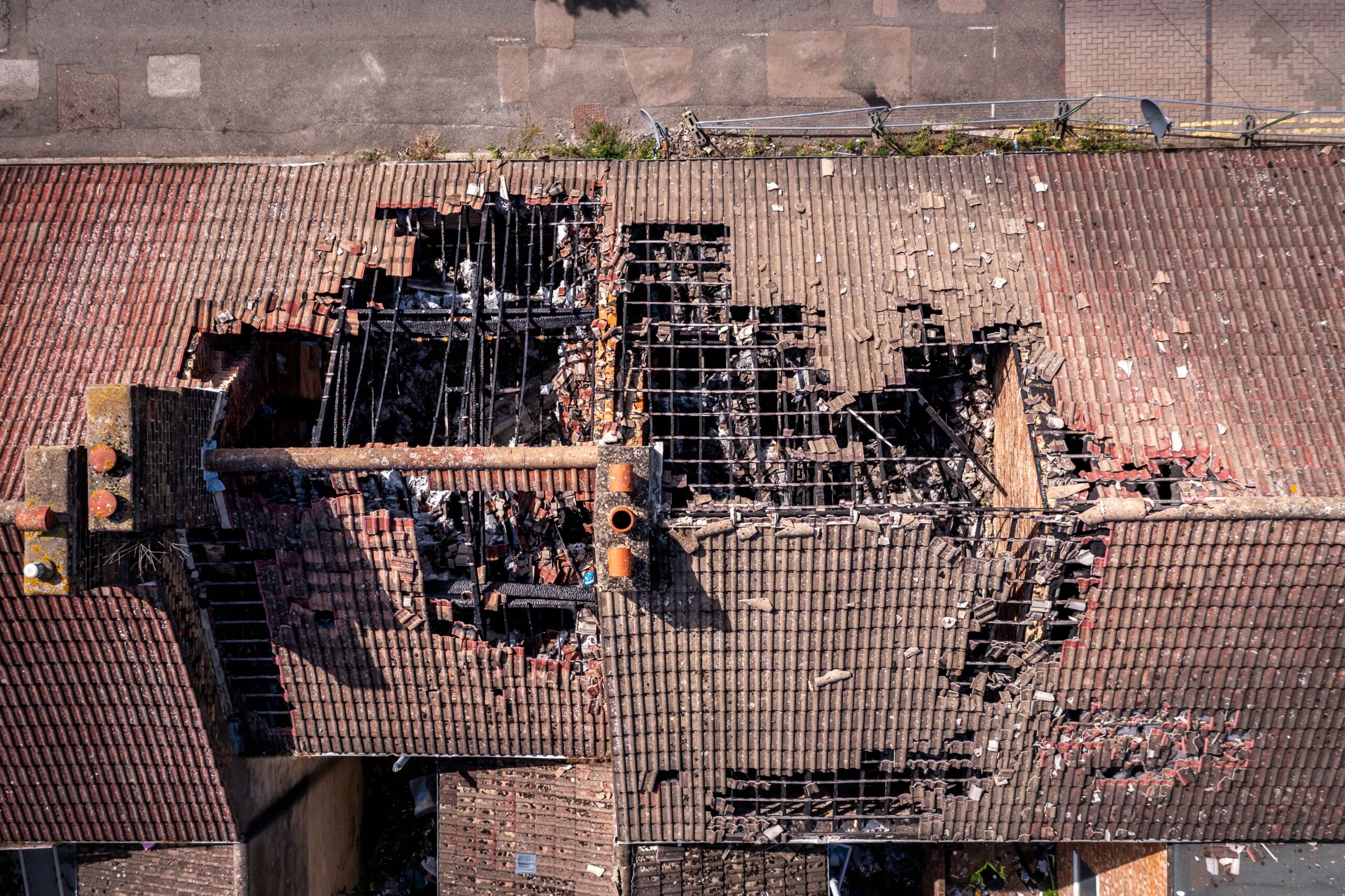
External damage normally appears as movement, breakage, separation, or debris. Compare rows, edges, peaks, and junctions rather than searching only for a completely empty space. Use several viewing angles because one roof slope may hide damage from another.
Check Tiles, Slates, Ridges and Roof Edges
Wind often shifts a covering unit before removing it completely. A small alignment change can expose the weather lap beneath. Compare every visible row with the straight lines around it.
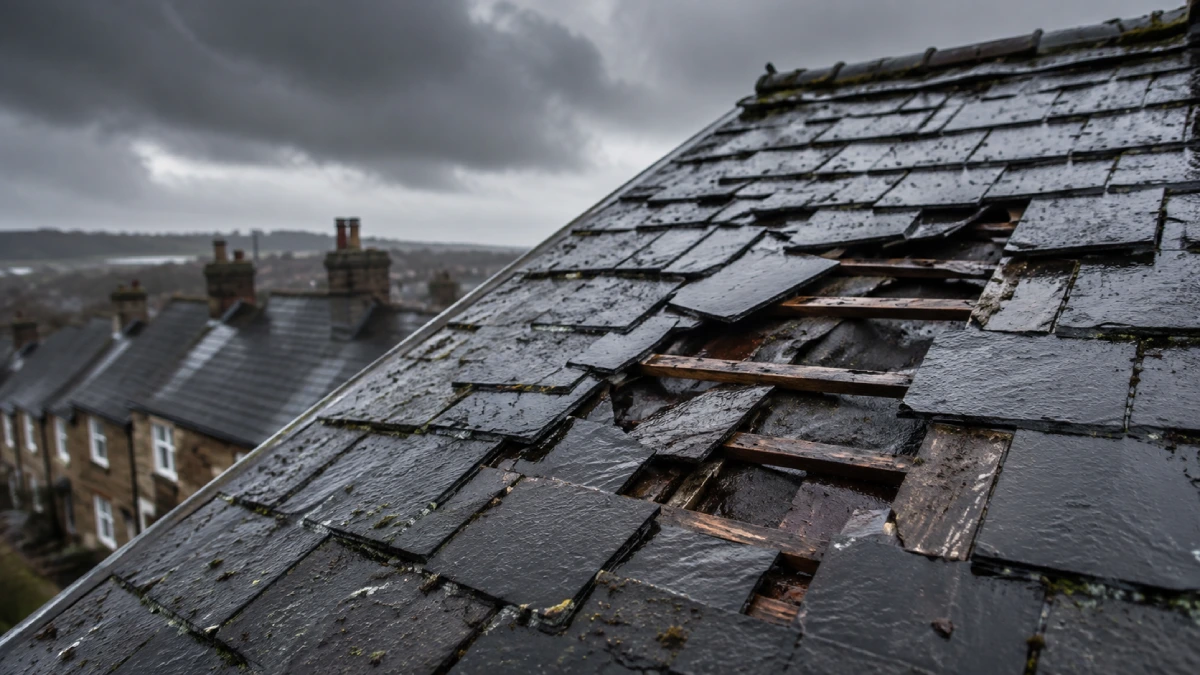
Look for tiles or slates sitting lower, higher, twisted, or farther forward than neighbouring units. A dark rectangular patch may show exposed underlay, battens, or an overlap no longer protected by the covering. Broken corners and fragments below the eaves may indicate impact damage.
Check for:
- A visible gap within an otherwise even row.
- A tile caught on the course below after slipping.
- A slate with a fresh edge beside weathered surfaces.
- Cracked ridge or hip bedding and displaced verge sections.
- Fragments on a driveway, path, patio, or neighbouring land.
One missing unit may not cause an immediate ceiling leak, but it weakens the roof’s weather protection. Several moved slates may justify a slate roofing service in london because concealed fixing failure can affect more than the fallen piece. Repeated tile movement may require assessment of whether repair or tile roof installation in london is the sounder route.
Inspect the ridge against the skyline for new gaps, uneven joints, or a visible dip. Check chimney pots, cowls, mortar, and brickwork for movement or fallen fragments. A newly distorted pitched roof needs specialist assessment before considering pitched roof installation solutions uk.
Inspect Flashing, Valleys and Drainage Routes
Many storm leaks begin where materials meet rather than across the open roof slope. Chimneys, dormers, roof windows, walls, extensions, and valleys rely on correctly formed junctions. Wind can lift one edge while the main covering appears unchanged.
Look for lead that appears creased, raised, torn, shortened, or separated from masonry joints. These lead roofwork basics help explain why formed sections must direct water over the covering rather than behind it. Damp near a chimney breast or wall abutment should prompt a check of the roof flashing failure signs.
Valleys should provide an open route between two roof slopes. Moss, leaves, tile fragments, and branches can slow water or force it beneath adjacent coverings. Compare visible debris with these roof valley blockage signs and arrange safe clearance where flow is restricted.
Check gutters for sagging runs, separated joints, snapped brackets, tilted downpipes, and staining behind fascia boards. Slate pieces, mortar, moss, felt fragments, or flashing in the gutter can provide evidence of damage above. The link between gutter blockage and roof damage matters because backed-up water can overflow against walls or vulnerable roof edges.
Photograph debris before moving it unless it creates a hazard. Note whether fragments lie below a chimney, verge, valley, or particular slope. This gives the roofer a useful starting point.
Internal Signs That Expose Hidden Leaks
A roof can lose weather resistance without showing a clear gap from the street. Internal signs often provide the first dependable evidence of water entry. Check the loft and upper rooms after conditions settle, then inspect again during later rainfall.
Trace Moisture Through the Loft and Ceilings
Water may track along felt, rafters, nails, masonry, or insulation before dropping. The visible wet patch can sit several metres from the original opening. Compare internal moisture with the roof features directly above and upslope.
Enter only through secure access and step on proper boarding or structural joists. Use a torch to inspect the roof underside, insulation, chimney faces, valley lines, and roof-window surrounds. Avoid touching cables, junction boxes, or fittings when nearby material is wet.
Look for:
- New dark streaks on rafters or masonry.
- Damp, compressed, or discoloured insulation.
- Droplets beneath underlay or around fixings.
- Water near chimney breasts, valleys, or roof windows.
- New daylight away from designed eaves ventilation.
Daylight alone does not always prove storm damage because roofs include intentional ventilation openings. A new point of light higher on the slope, especially beside dampness, deserves investigation. Record its position so the exterior and interior evidence can be compared.
Check upper-floor ceilings for brown rings, softened plaster, bubbling paint, or a slight downward bulge. Inspect chimney breasts, external wall junctions, roof windows, and sloping ceilings first. A musty smell or peeling finish can indicate moisture before visible dripping begins.
Do not repaint or cover the mark before the source is identified. Photograph a wide room view and a close image showing the stain’s shape. Recheck after later rainfall because growth, darkening, or fresh moisture helps confirm active ingress.
Recognise Structural Signs That Cannot Wait
Most storm defects affect coverings or drainage, but some signs suggest a greater safety concern. Structural movement must not be diagnosed from photographs alone. The immediate goal is to reduce exposure and obtain the correct assessment.
Urgent signs include:
- A ridge line that has newly dipped or bowed.
- A roof slope with a visible wave or local collapse.
- A ceiling bulging under retained water.
- Chimney masonry leaning or shedding fragments.
- A tree or heavy branch resting on the building.
- Material hanging above a doorway, pavement, or neighbour’s property.
Keep people away from the area below and leave the affected room when collapse appears possible. Water near electrical fittings requires immediate caution and suitable isolation. A structural engineer is generally reserved for sagging, displaced supports, major deformation, or suspected structural failure rather than an ordinary slipped tile.
Flat Roof Vulnerabilities After Severe Weather
Flat roofs fail differently from tiled and slated coverings. Their vulnerable points are edges, seams, penetrations, upstands, and outlets. A surface can look complete while a small lifted joint allows water beneath the membrane.
Check Lifted Edges, Punctures and Ponding
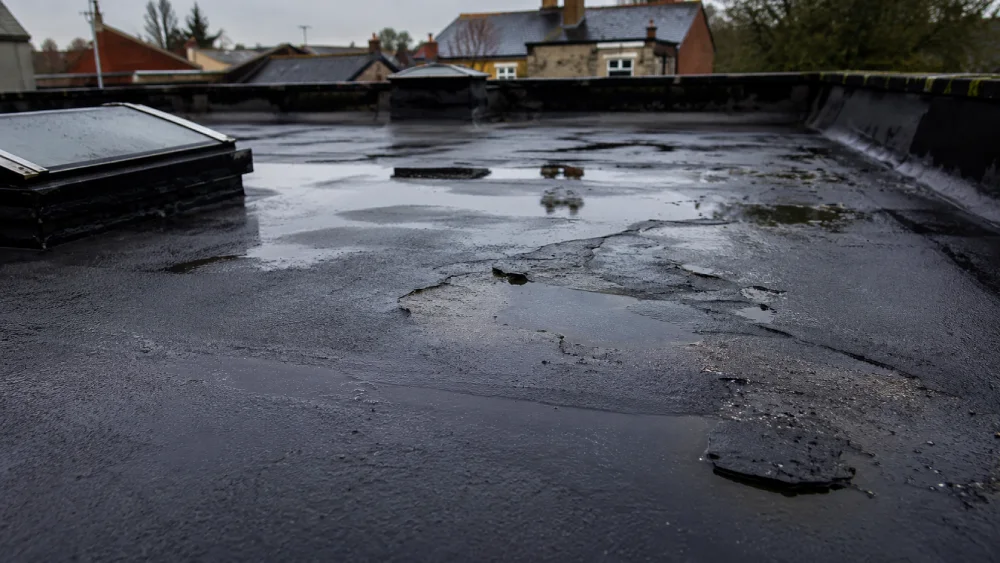
Wind uplift often begins at an exposed perimeter or poorly secured trim. Branches and loose objects can puncture felt, EPDM, GRP, or another membrane. Inspect from a safe window or ground viewpoint without walking on the surface.
Look for peeled edges, raised seams, split corners, punctures, loose trims, and bubbles beneath the covering. A blister may contain air or moisture, but its cause cannot be confirmed by appearance alone. Cutting or sealing it without diagnosis can enlarge the defect or trap moisture.
Rainwater should move toward an outlet rather than remain in deep, persistent pools. Check outlets, leaf guards, scuppers, gutter connections, and upstands where the roof meets a wall or rooflight. Separation, cracking, or blocked flow can admit water during wind-driven rain.
Several lifted areas, widespread cracking, repeated patch failure, or a compromised deck may make flat roof replacement london more appropriate than another isolated patch. A specialist should inspect the membrane, substrate, perimeter restraint, and drainage together. Treating only the visible split can leave concealed moisture in place.
Next Steps for Insurance and Repair
Once damage is identified, the order of action matters. Evidence can disappear during clean-up, while delay can allow further water entry. Separate immediate safety work from permanent repair decisions and keep a clear record of both.
Record Evidence Before Repairs Change the Scene
Good documentation shows the defect, location, and discovery time. Take wide photographs before close-ups so every detail has context. Keep the original files because their dates may support the timeline.
Record:
- Every visible roof slope from safe ground positions.
- Missing, slipped, cracked, or raised covering units.
- Fallen tiles, slate, mortar, lead, brackets, or branches.
- Loft dampness, wet insulation, and water tracks.
- Ceiling stains, bulging finishes, and damaged contents.
- The storm date, discovery time, and later changes.
Do not delay essential safety action merely to collect perfect photographs. Contain internal water only where this can be done without electrical or collapse risk. These post-storm roof damage steps can help keep the sequence organised.
Choose the Roofer, Insurer or Engineer Route
A single displaced unit with no internal damage may be handled as a direct roofing repair. Multiple missing units, active water entry, chimney damage, tree impact, major internal damage, or structural movement should prompt an insurer call alongside emergency assistance. Follow the notification requirements within the individual policy.
Contact the insurer promptly when a claim may be needed and ask what evidence it requires. Discuss emergency make-safe work before arranging it when practical, then retain all records if urgent action cannot wait. Avoid presenting storm causation as certain until the damage and the roof’s previous condition have been assessed.
An older roof is not automatically excluded, but deterioration can influence the decision. A clear report should distinguish sudden displacement or impact from long-term mortar loss, corrosion, membrane ageing, or earlier leakage. Earlier inspection records and dated photographs can strengthen the history.
Decide Between Repair, Restoration and Renewal
The visible defect does not always define the full scope of work. A slipped tile may need only reseating, while repeated movement can indicate failed fixings, battens, underlay, or surrounding covering. The roofer should explain what failed and why the proposed work matches the evidence.
Use a roof repair and replacement comparison when several options are proposed. Repair normally suits a localised defect with sound surrounding materials, while restoration may address broader deterioration without replacing every component. When searching for the best roof restoration company uk, prioritise a documented inspection, compatible materials, and a clear work scope.
A permanent solution should address covering, junctions, drainage, and concealed moisture rather than only the first visible symptom. Homeowners can discuss their findings through professional roofing solutions in London after collecting the external and internal evidence. Follow-up checks during later rainfall help confirm that the repaired route remains dry.
FAQ
These questions cover uncertainties not fully resolved by the inspection sequence. They reflect recurring searches about urgency, delayed leakage, insurance evidence, and specialist escalation. Each answer remains tied to post-storm roof damage.
Can Wind Damage a Roof Without Removing Tiles?
Yes, wind can loosen fixings, raise an edge, disturb mortar, or shift flashing while leaving the covering broadly in place. The clue may be an uneven row, a new gap, rattling during gusts, or dampness after rain from one direction. A professional close inspection is needed when symptoms exist without an obvious missing unit.
Is One Missing Roof Tile an Emergency?
One missing tile needs prompt attention, but urgency depends on its position, the exposed layer, current rainfall, and signs of water entry. Active leaking, exposed electrics, falling material, or a vulnerable chimney makes the situation more urgent. Stay off the roof and arrange assessment before further weather enlarges the opening.
Why Did the Leak Appear Days After the Storm?
Water can remain within insulation, track along timber, or enter only when later rain arrives from a particular direction. The stain may develop after the wind has stopped and away from the original defect. Photograph the change and recheck the loft so the route can be traced rather than treating only the ceiling mark.
Can an Insurer Reject Damage on an Older Roof?
An insurer may dispute a claim when it believes deterioration, lack of maintenance, or gradual damage was the main cause. Roof age alone does not establish causation, so photographs, weather timing, condition records, and a reasoned inspection report matter. Read the policy and use its complaint process when a conclusion appears unsupported.
When Does Roof Sagging Need an Engineer?
New sagging, major bowing, displaced structural members, ceiling distortion, or suspected collapse justifies specialist structural assessment. An ordinary cracked or slipped tile normally requires a roofer rather than an engineer. Keep the affected area clear until the severity and cause have been established.
Act Before the Next Rain Tests the Damage
A useful post-storm inspection follows one route: stay grounded, compare the covering, check junctions and drainage, inspect the loft, record evidence, and escalate serious movement immediately. Do not dismiss a small change because no water is visible, and do not assume every mark proves storm damage without checking deterioration and drainage. After repairs, use the roof inspection timing guide to plan the next check and reduce the chance of another hidden defect.