
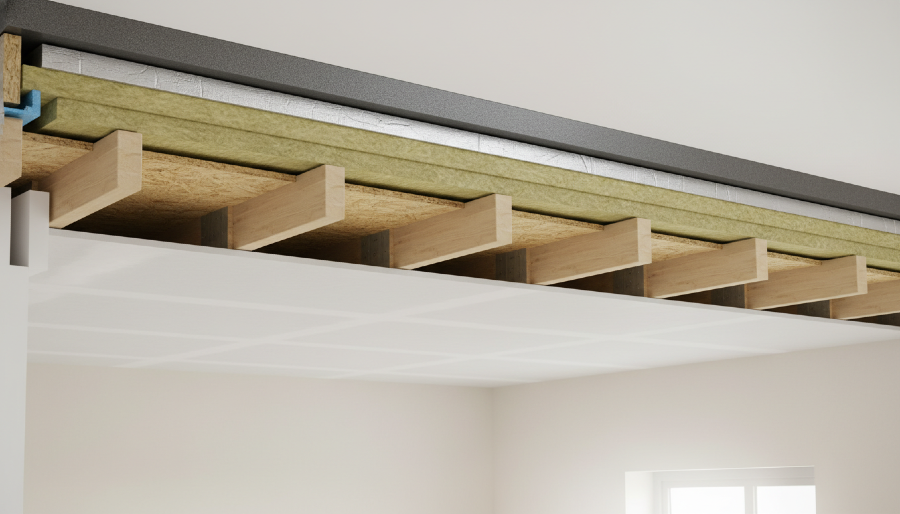
Cold Roof vs Warm Roof is more than a technical roofing term. It decides where insulation sits, how moisture is controlled, whether ventilation is needed, and how well a roof performs through British rain, cold snaps, and temperature changes. Pick the wrong build-up and a roof can suffer condensation, damp insulation, heat loss, deck decay, or repeated surface failures.
A & A Roofing London helps homeowners across London, Essex, and the Hertfordshire borders choose the right roof structure for flat roofs, pitched roofs, tile roofing, slate roofing, re-roofing, and roof restoration work.
Quick Check: Before choosing insulation, coverings, or roof build-up, review the right roofing materials in the UK with A & A Roofing London so the specification matches the property, roof type, and moisture risk.
Cold Roof Vs Warm Roof: Main Difference
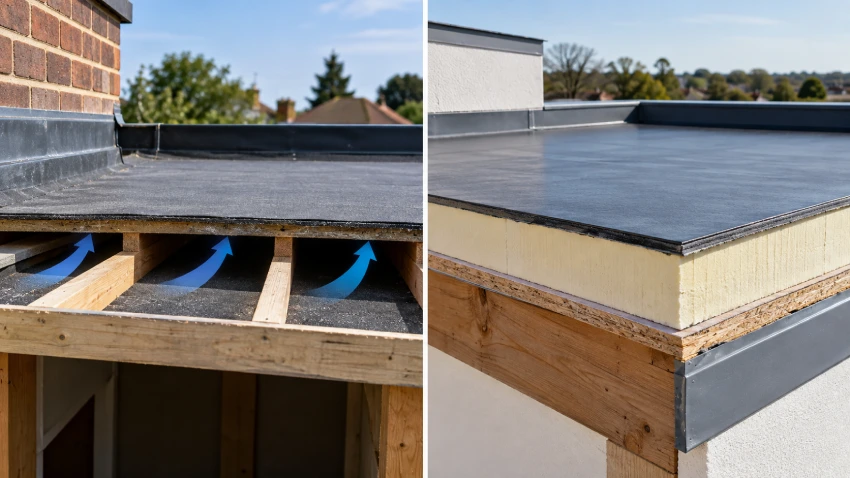
Cold Roof Vs Warm Roof comes down to insulation position. Planning Portal explains that a warm deck places insulation above rafters or joists with the roof covering above it, while a cold deck places insulation between joists, rafters, or ceiling joists and requires ventilation.
| Roof build-up | Where the insulation sits | Ventilation need | Main risk if detailed badly | Best-fit use case |
| Cold roof | Between rafters, joists, or ceiling joists | Usually required | Condensation in the roof void | Traditional lofts and some pitched roofs |
| Warm roof | Above rafters, joists, or structural deck | Usually not required in the same way | Poor detailing at edges and junctions | Flat roofs, conversions, upgrades, and high-performance roofs |
| Hybrid roof | Combination of insulation positions | Needs specialist design | Trapped moisture and thermal bridging | Only where assessed and specified properly |
Cold Roof Vs Warm Roof decisions should never be based on insulation thickness alone. The real issue is moisture movement. A cold roof keeps the roof void cooler, so ventilation has to remove moisture before it condenses. A warm roof keeps the structure warmer, reducing condensation risk when the vapour control layer, insulation, and waterproofing are correctly installed.
Energy Saving Trust explains that roof and loft insulation reduces heat loss through the roof and helps keep heat inside the home. It also warns that flat roofs, loft rooms, damp concerns, and structural concerns need specialist techniques rather than simple DIY work. For homeowners comparing insulation choices, the related foundation topic is roof insulation heat-loss fundamentals.
A & A Roofing London checks the existing roof type before recommending either build-up. The right answer may be a ventilated cold pitched roof, a warm flat roof system, or a broader re-roofing plan where the covering, deck, insulation, drainage, and edge details all need upgrading together.
Tile Roofing and the Cold Roof Choice
Tile roofing is often built as a cold pitched roof, with insulation at ceiling level and a ventilated loft above. This can work well when airflow is maintained at the eaves, ridge, or other designed ventilation points. The problem starts when insulation, stored items, blocked eaves, or poor previous work interrupt that airflow.
A & A Roofing London checks whether the tile roof has enough ventilation, whether underlay and battens are performing correctly, and whether condensation signs are being mistaken for leaks. In Cold Roof Vs Warm Roof decisions, a tiled pitched roof may not need conversion to a warm roof unless the loft is being converted, the roof is being replaced, or the insulation and ventilation strategy has failed.
For tiled roofs, the roof covering still has to shed water reliably. If the tile courses, battens, or underlay are part of the decision, A & A Roofing London can assess tile roofing in London as part of the wider insulation and ventilation plan.
Slate Roofing and Moisture Control
Slate roofing needs careful detailing because slate is thin, durable, and highly dependent on correct headlap, fixing, and underlay performance. A cold slate roof can perform well where the roof void is ventilated and the covering is correctly installed. If insulation upgrades make the home more airtight without ventilation planning, moisture problems can increase.
NFRC guidance on cold pitched roofs explains that roof-space ventilation is essential for preventing condensation, damp, mould, and long-term structural damage, especially where homes have become more airtight through insulation upgrades and draught-proofing. That is why roof ventilation moisture control is a direct comparison point when choosing between a cold slate roof and a warm roof approach.
A & A Roofing London checks slate roofs for ventilation routes, ridge and eaves details, underlay condition, flashing junctions, and internal moisture evidence. Where the roof covering itself is still sound, the solution may be improved ventilation and targeted detailing rather than full replacement. Where the slate system is failing, slate roofing in London may need to be assessed alongside insulation upgrades.
Flat Roofing: Why Warm Roofs Are Often Better
Flat roofing is where the Cold Roof Vs Warm Roof decision matters most. A cold flat roof places insulation below the deck and needs a ventilation gap above it, which can be difficult to achieve reliably in real homes. A warm flat roof places insulation above the deck, helping keep the deck warmer and reducing condensation risk when installed correctly.
Planning Portal describes warm flat roof insulation as rigid insulation placed over roof joists with a board above and roof covering laid over the board, while cold flat roofs require a ventilation gap, ventilation openings, and a vapour membrane below the insulation. Energy Saving Trust also notes that insulating a flat roof from underneath can lead to condensation problems if not completed correctly.
A & A Roofing London usually treats flat roof design as a full build-up decision, not just a waterproofing choice. The team checks the deck, insulation position, fall, outlets, edge trims, abutments, and waterproofing condition before recommending warm roof installation in London.
Flat roof condition also affects whether the existing roof can be upgraded or whether it needs replacement. The best supporting checks are flat roof service-life factors and flat roof ageing indicators, especially where a homeowner is unsure whether insulation work should be paired with a new waterproofing system.
Pitched Roof Installation and Build-Up Choice
Pitched roof installation can use either cold or warm principles depending on the property. A standard loft often uses cold roof insulation at ceiling level. A loft conversion, vaulted ceiling, or major re-roofing project may require insulation at rafter level or above the rafters.
Planning Portal states that, for pitched roofs, warm deck insulation is placed over the rafters before felt, battens, and tiling, while cold deck insulation can be placed between rafters or ceiling joists, with vents installed along eaves and sometimes ridge depending on the arrangement. This is why Cold Roof Vs Warm Roof must be decided before tiles, slates, battens, and membranes are specified.
A & A Roofing London reviews the roof structure, planned use of the loft, existing insulation, ventilation path, and roof covering before advising on pitched roof installation in the UK. The comparison with flat and pitched roof structure differences is useful when a property has both a main pitched roof and flat roof extensions.
Roof Restoration and Insulation Upgrades
Roof restoration can improve a roof’s condition, but Cold Roof Vs Warm Roof still has to be considered before work starts. A restoration plan that cleans, repairs, coats, or renews surface details without checking insulation and ventilation can leave the roof vulnerable to condensation or trapped moisture.
A & A Roofing London treats restoration as a condition-led decision. If the existing roof is a cold roof, ventilation has to be checked before insulation is added or disturbed. If the roof is flat and the waterproofing is being renewed, the insulation strategy may need to be upgraded at the same time.
Planning Portal states that re-covering a roof should include improving the thermal insulation properties of the roof because a roof is defined as a thermal element. For flat roofs specifically, NFRC CPS says replacing a cold flat roof system with a warm roof is advisable because it reduces condensation risk. That makes flat roof restoration suitability a useful next check before deciding whether restoration or renewal is the right path.
Where the roof can be preserved, A & A Roofing London can build roof maintenance in the UK into the plan so defects are monitored rather than ignored.
Repairs, Leaks, and Condensation Confusion
Cold Roof Vs Warm Roof mistakes often look like leaks. Damp insulation, mould in the loft, stained plasterboard, and water droplets on underlay can be caused by condensation rather than a hole in the roof. The repair route is different, so the diagnosis matters.
A & A Roofing London separates rainwater ingress from condensation by checking the location, timing, roof void condition, ventilation, insulation gaps, and external roof details. A leak that appears after wind-driven rain may point to flashing or covering failure. Damp that worsens in cold weather without clear rain entry may point to ventilation and insulation issues.
The most relevant supporting references are roof leak cause categories and flashing junction defects. If the defect follows poor installation, roof workmanship quality checks can help identify whether the roof build-up was detailed incorrectly from the start.
Re-Roofing and Replacement Decisions
Cold Roof Vs Warm Roof becomes a major issue when a roof is being stripped, re-covered, or replaced. At that point, the homeowner has an opportunity to correct poor insulation, missing ventilation, weak decking, failed waterproofing, or outdated detailing.
GOV.UK states that Building Regulations approval is generally needed for work including replacing roof coverings on pitched and flat roofs. Planning Portal also says most roof replacement work on existing buildings needs Building Regulations approval, and changing a pitched roof covering material can raise structural stability, fire safety, and energy efficiency issues.
| Project situation | Cold roof may suit | Warm roof may suit | A & A Roofing London check |
| Unconverted loft | Yes, if ventilation is clear | Sometimes, if roof is upgraded | Loft use, eaves airflow, insulation depth |
| Flat roof replacement | Usually less suitable | Often preferred | Deck condition, fall, vapour control, outlets |
| Loft conversion | Usually limited | Often needed | Rafter depth, headroom, ventilation, regulations |
| Roof restoration | Only if existing design is sound | Possible during major works | Moisture risk, roof covering life, access |
| Full re-roofing | Depends on structure | Strong option for upgrade | Material weight, insulation continuity, junctions |
A & A Roofing London helps homeowners decide whether the issue belongs in a repair, re-roofing, or replacement plan. The most relevant comparison points are repair and replacement decision steps and roof replacement trigger points.
Lead Work, Chimneys, and Edge Detailing
Warm roofs and cold roofs both fail when edges and penetrations are poorly detailed. Chimneys, parapets, dormers, abutments, roof windows, valleys, outlets, and perimeter upstands are all high-risk points because insulation, vapour control, ventilation, waterproofing, and flashing meet in the same area.
NFRC CPS inspection guidance says roof inspections should check continuity of insulation, thermal bridging, junctions such as eaves, verges, abutments, chimneys, dormers, and party walls, plus ventilation and vapour control layers. This matters because a technically correct roof build-up can still fail if the junctions are incomplete.
A & A Roofing London checks leadwork and chimney details as part of the insulation and roof covering decision. Warm roof edges need correct upstand and waterproofing integration. Cold roofs need ventilation routes that are not blocked at eaves or ridge. Both need reliable flashing and weathering details.
Inspections and Maintenance for Either Roof Type
Cold Roof Vs Warm Roof is not a once-only decision. The roof still needs inspection and maintenance because insulation, ventilation, membranes, drainage, flashing, and surface coverings all affect performance over time.
A & A Roofing London recommends checking roof spaces for condensation signs, wet insulation, blocked vents, mould, staining, and roof covering movement. Externally, gutters, outlets, valleys, flashings, surface cracks, and loose materials should be inspected before small defects become water-entry points.
For homeowners planning routine care, preventive roof maintenance steps give a useful inspection structure. Weather also affects the roof build-up, especially where rain, wind, frost, and temperature swings expose weak detailing, so weather exposure roof factors are worth checking before winter or after storms.
Residential Roofing: Which Option Fits Better?
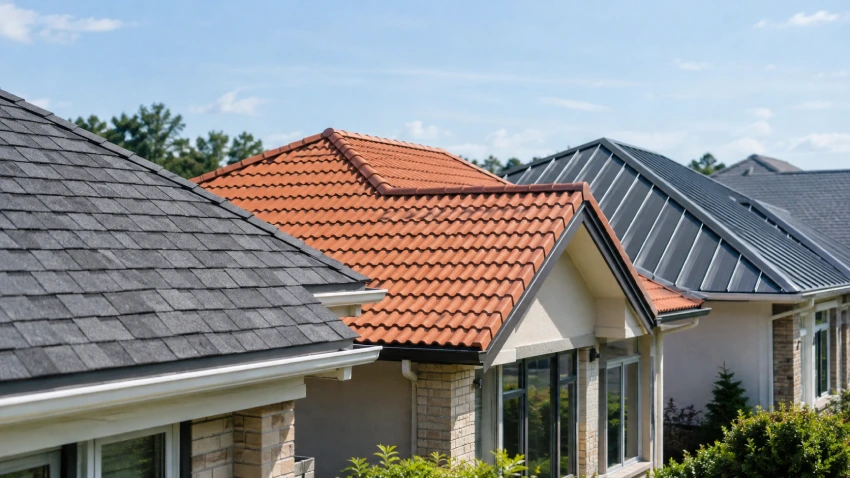
Residential roofing decisions should start with how the roof is used. A cold roof can be suitable for a traditional ventilated loft where insulation sits at ceiling level and the void is not used as living space. A warm roof is usually better where the roof deck needs to stay warm, where a flat roof is being replaced, or where a loft conversion or room-in-roof needs insulation within the roof slope.
A & A Roofing London does not treat Cold Roof Vs Warm Roof as a generic preference. The team checks roof type, access, property age, existing build-up, water entry risks, condensation signs, and the condition of current roofing materials. Older properties and modern extensions may need different specifications on the same home, which is why new-build and older-home roof differences can be helpful for mixed-age properties.
If the roof surface already shows cracks, bubbles, ponding, or surface movement, the insulation decision should be paired with condition checks. For flat roof surfaces, flat roof surface defect patterns and roof water-flow failure points help identify whether the system is suitable for upgrading or needs replacement.
Cold Roof Vs Warm Roof Area Coverage
Local roofing knowledge matters because London, Essex, and Hertfordshire-border properties often combine older pitched roofs, flat roof extensions, chimney details, dormers, and previous repairs. A & A Roofing London checks the build-up, insulation, ventilation, coverings, and junctions together so the Cold Roof Vs Warm Roof decision is practical for the actual property.
North London
In North London, Cold Roof Vs Warm Roof decisions often involve mixed roof layouts, including pitched main roofs, flat rear extensions, dormers, chimneys, and rooflights. A & A Roofing London can assess whether a ventilated cold roof is still suitable or whether a warm roof upgrade makes more sense during flat roof replacement, loft work, or wider re-roofing.
Hertfordshire Borders
Across the Hertfordshire borders, homeowners may be dealing with tiled pitched roofs, slate sections, flat extensions, and insulation upgrades that affect loft ventilation. A & A Roofing London checks the existing roof build-up before recommending a cold roof, warm roof, restoration plan, or replacement route, so the work is based on moisture control and roof condition rather than guesswork.
Essex
In Essex, Cold Roof Vs Warm Roof choices should account for roof covering condition, drainage, ventilation, flat roof edges, and chimney or leadwork details. A & A Roofing London can inspect whether the existing roof is losing heat, trapping moisture, or failing at the surface before deciding whether maintenance, repair, warm roof installation, or re-roofing is the right option.
Final Roofing Decision
Cold Roof Vs Warm Roof should be decided by roof type, moisture risk, insulation position, ventilation, regulations, and the condition of the existing roof. A cold roof can still be suitable for a ventilated pitched loft. A warm roof is often the stronger route for flat roofs, conversions, and major upgrades where the roof structure needs better thermal continuity.
A & A Roofing London can review roofing materials in the UK alongside the existing roof build-up, coverings, insulation, ventilation, flashings, and drainage. That gives homeowners a clear route: keep and improve a sound cold roof, upgrade to a warm roof where it is technically better, or replace a failing system properly instead of covering over the wrong build-up.
FAQs About Cold Roof Vs Warm Roof
What is the simplest difference in Cold Roof Vs Warm Roof?
The simplest Cold Roof Vs Warm Roof difference is insulation position. A cold roof usually has insulation between rafters, joists, or ceiling joists, which leaves a colder void that needs ventilation. A warm roof places insulation above the rafters, joists, or roof deck, keeping more of the structure on the warm side of the insulation. Planning Portal describes warm deck and cold deck arrangements this way and notes that cold deck roofs require ventilation.
Is a warm roof always better than a cold roof?
A warm roof is not automatically better in every situation, but it is often the stronger option for flat roof replacement, loft conversions, and major roof upgrades. A cold roof can work well on a traditional pitched loft if the ventilation routes are clear and the insulation is correctly placed. The decision should be based on roof type, access, condensation risk, Building Regulations, and whether the current roof covering or deck is being replaced.
Why can cold roofs get condensation?
Cold roofs can get condensation because the roof void stays cooler than the heated rooms below. If warm moist air escapes through ceilings, loft hatches, recessed lights, service penetrations, or gaps in the vapour control strategy, it can meet cold surfaces and condense. NFRC guidance highlights ventilation as essential in cold pitched roofs to reduce condensation, damp, mould, and long-term structural damage, especially after insulation and draught-proofing upgrades.
Should a flat roof be cold or warm?
For many UK homes, a warm flat roof is often preferred because it places insulation above the deck and reduces condensation risk when correctly detailed. Energy Saving Trust notes that insulating a flat roof from underneath can lead to condensation problems if not completed correctly. NFRC CPS also states that cold flat roof systems are now not recommended under the current British Standard 6229:2018 and that replacing with a warm type roof system is advisable because it reduces condensation risk.
Do Building Regulations apply to Cold Roof Vs Warm Roof work?
Building Regulations can apply, especially where a roof covering is replaced, a roof is re-covered, or a thermal element is upgraded. Planning Portal states that most existing roof replacement work needs Building Regulations approval and that re-covering a roof should include improving the roof’s thermal insulation properties because a roof is defined as a thermal element. GOV.UK also lists replacing roof coverings on pitched and flat roofs among work that generally needs Building Regulations approval.
Can I convert a cold roof to a warm roof?
A cold roof can often be converted to a warm roof during major work, but the roof has to be assessed first. The contractor needs to consider existing insulation, ventilation, deck condition, vapour control, waterproofing, edge details, height changes, and Building Regulations. NFRC CPS says that where cold flat roof insulation is unlikely to meet required standards, the usual route can involve creating a warm roof with a vapour control layer, insulation above the deck, and new waterproofing.
What should be inspected before choosing Cold Roof Vs Warm Roof?
Before choosing Cold Roof Vs Warm Roof, the roof should be inspected for current build-up, insulation position, ventilation routes, damp signs, roof covering condition, drainage, flashing, deck condition, and junction detailing. NFRC CPS inspection guidance says inspectors should verify roof type and construction, check insulation continuity, look for thermal bridging, review ventilation and condensation risk, and assess vapour control layers and workmanship. This is why A & A Roofing London starts with diagnosis before recommending a build-up.