Flat Roof Blisters and Cracks: Early Signs UK Homeowners Shouldn’t Ignore
admin2026-02-01T10:33:29+00:00BLOG
Flat Roof Blisters and Cracks: Early Signs UK Homeowners Shouldn’t Ignore
Flat roof blisters and cracks are early warning signs that many UK homeowners overlook until leaks appear inside the property. Because flat roofs do not shed water as quickly as pitched roofs, even small defects can escalate rapidly. What looks like minor surface damage often signals deeper problems developing beneath the membrane.
In the UK’s wet and temperature-variable climate, flat roof materials are under constant stress. Understanding what blisters and cracks mean, why they form, and when to act can prevent internal damage, insulation failure, and premature roof replacement.
Flat roof blisters: What blistering really indicates
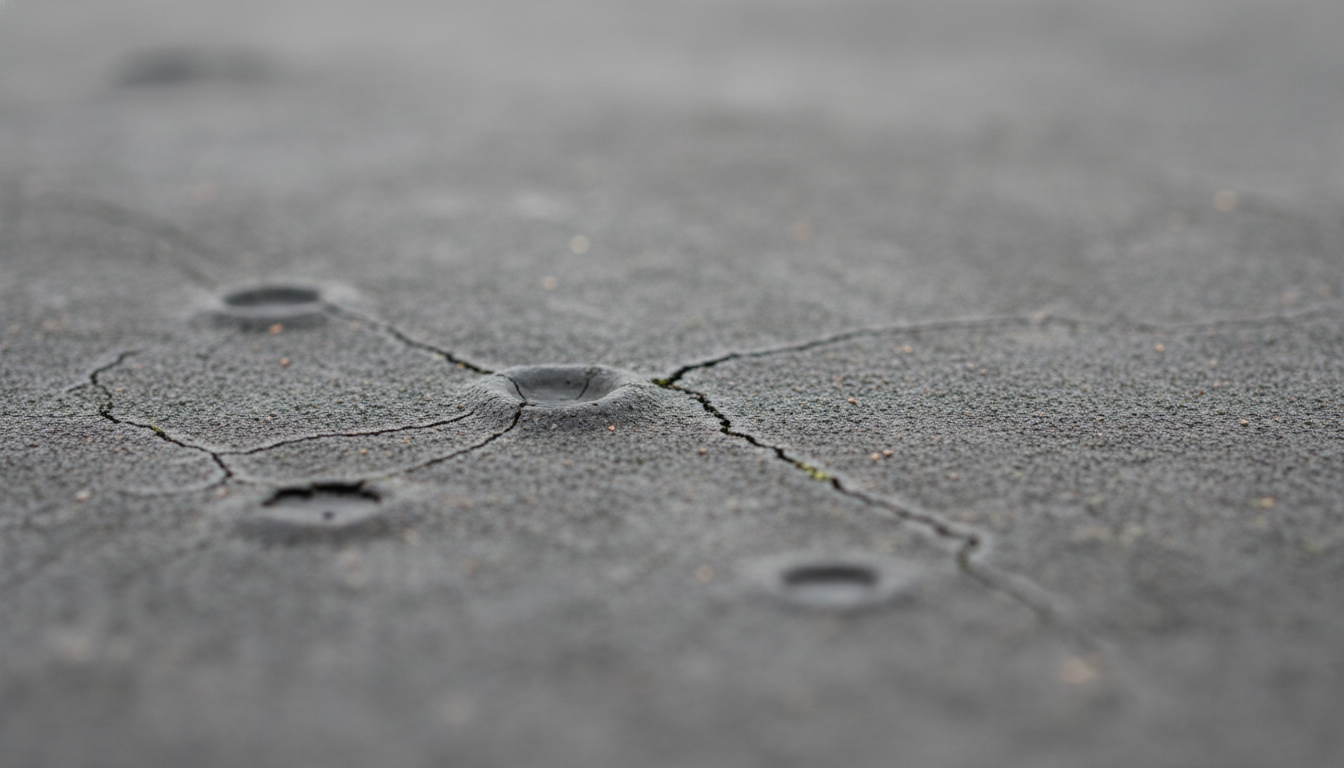
Flat roof blisters form when air or moisture becomes trapped beneath the roof membrane. As temperatures rise, this trapped air expands, forcing the membrane upward into raised bubbles or soft spots.
Blistering usually indicates poor adhesion, moisture trapped during installation, or water ingress through tiny breaches. While small blisters may not leak immediately, they weaken the membrane and create stress points that are prone to cracking.
Once blistering begins, it rarely resolves on its own and typically worsens with each heat cycle.
Flat roof cracks UK: Why cracking happens so often
Flat roof cracks UK homeowners experience are often caused by repeated expansion and contraction. Flat roof membranes expand in heat and contract in cold, placing stress on seams, joints, and surface layers.
Over time, this movement leads to surface cracking, especially where membranes are aging, poorly installed, or exposed to standing water. UV exposure further dries out materials, making them brittle and more likely to split.
Cracks provide direct entry points for water, which then spreads beneath the membrane and accelerates failure.
Flat roof repair signs: Blisters versus cracks
Flat roof repair signs vary depending on whether blistering or cracking is present. Blisters suggest trapped air or moisture, while cracks indicate material fatigue or advanced aging.
Blisters often feel soft underfoot and may shift when pressed. Cracks are usually visible as fine splits or open seams on the surface. Both conditions compromise waterproofing and should be treated as urgent inspection triggers.
Ignoring either sign increases the likelihood of leaks and internal damage.
Flat roof blisters: How moisture makes the problem worse
Flat roof blisters become more dangerous when moisture is involved. Water trapped beneath the membrane heats up and expands, enlarging blisters and stressing surrounding materials.
Once moisture penetrates insulation layers, thermal performance drops significantly. Wet insulation retains cold, increasing heating costs and prolonging damp conditions inside the roof structure.
This moisture cycle explains why blistering often precedes more serious flat roof failures.
Flat roof cracks UK: Standing water and crack expansion
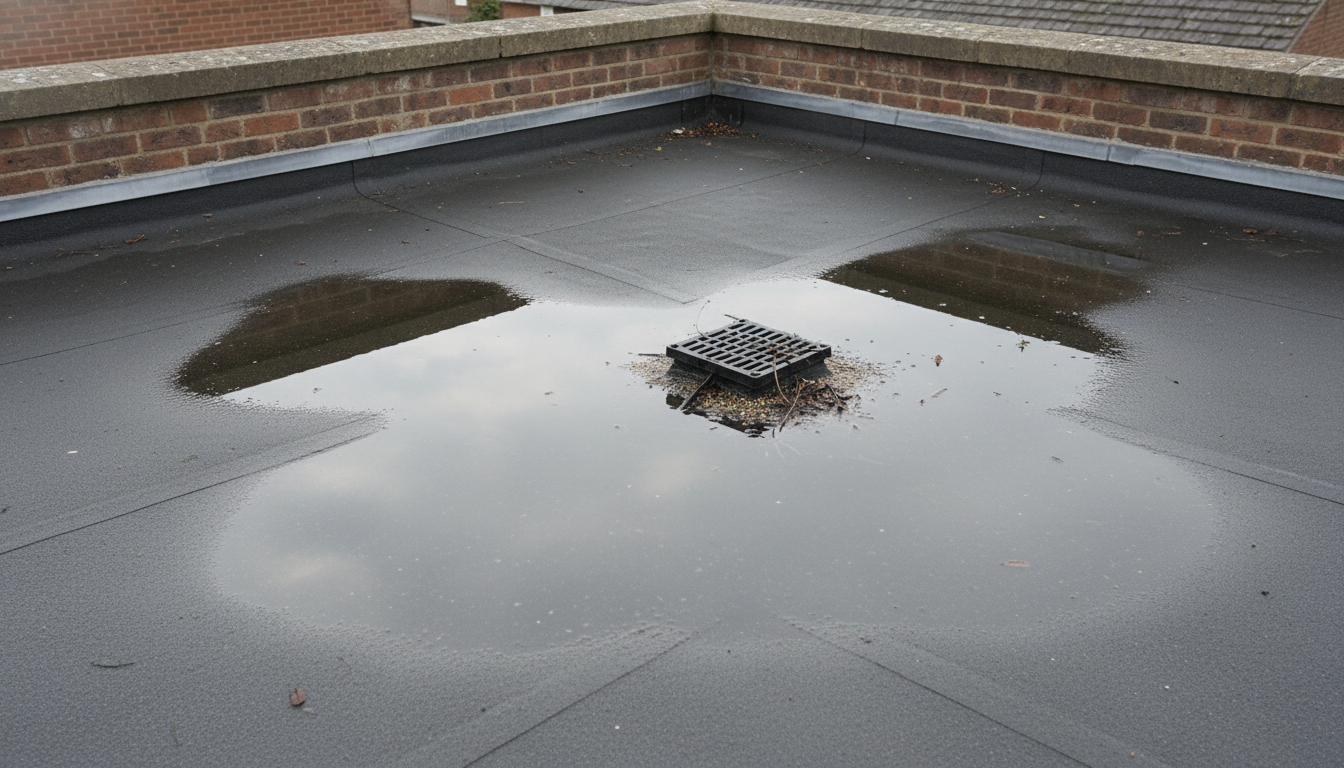
Flat roof cracks UK properties develop are often worsened by water pooling. Standing water increases membrane exposure time, allowing water to seep into even hairline cracks.
As water enters and refreezes during colder periods, cracks widen. This freeze-thaw action accelerates membrane breakdown and spreads damage beyond the original defect.
Persistent pooling is a strong indicator that drainage or roof falls need attention alongside crack repair.
Flat roof repair signs: Internal symptoms homeowners miss
Flat roof repair signs are not always visible from above. Many homeowners first notice internal symptoms such as ceiling stains, peeling paint, or musty smells before spotting roof surface damage.
These internal signs often appear long after blisters or cracks have formed. Water travels laterally beneath flat roof membranes, meaning leaks may surface far from the original defect.
Common internal warning signs align with those described in 10 signs your roof needs immediate repair and should prompt urgent inspection.
Flat roof blisters: Installation and material faults
Flat roof blisters are frequently linked to installation issues. Installing membranes over damp substrates, failing to allow proper curing, or using incompatible materials increases blister risk.
Older felt systems are particularly vulnerable, but modern membranes can also blister if installation standards are not met. Poor detailing around outlets, edges, and penetrations further increases failure likelihood.
Professional flat roof solutions focus on correct preparation and detailing to prevent blister formation from the outset.
Flat roof cracks UK: Storms and sudden failure
Flat roof cracks UK homeowners discover often worsen after storms. High winds flex roof surfaces, while heavy rain exploits existing cracks and weak points.
Storms rarely create cracks from nothing. They expose membranes that were already brittle or compromised. This is why leaks often appear immediately after severe weather even though damage existed beforehand.
Guidance in how to spot roof damage after a storm in the UK explains why post-storm flat roof checks are essential.
Flat roof repair signs: When patching is not enough
Flat roof repair signs sometimes indicate that patch repairs will not last. Isolated blisters or small cracks can often be repaired if caught early and surrounding materials remain sound.
However, widespread blistering, recurring cracks, or multiple repairs in the same area suggest systemic failure. In these cases, patching may delay leaks briefly but does not address underlying moisture or material fatigue.
Professional assessment determines whether local repair or broader intervention is required.
Flat roof blisters: Link to insulation and ventilation issues
Flat roof blisters are often linked to insulation and vapour control failures. Inadequate vapour barriers allow warm, moist air to rise into the roof structure, where it condenses beneath the membrane.
This trapped moisture expands during warm periods, contributing to blister formation. Poor ventilation compounds the problem by preventing moisture from escaping.
Many moisture-related flat roof issues mirror those explained in why proper roof ventilation matters in UK properties.
Flat roof cracks UK: Repair versus replacement decisions
Flat roof cracks UK homeowners face raise important decisions about repair versus replacement. Small, isolated cracks in otherwise sound membranes can often be repaired effectively.
However, when cracks are widespread or accompanied by blistering and water pooling, replacement may be more cost-effective long term. Continuing to repair failing membranes often increases cumulative costs and disruption.
In advanced cases, homeowners may need to consider roof restoration services to fully resolve the problem.
Flat roof repair signs: Prevention through inspection
Flat roof repair signs are far easier to address when detected early. Regular inspections help identify blisters, cracks, and drainage issues before leaks develop.
Annual inspections and post-storm checks are especially important for flat roofs due to their drainage reliance. Professional roof inspections often catch early membrane defects homeowners miss.
Preventative inspection significantly extends flat roof lifespan.
Flat roof blisters and cracks: Final expert guidance
Flat roof blisters and cracks are not cosmetic defects. They are early indicators of moisture, material fatigue, or installation failure. Ignoring them almost always leads to leaks, insulation damage, and premature roof replacement.
Understanding these warning signs and acting early protects both the roof and the property beneath it. With timely inspection and correct repair, many flat roof issues can be resolved before serious damage occurs.
Frequently Asked Questions
Are flat roof blisters always a leak risk?
They may not leak immediately but significantly increase failure risk.
What causes cracks in flat roofs?
Thermal movement, UV exposure, aging materials, and standing water.
Can flat roof blisters be repaired?
Yes, if localised and addressed early.
Do flat roof cracks worsen in winter?
Yes, freeze-thaw cycles often expand existing cracks.
How often should flat roofs be inspected?
At least once a year and after severe storms.