
BLOG
home How Weather in the UK Affects Your Roof (Rain, Wind, Frost & Heat)
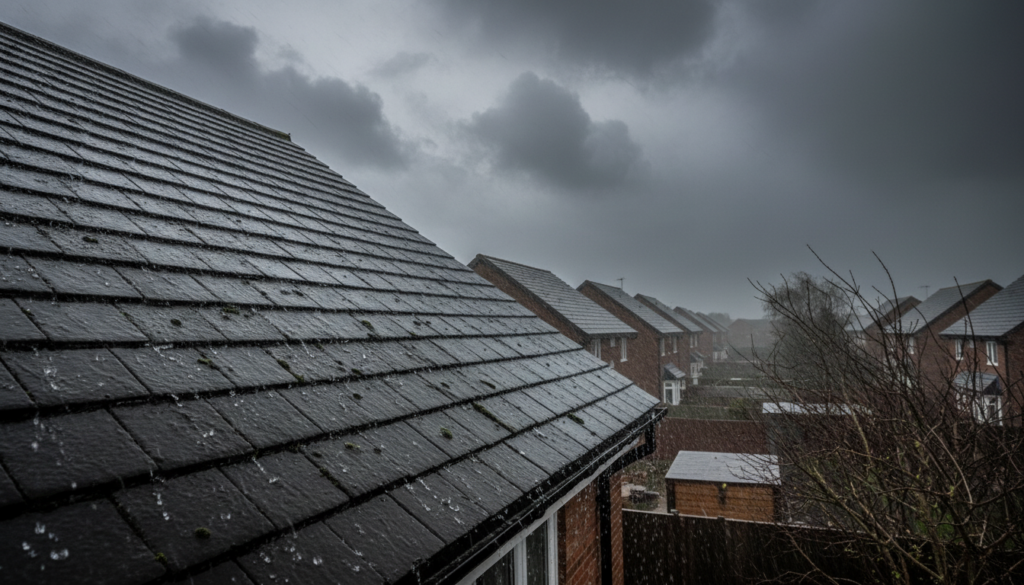
How Weather in the UK Affects Your Roof (Rain, Wind, Frost & Heat)
UK weather is one of the most aggressive environments a roof can face. Constant rain, strong winds, freezing temperatures, and occasional heatwaves all place different types of stress on roofing systems. Most roof failures are not caused by one extreme event, but by repeated exposure that slowly weakens materials and fixings.
Understanding how UK weather roof damage develops allows homeowners to take preventative action before small issues escalate. Knowing what weather does to your roof, where damage starts, and how to protect against it is essential for avoiding expensive repairs and premature replacement.
UK weather roof damage: Why climate stress is cumulative
UK weather roof damage rarely happens overnight. Roofing systems deteriorate through repeated cycles of wetting, drying, freezing, and movement. Each weather event adds incremental stress that compounds over time.
Rain penetrates small weaknesses, wind loosens fixings, frost expands trapped moisture, and heat causes materials to expand and contract. Individually these forces may seem minor, but together they accelerate roof aging. Homes that experience frequent weather exposure without maintenance often see failure years earlier than expected.
Regular monitoring and professional roof inspections help identify early damage before weather compounds the problem.
Roof damage from rain and wind: The most common threat
Roof damage from rain and wind accounts for the majority of roofing issues in the UK. Prolonged rainfall tests waterproofing layers, while strong winds exploit weaknesses in tiles, flashings, and ridges.
Rainwater follows the path of least resistance. Once it penetrates beneath tiles or membranes, it spreads laterally, damaging battens, underlay, and insulation. Wind-driven rain is especially dangerous, as it forces moisture upwards beneath roof coverings where drainage is weakest.
Repeated storm exposure often results in slipped tiles, damaged ridges, and failing flashings. These warning signs are explained in detail in how to spot roof damage after a storm in the UK and should always prompt inspection.
Where damage becomes widespread, professional roof repair services prevent water ingress from escalating further.
UK weather roof damage: Wind uplift and pressure zones
Wind affects roofs differently depending on property shape and location. Edges, corners, ridges, and valleys experience higher pressure zones, making them more vulnerable during storms. UK weather roof damage frequently begins in these areas.
As wind passes over a roof, it creates uplift forces that pull tiles and membranes upward. Once fixings loosen, repeated gusts worsen displacement. Detached and elevated properties are particularly susceptible, as wind speeds increase with exposure.
Ridge failures and tile displacement after storms are clear indicators of uplift stress. If ignored, these issues often lead to progressive roof failure across wider sections.
Roof damage from rain and wind: Gutter and drainage overload
Gutters play a critical role in preventing roof damage from rain and wind. During heavy rainfall, blocked or undersized gutters overflow, allowing water to soak roof edges, fascias, and masonry.
Overflowing water often enters the roof at vulnerable points, causing damp walls and hidden timber rot. Wind-driven debris worsens this problem by accelerating blockages during storms.
Routine maintenance and proper clearance are essential, as outlined in how to clean your gutters without damaging your roof, which explains why drainage neglect is a major contributor to roof failure.
UK weather roof damage: Frost and freeze-thaw cycles
Frost is one of the most underestimated causes of UK weather roof damage. Moisture trapped in tiles, mortar, and membranes expands when frozen, creating micro-cracks that worsen with each freeze-thaw cycle.
Over time, this expansion weakens tiles, ridge bedding, and pointing. Clay and concrete tiles are particularly vulnerable when moisture retention is high. Once cracks form, water penetration accelerates deterioration during warmer months.
Frost damage is often invisible from ground level but reveals itself through internal damp patches and loft condensation. Early detection prevents structural timber damage and insulation loss.
UK weather roof damage: Heat and thermal movement
While less frequent than rain and frost, heat also contributes to UK weather roof damage. Prolonged sunlight causes roofing materials to expand, while cooler nights trigger contraction. This repeated movement stresses fixings and seals.
Flat roofs are particularly sensitive to heat-related movement, as membranes can blister or split if expansion allowances are inadequate. Pitched roofs may experience cracked flashings or loosened fixings over time.
For modern builds and extensions, professionally installed flat roof solutions are designed to accommodate thermal movement and reduce heat-related failure.
Roofing protection tips: Preventative steps homeowners can take
Roofing protection tips focus on reducing exposure and catching problems early. Preventative care always costs less than reactive repair, especially in the UK’s unpredictable climate.
Effective protection measures include regular inspections, prompt repair of minor defects, and seasonal maintenance planning. Ensuring tiles are secure, flashings intact, and drainage clear significantly reduces weather-related damage.
Many early warning signs are detailed in 10 signs your roof needs immediate repair and should never be ignored.
Roofing protection tips: When maintenance is no longer enough
Roofing protection tips have limits once materials reach end-of-life or structural issues develop. Repeated weather damage in the same areas often signals deeper system failure.
If repairs become frequent or damage spreads across multiple sections, homeowners should consider more comprehensive solutions. Continuing minor fixes in these cases often increases long-term costs.
Professional roof restoration services or full roof replacement services may be necessary to reset the roof’s weather resistance.
UK weather roof damage: Final expert perspective
UK weather roof damage is inevitable, but serious failure is not. Roofs that are properly installed, maintained, and inspected withstand decades of climate stress. Those that are neglected fail early and expensively.
Understanding how rain, wind, frost, and heat affect roofing systems empowers homeowners to act proactively. Weather will always test your roof, but informed decisions determine how well it survives.
Frequently Asked Questions
What weather causes the most roof damage in the UK?
Heavy rain combined with strong wind causes the most frequent damage.
Can frost really damage roof tiles?
Yes, freeze-thaw cycles create cracks that worsen over time.
Are storms the main cause of roof failure?
Storms expose existing weaknesses rather than creating new ones.
How can I protect my roof from UK weather?
Regular inspections, maintenance, and prompt repairs are key.
When should weather damage lead to roof replacement?
When damage becomes widespread or repairs are repeatedly required.