
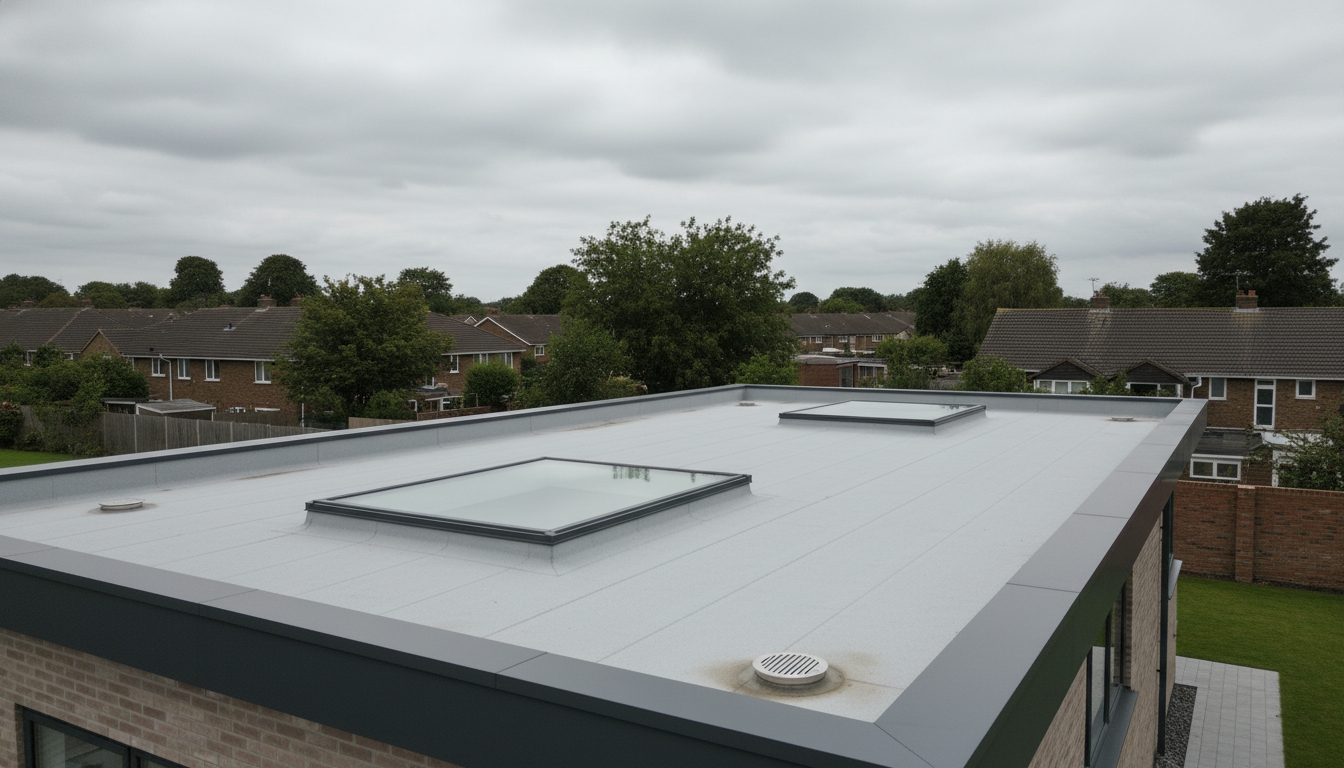
Flat Roof Lifespan UK: Maintenance and Repair Guide
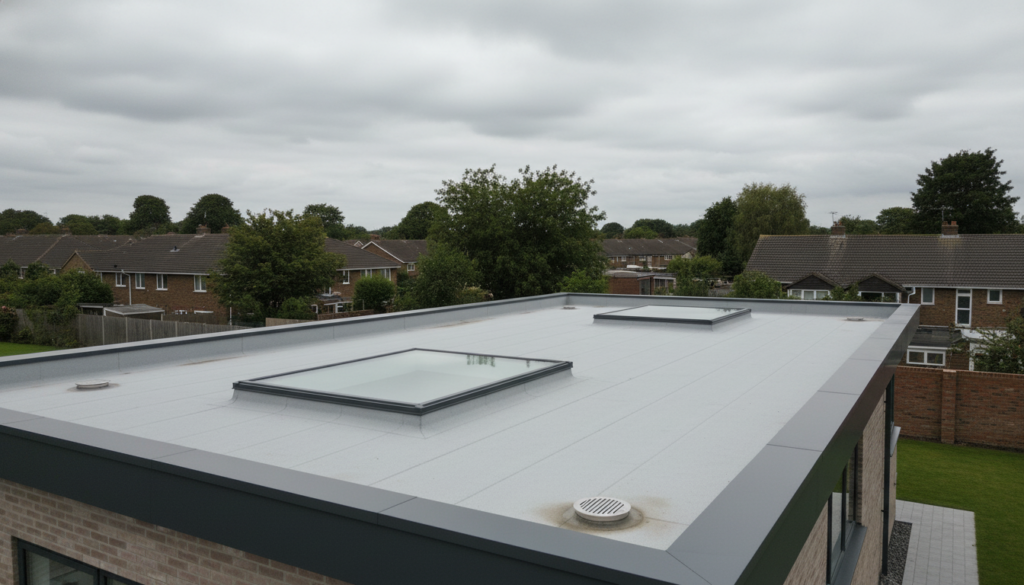
Flat Roof Lifespan UK depends on how the roof was built, how well it drains, whether the waterproofing is intact, how the edges and outlets are detailed, and whether defects are inspected early. A flat roof should not be judged only by age. Ponding water, cracks, blisters, blocked outlets, failed upstands, soft decking, damp ceilings, and repeated patching can all shorten its working life. A & A Roofing London helps homeowners across London, Essex, and the Hertfordshire borders assess flat roof condition, plan maintenance, and decide whether repair, restoration, or replacement is the right next step.
Quick Check: If a flat roof is ponding, cracking, blistering, leaking, or repeatedly needing patches, ask A & A Roofing London to review roof maintenance in the UK before minor surface wear becomes deck, insulation, or internal water damage.
Flat Roof Lifespan UK: What Really Affects It
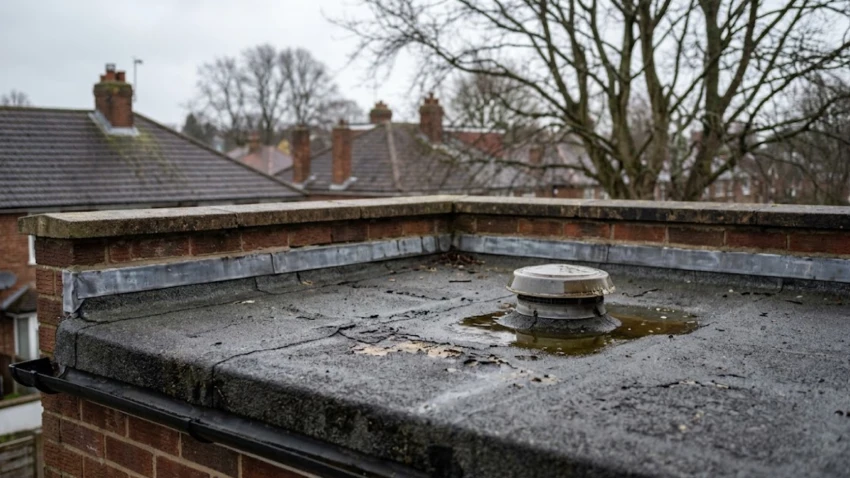
Flat Roof Lifespan Uk is shaped by the whole roof build-up. The surface covering matters, but so do falls, outlets, trims, upstands, rooflights, insulation, vapour control, workmanship, maintenance access, and water from nearby pitched roofs. Planning Portal notes that a flat roof usually has a slight fall so rainwater can drain away, and that full new-roof details are needed for Building Regulations compliance, including materials, dimensions, and performance properties.
| Lifespan factor | Why it matters | A & A Roofing London check |
| Drainage falls | Poor falls can leave water sitting on the surface | Ponding, outlet position, roof shape |
| Outlet condition | Blocked outlets can overload the roof | Gutters, downpipes, overflow routes |
| Membrane condition | Cracks, splits, and blisters can let water spread | Surface defects and hidden damp |
| Upstands and edges | Weak junctions often leak before the main field | Trims, wall junctions, rooflights |
| Deck condition | Soft or damp decking changes the repair scope | Moisture beneath the covering |
| Insulation build-up | Wrong build-up can create condensation risk | Warm roof, cold roof, vapour control |
| Maintenance history | Repeated patches may hide wider failure | Workmanship and repair pattern |
A & A Roofing London checks the visible surface and the hidden risk points together. A flat roof that looks worn may still be restorable, while a roof that looks acceptable from above may already have trapped moisture beneath the covering.
Flat Roofing and Lifespan Warning Signs
Flat roofs in London are common on extensions, garages, dormers, bays, porches, and modern additions. Their lifespan depends heavily on water movement and junction quality because rain has less slope to help it leave the surface.
A & A Roofing London inspects flat roofs in London by checking membrane condition, outlet flow, ponding, upstands, edge trims, rooflights, deck firmness, internal damp, and water discharging from higher roof sections. The aim is to decide whether the roof is ageing normally, repairable, restorable, or near replacement.
For surface-level deterioration, membrane surface warning marks are useful because blisters, cracks, splits, and edge lifting can appear before a leak becomes obvious indoors.
Tile Roofing Around Flat Roofs
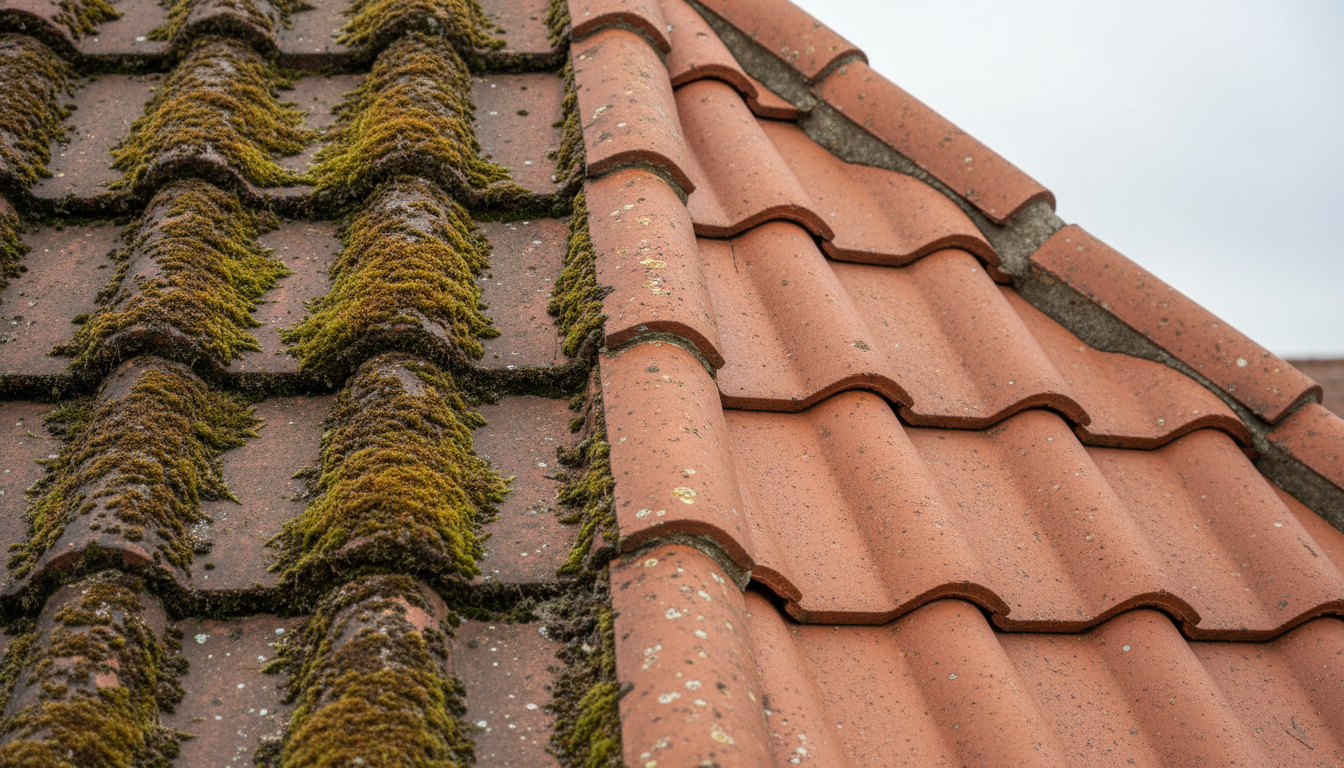
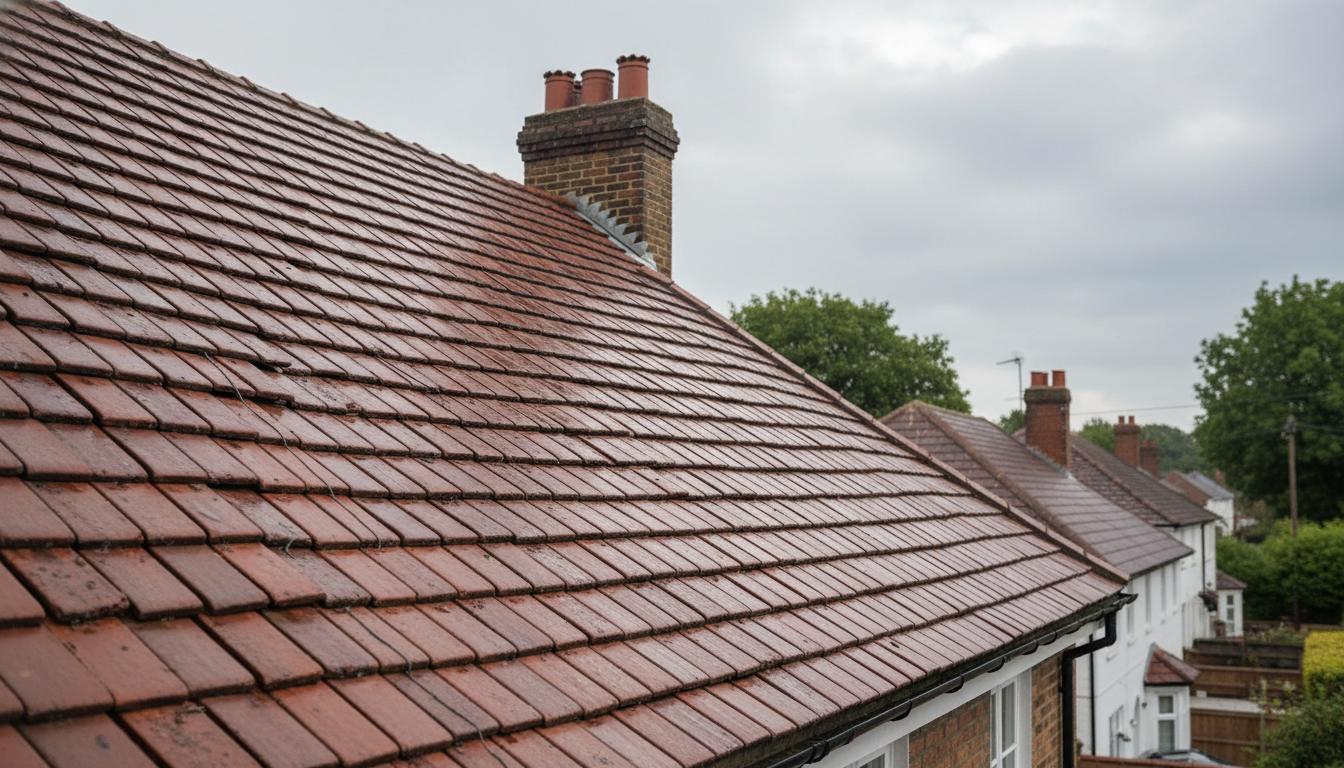
Tile roofing can affect a flat roof when a pitched tiled slope drains onto a lower flat roof extension. Broken tiles, loose fragments, moss, silt, and gutter overflow can all increase the load on a flat roof surface or outlet.
A & A Roofing London checks tile roofing in London alongside nearby flat roofs because the lower roof often receives water and debris from the upper roof. If a tiled roof is shedding fragments or debris into a flat roof gutter or outlet, the flat roof may age faster than expected.
Tile checks should include lower courses, gutters, valleys, roof edges, and any downpipe or outlet that discharges near the flat roof. Flat roof lifespan is often shortened by water arriving from somewhere else.
Slate Roofs and Lower Flat Roof Sections
Slate roofs can also affect flat roof lifespan when the main roof drains onto a lower flat roof section. Slipped slates, fractured edges, debris, or chimney-related water flow can place extra stress on the flat roof below.
A & A Roofing London checks slate roof maintenance in the UK where slate sections sit above or beside flat roofs. The inspection reviews slate condition, valleys, gutters, leadwork, chimney details, and discharge points that may be sending water or debris onto the flat roof.
For mixed roofs, flat roof lifespan should not be assessed in isolation. The upper roof, gutters, valleys, and downpipes may be the reason the flat roof is ponding, staining, or deteriorating early.
Pitched Roof Maintenance and Flat Roof Life
Pitched roof maintenance matters when a property has a pitched main roof with a flat roof extension. If the pitched roof has blocked gutters, loose tiles, overflowing valleys, or failed flashings, the lower flat roof may take more water than it was designed to handle.
A & A Roofing London checks pitched roof maintenance in the UK together with the flat roof below it. The review includes tile or slate condition, gutter discharge, valley flow, flashing, ridge debris, and downpipe routing.
Planning Portal describes gutters and rainwater pipes as roof drainage. That makes drainage checks essential when assessing flat roof lifespan, especially where several roof sections share one water route.
Warm Roof, Cold Roof, and Lifespan
Flat roof lifespan is strongly affected by the roof build-up. A warm roof, cold roof, or older hybrid detail can behave differently when insulation, vapour control, ventilation, and waterproofing are not planned correctly.
Planning Portal describes a warm deck as insulation placed on top of rafters or joists with the roof covering over the insulation. It describes a cold deck as insulation placed between joists, rafters, or ceiling joists, with ventilation requirements to allow air movement. Energy Saving Trust says flat roofs usually need professional installation and that insulating from underneath can lead to condensation problems if it is not done correctly.
A & A Roofing London checks whether the flat roof’s build-up is contributing to damp, mould, condensation, soft decking, or repeated failure. For this decision, warm-deck and cold-deck moisture logic is a useful supporting topic.
Roof Restoration for Ageing Flat Roofs
Flat roof restoration may be suitable when the roof is worn but still structurally serviceable. Restoration should not mean hiding defects under another surface layer. It should start with inspection of deck condition, drainage, outlets, seams, upstands, trims, rooflights, and internal damp evidence.
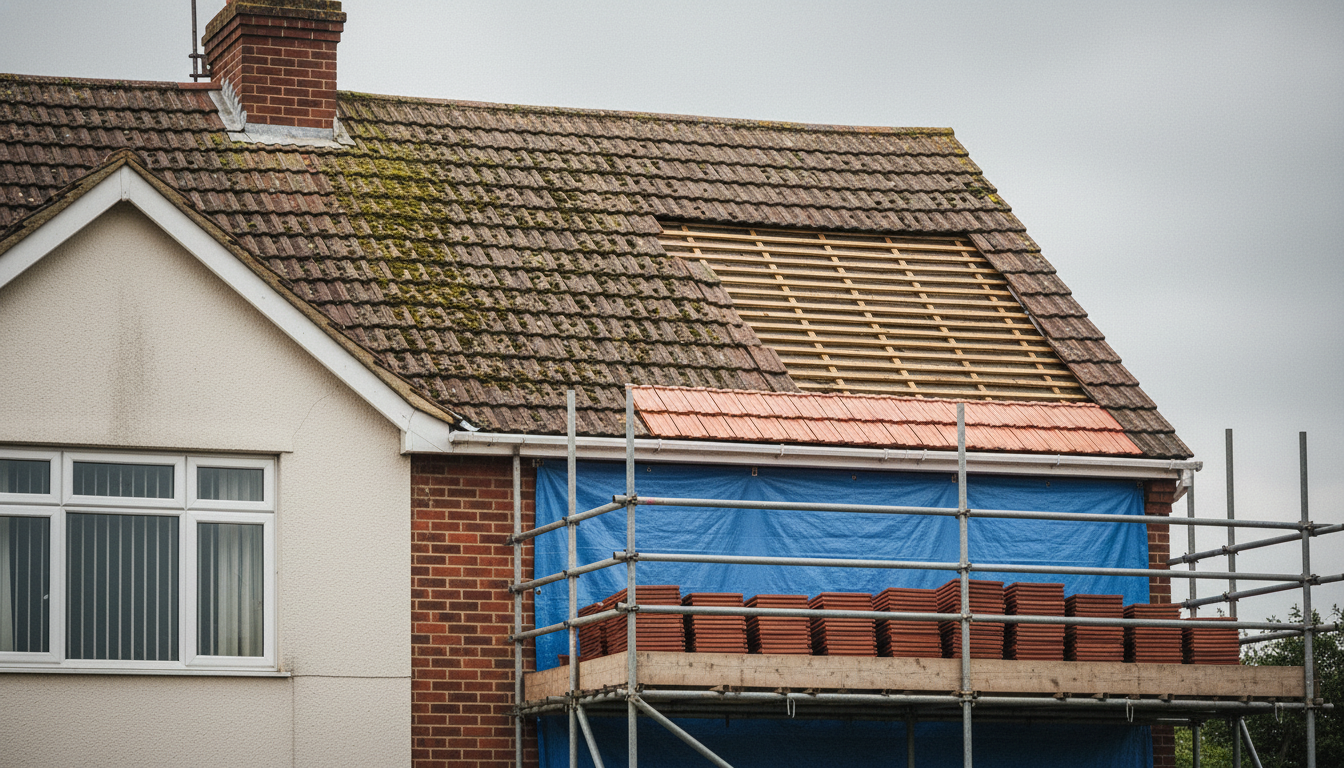
A & A Roofing London provides roof restoration in the UK by checking whether the flat roof can be repaired or restored, or whether replacement is more practical. If the deck is soft, water is trapped under the covering, or leaks keep returning, restoration may not be enough.
For flat-roof-specific planning, flat roof restoration timing signals helps connect surface condition with the decision between restoration and replacement.
Repair or Replacement: Lifespan Decision
Flat Roof Lifespan Uk often comes down to one question: is the failure local or widespread? A small edge defect, outlet issue, or puncture may be repairable if the surrounding roof is sound. Widespread cracking, repeated leaks, trapped moisture, or soft decking usually changes the decision.
A & A Roofing London checks the repair boundary before recommending work. Local patching may extend service life when the membrane and deck are sound, but repeated patching can become a false economy when the whole roof system is failing.
| Finding | Repair may be suitable | Replacement may be needed |
| Small puncture | Surrounding membrane is sound | Water has spread beneath surface |
| Blocked outlet | Surface and deck remain dry | Ponding has damaged deck or edges |
| Minor edge lift | Upstand can be corrected | Edge failure is repeated or widespread |
| Isolated blister | No water beneath covering | Blisters appear across roof field |
| Internal stain | Source is confirmed and local | Damp is recurring or unexplained |
For this judgement, flat roof repair limit markers and replacement-stage evidence markers are useful supporting topics.
Drainage Problems That Shorten Flat Roof Life
Poor drainage is one of the biggest reasons flat roofs fail early. Flat roofs need clear outlets, correct falls, reliable edge details, and a drainage route that can handle rain from the roof itself and any roof sections above.
A & A Roofing London checks ponding, outlet blockage, gutter overflow, downpipe discharge, roof edge staining, water tracking, and whether debris from a pitched roof is collecting on the flat roof. A flat roof that repeatedly holds standing water needs inspection before small defects spread.
For drainage diagnosis, flat roof water-flow restriction clues is the most relevant supporting topic. It connects poor water movement with roof damage, damp, and repair escalation.
Leaks and Hidden Flat Roof Damage
Flat roof leaks can be difficult because water may enter at one point and appear indoors somewhere else. Water can travel beneath the membrane, through insulation, along the deck, or down wall junctions before showing as a ceiling stain.
A & A Roofing London checks surface defects and hidden water paths together. The inspection may include rooflights, upstands, outlets, seams, trims, flashing, internal staining, ceiling softness, and signs of damp spreading.
For leak tracing, flat roof leak pathway indicators are useful. They help homeowners understand why a visible drip does not always identify the entry point.
Poor Workmanship and Early Failure
Poor workmanship can shorten flat roof lifespan even when the materials are suitable. Common problems include weak falls, poor outlet placement, shallow upstands, bad edge trims, open seams, incompatible repairs, poor preparation, and patching over damp surfaces.
A & A Roofing London checks whether the roof is failing because it is old, poorly maintained, badly detailed, or incorrectly installed. This matters because replacing only the visible surface may not fix the build-up beneath it.
For quality review, flat roof workmanship failure signs can help homeowners understand why details such as trims, outlets, laps, and upstands affect lifespan.
Weather, Materials, and Flat Roof Ageing
UK weather can speed up flat roof deterioration when rain, wind, frost, and temperature changes act on already weak details. A sound flat roof should move water away efficiently; a roof with cracks, ponding, blocked outlets, or edge lifting will be tested harder by bad weather.
A & A Roofing London checks whether weather damage is surface-only or part of wider ageing. The inspection looks at water retention, membrane flexibility, edge condition, outlet flow, and whether nearby roof sections are adding debris or runoff.
For material selection and exposure planning, weather-ready roofing material factors and roof material lifespan comparison notes are useful supporting references.
New Builds, Older Homes, and Flat Roof Lifespan
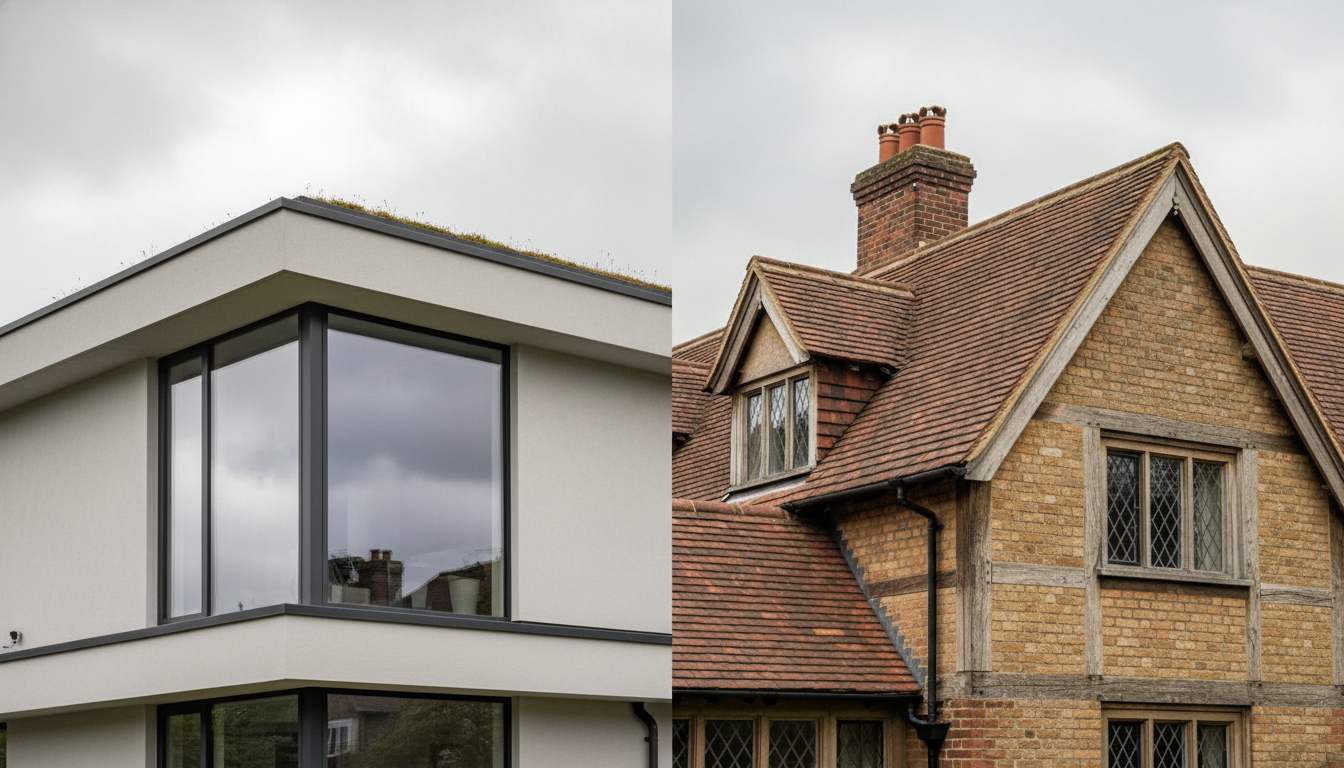
Flat roof lifespan can differ between new builds, older extensions, and mixed-age properties. A newer flat roof may have a clearer specification, while an older flat roof may have layers of repair, unknown insulation, blocked outlets, or junctions added over time.
A & A Roofing London checks property age and roof history before judging lifespan. A flat roof on an older rear extension may need different inspection from a new warm roof installation or a flat roof added beside a pitched roof.
For property-age context, older and newer flat roof build-up differences supports the decision. It helps explain why two flat roofs of the same size can age differently.
Inspection Timing for Flat Roof Lifespan
Flat roofs should be inspected before problems become internal leaks. Inspection is especially useful after heavy rain, visible ponding, cracks, blisters, outlet blockage, roof-edge staining, or repeated repairs.
A & A Roofing London checks flat roof condition during roof maintenance by reviewing surface wear, drainage, upstands, edge trims, rooflights, outlet flow, deck firmness, internal damp, and nearby pitched roof discharge.
HSE says roof work is high risk and that almost one in five construction deaths involve roof work. It also notes that many incidents involve people repairing or cleaning roofs, not only specialist roofers. Its fragile-surface guidance says precautions are required for work on or near fragile surfaces, no matter how short the duration. For planning, flat roof inspection timing cues and flat roof condition survey items are useful supporting topics.
Maintenance That Extends Service Life
Maintenance can extend flat roof service life when the roof is still sound. The key is to keep water moving, correct small defects early, and avoid letting debris, ponding, or failed edges turn into hidden damage.
A & A Roofing London may recommend clearing outlets, checking gutters, correcting minor edge defects, reviewing rooflights, inspecting upstands, monitoring ponding, and checking internal damp after heavy rain.
For practical planning, flat roof maintenance item groups is useful because it connects roof surface checks with gutters, valleys, flashings, drainage, and internal warning signs.
Cost Factors Over the Flat Roof Lifespan
Flat roof lifespan affects cost because repairs, restoration, and replacement are different scopes. A small local repair can be very different from replacing wet decking, upgrading insulation, correcting drainage, and renewing roof edges.
A & A Roofing London reviews cost factors after inspection rather than guessing from the roof surface alone. Factors include roof size, access, material system, hidden moisture, deck condition, insulation, outlets, upstands, rooflights, waste removal, and whether nearby drainage also needs correction.
For budget planning, flat roof restoration scope costs is useful background. It should be treated as planning context; the real scope depends on inspection.
Safety Limits for Homeowners
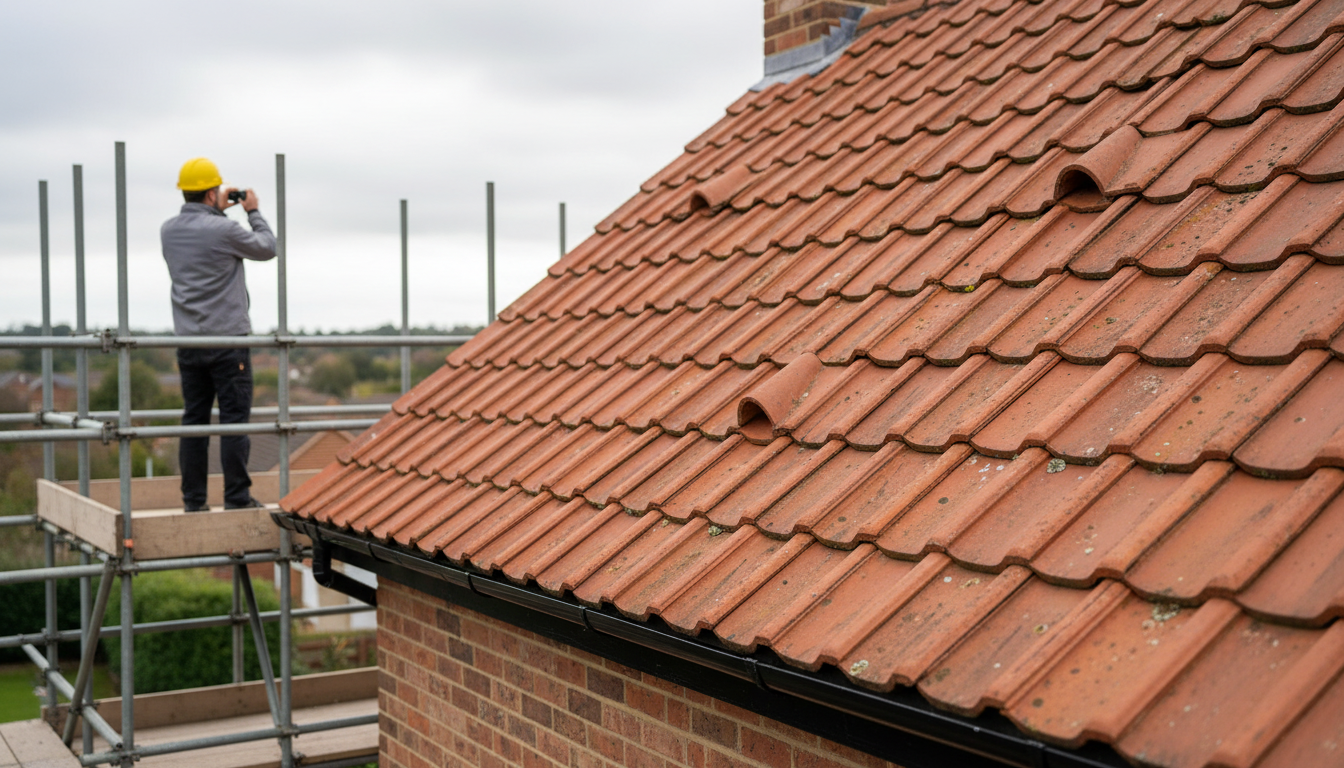
Homeowners should not walk on flat roofs to test lifespan. A flat roof may look accessible, but it can have soft decking, fragile rooflights, slippery surfaces, weak edges, or hidden defects beneath the membrane.
A & A Roofing London recommends safe ground-level and internal observations first: ceiling stains, damp smells, ponding seen from windows, outlet overflow, gutter staining, cracks visible from safe positions, and repeated leaks. Roof-level inspection should use proper access and safety precautions.
This is especially important because HSE identifies roof work as high risk and includes maintenance, repair, cleaning, and demolition within roof-work activity.
Residential Flat Roof Lifespan
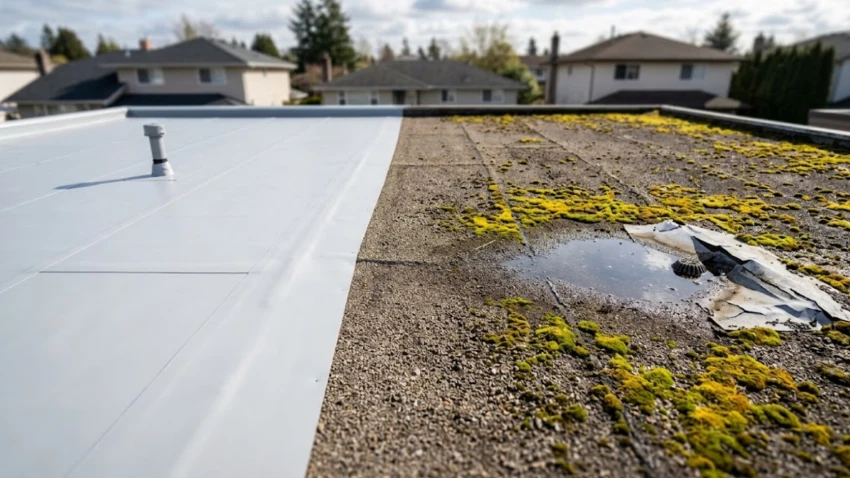
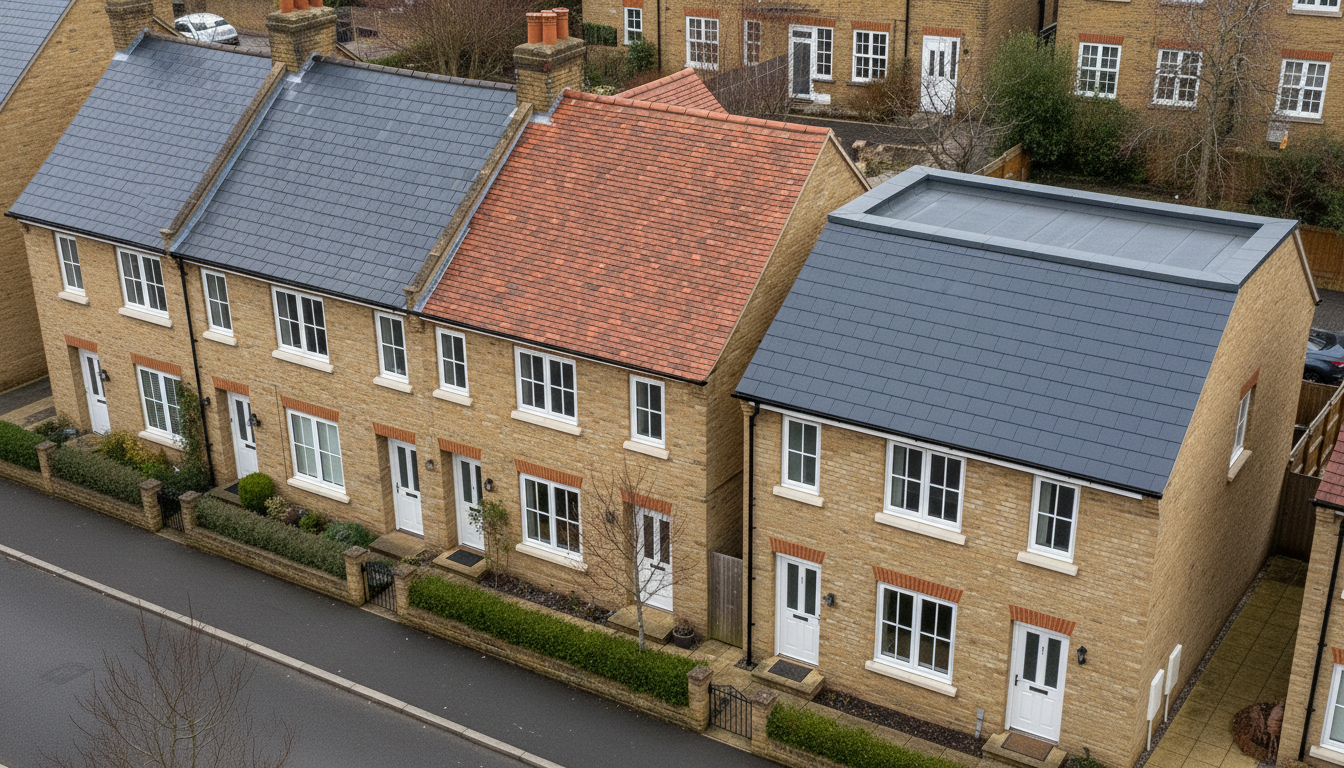
Residential flat roofs are often part of mixed roof systems: pitched tiled or slate main roofs, rear flat extensions, dormers, garages, porches, rooflights, and parapet edges. Their lifespan depends on how these parts connect.
A & A Roofing London inspects the flat roof as part of the whole property. If a main roof is discharging water onto a lower flat roof, or if gutters and outlets are overloaded, the flat roof may age faster even if its own surface was originally installed well.
Flat Roof Lifespan Uk Area Coverage
Local roof access, extension type, roof age, drainage route, tree debris, nearby pitched roofs, and weather exposure all affect flat roof lifespan. A & A Roofing London covers North London, Essex, and the Hertfordshire borders, helping homeowners assess flat roof condition, maintenance needs, and repair or replacement timing.
North London
In North London, Flat Roof Lifespan Uk often applies to rear extensions, dormers, porches, bay roofs, garages, shared rooflines, and lower flat roofs beneath tiled or slate main roofs. A & A Roofing London can check ponding, outlet flow, upstands, rooflights, edge trims, deck condition, and water coming from surrounding roof sections.
Hertfordshire Borders
Across the Hertfordshire borders, Flat Roof Lifespan Uk may involve extensions, tree debris, moss, blocked outlets, older roof layers, weather exposure, and mixed pitched-and-flat roof layouts. A & A Roofing London reviews drainage, membrane condition, flat roof edges, internal damp evidence, and whether restoration or replacement is the right route.
Essex
In Essex, Flat Roof Lifespan Uk can become important after heavy rain, wind exposure, ponding, roof-edge staining, outlet blockage, or repeated patch repairs. A & A Roofing London can inspect flat roof surfaces, gutters, outlets, upstands, rooflights, deck softness, and nearby pitched roof discharge so the lifespan assessment is based on real condition.
Final Roofing Decision
Flat Roof Lifespan Uk should be judged by condition, not age alone. A flat roof lasts longer when water drains away, outlets stay clear, the surface remains intact, upstands and edges are sound, insulation is correctly detailed, and small defects are repaired before moisture reaches hidden layers.
A & A Roofing London can support roof maintenance in the UK by checking flat roof surfaces, ponding, drainage, outlets, gutters, upstands, trims, rooflights, deck condition, insulation, vapour control, nearby pitched roof discharge, and internal damp evidence. The right outcome may be maintenance, repair, restoration, or replacement depending on what the roof inspection shows.
FAQs About Flat Roof Lifespan Uk
How long should a flat roof last in the UK?
Flat roof lifespan depends on the roof system, installation quality, drainage, maintenance, insulation build-up, weather exposure, and whether defects are repaired early. A & A Roofing London assesses lifespan by condition rather than giving a single number without inspection.
What shortens flat roof lifespan?
Poor drainage, ponding water, blocked outlets, weak upstands, cracked membranes, open seams, bad workmanship, soft decking, unsuitable insulation, and repeated patching can all shorten flat roof lifespan. Planning Portal notes that a flat roof usually needs a slight fall so rainwater can drain away.
Is ponding water always a replacement sign?
Not always. Ponding should be inspected because it may indicate poor falls, blocked outlets, surface distortion, or deck movement. Local correction may be possible if the roof is otherwise sound. Replacement becomes more likely when ponding has caused soft decking, repeated leaks, or widespread surface failure.
Does a warm roof last longer than a cold roof?
The answer depends on design and workmanship. Planning Portal describes warm deck and cold deck arrangements differently, and each build-up has different moisture-control needs. Energy Saving Trust says flat roof insulation usually needs professional installation and warns that insulating from underneath can cause condensation problems if done incorrectly. A & A Roofing London checks the build-up before advising.
Can flat roof restoration extend lifespan?
Yes, restoration can extend service life if the deck, insulation, drainage, and main waterproofing are still suitable. Restoration is less likely to be enough where the deck is soft, water is trapped beneath the covering, or leaks keep returning. A & A Roofing London checks whether restoration will solve the cause or only cover the symptom.
How often should a flat roof be inspected?
Inspection timing depends on roof age, material, drainage, trees, weather exposure, previous leaks, and visible defects. A flat roof should be checked sooner if there is ponding, cracking, blistering, outlet blockage, damp staining, or repeated repair work. Roof-level checks should be carried out safely because HSE treats roof work as high risk.
Does replacing a flat roof need Building Regulations approval?
It can. Planning Portal states that most roof replacement work on existing buildings needs Building Regulations approval, and that changing roof covering material may require checks for structural stability, fire safety, and energy efficiency. A & A Roofing London checks whether the planned work is repair, restoration, re-covering, or full replacement.
What should A & A Roofing London inspect on a flat roof?
A & A Roofing London should inspect the membrane, ponding, outlets, gutters, upstands, edge trims, rooflights, seams, deck condition, insulation, vapour control, nearby pitched roof discharge, internal damp marks, and previous repairs. That gives a clearer view of remaining lifespan and the right maintenance, repair, restoration, or replacement route.


Comments (4)
[…] or whether it needs replacement. The best supporting checks are flat roof service-life factors and flat roof ageing indicators, especially where a homeowner is unsure whether insulation work should be paired with a new […]
[…] material-specific context, tile roof service-life factors, slate roof lifespan variables, and flat roof lifecycle checkpoints help homeowners understand why roof age should be judged with […]
[…] planning should include drainage design, not only a new surface layer. For condition planning, flat roof lifespan indicators are […]
[…] advice for insulation, and flat roof insulation needs specialist techniques. For long-term planning, flat roof service-life indicators is […]
Comments are closed.