
BLOG
home Roof Safety for Homeowners: What Not to Do When Inspecting Your Roof
Roof Safety for Homeowners: What Not to Do When Inspecting Your Roof
Roof inspections seem harmless, but they are one of the most common causes of serious household accidents in the UK. Every year, homeowners are injured attempting quick checks or minor fixes without understanding the risks involved. Many of these accidents happen during routine inspections, not major repair work.
Understanding roof safety is not about learning how to climb safely. It is about knowing what not to do and when to stop. Recognising the limits of DIY roof inspections protects homeowners from injury while preventing small roof issues from becoming emergencies.
Roof safety UK: Why homeowner inspections are high risk
Roof safety UK guidance exists because domestic roof inspections are far more dangerous than most people realise. Roofs are exposed to wind, moisture, and surface wear that reduce grip and stability, even in good weather.
Tiles are not designed to carry foot traffic. They can crack, slip, or collapse under weight, especially on older roofs. Steep pitches, fragile materials, and uneven surfaces increase fall risk significantly.
Most serious roof accidents happen during “quick checks” where homeowners underestimate danger and overestimate roof stability.
DIY roof inspection risks: Climbing without proper equipment
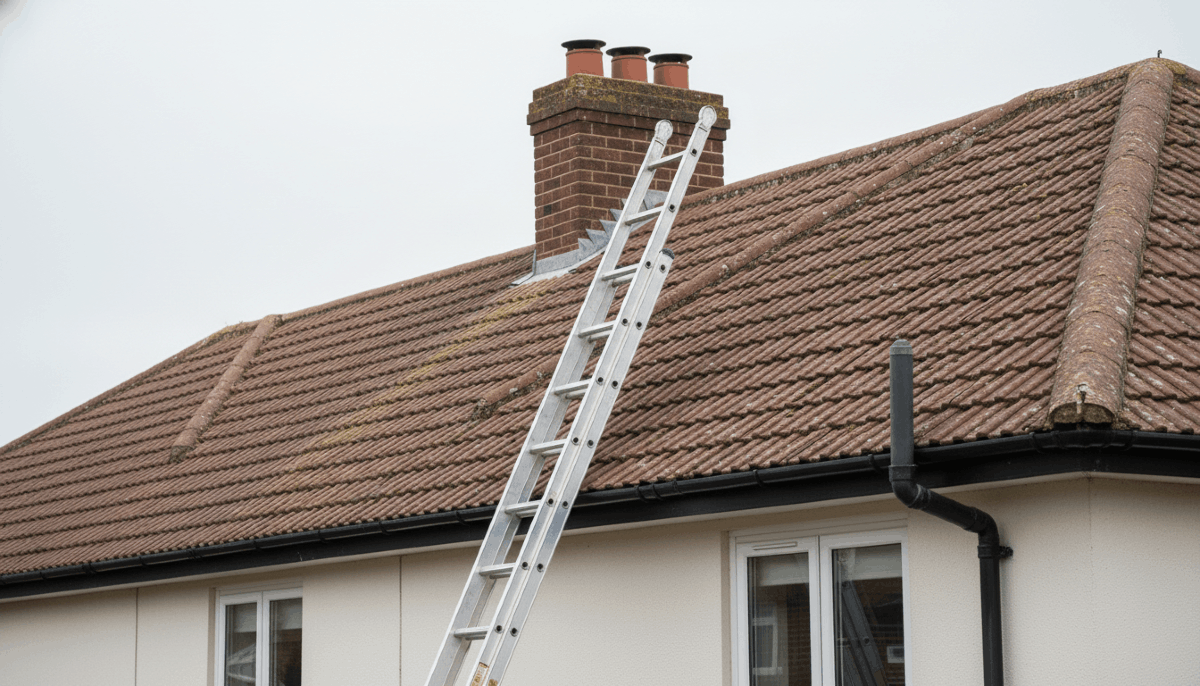
DIY roof inspection risks increase dramatically when homeowners use unsuitable ladders or improvised access. Household ladders are often not secured correctly and may rest on unstable ground or guttering.
Reaching sideways from a ladder to inspect tiles or flashing is particularly dangerous. This shifts body weight unexpectedly and causes many falls. Gutters are not load-bearing and can detach suddenly.
Safe roof inspections never involve climbing onto the roof without professional equipment and training.
Roof safety UK: Inspecting roofs during poor conditions
Roof safety UK incidents often occur because inspections are carried out in unsafe conditions. Wet tiles, frost, moss, and even morning dew make roof surfaces extremely slippery.
Wind also plays a major role. Gusts at roof height are stronger than at ground level and can destabilise balance without warning. Cold weather reduces grip and reaction time, increasing fall risk further.
Inspections should never be attempted during or immediately after rain, frost, snow, or high winds.
DIY roof inspection risks: Walking on tiles
DIY roof inspection risks are highest when homeowners step directly onto tiles. Tiles are designed to overlap and shed water, not support weight. Stepping incorrectly can crack tiles or cause them to shift suddenly.
Even if a tile does not break, movement can loosen fixings beneath the surface. This creates new problems that were not present before the inspection.
Walking on tiles frequently turns a minor inspection into a roof repair situation.
Roofing safety tips: What to check safely from the ground
Roofing safety tips focus on observation, not access. Many warning signs can be identified safely from ground level or inside the loft.
From outside, homeowners can look for slipped tiles, uneven ridge lines, sagging roof sections, and debris buildup in gutters. Inside the loft, damp patches, mould, daylight penetration, and water staining often indicate roof issues.
These early signs are also highlighted in 10 signs your roof needs immediate repair and should prompt professional inspection rather than DIY access.
Roof safety UK: Overestimating “minor” repairs
Roof safety UK risks increase when inspections turn into “quick fixes.” Homeowners often attempt to reposition tiles, apply sealant, or clear valleys while already on the roof.
These actions increase time spent at height and distract from balance and footing. Temporary fixes rarely last and often fail during the next storm, making the risk pointless.
What seems like a small task often leads to emergency situations requiring professional intervention anyway.
DIY roof inspection risks: Ignoring structural warning signs
DIY roof inspection risks rise significantly when structural issues are present. Sagging ridges, bowed roof slopes, or cracked timbers indicate load-bearing problems.
Standing on a roof with structural weakness increases collapse risk. Roofs under stress may not fail gradually. They can give way suddenly without visible warning.
Structural concerns should always be assessed by professionals rather than inspected directly by homeowners.
Roofing safety tips: Post-storm inspections done wrong
Roofing safety tips are especially important after storms. Many accidents occur when homeowners rush to inspect damage immediately after severe weather.
Storms leave roofs wet, unstable, and covered in debris. Loose tiles and damaged ridges are more likely to shift under weight. Power lines and fallen branches also create additional hazards.
Post-storm guidance in how to spot roof damage after a storm in the UK explains how to assess damage safely without climbing.
Roof safety UK: When inspections should stop immediately
Roof safety UK guidance is clear that inspections should stop immediately if any of the following are present:
Slippery or wet surfaces
Steep or high roof pitches
Loose tiles or ridge movement
Structural sagging or cracking
Lack of proper access equipment
At this point, continuing the inspection increases risk without adding useful information.
DIY roof inspection risks: Insurance and liability issues
DIY roof inspection risks extend beyond physical injury. Homeowners may invalidate insurance coverage if injuries occur during unsafe inspections or unapproved repairs.
Additionally, causing further damage during an inspection can complicate future insurance claims. Insurers often require evidence that reasonable safety precautions were taken.
Professional inspections reduce both injury risk and administrative complications.
Roofing safety tips: The professional alternative
Roofing safety tips ultimately point to one solution. Professional inspections provide safe access, proper equipment, and experienced assessment.
Trained professionals identify issues that homeowners often miss, including flashing failure, underlay deterioration, and early structural movement. They also document findings clearly, helping homeowners plan repairs effectively.
Routine roof inspections eliminate the need for risky DIY access while protecting the roof long term.
Roof safety UK: When repairs are actually needed
Roof safety UK concerns often arise when homeowners attempt inspections instead of addressing known issues. Once warning signs are present, the safest action is arranging repair rather than further inspection.
Minor issues left unattended often escalate into urgent problems. Professional roof repair services resolve issues safely without exposing homeowners to unnecessary risk.
Roof safety UK: Final expert guidance
Roof safety UK advice is simple but critical. Do not climb, do not walk on tiles, and do not inspect roofs in unsafe conditions. Most roof issues can be identified without leaving the ground.
Knowing what not to do is the most important part of roof safety. Early professional assessment prevents accidents, protects insurance cover, and ensures roofing problems are resolved properly.
Frequently Asked Questions
Is it safe to inspect my roof myself?
Only from ground level or inside the loft, never by climbing onto it.
Are ladders safe for roof inspections?
No, unsecured ladders are a major cause of roof accidents.
Can I walk on my roof if I’m careful?
No, tiles are not designed to support foot traffic.
When should I call a professional instead?
As soon as damage is suspected or after storms.
Do professionals make inspections safer?
Yes, they use proper access equipment and safety systems.