
BLOG
home How to Clean a Slate Roof in the UK: Safe Methods and Tips
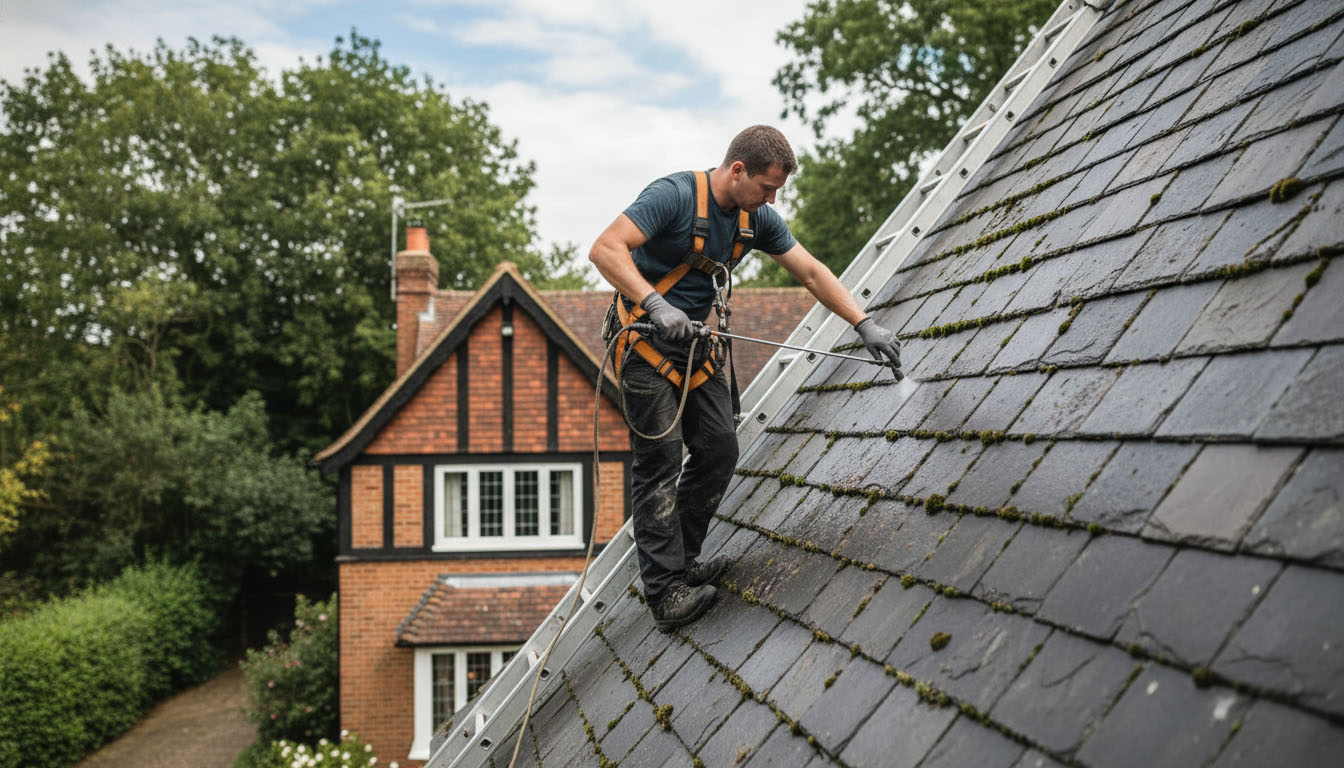
How to Clean a Slate Roof in the UK: Safe Methods and Tips
Slate roofing is highly durable, but improper cleaning can cause more damage than neglect. Many UK homeowners attempt pressure washing or harsh chemical treatments to remove moss, only to loosen tiles, damage fixings, or shorten roof lifespan. Cleaning slate incorrectly often leads to costly repairs.
The UK’s damp climate encourages moss and algae growth, making maintenance essential. However, cleaning must preserve tile integrity and avoid disturbing the double-lap system. This guide explains how to clean a slate roof safely in the UK and what methods should be avoided.
How to Clean Slate Roof UK: Safe Preparation Steps
Understanding how to clean slate roof UK properties safely begins with preparation. Slate tiles are brittle under concentrated pressure and must never be treated like concrete or metal roofing.
Essential preparation steps include:
Visual inspection from ground level
Identifying slipped or cracked slates
Avoiding direct foot traffic on tiles
Using scaffold or roof ladder systems
Walking directly on slate can cause cracking or dislodgement. Professional slate roofing services ensure safe access methods that protect both the roof and the individual performing the work.
Slate Roof Cleaning UK: Methods That Protect Tile Integrity
Slate roof cleaning UK homeowners consider must prioritise gentle techniques. High-pressure washing is one of the most common causes of premature slate deterioration.
Safe cleaning methods include:
Manual moss removal using soft tools
Low-pressure water rinsing
Application of biocide treatments
Clearing debris from gutters and valleys
Pressure washing should be avoided because it can force water beneath the slate layer and weaken fixings.
Professional slate roofing teams use controlled cleaning methods designed specifically for natural stone roofing systems.
Removing Moss from Slate Roof UK: Best Practices
Removing moss from slate roof UK properties experience requires care to prevent lifting slates. Moss retains moisture and increases weight load, which may accelerate nail fatigue.
Best practice guidelines include:
Gently brushing moss downward with soft tools
Avoiding scraping that damages slate edges
Treating remaining spores with approved biocide
Monitoring areas prone to shade and damp
Moss removal should be performed without disturbing overlapping tiles. If multiple slates appear loose during cleaning, professional evaluation may be required.
Where underlying battens or fixings show deterioration, roof restoration services can reinforce the system before further cleaning.
Methods to Avoid When Cleaning Slate
Certain cleaning approaches significantly increase the risk of damage.
Unsafe methods include:
High-pressure jet washing
Acidic chemical treatments
Walking directly on unsupported tiles
Using hard metal scraping tools
These methods can crack slates, dislodge fixings, and reduce long-term durability.
If the roof structure requires reinforcement before safe cleaning can occur, professional pitched roof installation expertise ensures structural compliance and stability.
Cleaning Frequency and Seasonal Considerations
Cleaning frequency depends on roof location and environmental exposure. Shaded or tree-covered properties typically require more frequent maintenance.
General cleaning guidance:
Roof Environment | Recommended Cleaning Frequency |
|---|---|
Open, sunny location | Every 2–3 years |
Tree-covered area | Every 1–2 years |
Coastal exposure | Annual inspection recommended |
After heavy storms | Visual check required |
Regular inspection prevents excessive moss accumulation and reduces long-term maintenance costs.
Professional slate roofing inspections ensure cleaning aligns with roof age and exposure level.
Cost of Professional Slate Roof Cleaning
The cost of professional cleaning varies depending on roof size, pitch, and access requirements.
Factors influencing cost include:
Scaffold installation
Extent of moss growth
Roof complexity and pitch
Need for minor repairs during cleaning
Attempting DIY cleaning may seem cost-effective initially but can lead to greater repair expenses if tiles are damaged.
Long-Term Impact of Proper Cleaning
When performed correctly, cleaning extends the life of slate roofing by reducing moisture retention and preventing moss-related stress.
Long-term benefits include:
Reduced nail fatigue
Lower risk of water ingress
Improved roof appearance
Extended structural lifespan
Preventative maintenance remains more cost-effective than reactive repair.
Frequently Asked Questions
Can you pressure wash a slate roof in the UK
No, pressure washing can damage tiles and loosen fixings.
How do you remove moss from a slate roof safely
Moss should be gently brushed downward and treated with approved biocide solutions.
How often should a slate roof be cleaned
Most slate roofs require cleaning every one to three years depending on environment.
Is walking on a slate roof safe during cleaning
Walking directly on slate is not recommended without professional access equipment.
Does cleaning extend slate roof lifespan
Yes, proper cleaning reduces moisture retention and protects fixings from premature deterioration.