
BLOG
home Is Slate Roofing Environmentally Friendly in the UK? Sustainability Explained
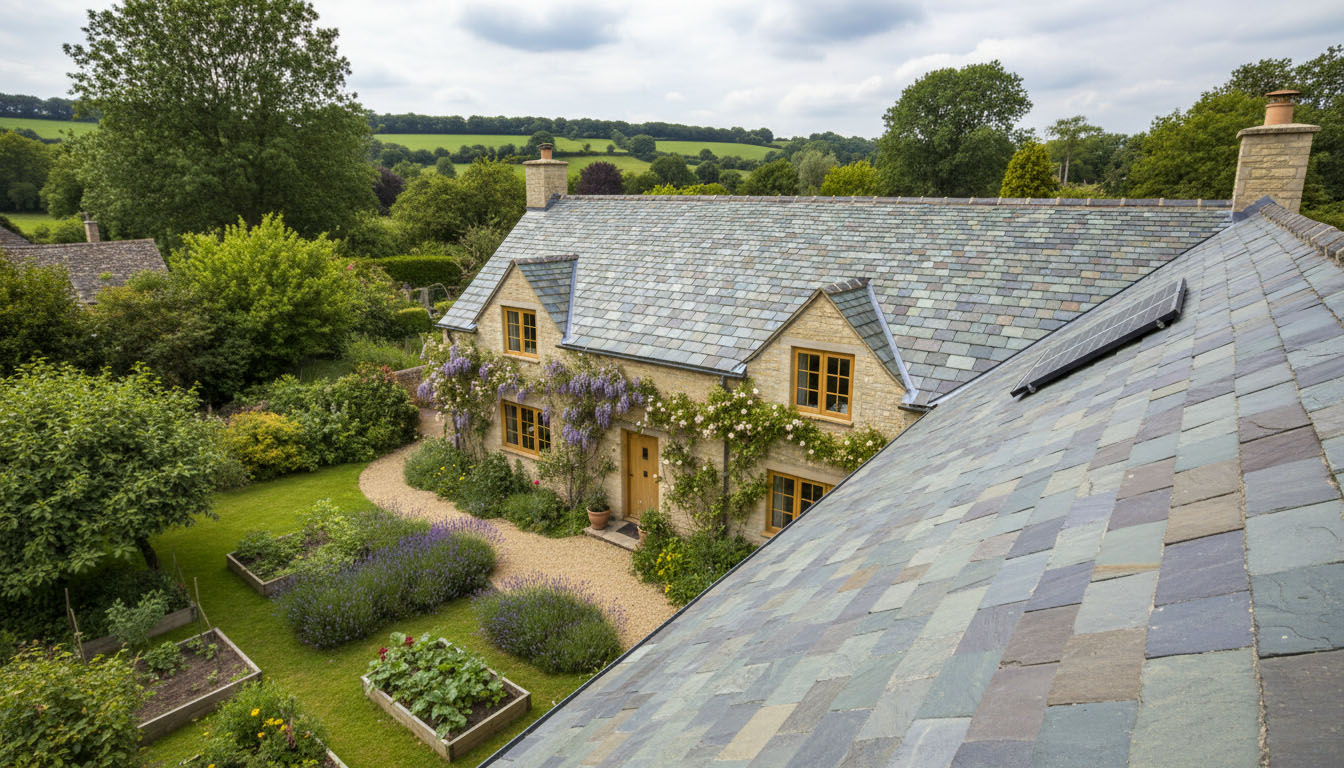
Is Slate Roofing Environmentally Friendly in the UK?
Sustainability is now a major decision factor for UK homeowners replacing or installing new roofs. While slate is often praised for durability, many question whether quarrying natural stone offsets its environmental benefits. Choosing roofing materials without understanding lifecycle impact can lead to unintended environmental costs.
The real sustainability of slate roofing depends on lifespan, recyclability, insulation performance, and sourcing standards. This guide explains whether slate roofing is environmentally friendly in the UK and how it compares to other eco friendly roof tiles available today.
Environmentally Friendly Slate Roofing UK: Lifecycle Impact
Environmentally friendly slate roofing UK projects benefit from is largely due to slate’s exceptional lifespan. A material that lasts 80 to 100 years reduces replacement frequency and long-term construction waste.
Key environmental advantages include:
Extremely long service life
Minimal manufacturing processing
Low chemical treatment requirement
Natural stone composition
Unlike synthetic roofing materials, slate does not rely on petrochemical-based production. Its natural durability reduces the need for repeated resource extraction over time.
Professional slate roofing ensures high-quality installation that maximises lifespan and sustainability benefits.
Sustainable Slate Roofing UK: Quarrying vs Longevity
Sustainable slate roofing UK discussions often focus on quarrying impact. Quarry extraction does require energy and landscape management, yet lifecycle performance must be considered in comparison.
Factor | Natural Slate | Concrete Tiles | Synthetic Tiles |
|---|---|---|---|
Production Energy | Moderate | High | High |
Lifespan | 80–100+ years | 40–60 years | 30–50 years |
Recyclability | High | Moderate | Low |
Replacement Frequency | Low | Moderate | High |
When lifespan is factored in, slate often generates lower cumulative environmental impact than materials requiring multiple replacements.
Experienced slate roofing specialists help homeowners select responsibly sourced slate aligned with sustainability goals.
Eco Friendly Roof Tiles UK: How Slate Compares
Eco friendly roof tiles UK homeowners consider typically include clay, concrete, metal, and recycled composite options. Slate performs strongly in several sustainability categories.
Environmental comparison highlights:
Natural slate contains no synthetic binders
Clay tiles require kiln firing at high temperatures
Concrete production generates higher carbon emissions
Metal roofing involves significant processing energy
While slate quarrying has environmental impact, its long lifespan reduces lifetime carbon footprint compared to more frequently replaced materials.
Homeowners comparing options may also review best roofing materials UK sustainability insights before finalising their decision.
Energy Efficiency and Thermal Contribution
Although slate itself is not a high-insulation material, its compatibility with breathable and insulated roof systems contributes to overall energy performance.
Sustainability factors include:
Supporting modern insulation upgrades
Reducing heat loss through durable structure
Providing thermal mass for gradual heat release
Preventing moisture-related insulation degradation
When re-roofing, insulation upgrades are often required under Building Regulations, further improving environmental performance.
Where structural adaptation is needed to integrate insulation improvements, professional pitched roof installation ensures compliance and optimal energy efficiency.
Recyclability and End-of-Life Impact
One of slate’s strongest sustainability advantages is its recyclability. Salvaged slate tiles can often be reused on new projects or restoration work.
End-of-life benefits include:
Reusable individual tiles
Minimal landfill waste
No toxic material breakdown
Natural biodegradability over time
Unlike composite tiles, slate does not release harmful substances as it ages.
Where older roofs require reinforcement before reuse, roof restoration services can preserve original slate while upgrading structural support.
Local Sourcing and Carbon Footprint
Sourcing slate closer to installation location reduces transportation emissions. Welsh slate, for example, offers reduced transport distance for UK projects compared to imported alternatives.
Considerations when evaluating sustainability:
Quarry location
Transportation distance
Certification of ethical sourcing
Installation lifespan expectations
Long-term durability remains the dominant sustainability factor regardless of origin.
Professional slate roofing consultation helps align sourcing decisions with environmental objectives.
Is Slate Roofing the Most Sustainable Choice?
Slate roofing is among the most sustainable pitched roofing options when evaluated across lifespan, recyclability, and maintenance requirements.
Slate is particularly sustainable for:
Long-term homeowners
Heritage properties requiring longevity
Projects prioritising low replacement cycles
Eco-conscious renovation planning
However, sustainability also depends on responsible sourcing and high-quality installation.
Frequently Asked Questions
Is slate roofing environmentally friendly in the UK
Yes, due to its long lifespan, recyclability, and minimal chemical processing.
Does slate have a lower carbon footprint than concrete tiles
Over its lifespan, slate often generates lower cumulative carbon impact due to reduced replacement cycles.
Can slate tiles be reused
Yes, many natural slate tiles can be salvaged and reused in restoration projects.
Is synthetic slate more eco friendly
Synthetic slate may use recycled materials but typically has shorter lifespan than natural slate.
Does insulation affect slate roof sustainability
Yes, proper insulation upgrades significantly enhance overall environmental performance.