
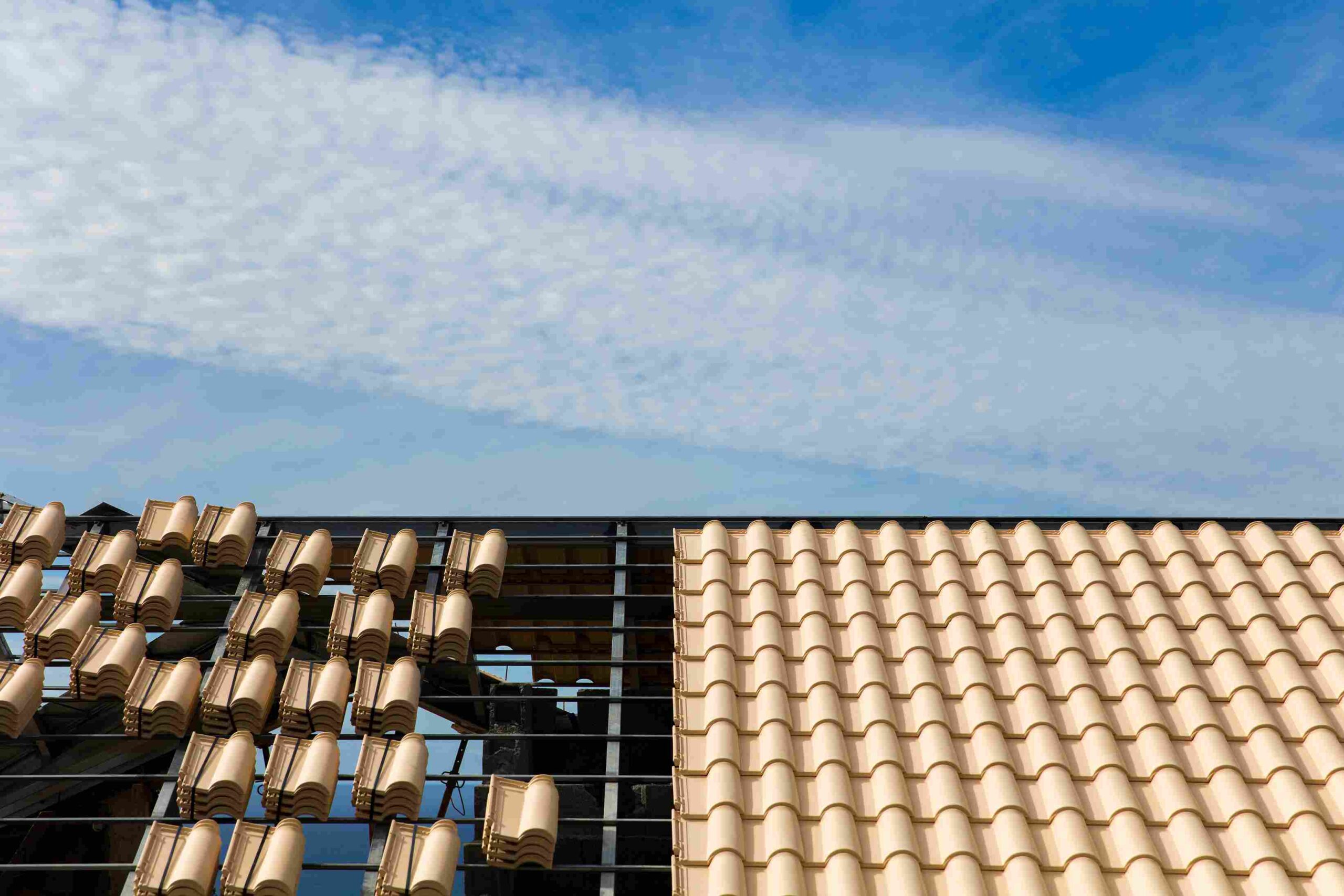

Comparing commercial roofing systems by cost and longevity requires more than matching one installation figure to one lifespan claim. Flat or low-slope roofs, industrial and restaurant roofs, and long-term ROI each introduce different technical priorities. The complete assembly determines whether expected performance becomes achievable.
Roofing system | Relative initial cost | Planning lifespan | Strong application | Main limitation |
TPO | Low to moderate | 20–30 years | Large reflective low-slope roofs | Grease and chemical limitations |
EPDM | Low to moderate | 20–30 years | Flexible roofs exposed to temperature movement | Puncture and traffic sensitivity |
PVC/PVC-KEE | Moderate to high | 20–30+ years | Restaurants and selected industrial uses | Compatibility must be confirmed |
BUR | Moderate | 20–30 years | Robust roofs needing multi-layer redundancy | Weight and installation logistics |
Modified bitumen | Moderate | 15–30 years | Reinforced refurbishment projects | Application and hot-work controls |
Standing-seam metal | High | 40–60+ years | Long-term ownership and suitable geometry | Detailing and corrosion exposure |
These figures are broad planning ranges rather than fixed outcomes. Membrane thickness, workmanship, climate, drainage and maintenance can move actual service life in either direction. A wider review of roofing material durability and trade-offs helps establish those limitations.
Commercial Roof Decision Snapshot
- Choose TPO when reflective performance and efficient installation support the building’s requirements.
- Choose EPDM when flexibility and temperature movement matter more than frequent unprotected access.
- Choose PVC when verified grease or chemical resistance is necessary.
- Choose BUR when multi-layer redundancy and physical robustness are priorities.
- Choose modified bitumen when reinforced sheets suit refurbishment and detailed roof zones.
- Choose metal when roof geometry and ownership plans support a larger initial investment.
Why Initial Roof Cost Creates a False Comparison
A commercial roof estimate includes more than the exposed membrane or panels. Removal, insulation, access equipment, deck repairs and drainage changes can outweigh differences between covering materials. An unusually low bid may therefore omit work included elsewhere.
Initial cost also ignores future disruption. Replacing a roof above an occupied hospital, restaurant, warehouse or office can affect staff, customers and stored equipment. A longer-lasting assembly may reduce the number of disruptive replacement cycles.
The correct calculation considers whole-life expenditure. This includes inspections, repairs, cleaning, access protection and eventual replacement. Long-term ROI improves when the roof remains serviceable without repeated emergency intervention.
Published square-foot figures require careful location context. Labour conditions, safety access, waste handling and regulatory requirements vary significantly between regions. UK projects should therefore rely on measured local specifications rather than imported US averages.
The following factors must appear beside every installation figure:
- Existing-roof removal
- Wet-insulation replacement
- Deck repair allowances
- New insulation and vapour control
- Tapered drainage
- Membrane or panel thickness
- Perimeter and penetration detailing
- Walkways and protection boards
- Lifting and access requirements
- Operational working restrictions
A roof survey should determine whether replacement is necessary before a complete specification is prepared. The guide to roof condition decision points separates isolated defects from system-wide deterioration. That distinction prevents minor failures from automatically becoming complete reroofing projects.
TPO Balances Installation Speed and Reflectivity
TPO is a thermoplastic single-ply membrane joined through heat-welded seams. Large sheets can cover uninterrupted low-slope areas efficiently. White and other reflective finishes may reduce solar heat absorption under appropriate operating conditions.
Reflectivity alone does not establish total energy performance. Insulation, air leakage, internal heat generation and membrane cleanliness also influence cooling demand. The system must therefore be evaluated as part of the building envelope.
TPO is not universally compatible with oils, grease or aggressive chemicals. Restaurant exhaust zones and industrial discharge points require a substance-specific assessment. PVC or another protected assembly may be more suitable where exposure is unavoidable.
Installation options can include mechanical attachment, full adhesion or induction welding. Deck type, wind exposure and internal operations influence the correct method. Perimeter and corner zones require particular attention because wind-uplift forces are commonly greater there.
TPO often supports a lower or moderate initial project figure. Its long-term result still depends on seam quality, membrane thickness and protection from punctures. A low bid using a thinner or incomplete assembly is not equivalent to a more robust specification.
EPDM Handles Movement but Needs Traffic Control
EPDM is a flexible synthetic rubber membrane used on many flat and low-slope roofs. Its flexibility allows the material to accommodate normal thermal movement. Large sheets can also reduce the number of field seams.
The material should not be selected solely because it appears simple to install. Edges, outlets, parapets and penetrations remain vulnerable when detailing is weak. Compatible adhesives and clean substrate preparation are essential.
EPDM does not make an ideal unprotected walkway. Repeated access, dropped tools and maintenance equipment can puncture or abrade the membrane. Cover boards and designated walkway systems should protect routes around HVAC equipment.
Dark EPDM can absorb more solar heat than a light reflective membrane. That characteristic may affect the roof surface temperature, although insulation remains a central part of thermal performance. Climate and building operation should guide the colour decision.
EPDM can be appropriate for straightforward commercial or domestic flat roofs. A project-specific flat roof replacement London assessment should examine the membrane, deck and insulation together. Replacing only the visible surface may leave concealed moisture untouched.
PVC Answers Grease and Chemical Exposure Risks
PVC and PVC-KEE are thermoplastic membranes with heat-welded seams. Certain formulations provide stronger resistance to grease and selected chemicals than standard TPO or EPDM. This makes them relevant to restaurants, food processing and some industrial buildings.
Chemical resistance must never be described as unlimited. Substance concentration, temperature and exposure duration can change membrane behaviour. The selected manufacturer must confirm compatibility with the facility’s actual contaminants.
Restaurant roofs often contain exhaust fans, ducts and frequent service routes. Grease accumulation can affect membranes, drainage and worker safety. The roof should include protected access and a cleaning plan around discharge zones.
PVC generally occupies a higher initial-cost position than basic single-ply alternatives. That additional investment may be justified where an incompatible membrane would deteriorate prematurely. Long-term ROI depends on preventing exposure-related failure rather than choosing PVC for every low-slope roof.
Heat-welded seams require trained installation and inspection. Penetrations, corners and equipment curbs need carefully formed details. The finished system should also remain accessible for routine examination.
BUR Builds Protection Through Multiple Roof Layers
Built-up roofing uses multiple bituminous layers with reinforcing felts and a protective surface. This layered construction provides redundancy if the upper surface becomes locally damaged. It has a long history on commercial low-slope buildings.
BUR can tolerate routine service conditions better than an unprotected thin membrane. However, heavy rooftop equipment still requires structural supports, curbs and protected routes. No roof covering should be used as a direct equipment platform.
The completed assembly may be heavier than single-ply alternatives. Deck capacity must be confirmed before BUR is specified. Existing layers can further increase load when an overlay is considered.
Installation may involve hot asphalt and associated operational controls. Odour, fire planning, access and occupied-building restrictions can influence project suitability. Alternative systems may be preferable where sensitive operations must continue beneath the roof.
Multiple layers can make leak tracing more complicated if water travels within the assembly. Effective drainage and regular inspections remain essential. The presence of several plies does not compensate for blocked outlets or failed flashings.
Modified Bitumen Adds Reinforced Flexibility
Modified-bitumen systems combine bitumen with polymer modification and reinforcement. They can be installed as multi-layer assemblies on new or existing low-slope roofs. Their physical robustness makes them relevant where controlled rooftop access is expected.
SBS formulations are generally associated with flexibility at lower temperatures. APP products use different polymer characteristics and installation approaches. Product selection must match climate, application method and required surface performance.
Torch application is only one installation method. Cold-applied, self-adhered and mechanically secured options may also be available. Fire risk and building occupancy should influence the installation plan.
A cover board can improve resistance to foot traffic and impact. Walkways should still identify regular service routes. Penetrations and changes in level require careful treatment within every layer.
Modified bitumen may provide a practical middle position between thin single-ply membranes and heavier traditional BUR. Its value comes from a correctly designed assembly rather than the material name alone. Future maintenance must remain part of the ownership plan.
Metal Roofing Changes the Long-Term ROI Equation
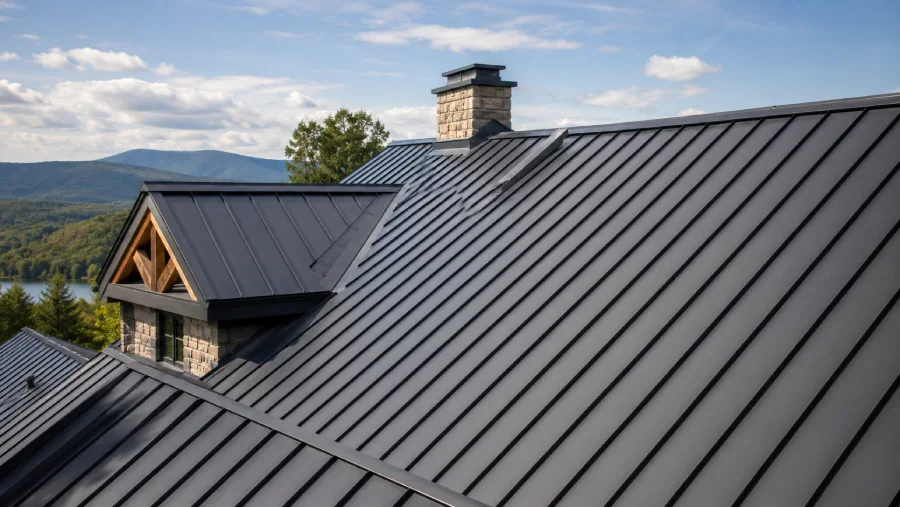
Standing-seam metal normally requires a larger initial investment than membrane systems. Properly designed systems can provide a significantly longer service life. This can improve long-term ROI for owners expecting to retain the building.
Metal performance depends on more than panel thickness. Seam formation, clips, fasteners, coatings, sealants and penetrations all influence durability. Thermal movement must be accommodated without stressing panels or connections.
Coastal and industrial atmospheres require additional material analysis. Salt, chemicals and incompatible metals can accelerate corrosion. Runoff between dissimilar materials must also be controlled.
Metal does not eliminate inspections. Sealants, flashings, drainage paths and rooftop penetrations can deteriorate before the principal panels. Periodic examination helps prevent local defects from spreading.
Standing seams may support certain non-penetrating solar attachments. This can help maintain roof integrity when future photovoltaic equipment is planned. Roof service life should ideally extend beyond the expected solar installation period.
Metal is unsuitable for some flat-roof geometries and detailed refurbishment conditions. A roof with numerous penetrations or difficult drainage may favour another system. The decision must follow measured geometry rather than longevity alone.
Industrial and Restaurant Roofs Need More Analysis
Industrial and restaurant roofs experience risks that ordinary offices may not face. Grease, chemicals, heat, exhaust discharge and frequent servicing can alter membrane performance. The roof must be designed around actual facility operations.
Restaurant Exposure Changes Membrane Selection
Kitchen exhaust can deposit grease on nearby surfaces. The affected zone may become slippery, difficult to clean and chemically aggressive to certain membranes. PVC or protected hybrid systems may be considered after compatibility is confirmed.
Fans and ducts create additional penetrations. Every curb and flashing interrupts the continuous waterproofing plane. Maintenance routes should prevent technicians from walking across unprotected areas.
Industrial Operations Introduce Unknown Contaminants
Manufacturing buildings may release oils, solvents or process chemicals. A general statement that a membrane is “chemical resistant” is not sufficient. The exact substance and concentration must be documented.
Industrial roofs may also support extensive pipework and plant. Supports must transfer loads correctly without damaging the covering. Future equipment changes should be considered during the initial specification.
Occupied Buildings Restrict Installation Choices
Hospitals, offices and food facilities may remain operational during reroofing. Noise, odour, dust and hot work can influence system selection. Phased installation and temporary waterproofing require detailed planning.
A covering that installs quickly may reduce disruption but must still suit the building technically. Access arrangements should protect occupants and stored materials. The contractor’s occupied-building experience deserves close examination.
Drainage and Insulation Can Change Every Estimate
Drainage failure can shorten the service life of any commercial roofing system. Ponding water adds weight, collects dirt and places prolonged stress on weak details. Outlets and overflow routes should be examined before material selection.
Deflection can create local low areas even when the roof was originally designed with falls. Tapered insulation may redirect water without altering the structural deck. The proposal must identify how drainage improvement will be achieved.
The guide to roof drainage failure risks explains why covering replacement alone may not stop recurring water accumulation. Blocked perimeter drainage can create similar problems. Understanding blocked gutter damage supports a complete water-management plan.
Wet insulation should not remain concealed beneath a new membrane. It can reduce thermal performance and contribute to deck corrosion or deterioration. Moisture surveys and controlled openings help define the replacement area.
Insulation compressive strength matters where workers regularly cross the roof. Weak boards can crush beneath traffic and stress the membrane above. Cover boards can distribute loads while increasing impact resistance.
Thermal improvement must also account for vapour movement. Incorrect vapour control can produce condensation within the assembly. Guidance on reducing heat loss through insulation helps connect energy decisions with moisture management.
Compare Commercial Roof Bids on an Equal Scope
Commercial bids should be normalised before their totals are compared. Different membrane thicknesses, insulation levels and repair allowances can create misleading variations. A scope matrix exposes what each contractor has included.
Bid element | Contractor A | Contractor B | Contractor C |
Existing covering removal | Confirm | Confirm | Confirm |
Wet insulation allowance | Record area | Record area | Record area |
Deck repairs | Unit rate | Unit rate | Unit rate |
Insulation specification | Type and thickness | Type and thickness | Type and thickness |
Cover board | Included or excluded | Included or excluded | Included or excluded |
Membrane specification | Type and thickness | Type and thickness | Type and thickness |
Attachment method | Confirm | Confirm | Confirm |
Drainage correction | Confirm | Confirm | Confirm |
Walkways | Confirm | Confirm | Confirm |
Penetration detailing | Confirm | Confirm | Confirm |
The Reddit discussion supplied for this project highlights inaccurate estimating as a real contractor concern. A higher bid may reflect an error, but it may also contain work missing from another proposal. Decision-makers should request explanations rather than assuming either conclusion.
Small repair projects can reveal communication and response quality before a major replacement. Useful evidence includes photographs, leak reports, completion documentation and accurate invoicing. A clear roof repair process overview provides a basis for evaluating that performance.
Historic maintenance records may show recurring defects around drains, penetrations or edges. Early detection through roof inspections helps identify those patterns before bids are requested. Suitable roof inspection frequency factors should then inform the future maintenance schedule.
Select a System Through Building-Specific Evidence
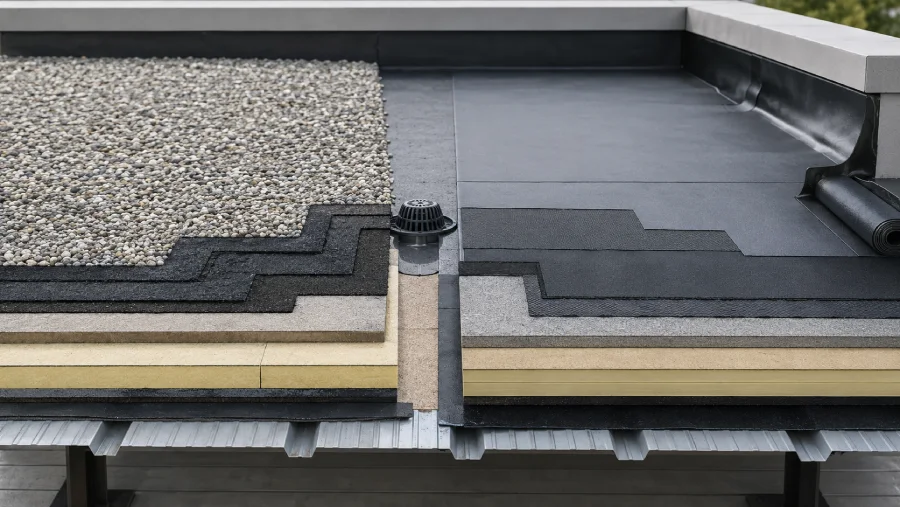
The final decision should begin with a measured roof survey. Identify slope, deck type, moisture, drainage, access patterns and contamination risks. Then compare systems against the building’s expected ownership period.
Use this sequence:
- Confirm whether the roof is flat, low-slope or pitched.
- Map drains, gutters, penetrations and ponding areas.
- Identify wet insulation and deck deterioration.
- Record rooftop traffic and plant-maintenance routes.
- Document grease, oil or chemical exposure.
- Establish wind, fire and attachment requirements.
- Compare insulation and vapour-control strategies.
- Align roof service life with future solar equipment.
- Normalise every contractor bid against one scope.
- Calculate expected whole-life expenditure.
Other materials may become relevant where the building includes pitched entrance roofs or historic sections. Review British roofing material fundamentals and roofing material suitability for British weather before combining contrasting roof forms. A roof tile expenditure guide can support separate pitched-area planning.
Clay or concrete sections require different installation skills from commercial membranes. The tile roof installation sequence outlines that construction. Appropriate tile roof installation in London becomes relevant when a commercial property includes tiled pitched zones.
Natural slate requires another specialist approach. A slate roofing service in London may suit traditional offices, schools or mixed historic buildings. Suitable pitched roof installation solutions UK should connect the covering to pitch and structural capacity.
Flashings and leadwork remain important where roof systems meet walls or masonry. Review flashing damage and water entry and the leadwork purpose in roofing when examining junction failures. Persistent leaks may originate from these details rather than the principal membrane.
Severe weather can also expose weak edges, outlets and flashings. Follow defined roof storm damage evaluation points and roof safety after severe storms. Anyone inspecting from ground level should maintain appropriate roof inspection safety precautions.
Complex roof areas may include valleys or adjacent pitched slopes. Roof valley debris buildup can restrict concentrated drainage, while the reasons roof valleys develop leaks clarify common detail failures. These conditions should be recorded before a combined commercial specification is issued.
Where an existing assembly has historic value, restoration may preserve serviceable materials. A best roof restoration company UK assessment can distinguish recoverable components from failed areas. For a complete property-specific review, explore professional roofing solutions in London.
Frequently Asked Questions
These questions address uncertainties that remain after the main system comparison. They focus on overlays, concealed moisture, solar projects and disruptive commercial operations. Each answer supports a more precise building-specific decision.
Can a commercial roof be overlaid twice?
The answer depends on local requirements, existing layer count, deck capacity and moisture condition. Additional layers increase weight and can conceal trapped water. Controlled investigation is required before another overlay is approved.
How can wet insulation be found before reroofing?
Moisture surveys may use infrared imaging, electrical methods or nuclear scanning where appropriate. Test openings can confirm the survey findings and reveal deck condition. The investigation should map affected areas before the final scope is issued.
Does a thicker membrane always last longer?
Greater thickness can improve resistance to wear and provide more material above the reinforcement. It cannot correct weak seams, poor drainage or unsuitable chemical exposure. Assembly design and installation quality remain equally important.
Should a commercial roof be replaced before solar panels?
Replacement is sensible when the remaining roof life is shorter than the planned solar service period. Removing and reinstalling panels during later reroofing creates disruption and additional work. Both projects should be planned through one coordinated timeline.
Which roof system is easiest to repair?
Repairability depends on contamination, age, accessibility and installer familiarity. EPDM, TPO, PVC and bituminous systems use different preparation and joining methods. A clean, well-documented roof is generally easier to diagnose and repair than a neglected one.