
BLOG
home Building Regulations for Slate Roofing in the UK: Compliance Guide
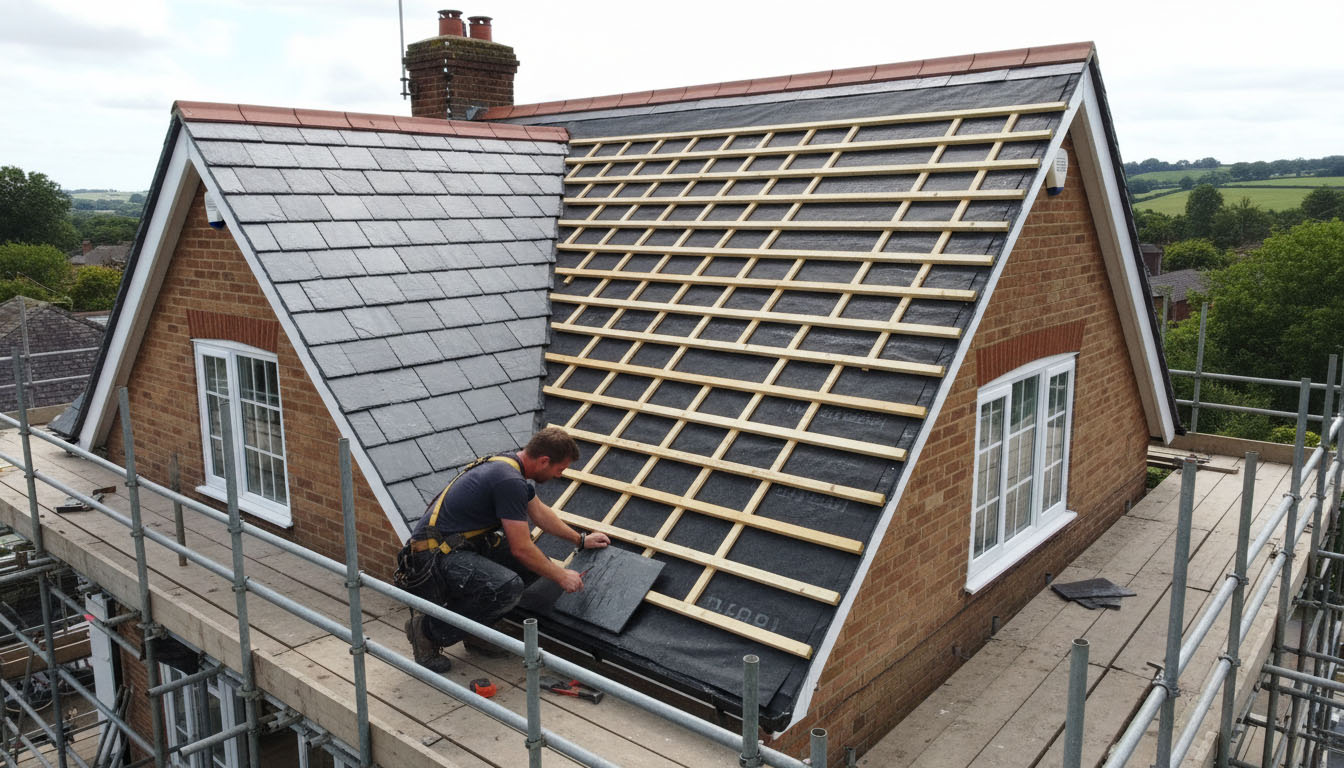
Building Regulations for Slate Roofing in the UK: Compliance Guide
Replacing or installing a slate roof in the UK involves more than selecting quality materials and skilled contractors. Failure to comply with building regulations can result in enforcement notices, rejected building control sign-off, and costly corrective work. Many homeowners assume like-for-like slate replacement avoids regulatory oversight, only to discover insulation or structural upgrades are legally required.
Building regulations for slate roofing in the UK cover structural integrity, wind uplift resistance, ventilation, and thermal performance. Understanding compliance requirements before installation protects both property value and legal standing. This guide explains UK slate roof building standards clearly and practically.
Building Regulations Slate Roofing UK Projects Must Follow
Building regulations slate roofing UK installations must comply with fall under the Building Regulations 2010 framework. Several Approved Documents apply directly to slate roofing works.
Key regulatory areas include:
Approved Document A for structural safety
Approved Document C for moisture resistance
Approved Document L for thermal performance
Approved Document B for fire safety
If more than 25 percent of a roof is replaced, thermal upgrade compliance is usually mandatory. Structural changes or heavier materials may also require formal assessment.
Professional slate roofing ensures installations align with all applicable compliance requirements from project planning to completion.
UK Slate Roof Building Standards: Structural Compliance
UK slate roof building standards place strong emphasis on load-bearing capacity and wind resistance. Natural slate is heavier than many roofing alternatives, which increases structural requirements.
Structural compliance includes:
Rafter span and load calculation verification
Batten grading compliant with BS 5534
Secure fixing density based on wind exposure
Proper head lap measurement according to pitch
Switching from lightweight concrete tiles to natural slate may require reinforcement of rafters or battens.
Where structural modification is necessary, professional pitched roof installation ensures safe load distribution and regulatory compliance.
Slate Roofing Compliance UK: Thermal and Insulation Rules
Slate roofing compliance UK requirements extend beyond the tiles themselves. When significant roof area is replaced, insulation must meet current thermal performance standards.
Thermal compliance typically involves:
Upgrading insulation to current U-value requirements
Installing vapour control layers where necessary
Maintaining adequate roof ventilation
Preventing condensation build-up
Failure to upgrade insulation when required can delay building control approval. Integrating insulation improvements during re-roofing is often more cost-effective than retrofitting later.
Homeowners reviewing broader efficiency requirements may also consult roof insulation requirements UK guidance before commencing work.
Wind Uplift and Fixing Standards
The UK’s exposure classifications mean wind resistance plays a central role in compliance. Slate roofs must be fixed according to wind zone calculations.
Wind-related compliance includes:
Increased fixing density in high-exposure zones
Use of corrosion-resistant nails or hooks
Correct double-lap installation
Secure ridge and verge detailing
Under-fixing is one of the most common compliance failures in slate roofing projects.
Professional slate roofing services ensure correct fixing schedules are applied based on geographic location and roof pitch.
Building Control Notification Requirements
Building control must be notified when:
More than 25 percent of roof covering is replaced
Structural alterations are made
Insulation upgrades are required
Roof height or profile is altered
Homeowners can submit a Building Notice or use an approved contractor who handles compliance documentation.
Ignoring notification requirements can result in enforcement action and complications during property resale.
Where ageing roofs require structural reinforcement before compliance upgrades, roof restoration services provide compliant structural improvement before slate reinstallation.
Compliance Overview Table
Compliance Area | Requirement | Trigger Condition |
|---|---|---|
Structural Safety | Load-bearing verification | Changing to heavier slate |
Thermal Upgrade | Insulation to current standards | Replacing 25%+ roof area |
Wind Resistance | Fixing density per exposure zone | All slate installations |
Moisture Control | Proper ventilation and underlay | Full or partial replacement |
Building Control Notice | Formal notification required | Major roofing works |
Understanding these triggers prevents unexpected delays or legal issues.
Professional slate roofing ensures compliance documentation and installation standards meet regulatory expectations.
Consequences of Non-Compliance
Failure to meet building regulations slate roofing UK standards can result in significant financial and legal consequences.
Potential risks include:
Enforcement notices requiring corrective work
Removal of non-compliant installation
Reduced property saleability
Insurance claim complications
Compliance protects both structural safety and long-term investment value.
Frequently Asked Questions
Do I need building regulations approval to replace a slate roof
If more than 25 percent of the roof is replaced, thermal compliance and building control notification are usually required.
Does switching to natural slate trigger structural checks
Yes, heavier materials often require load assessment to meet structural standards.
What British Standard applies to slate roofing installation
BS 5534 governs slating and tiling installation practices in the UK.
Are insulation upgrades mandatory during re-roofing
Yes, when significant roof area is replaced, insulation must meet current performance requirements.
What happens if building regulations are ignored
You may face enforcement action, required corrective work, and complications during property sale.